Artwork
The Triumph of Saul (sketch)
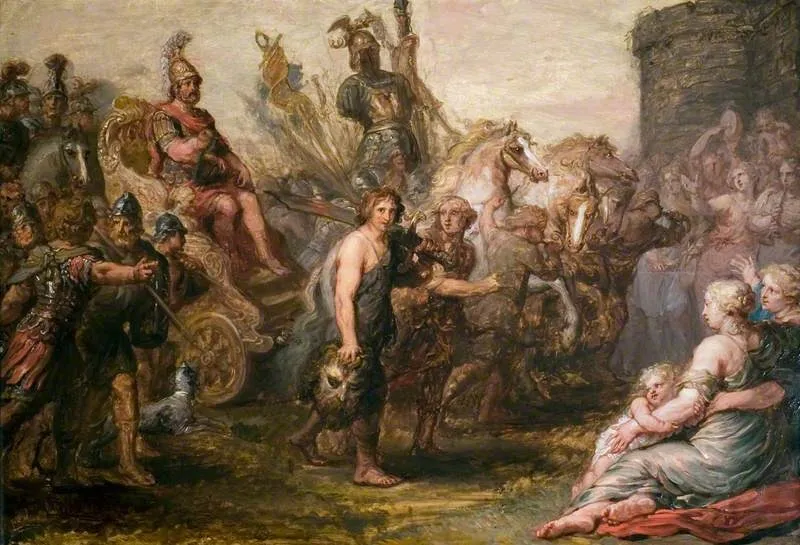
The Triumph of Saul (sketch) is an unspecified painting by the Flemish Baroque painting artist Jan van den Hoecke. It dates from 1642 and is held in the collection of the Victoria and Albert Museum.
About this work
Overview
The Triumph of Saul (sketch) is a painting created by Flemish artist Jan van den Hoecke around 1642, reflecting his Flemish Baroque style training under Peter Paul Rubens and influence from Italian art during his time in Rome.
Subject & Meaning
The sketch depicts a historical or allegorical scene centered on the biblical figure of Saul, with a central figure wielding a sword and shield, surrounded by multiple onlookers, horseback riders, and a built environment backdrop.
Technique & Style
The painting features visible brushstrokes, a predominantly earthy tone palette, and employs chiaroscuro, a strong light-and-dark contrast technique, to add depth and dramatic effect, characteristic of the Flemish Baroque style.
History & Provenance
Jan van den Hoecke, a former principal assistant to Peter Paul Rubens in the 1630s, created this work after a decade in Rome, later serving as a court painter in Vienna and Brussels, influencing his artistic approach.
Context
Created during the Flemish Baroque period, the work synthesizes Van den Hoecke's experiences: the compositional flair of Rubens, the dramatic lighting of Italian Baroque, and the vibrant activity of Flemish scenes.
Legacy
While specific legacy details of *The Triumph of Saul (sketch)* are not provided, as a work of Jan van den Hoecke, it contributes to the broader understanding of Flemish Baroque's evolution and the spread of Italian artistic influences in 17th-century Europe.
Artist & collection
Artist
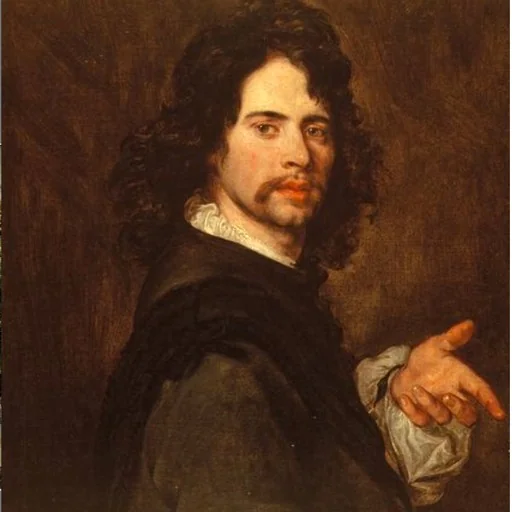
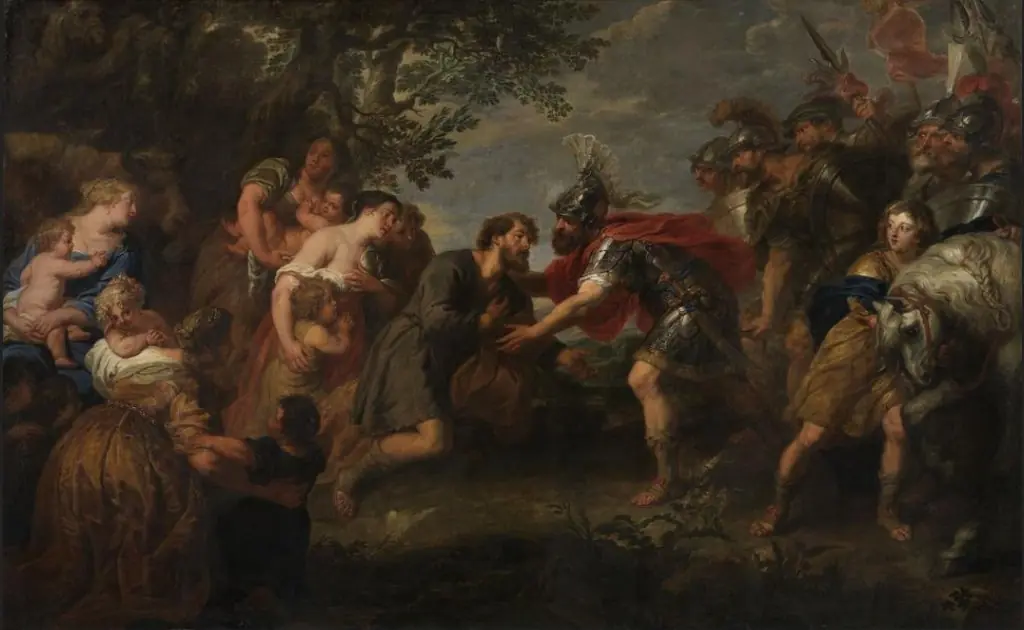
Jan van den Hoecke (baptised on 4 August 1611 – 1651) was a Flemish painter, draughtsman and designer of wall tapestries.

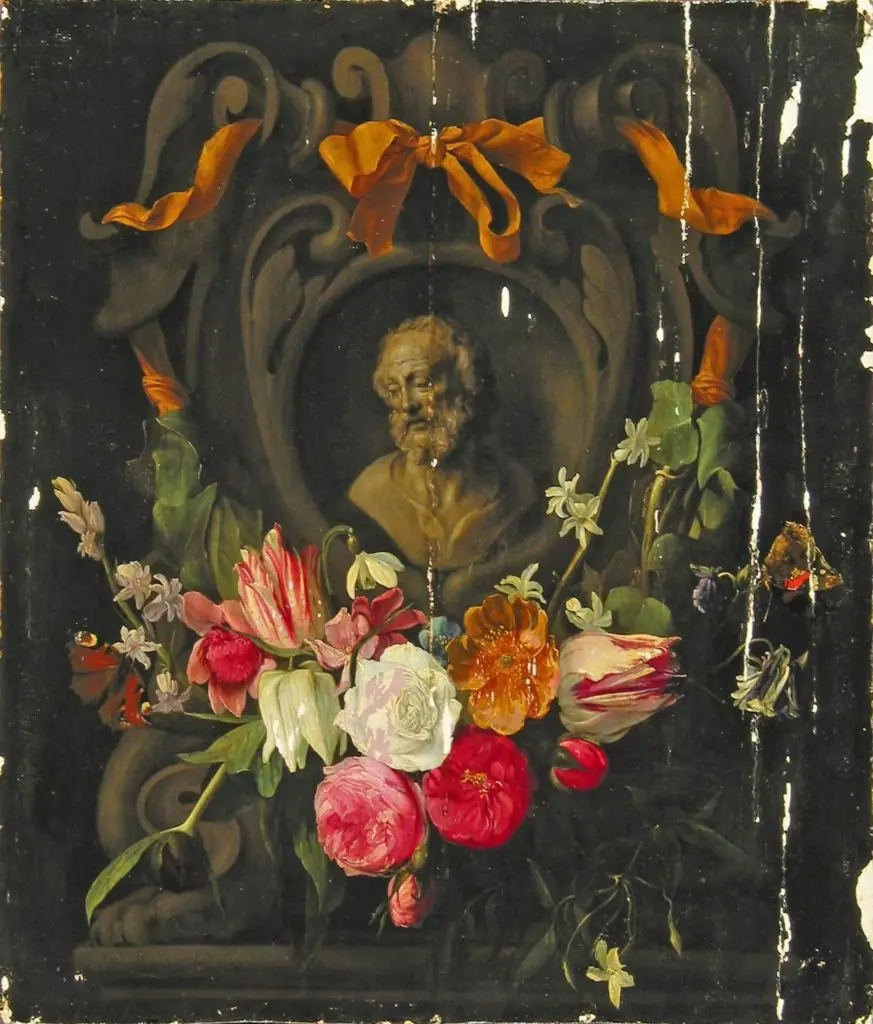
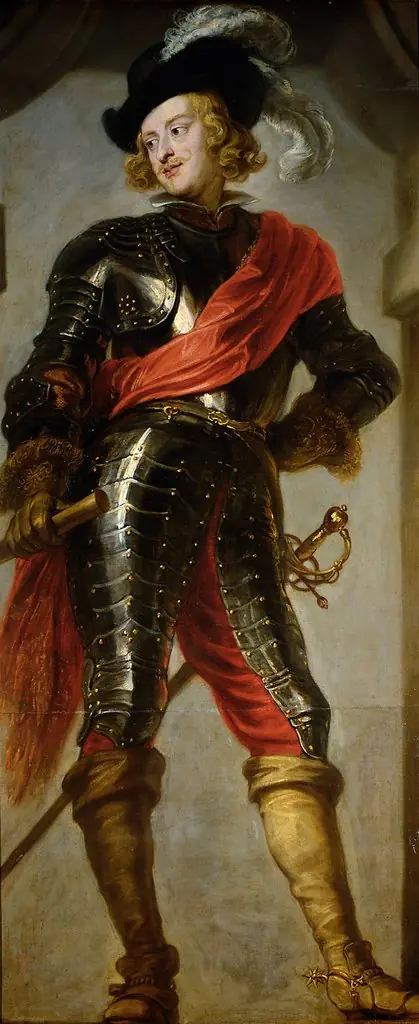
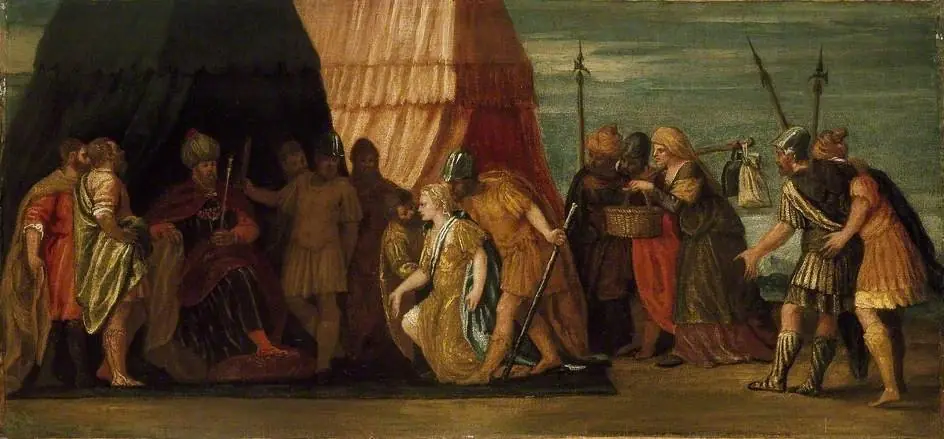 Judith received by Holofernes
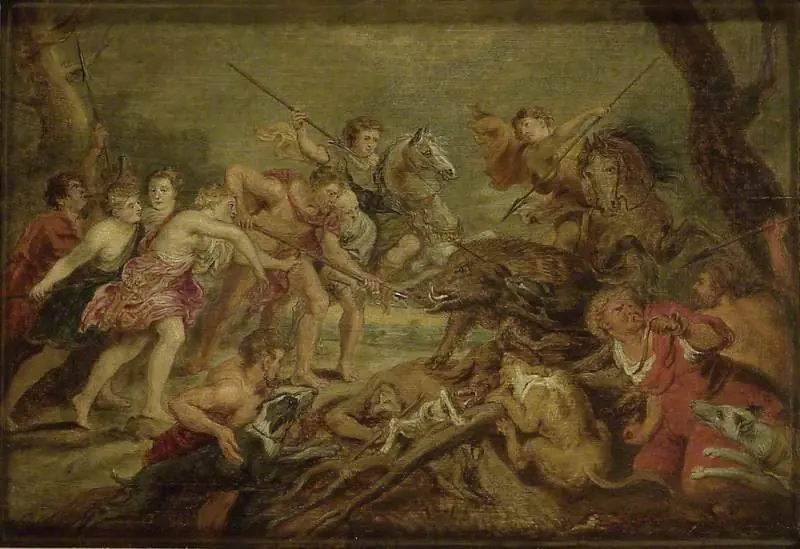 The Hunting of the Calydonian Boar
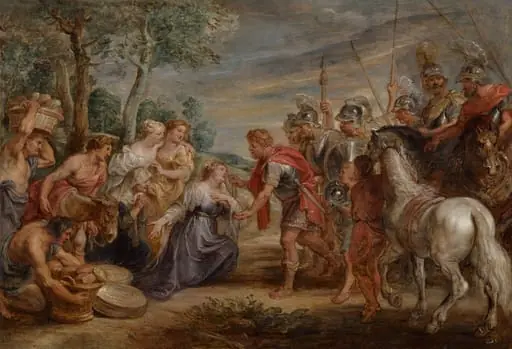 The Meeting of David and Abigail
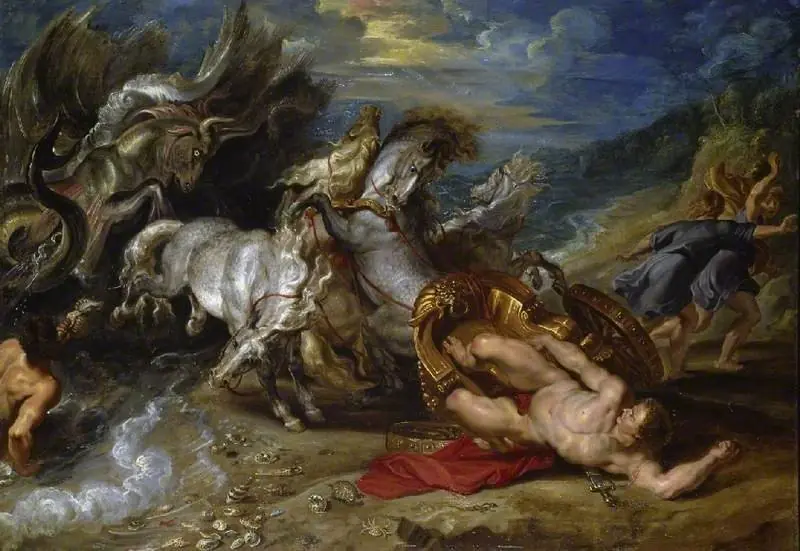 Death of Hippolytus
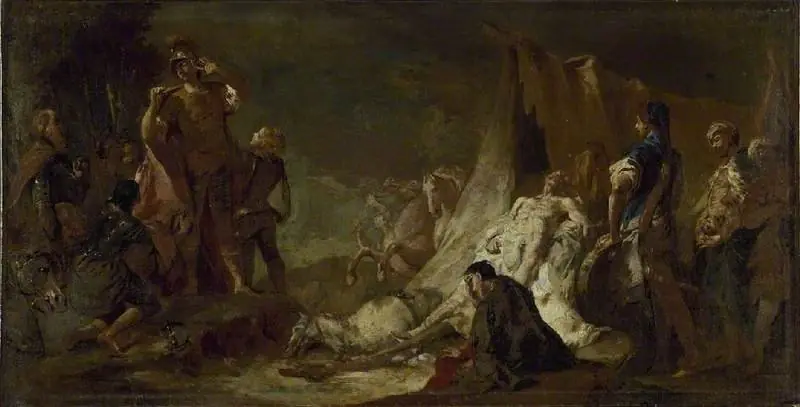 The death of Darius
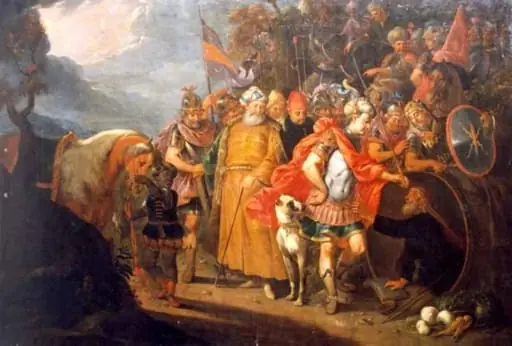 Alexandru cel Mare și Diogene
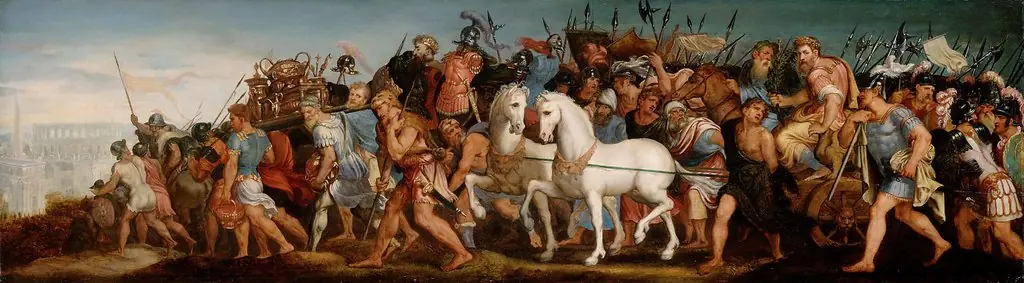 Römischer Triumphzug
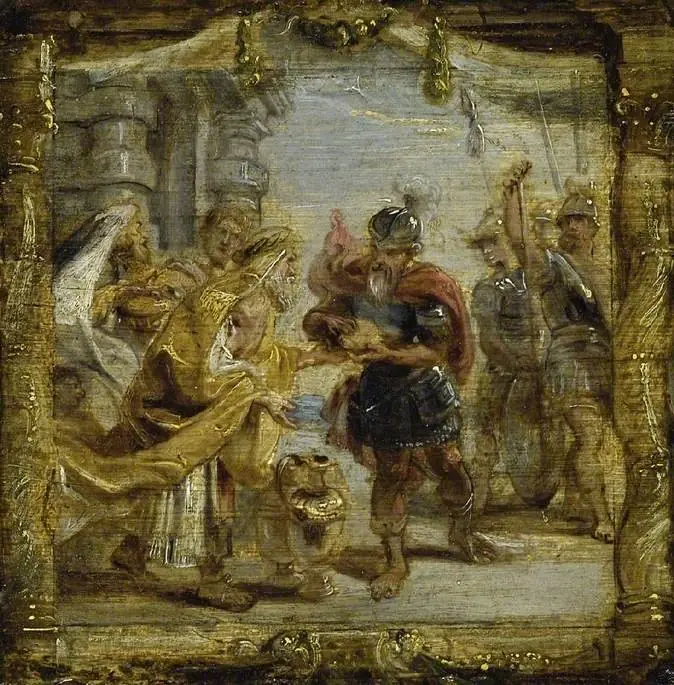 The meeting of Abraham and Melchisedek
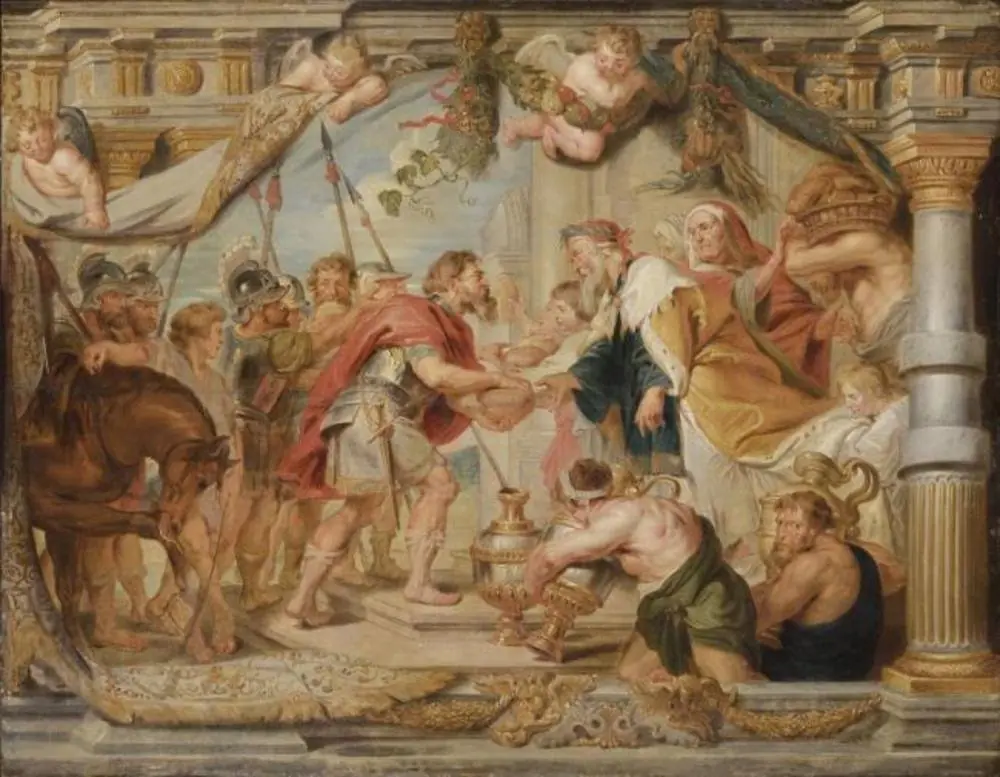 The Meeting of Abraham and Melchizedek
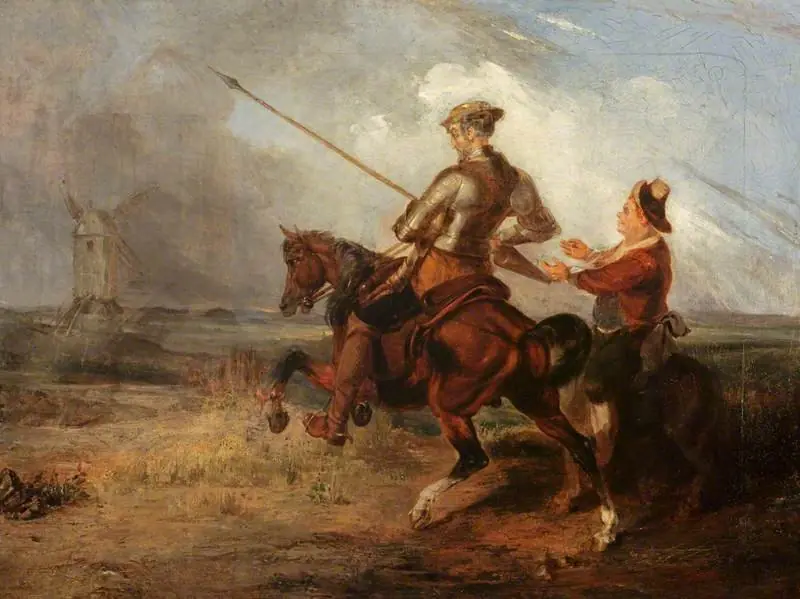 Don Quixote Tilting at a Windmill
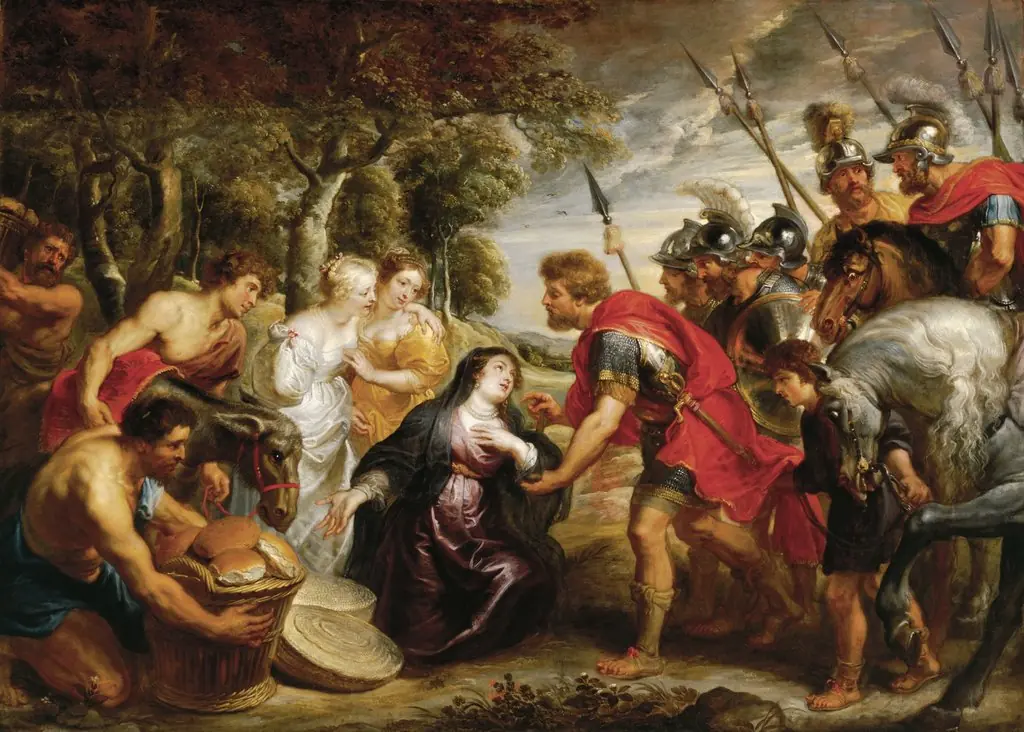 The Meeting of David and Abigail
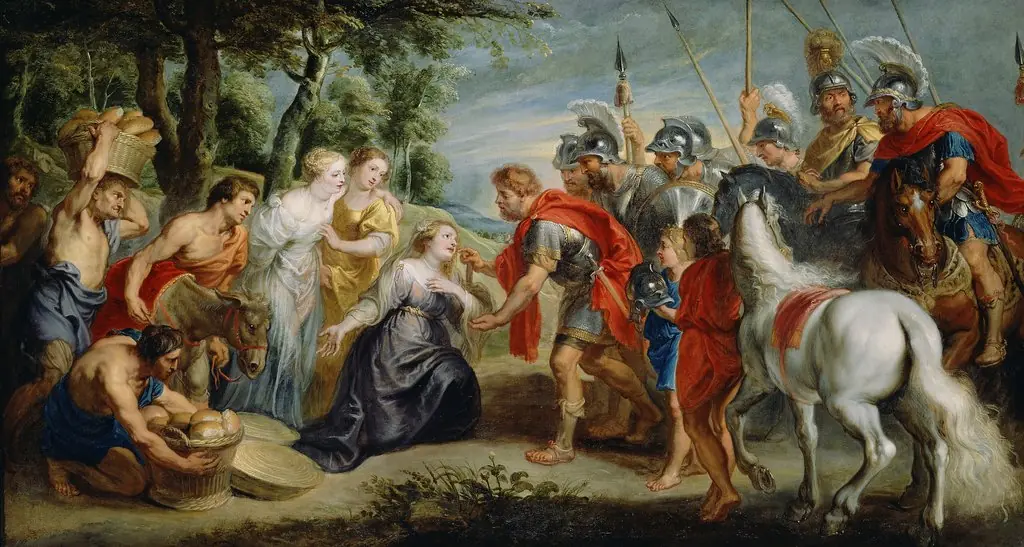 David Meeting Abigail