Artwork
The Rape of Proserpine
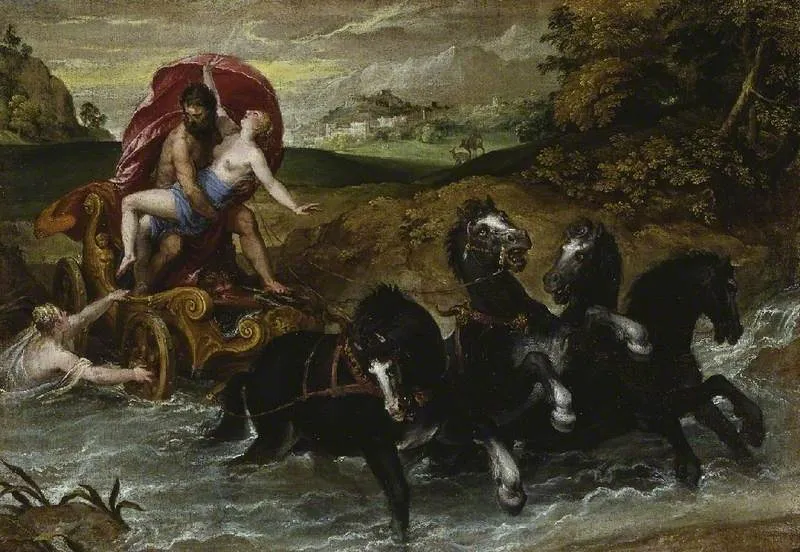
The Rape of Proserpine is an oil painting by the Mannerist artist Christoph Schwarz. It dates from 1573 and is held in the collection of the Fitzwilliam Museum.
About this work
Overview
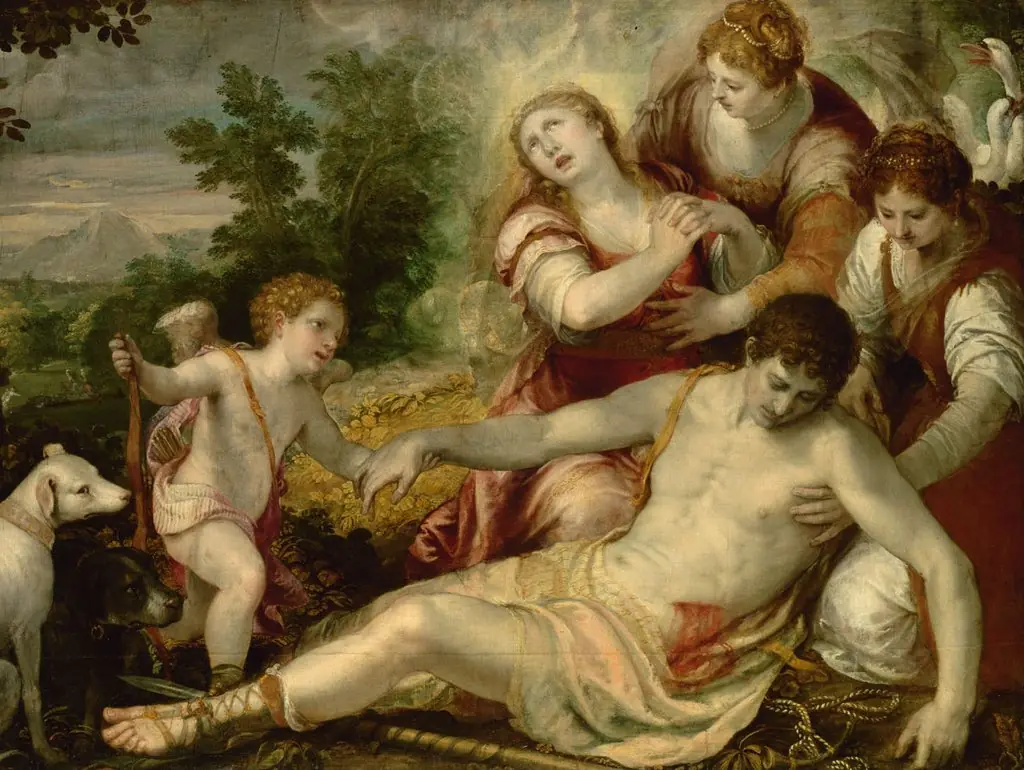
Christoph Schwarz’s oil painting The Rape of Proserpine, executed in 1573, is part of the Fitzwilliam Museum’s collection. The work presents a mythological episode in a dynamic composition, employing strong contrasts of light and shadow to model the figures and convey a sense of movement.
Subject & Meaning
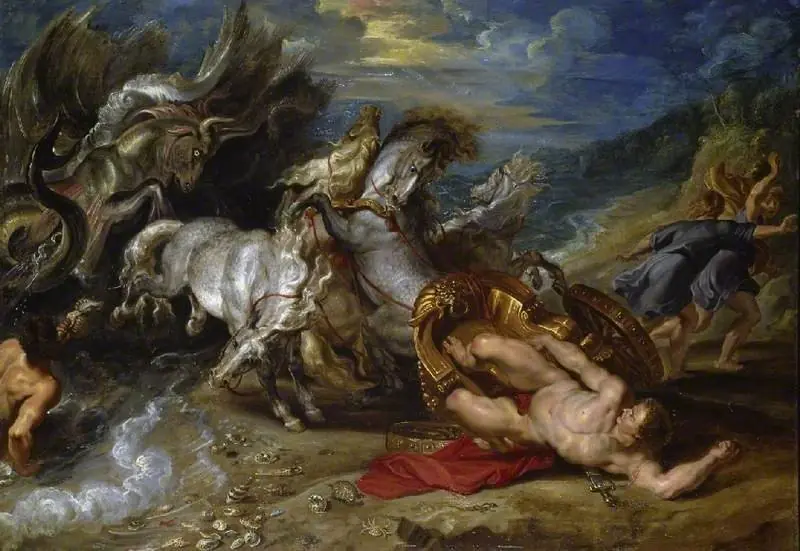
The scene shows the abduction of Proserpine, with the goddess seated beside a bearded man in a red cloak and blue shorts. They occupy a chariot drawn by four horses, while a hand emerges from turbulent water, reaching toward the vehicle, suggesting the underworld’s pull on the captured deity.
Technique & Style
Schwarz utilizes chiaroscuro, juxtaposing illuminated forms against deep shadows to generate volume and drama. The palette combines vivid reds and blues with a muted, cloudy sky, while the rendering of water and the distant landscape demonstrates a careful handling of atmospheric perspective.
History & Provenance
Created in the late Renaissance, the painting entered the Fitzwilliam Museum’s holdings in the 19th century, though earlier ownership records are sparse. Its survival in a public collection has allowed continued scholarly access to Schwarz’s interpretation of classical mythology.
Context
The work reflects the period’s fascination with antiquarian subjects and the visual language of myth. By placing the mythic narrative within a turbulent natural setting, Schwarz aligns with contemporary trends that emphasized emotional intensity and the moral implications of divine intervention.
Artist & collection