Artwork
The Feast of Herod (recto)
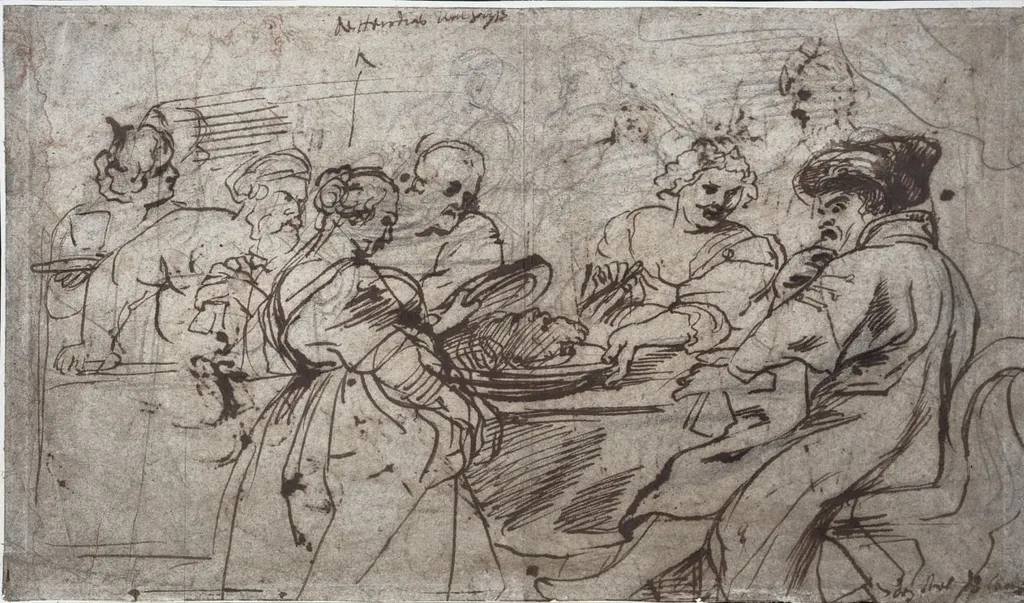
The Feast of Herod (recto) is a drawing by the Baroque artist Peter Paul Rubens. It dates from 1638 and is held in the collection of the Cleveland Museum of Art.
About this work
Overview
This drawing serves as a preparatory study for Rubens' painting 'The Feast of Herod', now housed at the Scottish National Gallery in Edinburgh. Executed with loose, expressive lines, it captures a pivotal moment in the narrative with immediacy.
Subject & Meaning
The drawing depicts the instant Herod recoils in horror as Salome reveals the severed head of Saint John the Baptist on a charger. Herodias, with a chilling smile, gestures toward the head with a fork, amplifying the dramatic tension.
Technique & Style
Characterized by rapid, spontaneous execution, the drawing showcases Rubens' use of loose lines to convey dynamic movement and emotion. The emphasis on capturing the shock and drama of the moment reflects his planning process for larger, more polished works.
History & Provenance
Part of a two-sided sheet, the recto focuses on 'The Feast of Herod', while the verso sketches 'Tomyris with the Head of Cyrus'. Rubens produced two paintings of the latter subject, now located in Paris and Boston.
Context
Created in Rubens' Antwerp studio, this drawing demonstrates his practice of using sketches to direct pupils and prepare for paintings. Notable annotations by Rubens, such as 'Herodias somewhat higher' and 'plus spatij' (more space), offer insight into his compositional decisions.
Artist & collection
Artist
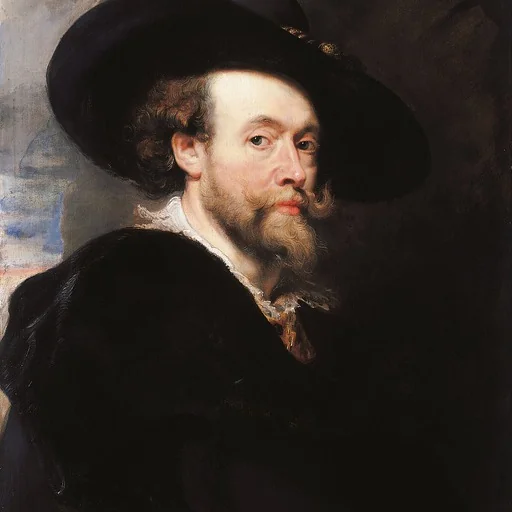
Sir Peter Paul Rubens ( ROO-bənz; Dutch: ; 28 June 1577 – 30 May 1640) was a Flemish artist and diplomat.

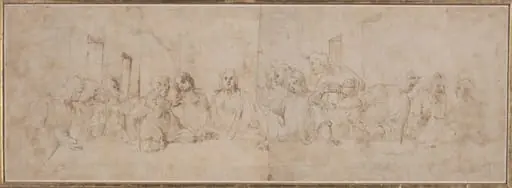 a) The Last Supper; b) Putti
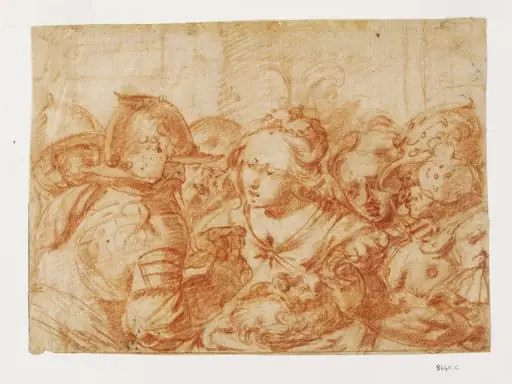 Judith showing the head of Holofernes to the Israelite elders
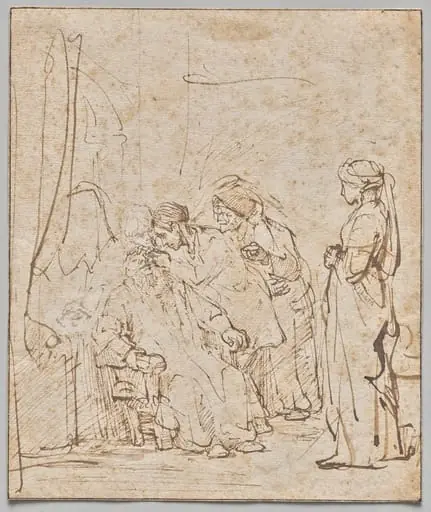 Tobias Healing His Father's Blindness
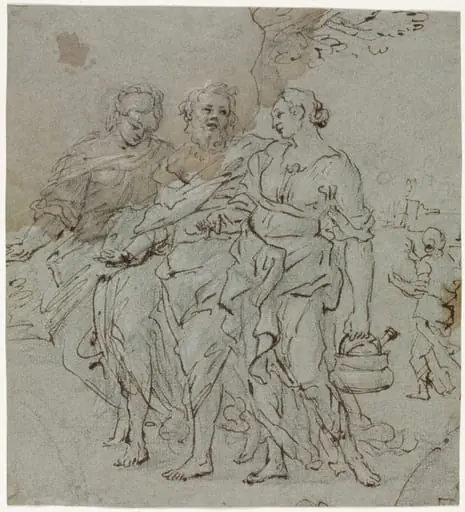 Lot and His Daughters (recto)
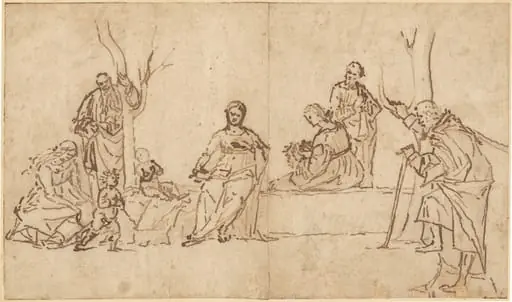 The Madonna and Child with Saints in a Landscape (Sacra Conversazione)
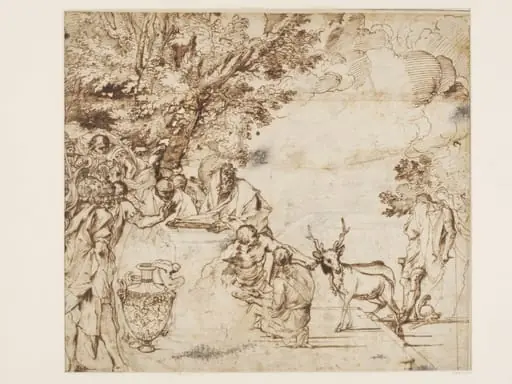 The Sacrifice of Iphigenia
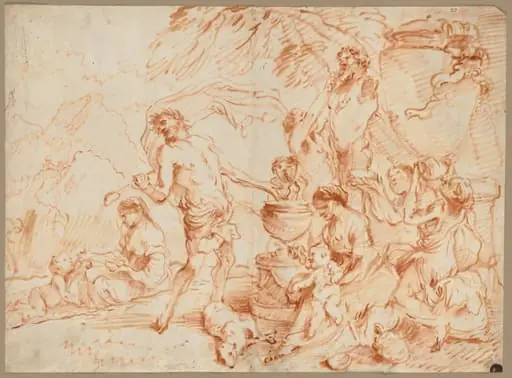 Bacchanal Before a Herm
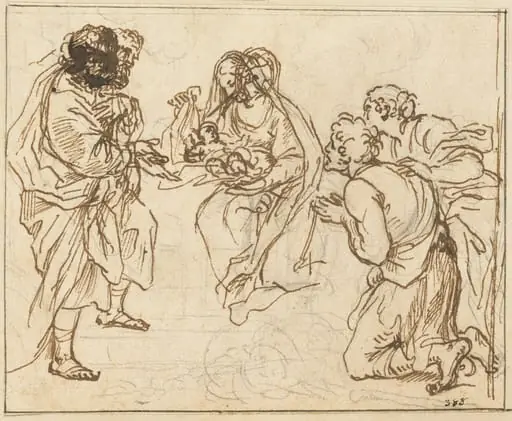 The Adoration of the Shepherds
![Various Sketches of the Madonna and Child (recto); Architectural Studies (verso) [partially visible on recto], by Paolo Veronese](https://artifactworldgallery.com/img/paolo-veronese--various-sketches-of-the-madonna-and-child-recto-architectura--90586edfc8e8efd5-w320.webp) Various Sketches of the Madonna and Child (recto); Architectural Studies (verso) [partially visible on recto]
Various Sketches of the Madonna and Child (recto); Architectural Studies (verso) [partially visible on recto]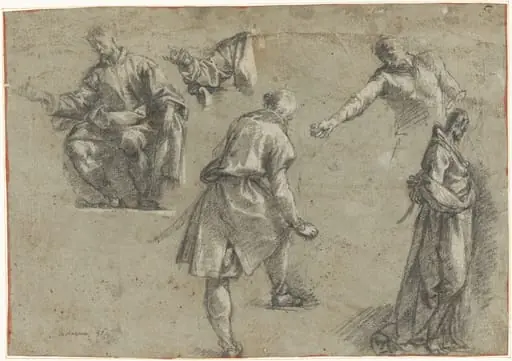 Studies for Christ Before Caiaphas