Artwork
Festón de flores y frutas y angelotes
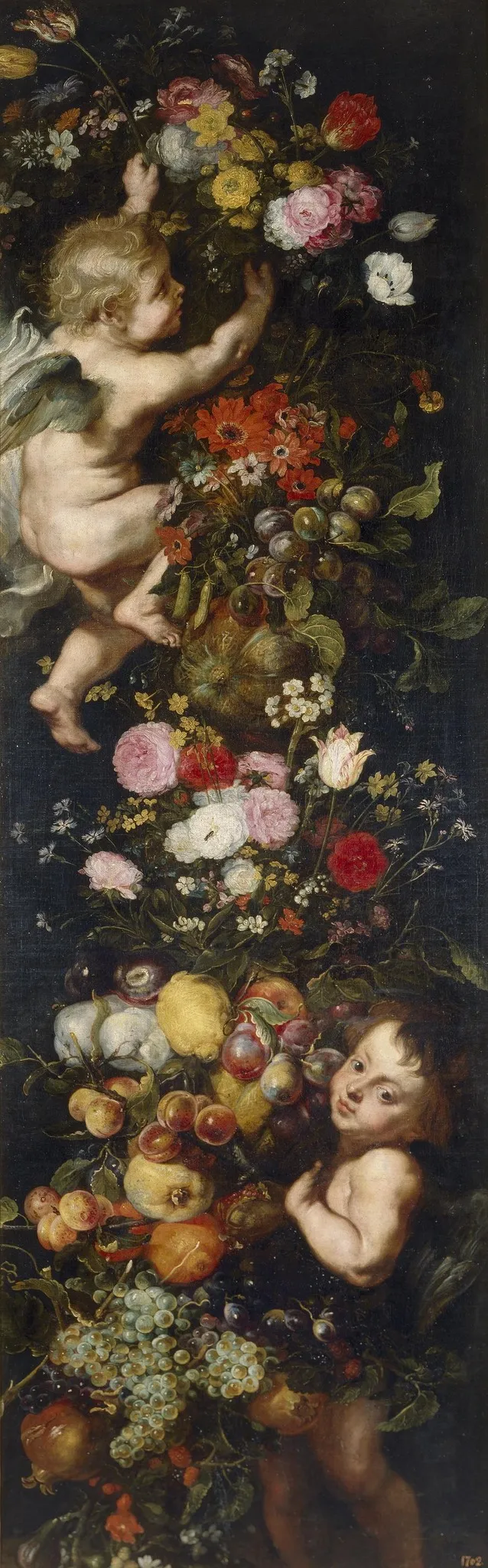
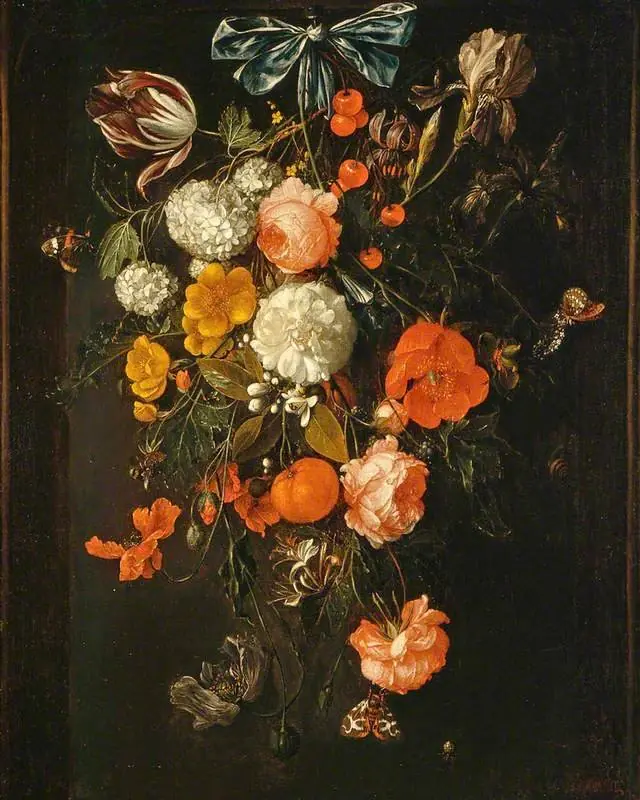
Festón de flores y frutas y angelotes is an oil painting by the Flemish Baroque painting artist Peter Paul Rubens. It dates from 1620 and is held in the collection of the Museo del Prado.
About this work
Overview
Executed in the Flemish Baroque tradition, the piece exemplifies Rubens’s ability to merge naturalistic detail with mythological grace.
Painted in 1620 by Peter Paul Rubens, this oil-on-canvas work presents a lush arrangement of flowers and fruit suspended by a garland, animated by two cherubic figures. Executed in the Flemish Baroque tradition, the piece exemplifies Rubens’s ability to merge naturalistic detail with mythological grace. It is held in the Museo del Prado’s collection, where it stands as a representative example of his decorative still-life compositions.
Subject & Meaning
The painting centers on a bountiful floral and fruit garland, symbolizing abundance and the cyclical nature of life. Two cherubs, one reaching for a bloom and the other gazing outward, introduce a sense of playful innocence. Their presence evokes classical putti, linking the scene to Renaissance and Baroque traditions that associated such figures with divine favor and earthly pleasure, without overt religious narrative.
Technique & Style
Rubens employed thick, fluid brushwork to render the textures of petals, skin, and fruit with tactile realism. The palette is rich yet harmonious, with warm pinks, golden yellows, and deep reds contrasting against soft shadows. Light falls naturally across the forms, enhancing volume and depth. The composition is asymmetrical yet balanced, a hallmark of Baroque dynamism, guiding the eye through the interplay of organic shapes and cherubic motion.
History & Provenance
Commissioned during Rubens’s mature period, the painting likely originated as part of a decorative scheme for a private or aristocratic residence. It entered the Spanish royal collection in the 17th century and was later transferred to the Museo del Prado upon its founding. Its continuous presence in royal holdings underscores its value as a work of refined artistry, though its original context remains undocumented.
Context
In early 17th-century Flanders, still-life paintings infused with mythological or allegorical elements were popular among elite patrons. Rubens, influenced by Italian Renaissance ideals and Antwerp’s commercial culture, adapted these conventions to suit aristocratic tastes. This work reflects a broader trend in Northern Europe where nature’s splendor was celebrated not merely as observation but as a vehicle for aesthetic and symbolic expression.
Legacy
Rubens’s garland paintings influenced generations of Northern European artists who adopted his fusion of naturalism and allegory. While not as widely exhibited as his mythological scenes, this work remains a key reference in studies of Baroque decorative painting. Its enduring presence in the Prado highlights its role in shaping the genre’s evolution beyond mere ornamentation into a vehicle for layered visual poetry.
Artist & collection
Artist
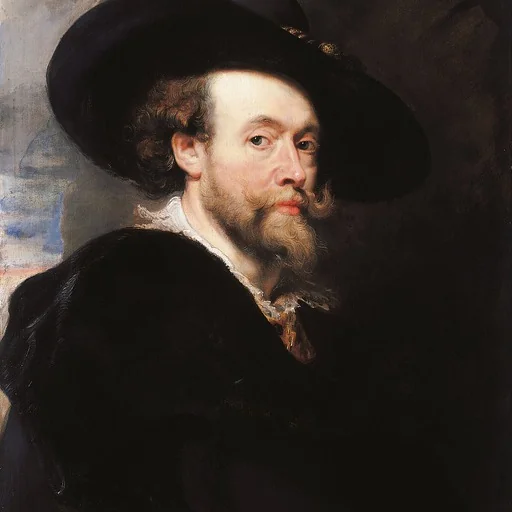
Sir Peter Paul Rubens ( ROO-bənz; Dutch: ; 28 June 1577 – 30 May 1640) was a Flemish artist and diplomat.

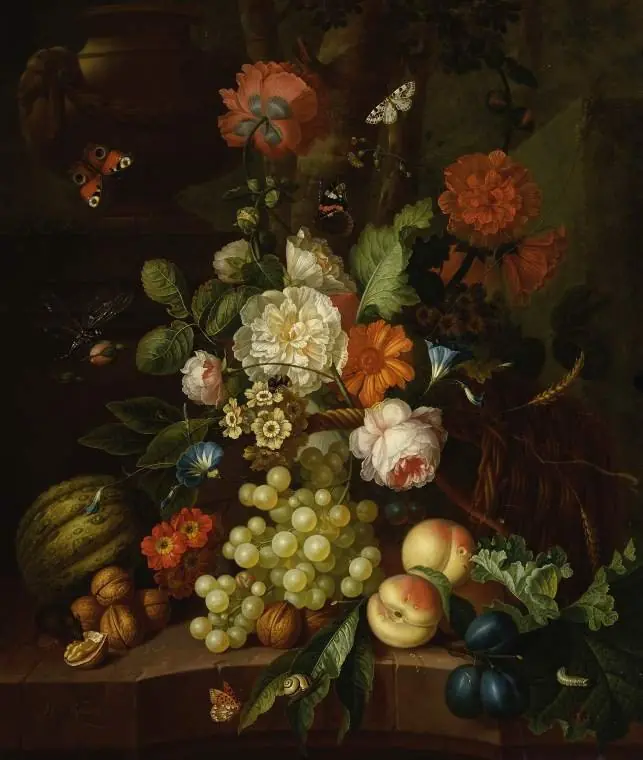 Basket of flowers with fruit
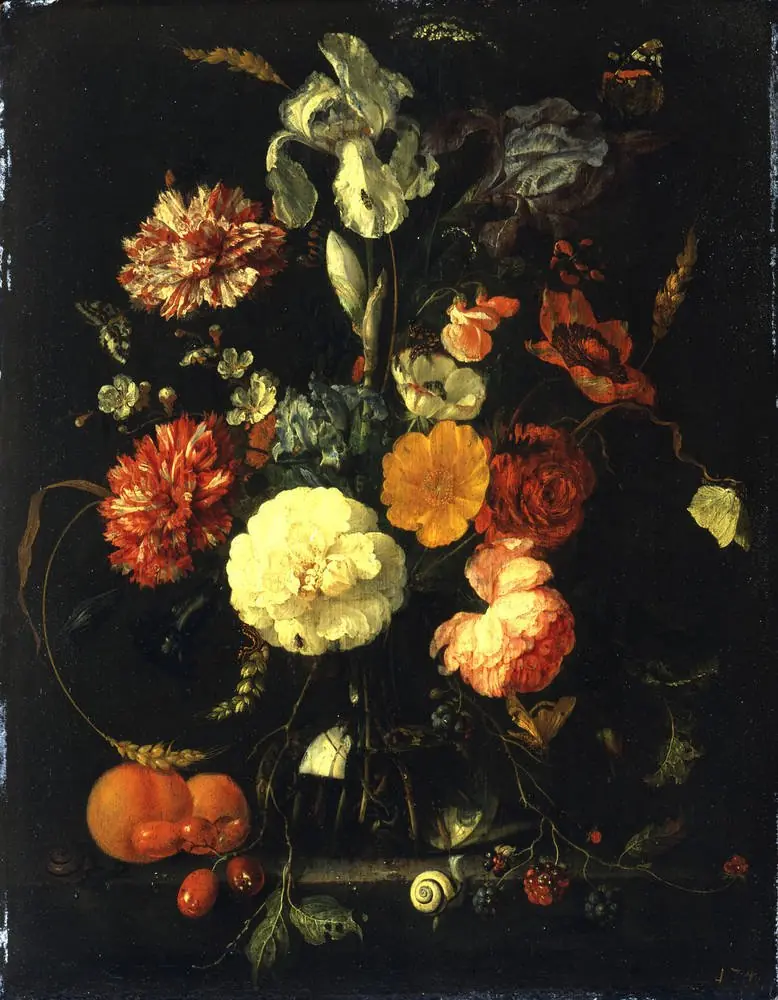 Bouquet with Blue Iris in a Glass Vase
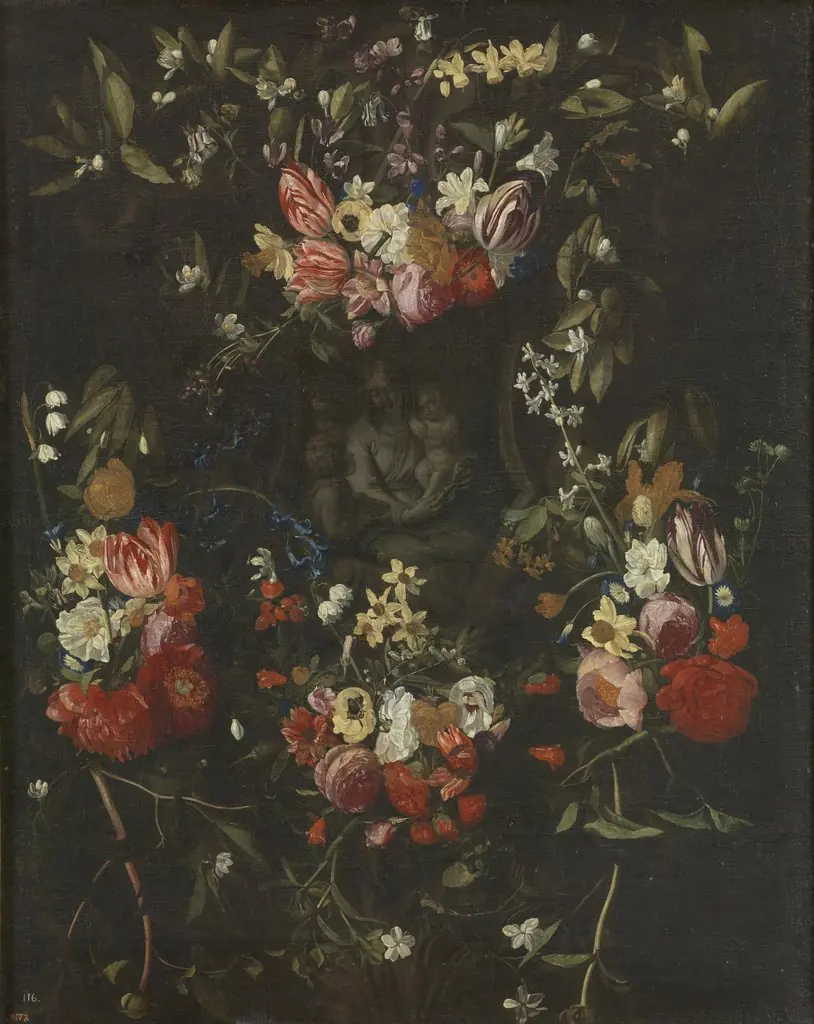 Garland of Flowers with the Virgin, the Christ Child and Saint John
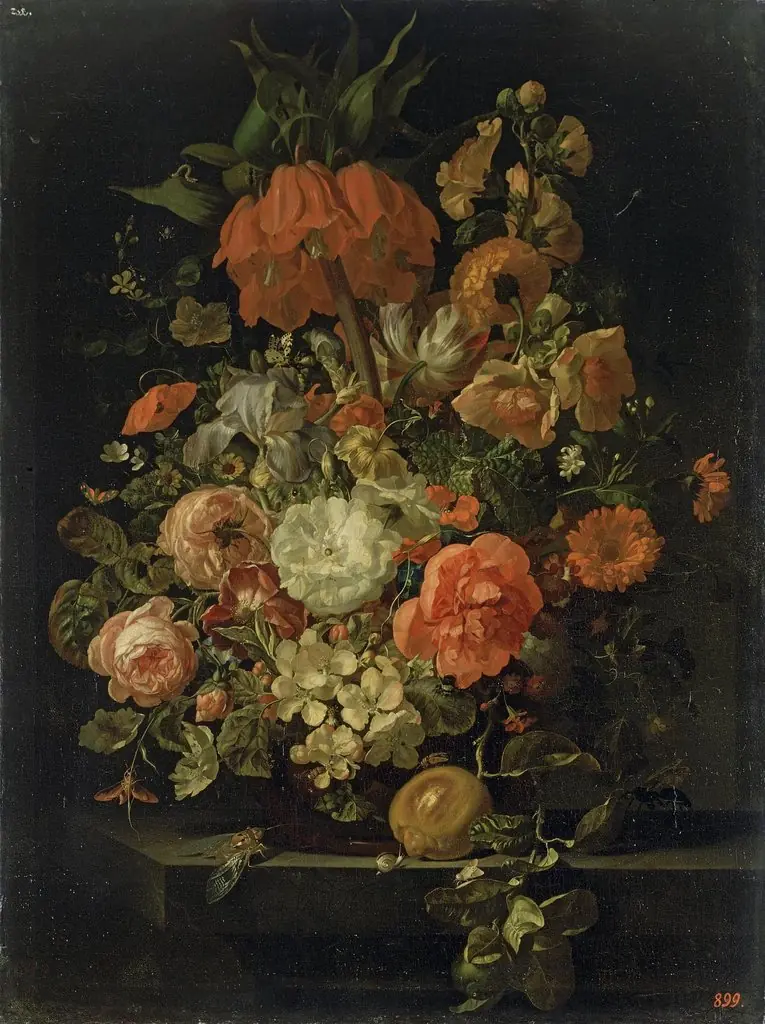 Flowers
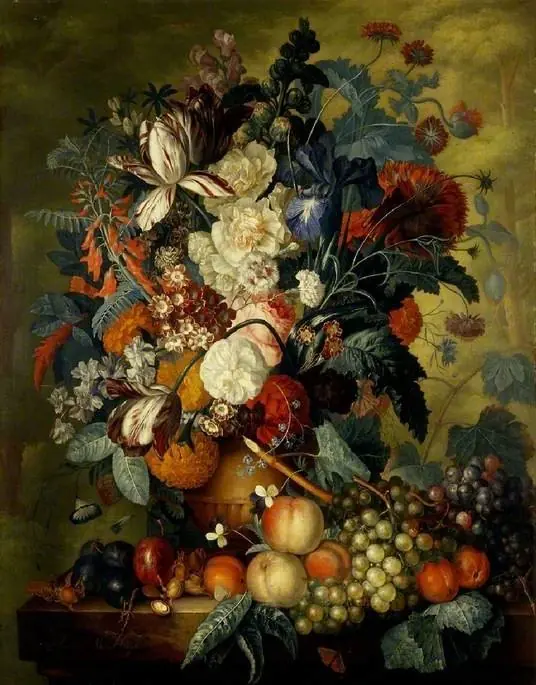 A vase of flowers with fruit
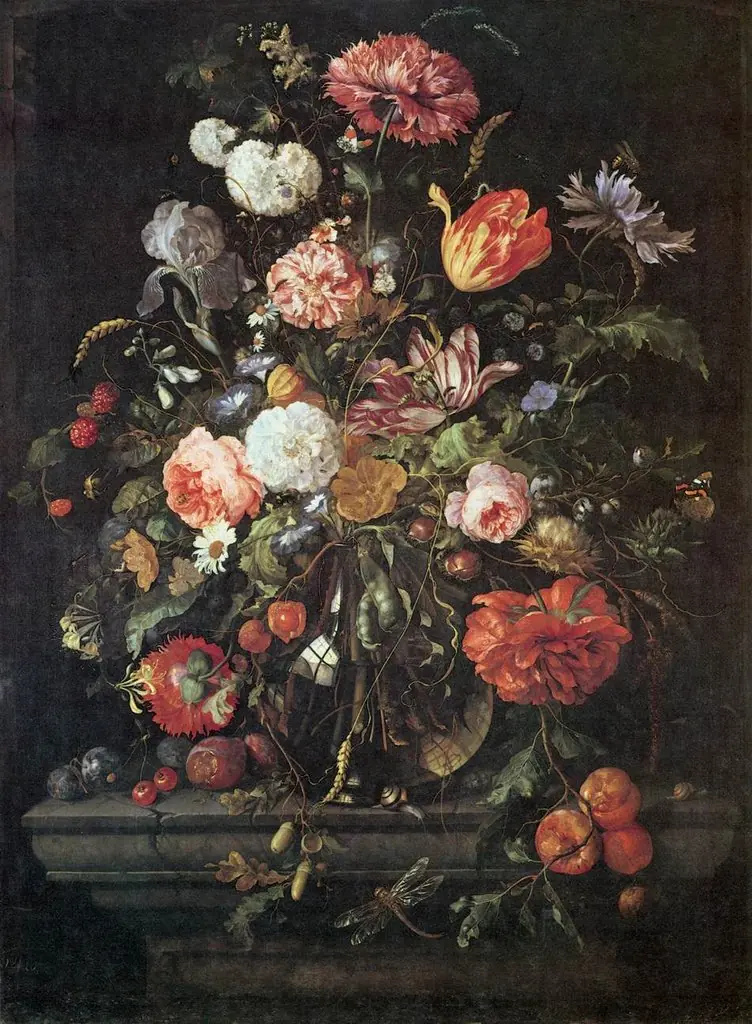 Flowers in a Glass Bowl
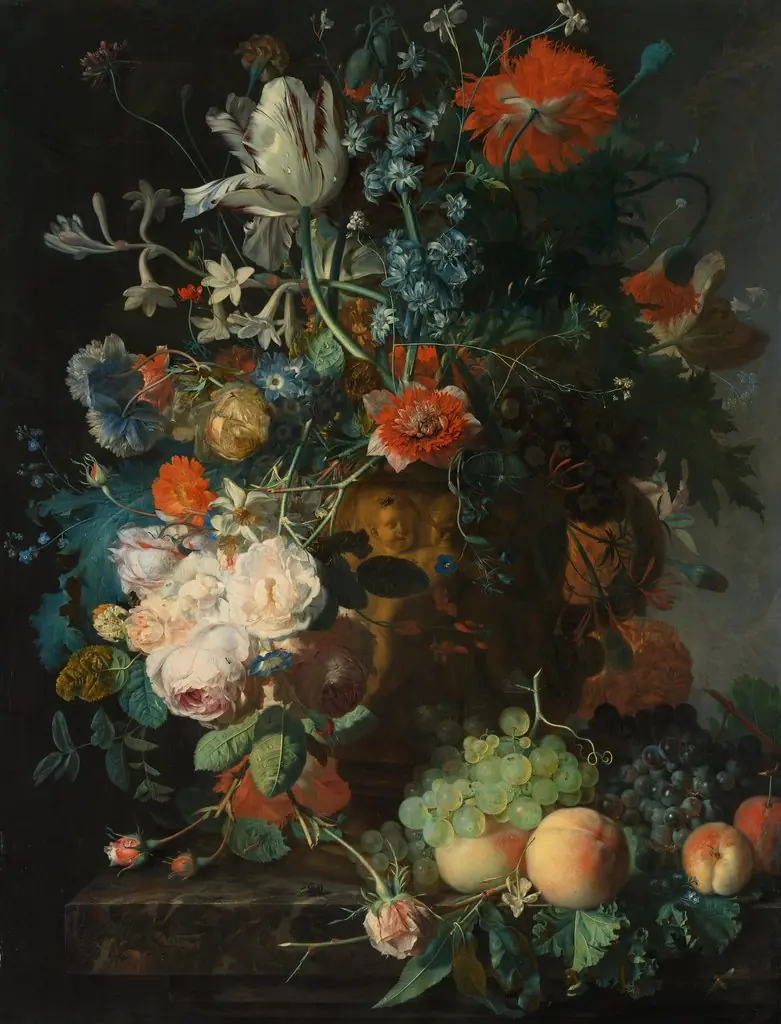 Still life with flowers and fruit
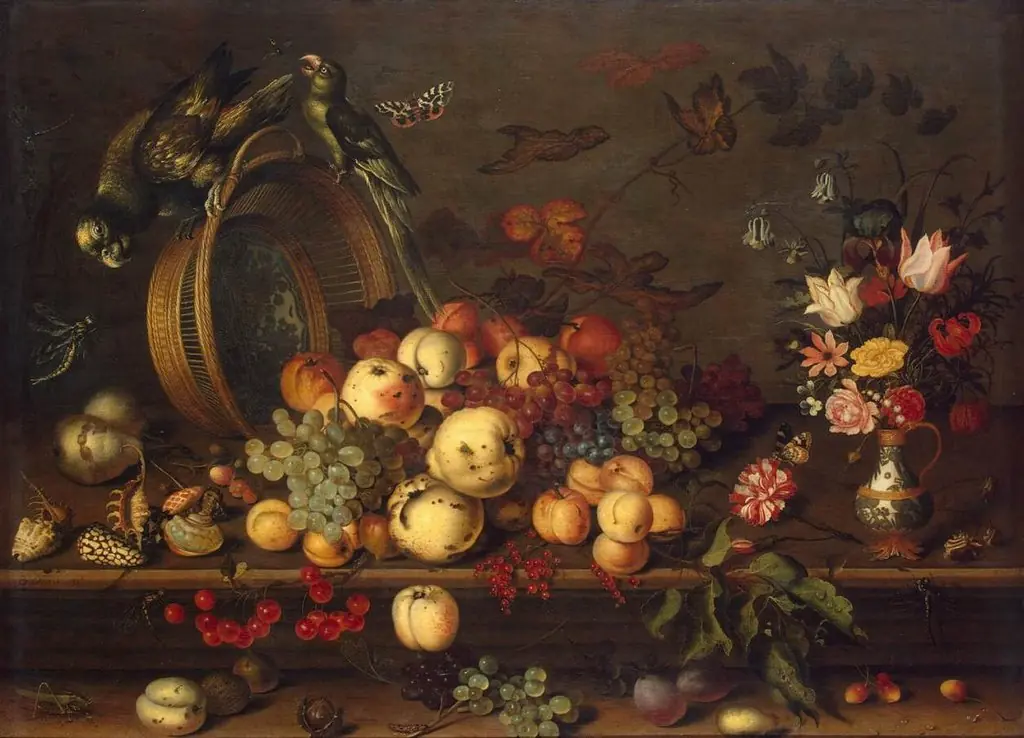 Still Life with Fruits, Shells and Insects
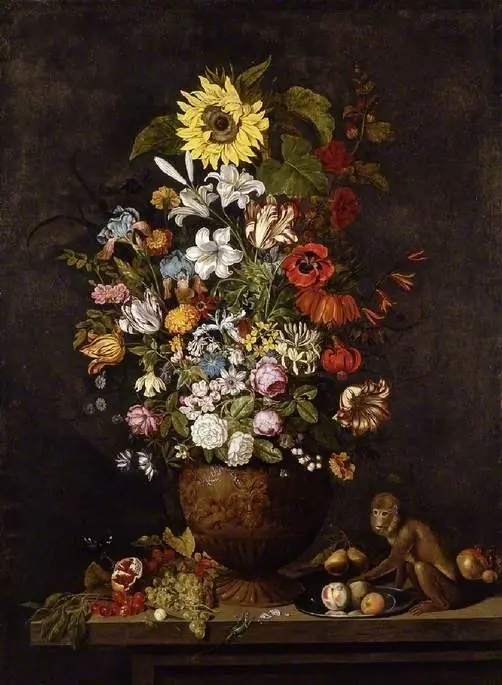 A vase of flowers with a monkey
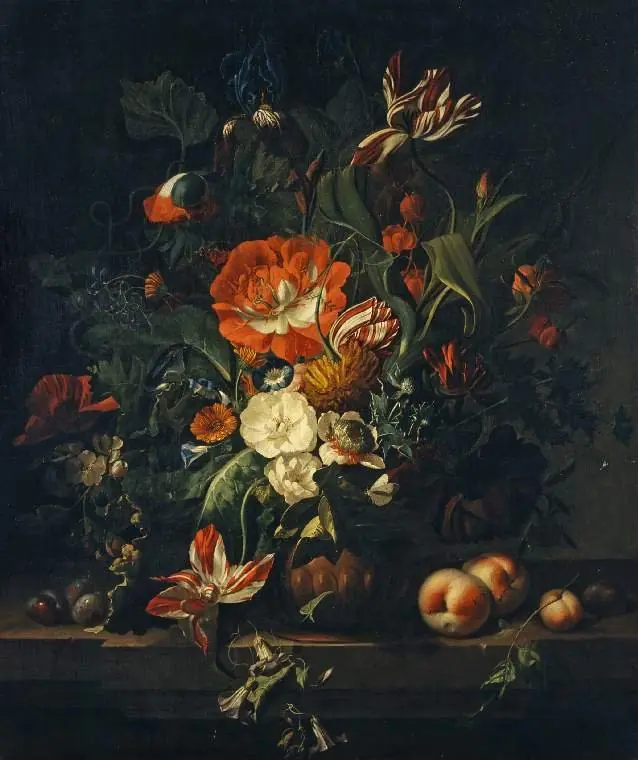 Flowers in a terracotta vase
 Still Life with Fruit on a Table
 A festoon of flowers and fruit