Artwork
The Alchymist, in Search of the Philosopher's Stone, Discovers Phosphorus, and Prays for the Successful Conclusion of his Operation, as was the Custom of the Ancient Chymical Astrologers
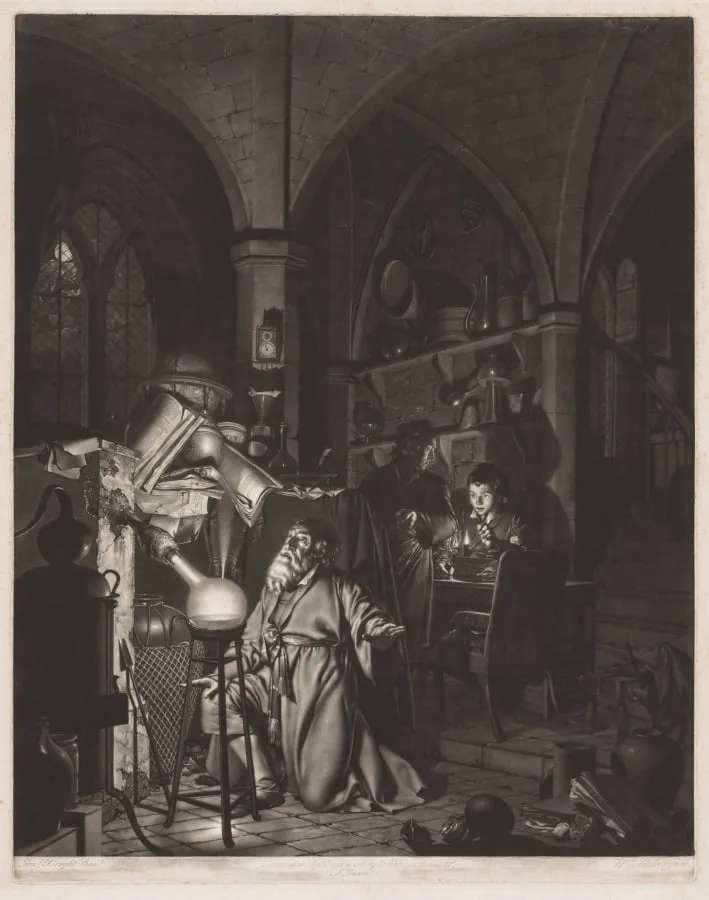
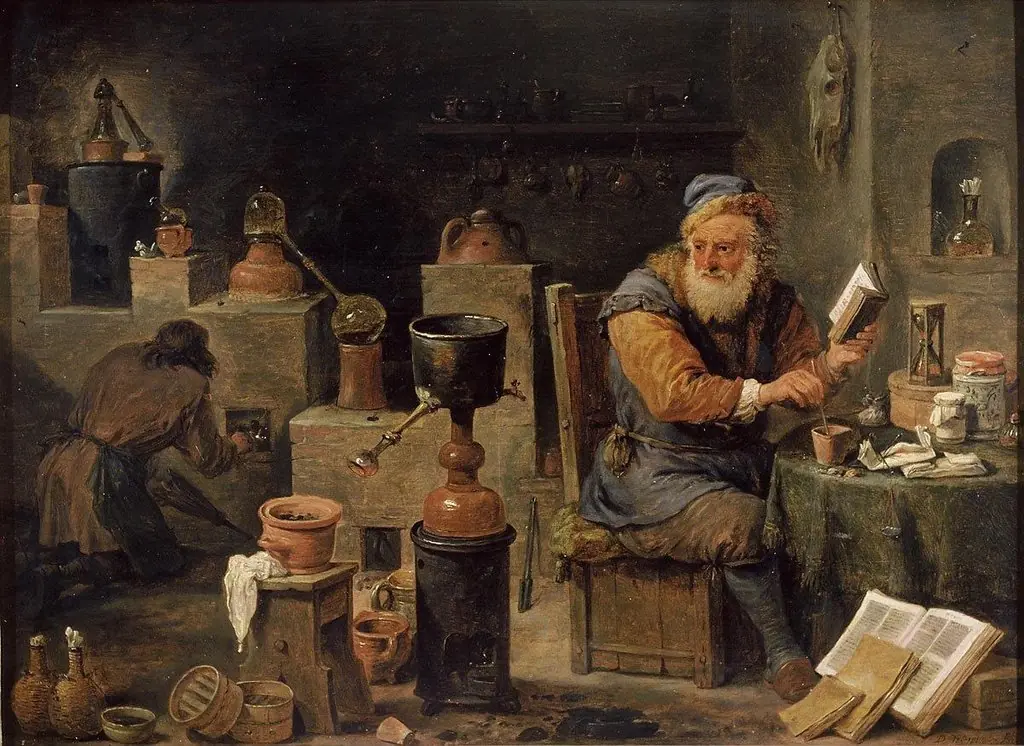
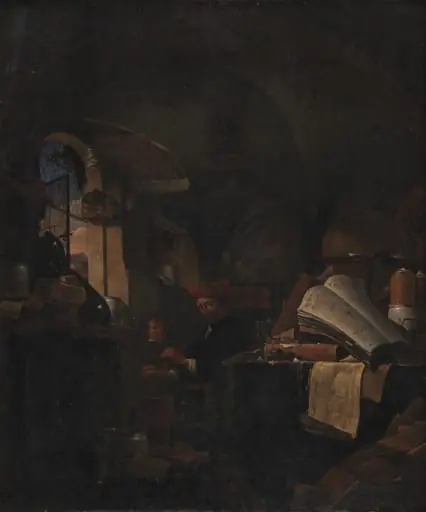
The Alchymist, in Search of the Philosopher's Stone, Discovers Phosphorus, and Prays for the Successful Conclusion of his Operation, as was the Custom of the Ancient Chymical Astrologers is a print by the Romanticist artist William Pether. It dates from 1775 and is held in the collection of the Cleveland Museum of Art. This print depicts an alchemist in a dim, cluttered chamber, kneeling in prayer before a glowing flask.
About this work
Overview
The scene captures the accidental discovery of phosphorus during a ritualistic search for the philosopher’s stone.
This print depicts an alchemist in a dim, cluttered chamber, kneeling in prayer before a glowing flask. The scene captures the accidental discovery of phosphorus during a ritualistic search for the philosopher’s stone. The title, rich with archaic phrasing, frames the moment as both spiritual and scientific, reflecting the transitional period between occult traditions and emerging empirical methods in early modern science.
Subject & Meaning
The figure represents the alchemist’s dual pursuit: mystical transformation and material discovery. His prayerful posture suggests reverence for forces beyond human control, yet the glowing phosphorus—unintended and natural—signals a shift from superstition to observation. The scene implies that true understanding arises not from divine intervention, but from patient, if misguided, experimentation.
Technique & Style
The artist employs strong chiaroscuro to isolate the glowing flask as the sole source of light, casting deep shadows across tools, books, and a skull. The contrast heightens the drama of revelation, directing focus to the alchemist’s illuminated face and raised hands. Detailed rendering of glassware and instruments lends credibility to the setting, grounding the mystical in tangible reality.
History & Provenance
Created in the late 17th or early 18th century, the print emerged during a time when alchemy was being reevaluated in light of new chemical discoveries. Phosphorus had been isolated in 1669 by Hennig Brand, and its eerie glow became a symbol of nature’s hidden powers. This image likely circulated among educated audiences familiar with both alchemical lore and the rise of experimental science.
Context
The image reflects a cultural moment when traditional alchemical practices were being replaced by systematic chemistry. While the alchemist still invokes ritual, the glowing substance before him is a product of empirical process, not divine revelation. The presence of a skull and astrological texts underscores the lingering influence of medieval cosmology, even as reason begins to take hold.
Legacy
The print endures as a visual metaphor for the transition from esoteric tradition to scientific inquiry. It captures the ambiguity of progress: discovery born of belief, illumination emerging from darkness. Later generations would reinterpret such images as symbols of the Enlightenment’s triumph, though the work itself preserves the tension between old and new ways of knowing.
Artist & collection

Artist
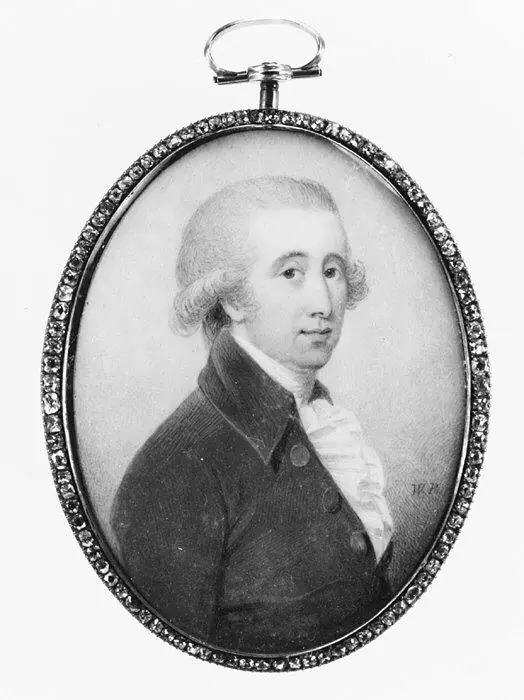
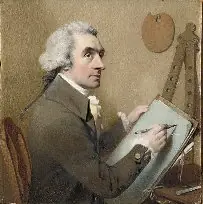
William Pether (c. 1739 – 19 July 1821) was primarily an English mezzotint engraver, but also decorated porcelain, made oil paintings and pastel drawings, and invented gadgets.