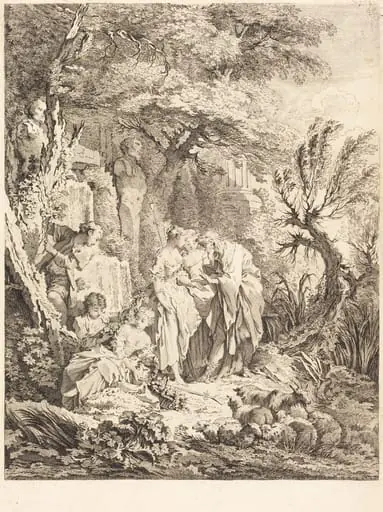
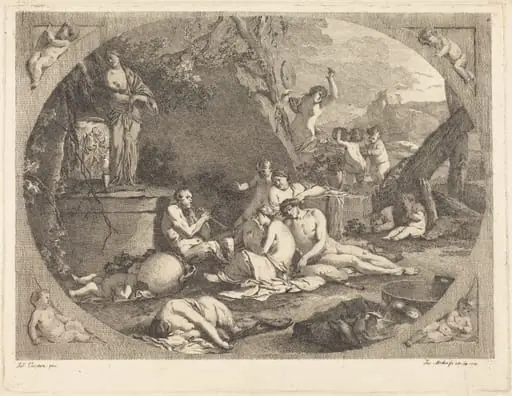
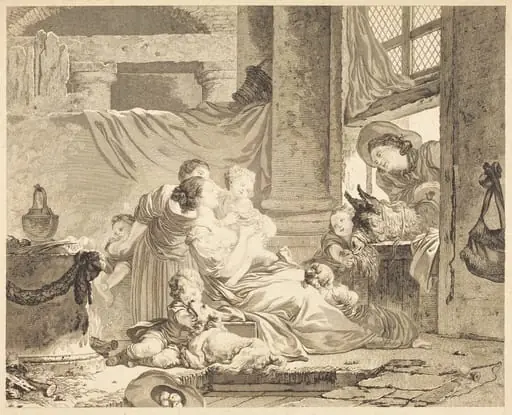
Artwork
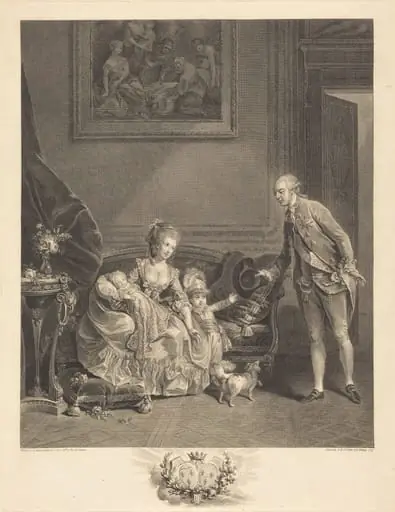
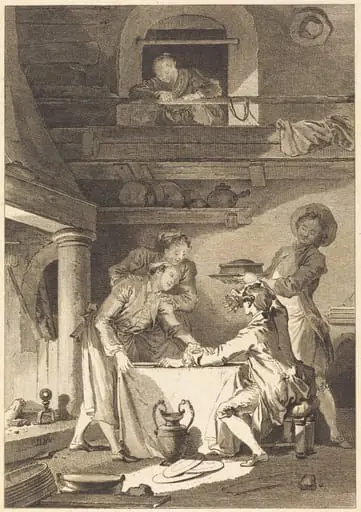
Le lever de la mariée russe (Custom of the Russians after the Marriage Ceremony and before the Wedding Feast)
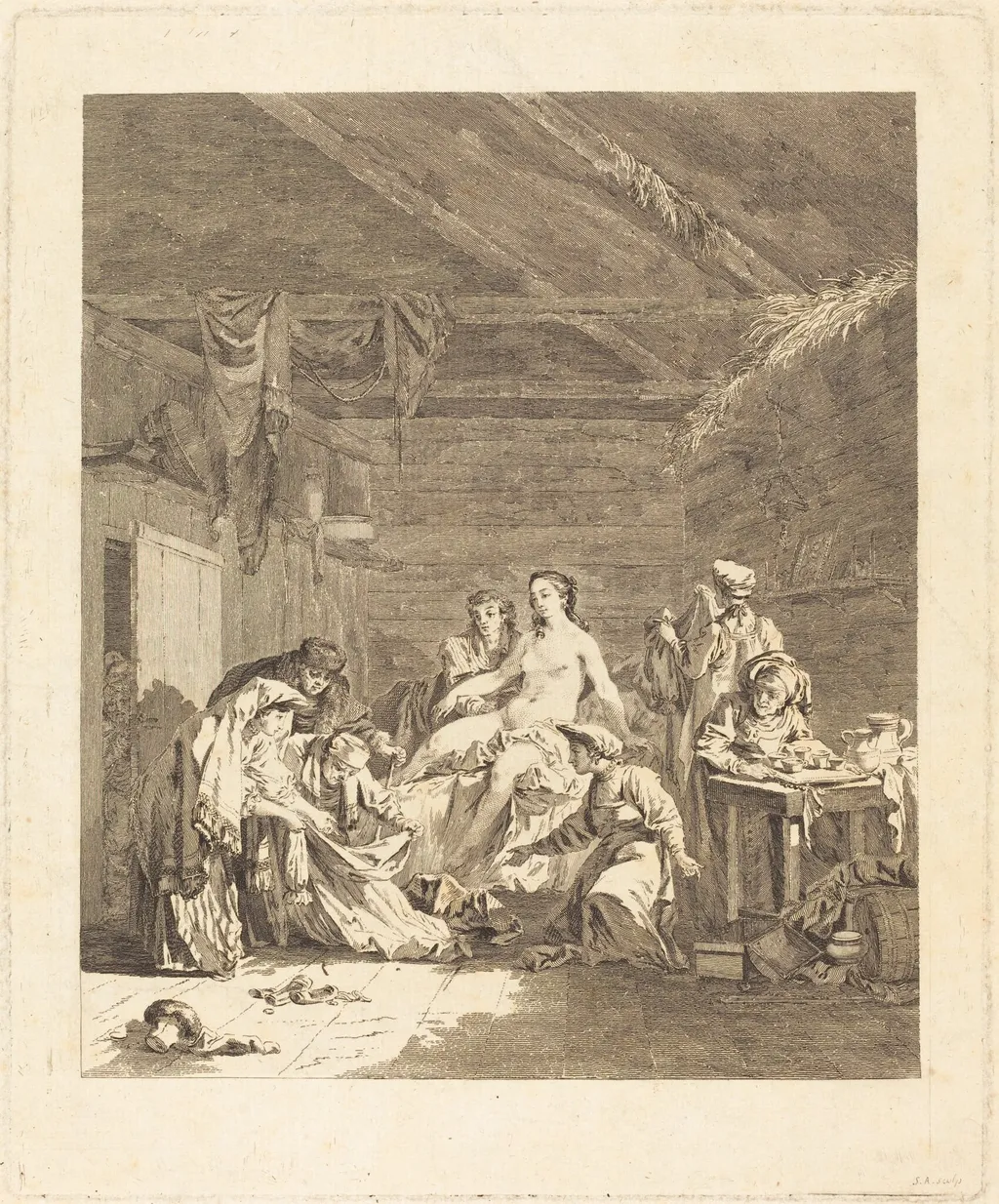
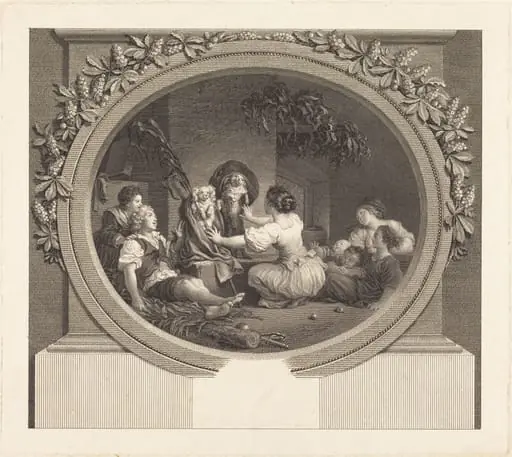
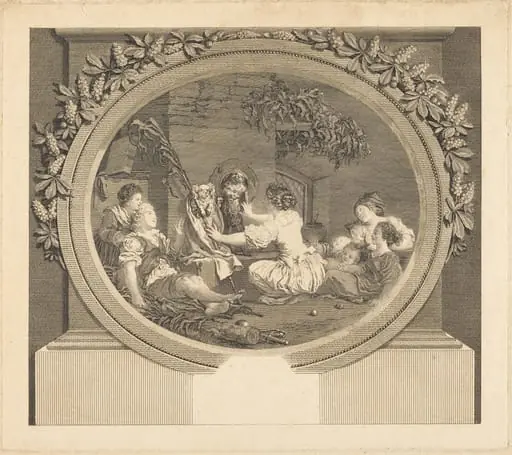
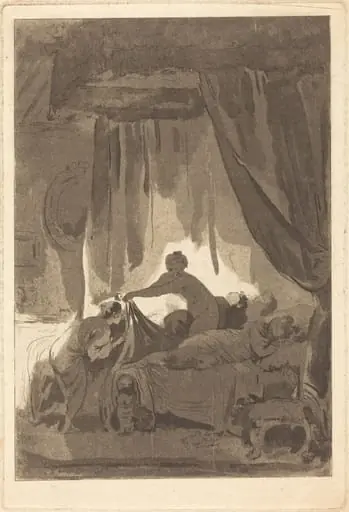
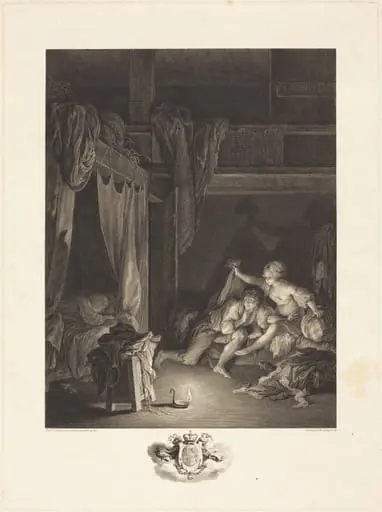
Le lever de la mariée russe (Custom of the Russians after the Marriage Ceremony and before the Wedding Feast) is an ink print by the Baroque artist Augustin de Saint-Aubin. It dates from 1772 and is held in the collection of the National Gallery of Art.
About this work
Overview
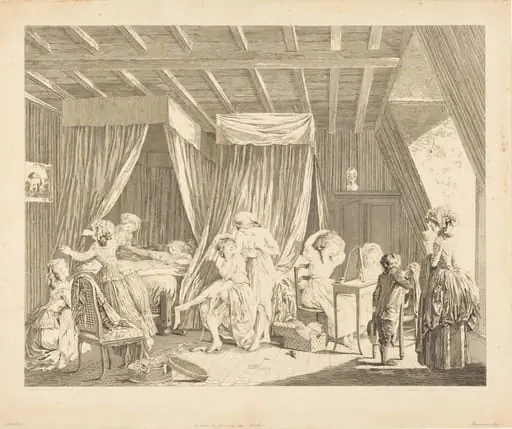
Created in 1772 by Augustin de Saint-Aubin, this etching captures a private moment in a Russian wedding ritual, following the ceremony and preceding the feast.
Created in 1772 by Augustin de Saint-Aubin, this etching captures a private moment in a Russian wedding ritual, following the ceremony and preceding the feast. As part of a broader European fascination with foreign customs, the print presents an intimate, unidealized glimpse into domestic life. Saint-Aubin, trained in the family tradition of engraving, employed fine lines and subtle tonal shifts to render a scene rich in detail and quiet narrative.
Subject & Meaning
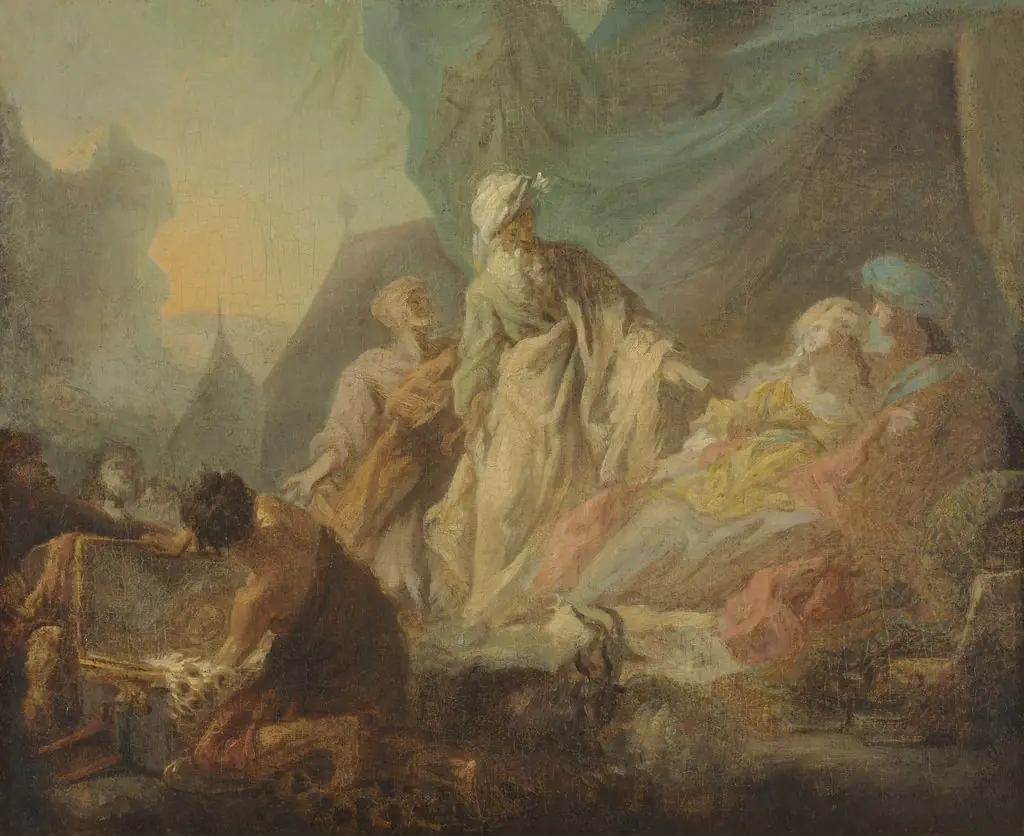
The scene portrays a bride reclining, partially undressed, as attendants engage in mundane tasks: sewing, pouring tea, and tidying. The presence of a dog, scattered garments, and a basket of fruit suggests a transitional space between ritual and celebration. Rather than glorifying the wedding, the image emphasizes the ordinary rhythms surrounding it, hinting at cultural specificity while avoiding overt symbolism or moral judgment.
Technique & Style
Executed in etching, the work demonstrates Saint-Aubin’s mastery of fine line and controlled ink tone. Delicate hatching defines fabric folds, skin texture, and the soft contours of domestic objects. The composition is crowded yet orderly, with figures arranged to guide the eye across the room. The absence of dramatic lighting or idealized forms reflects a documentary impulse, prioritizing observation over theatricality.
History & Provenance
The print was produced during a period when French artists frequently depicted foreign customs as curiosities for domestic audiences. Saint-Aubin, part of a prominent family of engravers, likely drew from published accounts or travel literature rather than firsthand experience. Its survival in museum collections suggests it was valued as an example of refined graphic art, not as ethnographic documentation.
Context
In late 18th-century Europe, interest in non-Western rituals flourished among the educated classes, often filtered through exoticized lenses. Saint-Aubin’s etching aligns with this trend, yet avoids caricature. The domestic setting and unglamorous activity suggest a more grounded approach than contemporary Orientalist fantasies, reflecting a growing appetite for realism in printmaking, even when depicting distant cultures.
Legacy
Though not widely reproduced or celebrated in its time, the etching remains a quiet example of how French engravers engaged with global customs through meticulous draftsmanship. It contributes to a broader archive of pre-modern visual ethnography, valued today for its unembellished observation and technical precision rather than its subject matter’s novelty.
Artist & collection
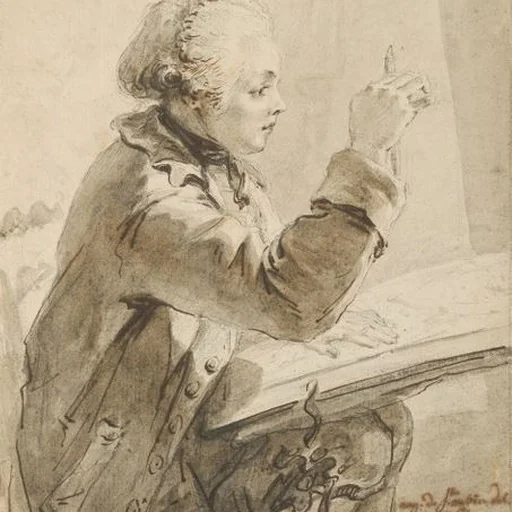
Artist
Augustin de Saint-Aubin sometimes styled Auguste de Saint-Aubin (3 January 1736 – 9 November 1807), belongs to an important dynasty of French designers and engravers.