Artwork
Madame Kitty (Femeie din regiunea Fouesnant/Pont-Aven)
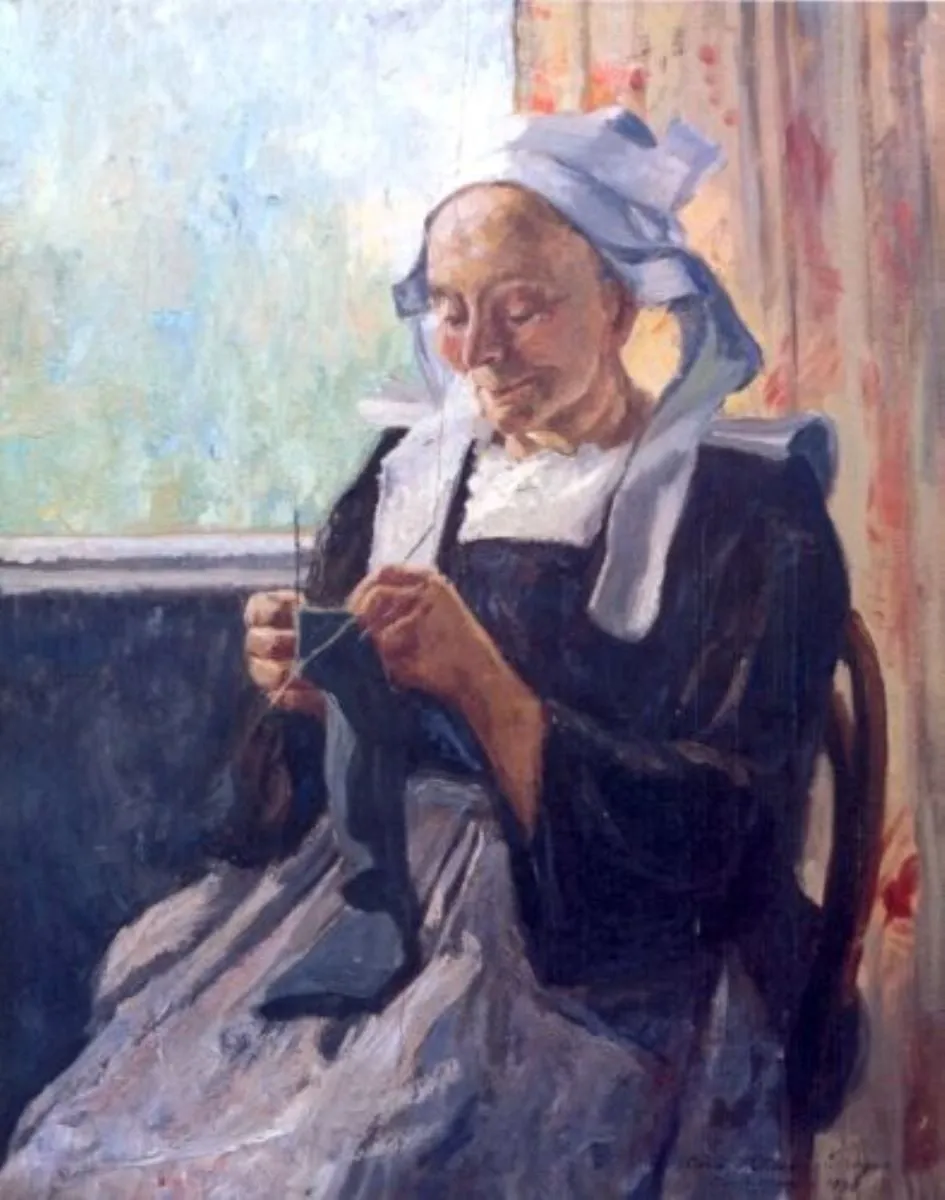
Madame Kitty (Femeie din regiunea Fouesnant/Pont-Aven) is an unspecified painting by Constantin Petrescu-Dragoe. It dates from 1930 and is held in the collection of the National Museum of Art of Romania.
About this work
Overview
The blurred face and soft lighting invite contemplation rather than identification, aligning the work with introspective genre painting of the interwar period.
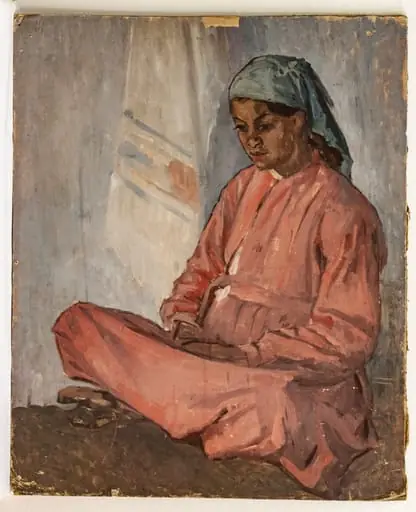
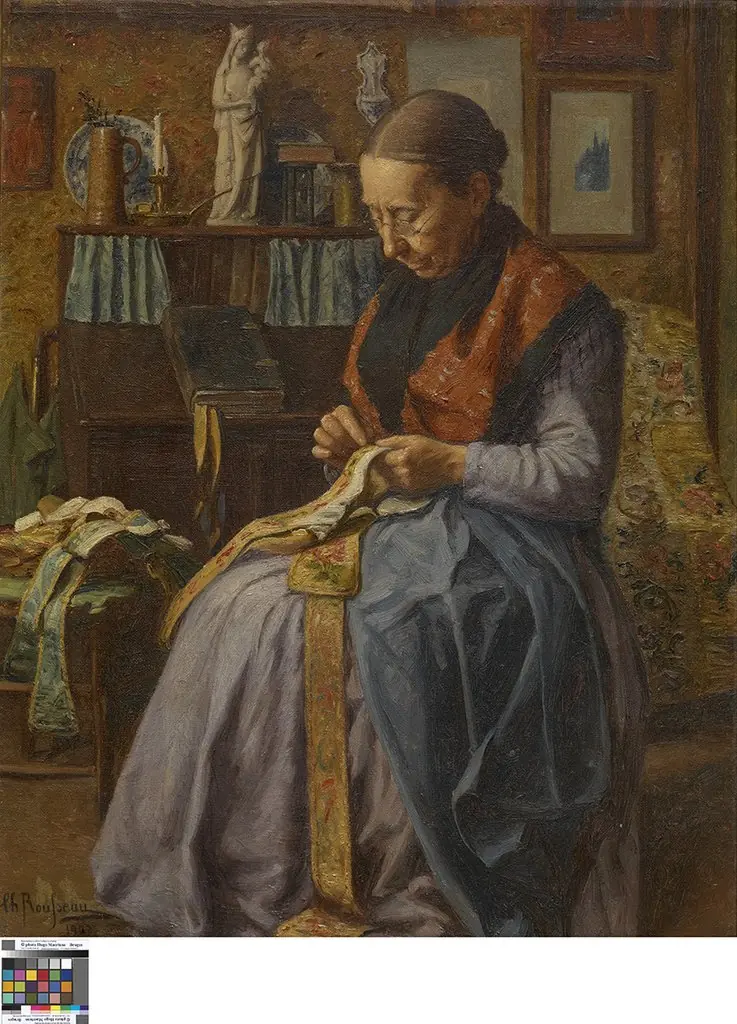
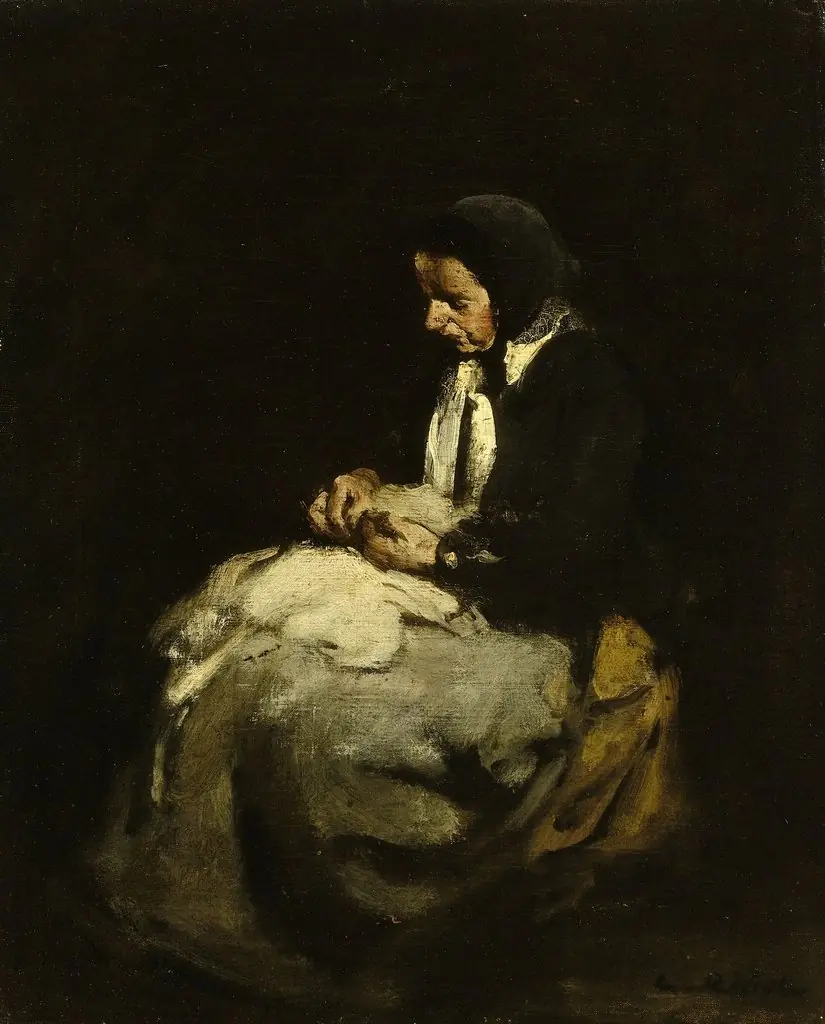
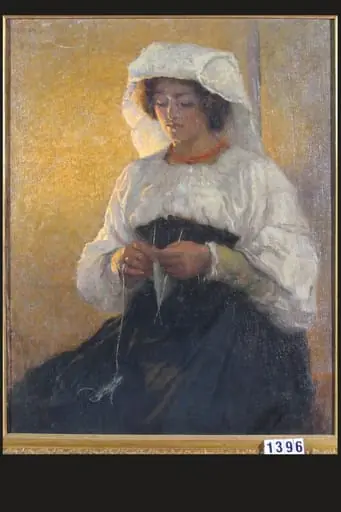
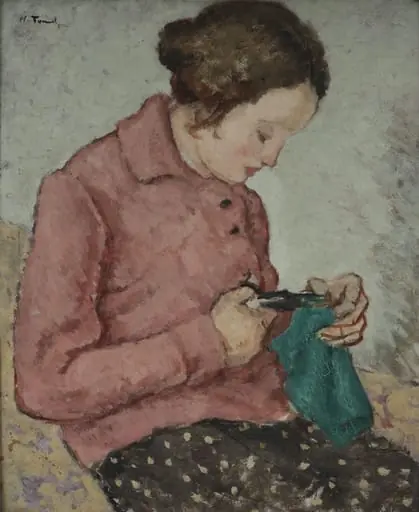
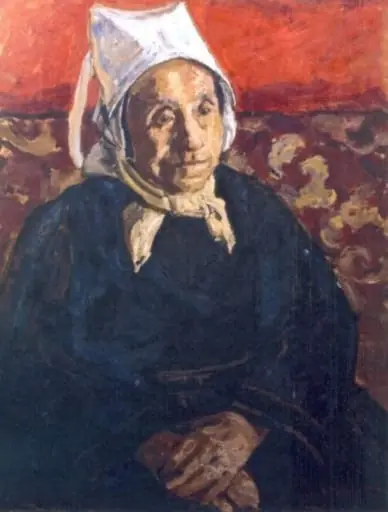
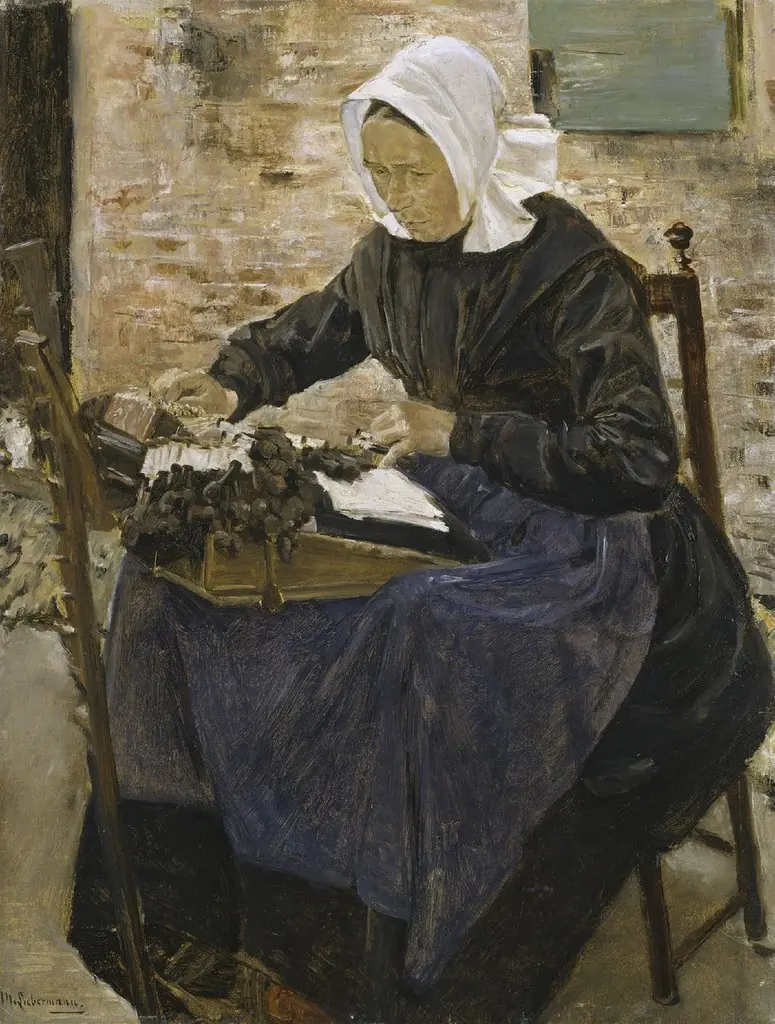
Painted in 1930 by Constantin Petrescu-Dragoe, this portrait captures a woman from the Fouesnant-Pont-Aven region engaged in quiet domestic labor. The composition centers on her seated form, rendered with restrained detail and a muted palette, emphasizing stillness over narrative. The blurred face and soft lighting invite contemplation rather than identification, aligning the work with introspective genre painting of the interwar period.
Subject & Meaning
The subject, identified as Madame Kitty, is depicted knitting—a routine act rendered with solemn focus. Her attire, a black dress with white collar and headscarf, suggests regional dress or mourning, though no specific cultural context is confirmed. The absence of facial detail shifts emphasis from identity to the rhythm of labor, evoking themes of solitude, endurance, and the quiet dignity of everyday tasks.
Technique & Style
Petrescu-Dragoe employs subtle chiaroscuro to model form without dramatic contrast, softening edges to blur the woman’s features while defining her hands and the texture of her clothing. The background, a plain wall with a window, recedes into muted tones, isolating the figure. Brushwork is deliberate but unobtrusive, favoring atmospheric cohesion over fine detail, reinforcing the painting’s meditative tone.
History & Provenance
The painting’s early history is undocumented beyond its creation in 1930. It was likely produced during the artist’s time in Brittany, where he engaged with regional subjects. No exhibition records or ownership trails from the 1930s are publicly known. Its current location and acquisition history remain unverified in accessible archives.
Context
Created during a period when European artists increasingly turned to rural life and domestic scenes, the work reflects broader trends in interwar realism. Unlike the bold stylizations of Post-Impressionism, Petrescu-Dragoe’s approach is subdued, aligning with quieter, psychologically oriented portraiture. The choice of a Breton woman as subject situates the piece within regionalist currents, though without overt folkloric embellishment.
Legacy
The painting remains a lesser-known work within the artist’s oeuvre, with limited scholarly attention. It contributes to a body of interwar portraits that prioritize emotional resonance over spectacle. Its quiet intensity has not been widely reproduced or exhibited, preserving its status as a private, introspective study rather than a public statement.
Artist & collection
Artist
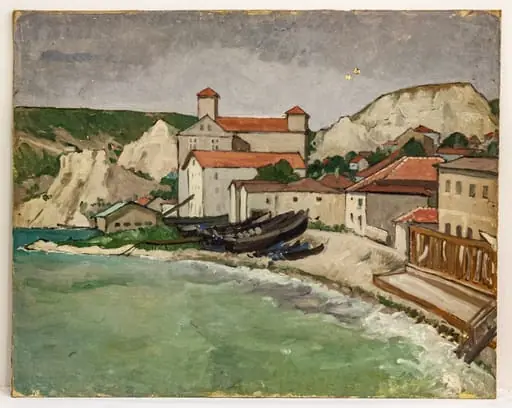
Constantin Petrescu-Dragoe painted gentle scenes of everyday life and quiet landscapes around Balcic, a small town on the Black Sea coast.