Artwork
Deisis
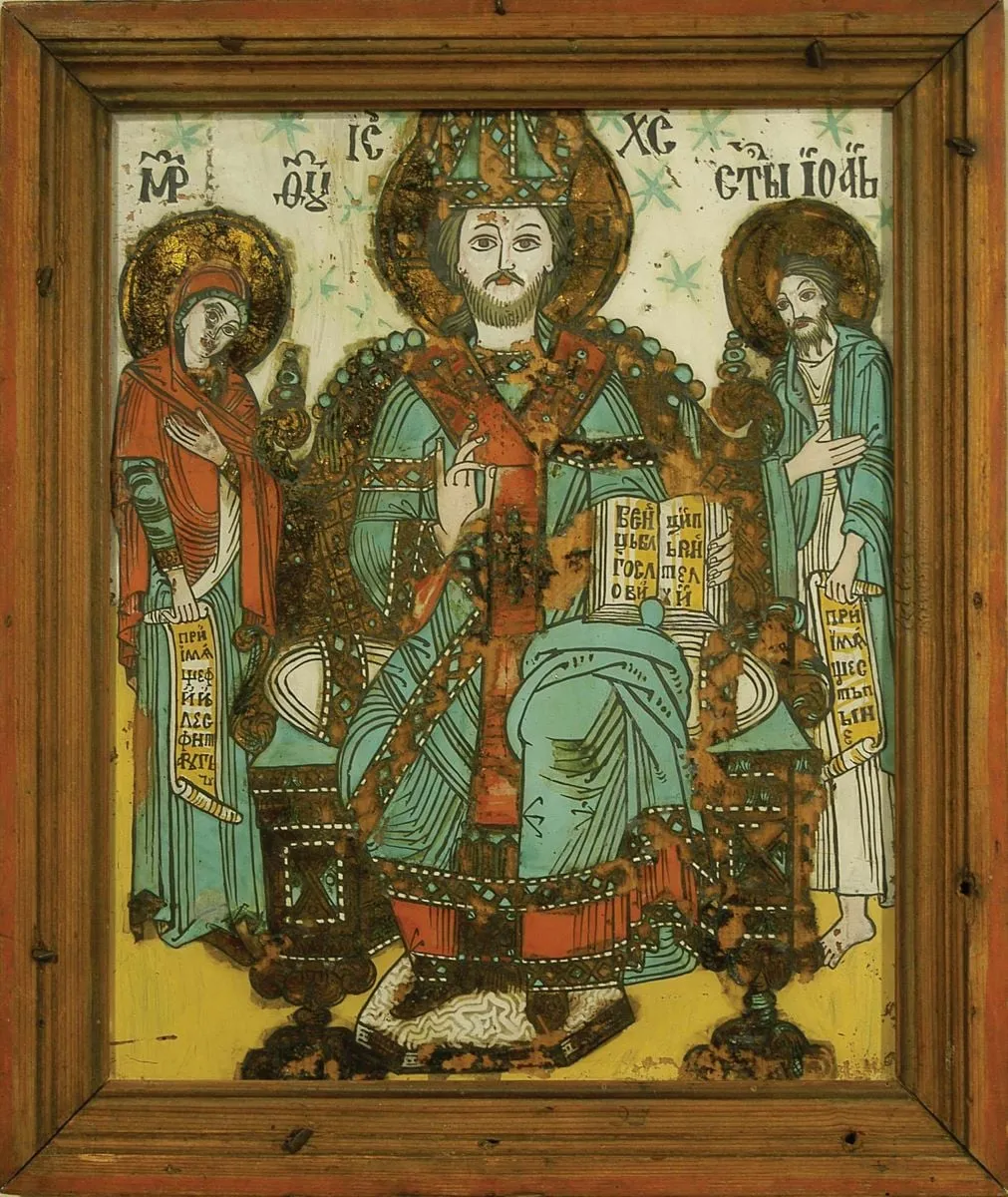
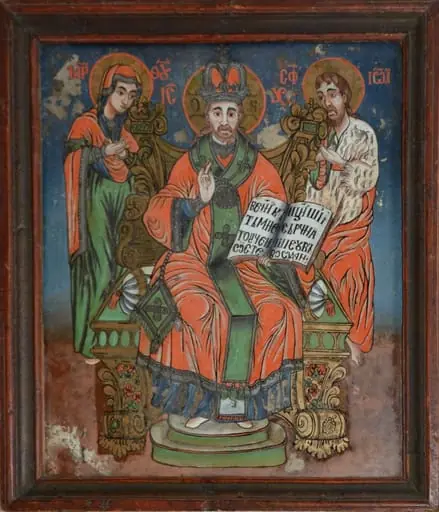
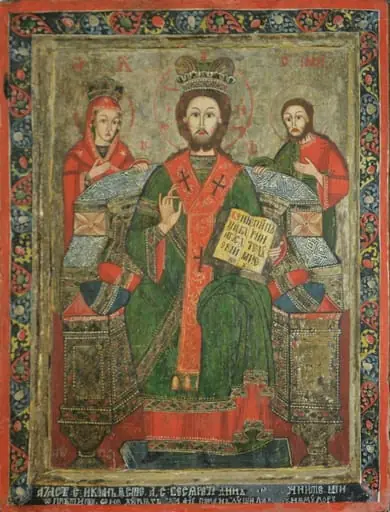
Deisis is a drawing by Petru din Topârcea. It is held in the collection of the Alba Iulia Unification National Museum. This panel depicts three standing figures arranged symmetrically against a gold background.
About this work
Overview
The composition follows a traditional tripartite structure common in Byzantine and early Orthodox iconography, emphasizing hierarchy and spiritual focus.
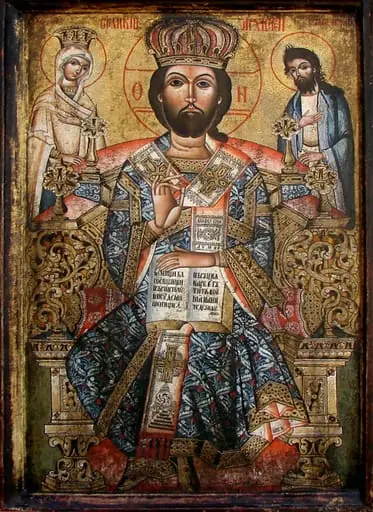
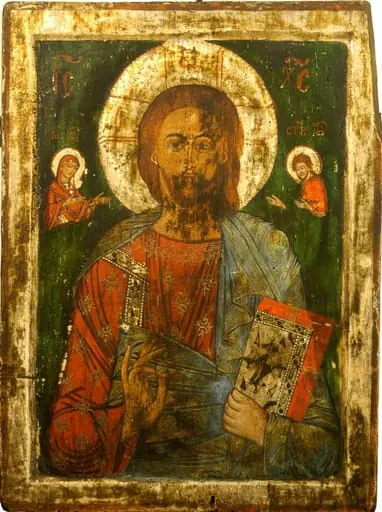
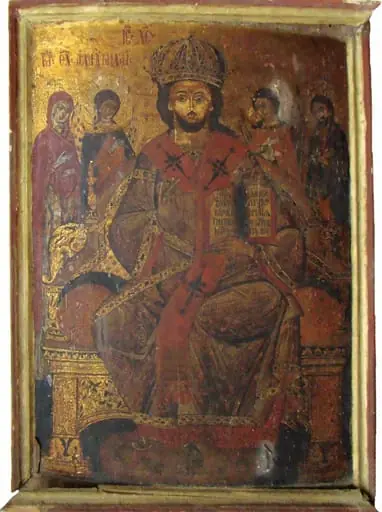
This panel depicts three standing figures arranged symmetrically against a gold background. The central figure, distinguished by a golden halo and a red robe, holds a closed book. Flanking figures, also haloed, wear contrasting robes of red and white, and blue and white. The composition follows a traditional tripartite structure common in Byzantine and early Orthodox iconography, emphasizing hierarchy and spiritual focus.
Subject & Meaning
The central figure likely represents Christ Pantocrator, identified by the halo and book symbolizing divine authority. The figures on either side are traditionally interpreted as the Virgin Mary and John the Baptist, interceding on behalf of humanity. Their gestures, directed toward the central figure, reflect a theological theme of supplication and divine mercy within Christian liturgical tradition.
Technique & Style
The painting employs flat, unmodulated color fields with sharp outlines, characteristic of medieval icon painting. Gold leaf outlines define the contours of garments, enhancing luminosity and spiritual presence. The background, entirely gilded, eliminates spatial depth, directing attention to the figures. The inscriptions, rendered in an unfamiliar script, suggest liturgical or symbolic text, possibly Greek or Slavonic.
History & Provenance
The work originates from the Byzantine or post-Byzantine tradition, likely produced in a monastic workshop between the 12th and 15th centuries. Its preservation in a religious context is probable, given its iconographic form. Exact provenance remains undocumented, but similar panels were commonly used in church iconostases or private devotional settings across Eastern Orthodox regions.
Context
This image belongs to a broader category of religious art designed for veneration rather than narrative storytelling. The rigid frontal poses, lack of perspective, and symbolic color use reflect theological priorities over naturalism. Such icons were central to Orthodox worship, serving as mediators between the faithful and the divine, reinforcing doctrinal themes through visual constancy across centuries.
Legacy
The Deisis composition became a standard in Eastern Christian art, influencing icon production for centuries. Its structural clarity and spiritual emphasis were adopted in regions from Constantinople to Russia. Though stylistic details evolved, the core arrangement of Christ flanked by intercessors remained unchanged, underscoring its enduring role in liturgical and devotional life.
Artist & collection
Artist
This Romanian artist painted vivid religious scenes on wood—think bold colors against dark backgrounds, fine linework, and ornate frames.
Museum
Alba Iulia Unification National Museum
Continue through works from the same source collection.
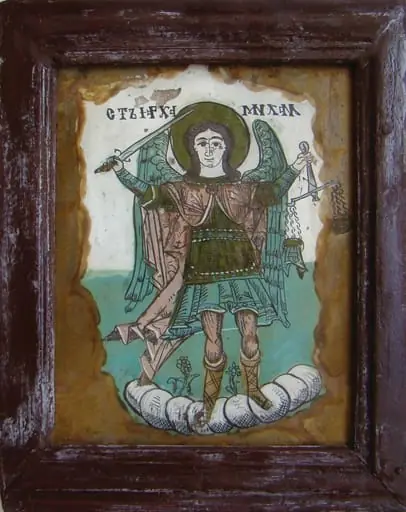 Arhanghelul Mihail
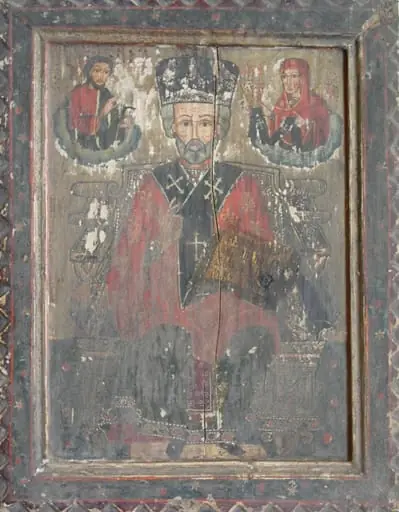 Sf. Nicolae
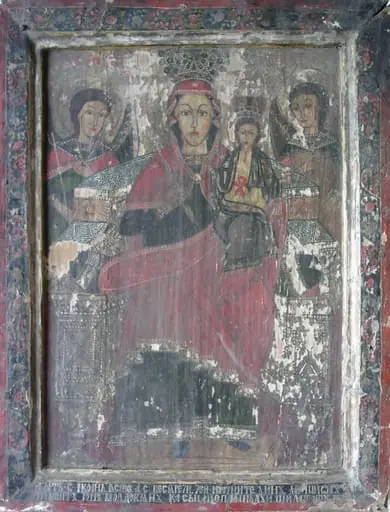 Maica Domnului cu Pruncul
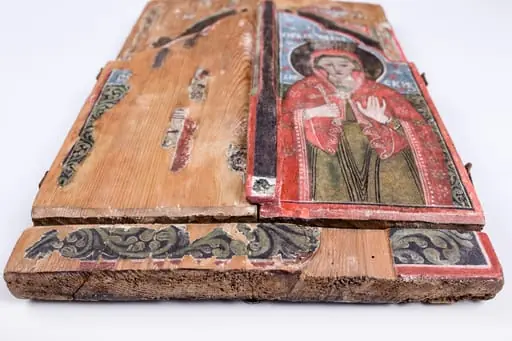 Tripticul de față are pe laterala din stângă o icoană, care o reprezintă pe Sfânta Mare Cuvioasă Parascheva din Epivat, Tracia, cu Sfintele Moaște la Iași. Are crucea în mâna dreaptă și o ramură de finic în mâna stângă. Este îmbrăcată în cămașă lungă albă - sacos, acoperit cu veșmânt roșu vermillon, cu interiorul căptușit cu verde și griuri. Maforiomul este închis la gât cu o broșă - fibulă. Peste maforionul roșu, sfânta cuvioasă are coroniță și aureolă. Fondul icoanei este cerul albastru de un ton cobalt, cu stele roșii. Icoana este foarte frumos realizată artistic și estetic, finețea nuanțelor cromatice și expresivitatea sfintei cuvioase remarcându-se într-un mod deosebit. Inscripția din româno-chrilică se traduce Sf Parascheva. Cromatica este armonioasă: roșu, albastru, verde, gri, negru, alb.
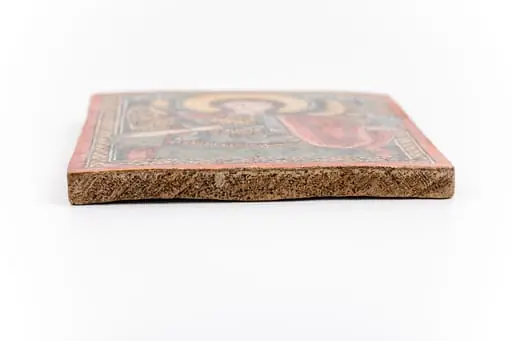 Sfântul Arhanghel Mihail este unul dintre mai-marii voievozi ai oștilor cerești. Sfântul Arhanghel Mihail este numit slujitorul Legii. Este îmbrăcat în haine de oștean militar, cavaler, cu cămașă verde, vestă de zale, cu solzi aurii, cu tunică și mantie roșie-vermillon. Ține în mâna dreaptă spada de război ridicată, fiind un sfânt luptător și apărător al Creștinismului și în mâna stângă Potirul pictat cu nuanțe de negru-gri-alb, pentru a arăta argintul. Are aureolă și aripi ocru-galbene. Fondul icoanei este negru. Icoana are un chenar decorativ geometrizant, bogat ornamentat, format dintr-un lanț împletit de romburi ondulatorii, pictate cu roșu și galben alternativ. Rama pictată din aceeași bucată de lemn a icoanei este roșie-cărămizie. Trăsăturile feței sunt foarte fin realizate, cu minuțiozitatea detaliului. Cromatica armonioasă este alcătuită din: roșu-vermillon, cărămiziu, ocru-galben, verde, gri,brun-roșcat, alb, bej, negru, acajou. Inscripția din româno-chirilică se traduce Sfântul Arhanghel Mihail.
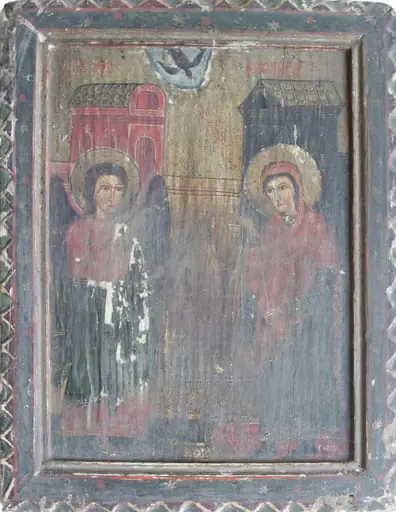 Buna Vestire
 Deisis
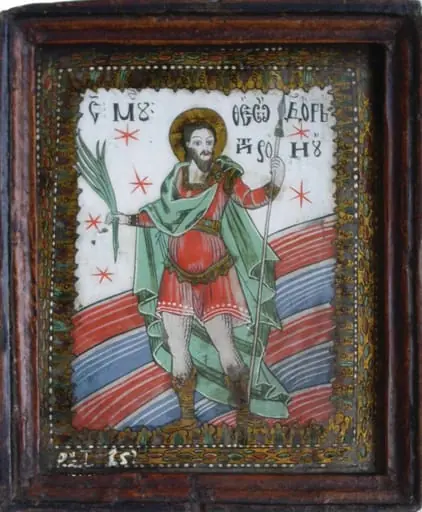 Sf. Teodor Tiron