Artwork
Tripticul de față are pe laterala din stângă o icoană, care o reprezintă pe Sfânta Mare Cuvioasă Parascheva din Epivat, Tracia, cu Sfintele Moaște la Iași. Are crucea în mâna dreaptă și o ramură de finic în mâna stângă. Este îmbrăcată în cămașă lungă albă - sacos, acoperit cu veșmânt roșu vermillon, cu interiorul căptușit cu verde și griuri. Maforiomul este închis la gât cu o broșă - fibulă. Peste maforionul roșu, sfânta cuvioasă are coroniță și aureolă. Fondul icoanei este cerul albastru de un ton cobalt, cu stele roșii. Icoana este foarte frumos realizată artistic și estetic, finețea nuanțelor cromatice și expresivitatea sfintei cuvioase remarcându-se într-un mod deosebit. Inscripția din româno-chrilică se traduce Sf Parascheva. Cromatica este armonioasă: roșu, albastru, verde, gri, negru, alb.
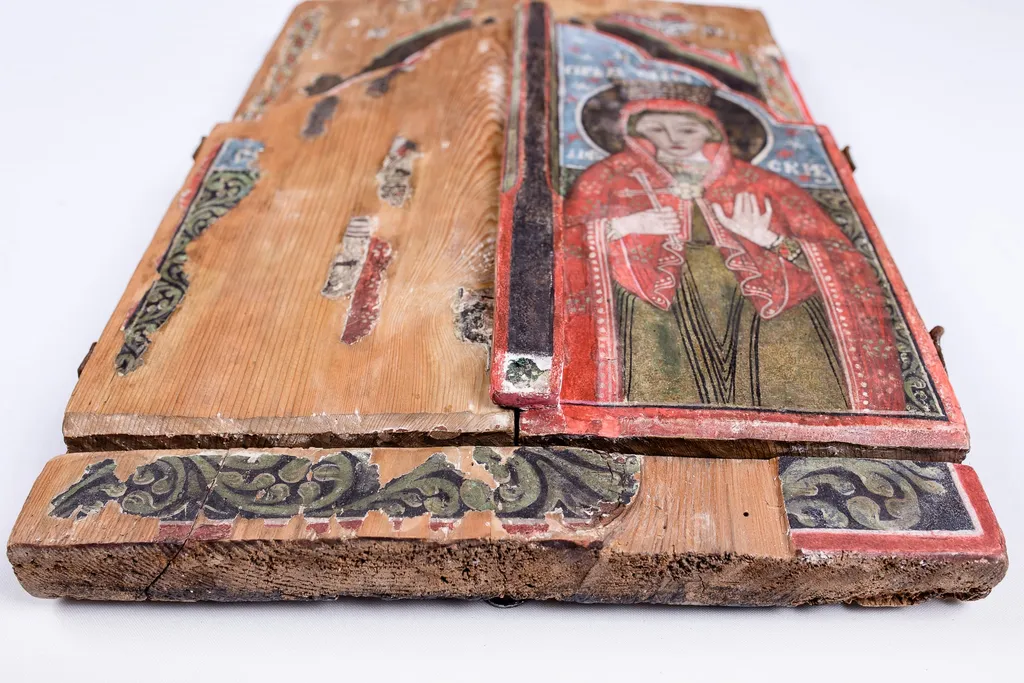
Tripticul de față are pe laterala din stângă o icoană, care o reprezintă pe Sfânta Mare Cuvioasă Parascheva din Epivat, Tracia, cu Sfintele Moaște la Iași. Are crucea în mâna dreaptă și o ramură de finic în mâna stângă. Este îmbrăcată în cămașă lungă albă - sacos, acoperit cu veșmânt roșu vermillon, cu interiorul căptușit cu verde și griuri. Maforiomul este închis la gât cu o broșă - fibulă. Peste maforionul roșu, sfânta cuvioasă are coroniță și aureolă. Fondul icoanei este cerul albastru de un ton cobalt, cu stele roșii. Icoana este foarte frumos realizată artistic și estetic, finețea nuanțelor cromatice și expresivitatea sfintei cuvioase remarcându-se într-un mod deosebit. Inscripția din româno-chrilică se traduce Sf Parascheva. Cromatica este armonioasă: roșu, albastru, verde, gri, negru, alb. is a drawing by Petru din Topârcea. It is held in the collection of the ASTRA National Museum Complex. This wooden triptych features a central panel depicting Saint Parascheva of Epivat, a venerated ascetic from Thrace.
About this work
Overview
This wooden triptych features a central panel depicting Saint Parascheva of Epivat, a venerated ascetic from Thrace. The other panels are not described, but the central image is rendered with refined detail on a deep blue background marked by red stars. The figure is inscribed in Romanian-Chilic script as 'Sf Parascheva,' identifying her clearly within Orthodox devotional tradition.
Subject & Meaning
Saint Parascheva is portrayed with symbolic attributes common in Eastern Christian iconography: a cross in her right hand signifies her faith and martyrdom, while the palm branch in her left denotes victory over death. The crown and aureole mark her sanctity, and her attire reflects both monastic humility and royal dignity, aligning her with the tradition of holy women who embraced asceticism as a form of spiritual sovereignty.
Technique & Style
The background’s star-studded sky suggests celestial presence without narrative distraction.
The painting employs a harmonious palette of vermilion red, cobalt blue, green, gray, black, and white, applied with subtle gradations that enhance the figure’s three-dimensionality. The robe’s green lining and gray undertones add depth, while the fibula securing the mantle and the delicate rendering of the crown reflect careful attention to textile and metallic detail. The background’s star-studded sky suggests celestial presence without narrative distraction.
History & Provenance
The triptych originates from Moldavian religious art traditions, likely produced in the 17th or 18th century for private or monastic devotion. Its worn edges and faded paint indicate prolonged liturgical use. The presence of Saint Parascheva’s relics in Iași suggests the work may have been commissioned in connection with her cult center there, reinforcing regional devotional practices.
Context
Saint Parascheva was widely venerated in Romanian lands, especially after her relics were translated to Iași in the 17th century. Triptychs like this served as portable altarpieces, used in homes or chapels for daily prayer. The inclusion of celestial symbols and specific iconographic elements aligns this work with broader Byzantine and post-Byzantine models, adapted to local theological and aesthetic sensibilities.
Legacy
This triptych exemplifies the enduring visual language of Orthodox hagiography in Moldavia. Its preservation, despite wear and pigment degradation, underscores the continued reverence for Saint Parascheva in Romanian religious culture. The work remains a tangible link to pre-modern devotional practices, where art functioned not merely as decoration but as a conduit for spiritual encounter.
Artist & collection
Artist
This Romanian artist painted vivid religious scenes on wood—think bold colors against dark backgrounds, fine linework, and ornate frames.

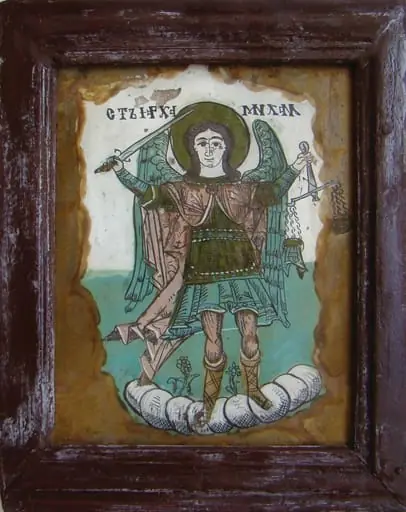 Arhanghelul Mihail
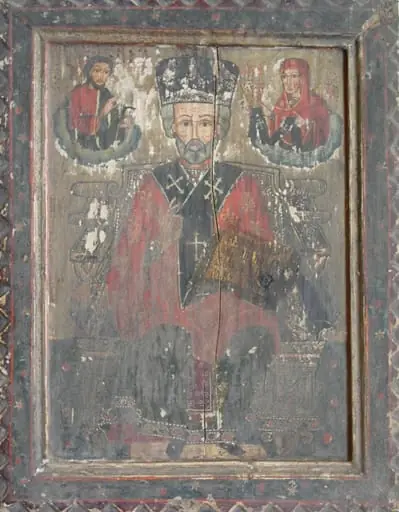 Sf. Nicolae
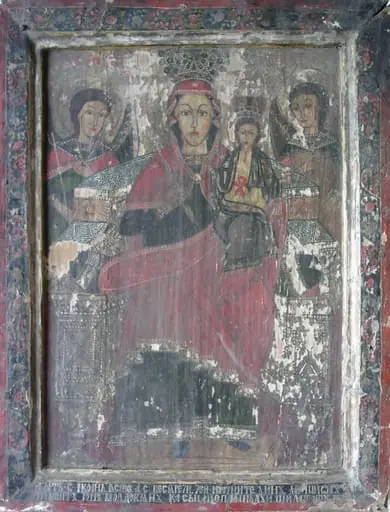 Maica Domnului cu Pruncul
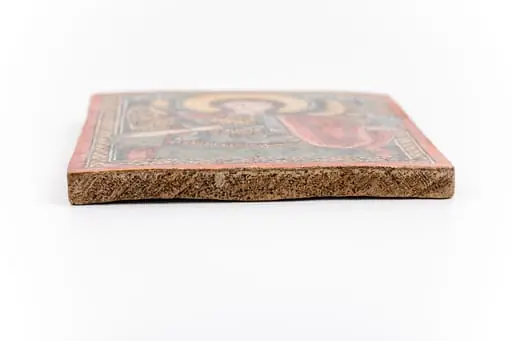 Sfântul Arhanghel Mihail este unul dintre mai-marii voievozi ai oștilor cerești. Sfântul Arhanghel Mihail este numit slujitorul Legii. Este îmbrăcat în haine de oștean militar, cavaler, cu cămașă verde, vestă de zale, cu solzi aurii, cu tunică și mantie roșie-vermillon. Ține în mâna dreaptă spada de război ridicată, fiind un sfânt luptător și apărător al Creștinismului și în mâna stângă Potirul pictat cu nuanțe de negru-gri-alb, pentru a arăta argintul. Are aureolă și aripi ocru-galbene. Fondul icoanei este negru. Icoana are un chenar decorativ geometrizant, bogat ornamentat, format dintr-un lanț împletit de romburi ondulatorii, pictate cu roșu și galben alternativ. Rama pictată din aceeași bucată de lemn a icoanei este roșie-cărămizie. Trăsăturile feței sunt foarte fin realizate, cu minuțiozitatea detaliului. Cromatica armonioasă este alcătuită din: roșu-vermillon, cărămiziu, ocru-galben, verde, gri,brun-roșcat, alb, bej, negru, acajou. Inscripția din româno-chirilică se traduce Sfântul Arhanghel Mihail.
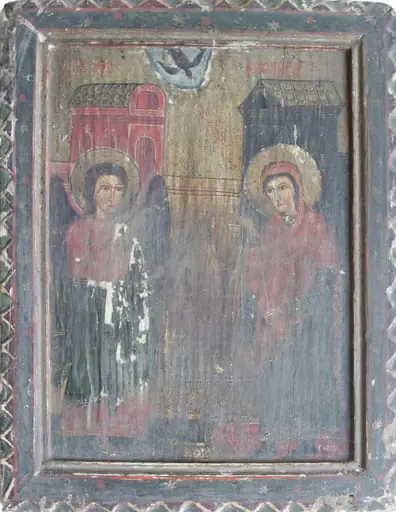 Buna Vestire
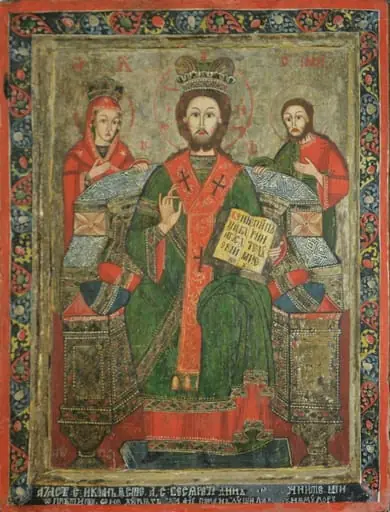 Deisis
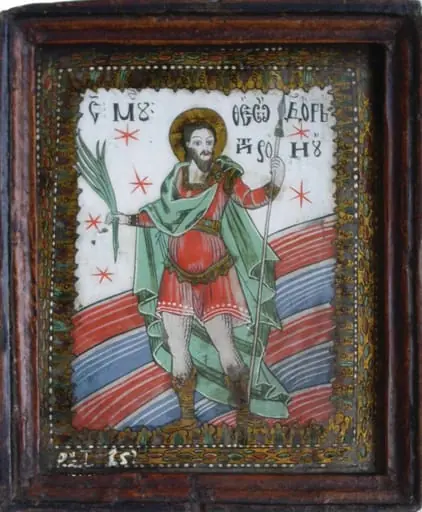 Sf. Teodor Tiron
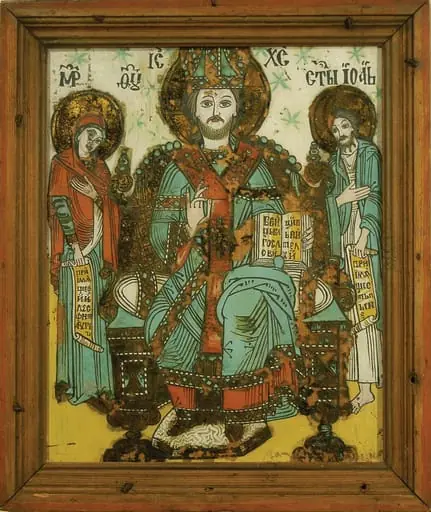 Deisis
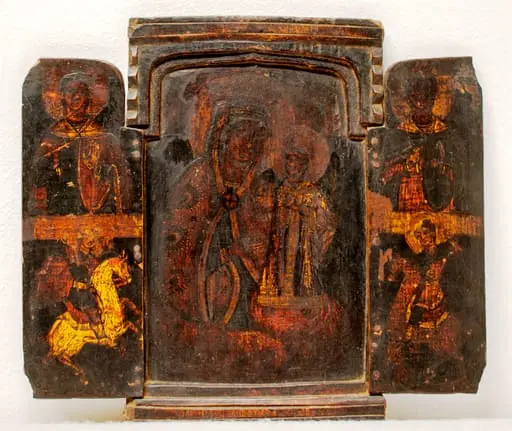 Pe panoul central este reprezentată Maica Domnului Hodighitria(Călăuzitoarea). Pruncul stă în picioare, amândoi fiind înveșmântați în straie împărătești. Maica ține Pruncul cu mâna stângă, cu dreapta arată către El. Voleul stâng, jumătatea inferioară - Sfântul Gheorghe călare pe cal alb. Înveșmântat în costum românesc de oștean medieval, mantie roșie. Calul cu picioarele din față ridicate, harnașament de culoare roșie. Deasupra e posibil să fie tot sfântul Gheorghe, în stânga ținând crucea, cu dreapta face gestul păcii, al liniștii.(prin analogie cu 34530). Simetric, pe latura dreaptă a tripticului se află jos, Sf. Dumitru, călare pe cal roșu, în poziție asemănătoare cu a SF. Gheorghe, iar sus probabil tot el, în altă ipostază iconografică(analogie) . Veșmintele au culorile inversate(tunica roșie -dreapta, albastru-stânga, mantie roșu -stânga, albastru - dreapta), la fel la sfinții războinici, probabil în legătură cu reprezentarea populară a timpului. Inițial, tripticul se închidea, dovadă inscripția care se continuă pe cele două uși. Ulterior a fost fixat cu cuie de fier, iar prinderea se făcea cu o sfoară legată de două cuie bătute pe cant.
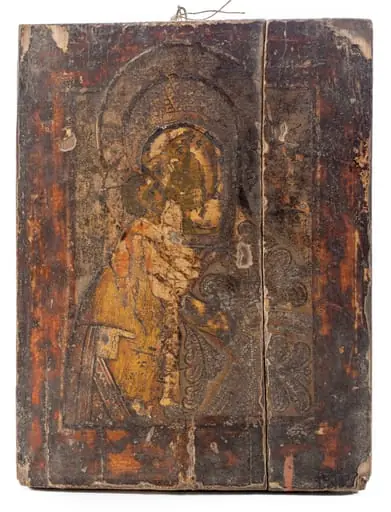 Maica Domnului cu Pruncul Iisus
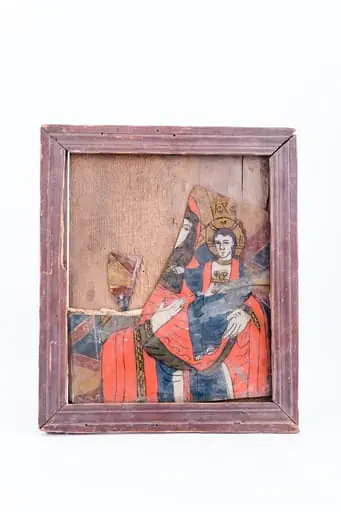 Maica Domnului ține în brațe Pruncul Iisus Hristos arătându-L ca fiind Calea, Adevărul și Viața. Este Maica Domnului Hodighitria. Maica Domnului este înveșmântată în mantie cu maforion roșu vermillon și interiorul căputușit cu albastru și sacos verde - nuanță de spanac-avocado. Pruncul Iisus Hristos este înveșmântat în albastru ceruleum, cu aureolă. Fondul icoanei este albastru cu un chenar decorativ geometrizant, format din romburi și triunghiuri albastru și ocru. Cromatică: roșu vermillon, verde, abastru, alb, ocru-brun-bronziu. Inscripția din româno-chirilică se traduce MP IC XC Maica Domnului Iisus Hristos. Icoana este de Țara Oltului. Este spartă.
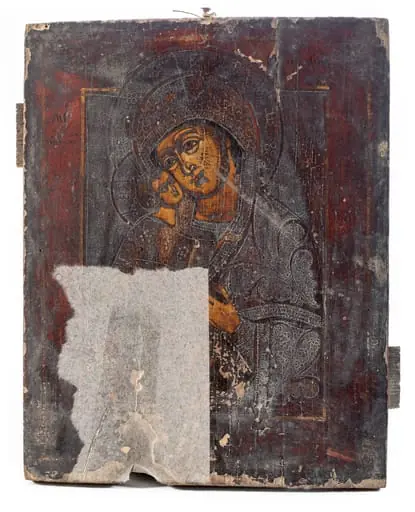 Maica Domnului cu Pruncul
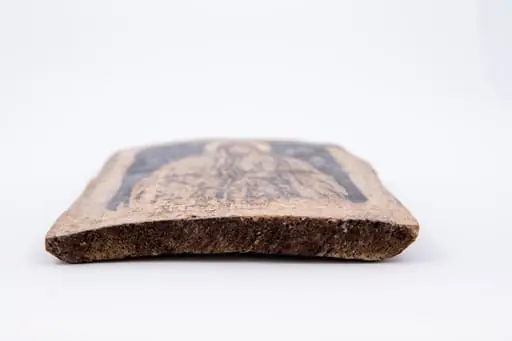 Sfânta Mare Cuvioasă Parascheva de la Iași are crucea în mâna dreaptă. Este îmbrăcată în veșmânt bej-galben-auriu, cu mantia și omoforul și maforiomul foarte largi, încăpătoare, în forma unui cort, extrapolând, până la metafora vizuală a unei mănăstiri, chiar monahismul ortodox din Moldova. Sfânta Cuvioasă Parascheva are în mâna dreaptă crucea și cu mâna stângă având palma deschisă înspre noi dăruiește har și liniște. Fondul icoanei este bleumarin închis, asemenea unei nopți întunecate cu stele luminoase albe - 12. Elementele astrale sunt desenate în crochiu sau mai stilizate, mari, de departe având forma unor păsări. De aici, reiese înrudirea monahicească cu Sfânta Cuvioasă Teodora de la Sihla, cea hrănită de păsări. Cele două cuvioase maici sfințite sunt reprezentante de seamă ale sfintelor din Moldova. Chenarul decorativ liniar este lat și de nuanța veșmântului luminos al Sfintei Parascheva. În alăturarea simbolurilor iconografice: steaua și pasărea, icoana primește o valoare semantic-teologică aparte. Icoana este deteriorată, cu absențe cromatice. Cromatica este armonioasă, dar foarte sumară: bej-galben-auriu, bleumarin, negru, alb.
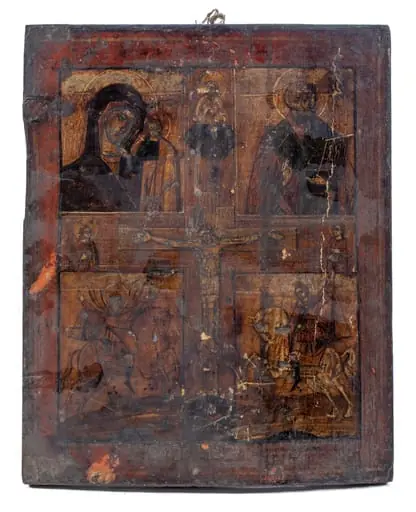 Răstignirea
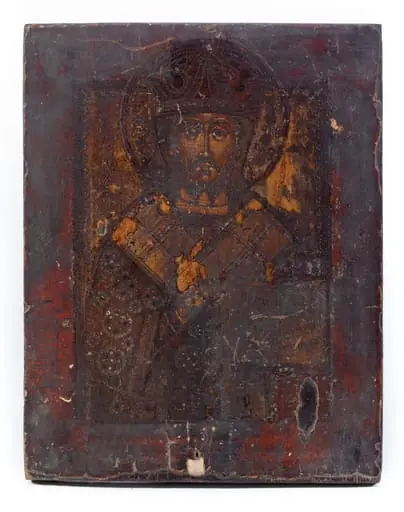 Sfântul Nicolae