Artwork
The Grand Attack on Valenciennes
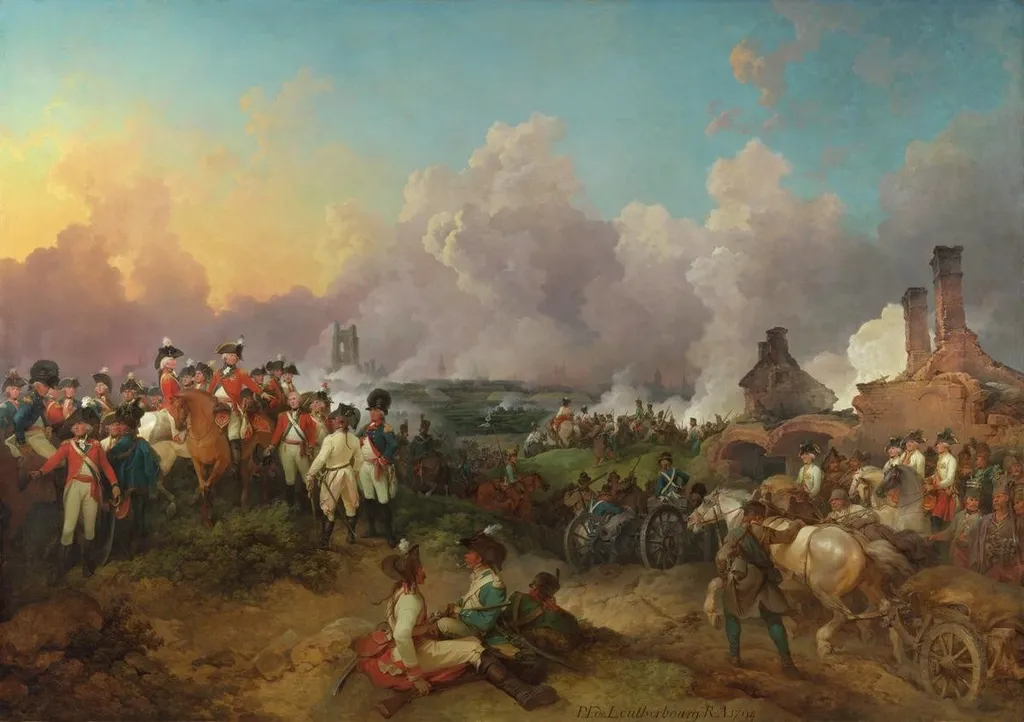
The Grand Attack on Valenciennes is an oil painting by Philip James de Loutherbourg. It dates from 1798 and is held in the collection of the Tate.
About this work
The Grand Attack on Valenciennes is an oil painting made in 1794 by Philip James de Loutherbourg.
The Grand Attack on Valenciennes is an oil painting made in 1794 by Philip James de Loutherbourg. It shows a scene from the battle when the Combined Armies moved on the town. The work is a history painting, meant to record a military event. De Loutherbourg was born in France but worked in Britain. It was created with oil paint, a common medium for large historical scenes. No specific art movement is attached to it. The canvas is part of the collection at Tate Britain.
Overview
Painted in 1794, The Grand Attack on Valenciennes is an oil-on-canvas work by Philip James de Loutherbourg, a French-born artist who spent much of his career in Britain. It depicts a military engagement during the French Revolutionary Wars, capturing the moment when allied forces advanced on the French town of Valenciennes. The painting belongs to the tradition of historical narrative art, intended to document a specific wartime event rather than convey allegory or emotion.
Subject & Meaning
The scene portrays the coordinated assault by British and allied troops on Valenciennes, a strategic French stronghold. De Loutherbourg emphasizes the scale and movement of the attack, with troops advancing under smoke and fire. The composition avoids glorification, instead focusing on the chaos and logistics of battle, reflecting an interest in recorded events over heroic mythmaking.
Technique & Style
Using oil paint on canvas, de Loutherbourg employed detailed brushwork to render uniforms, terrain, and atmospheric effects like smoke and light. The perspective is elevated, allowing a broad view of the battlefield. While not aligned with a formal movement, the style shows influence from military topography and theatrical staging, reflecting the artist’s background in stage design.
History & Provenance
Commissioned to commemorate the 1793–94 campaign, the painting entered the British national collection and is now held by Tate Britain. Its creation coincided with heightened public interest in the war effort, and it was likely displayed to reinforce national narratives around military cooperation. No significant alterations or reattributions are recorded in its documented history.
Context
Created during the early years of the French Revolutionary Wars, the painting reflects Britain’s active role in the coalition against revolutionary France. Military victories like the capture of Valenciennes were widely reported and celebrated in British media. De Loutherbourg’s work aligns with a broader trend of visual documentation of contemporary warfare, distinct from classical or mythological history painting.
Legacy
Though not widely exhibited today, the painting remains a significant example of late 18th-century British military art. It preserves a visual record of coalition tactics and battlefield conditions during a pivotal conflict. De Loutherbourg’s fusion of documentary precision and compositional clarity influenced later military painters, though his name remains less prominent than contemporaries.
Artist & collection
Artist
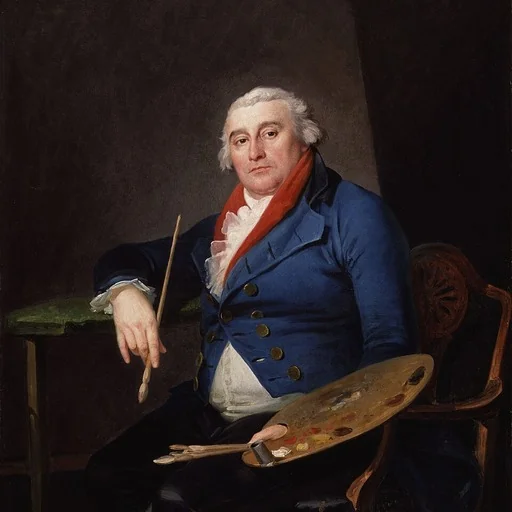
Philip James de Loutherbourg, RA (born Philippe Jacques de Loutherbourg; 31 October 1740 – 11 March 1812) was a French-born British painter who became known for his large naval works, his elaborate set designs for…

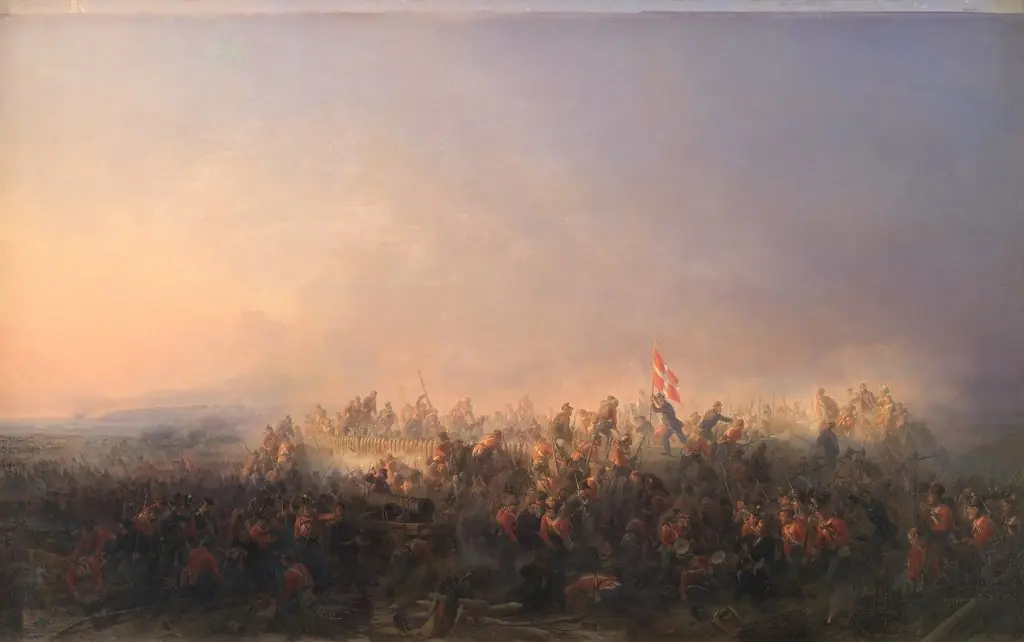 Slaget ved Fredericia den 6. juli 1849
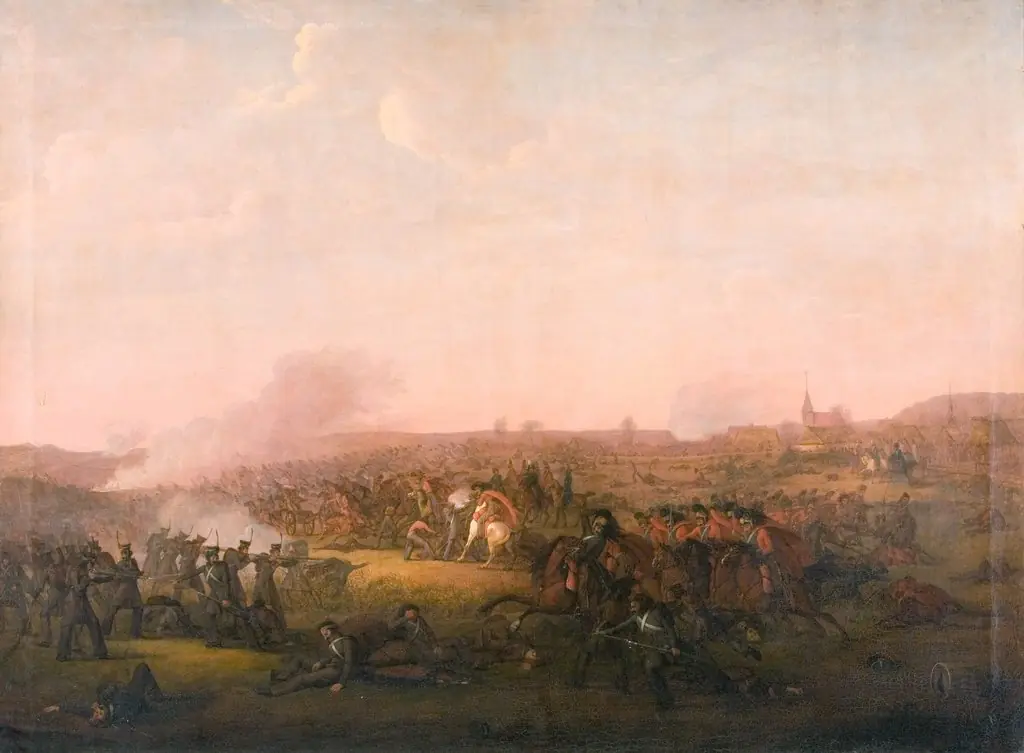 Slaget ved Sehested
 De Slag bij Bautersem, gedurende de Tiendaagse Veldtocht
 Slaget ved Fredericia den 6. juli 1849
 Battle of Novi on 4 August 1799
 La Batalla de Almansa
 Carga de caballería - Serie Usos y Costumbres de Buenos Aires
 Storming of a fortified city
 Die Schlacht bei Komorn
 Slaget ved Sehested
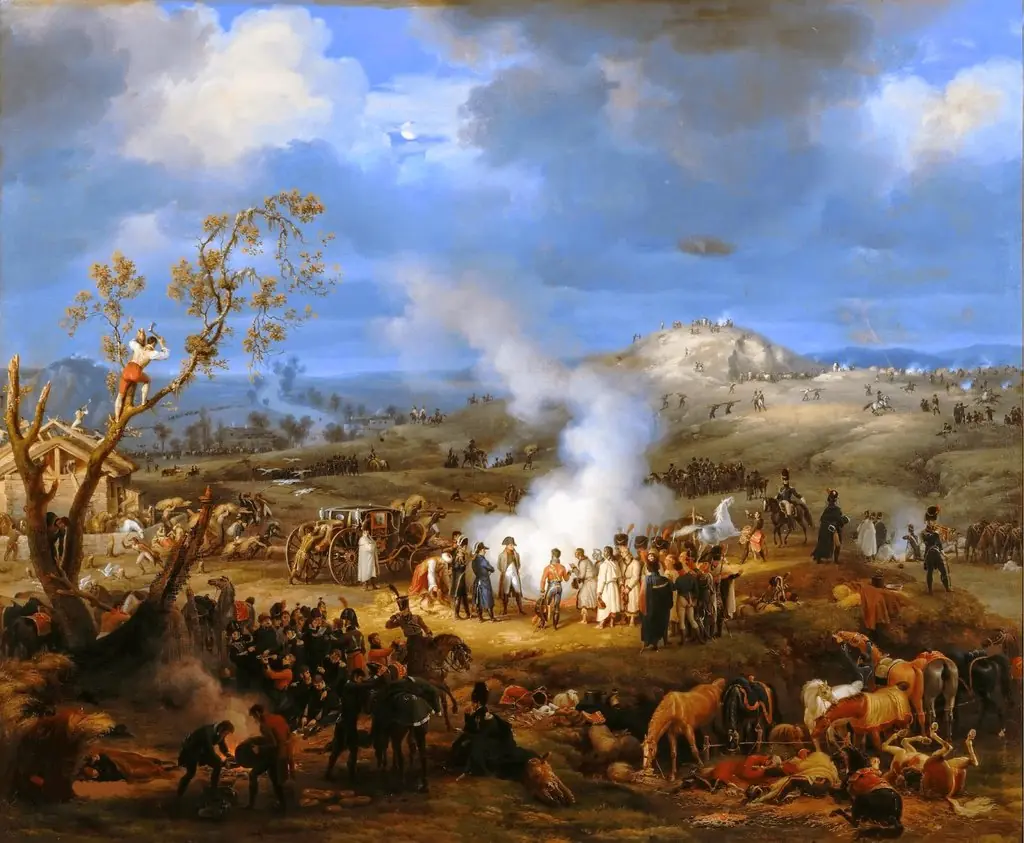 Bivouac on the Eve of the Battle of Austerlitz
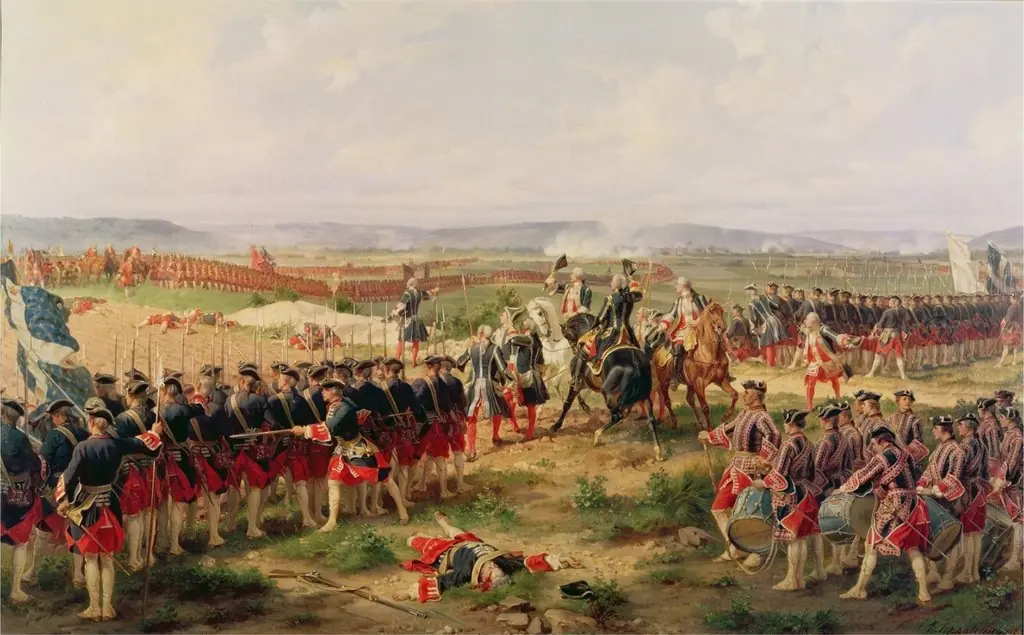 The Battle of Fontenoy, 1745: The French and the Allies Confronting Each Other