Artwork
Darjeeling. Kinchinjunga and the Snows from Beechwood Park
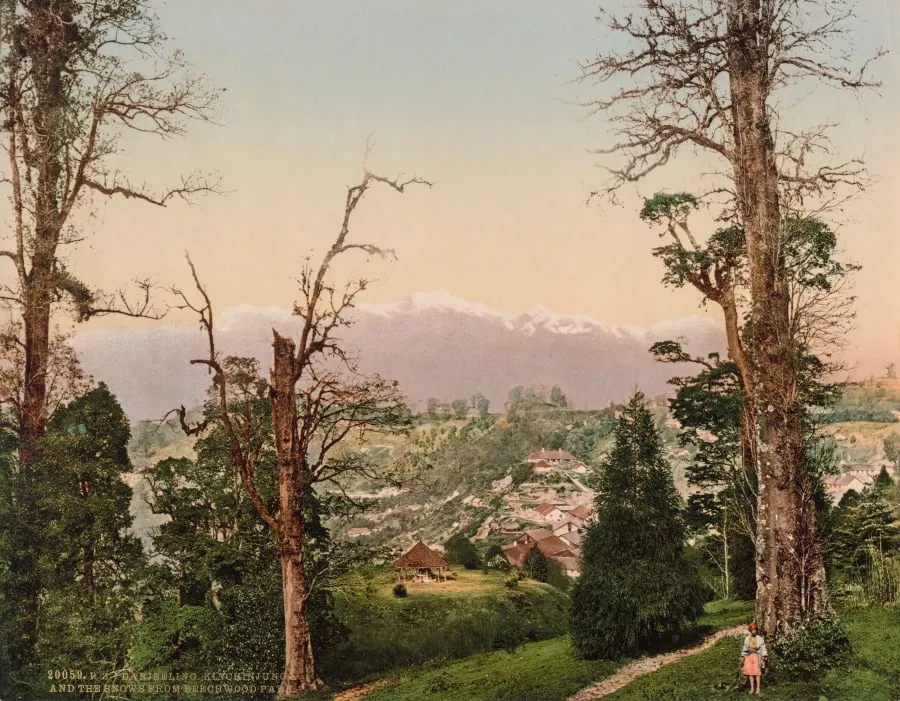
Darjeeling. Kinchinjunga and the Snows from Beechwood Park is a photography by the Impressionist artist Photoglob Co.. It dates from 1890 and is held in the collection of the Cleveland Museum of Art. The photograph presents a panoramic view of Darjeeling, a hill town perched at roughly 6,900 feet in the Indian Himalayas.
About this work
The British built Darjeeling as a cool retreat from the hot plains, and the picture was meant to show off the empire’s reach.
You’re looking down at a hillside town with red roofs, a white church steeple, and a train puffing smoke. Beyond it, snow peaks rise sharp against a pale sky—the third-tallest mountain in the world.
This photo was made by a Swiss company that sold travel views to armchair explorers in the 1890s. The British built Darjeeling as a cool retreat from the hot plains, and the picture was meant to show off the empire’s reach.
If you like this kind of travel snapshot, look up the subject “India, 19th century.”
Overview
The photograph presents a panoramic view of Darjeeling, a hill town perched at roughly 6,900 feet in the Indian Himalayas. The composition looks down onto terraced rooftops, a white church spire, and a steam locomotive, while the distant silhouette of Kangchenjunga, rising above 28,000 feet, dominates the horizon under a pale sky.
Subject & Meaning
The image captures Darjeeling as a colonial summer retreat, illustrating the British effort to establish a temperate enclave amid the tropical plains. By juxtaposing the orderly town with the towering, snow‑capped peaks, the picture conveys both the civilising ambition of the empire and the awe of the surrounding natural grandeur.
Technique & Style
Produced in the 1890s by a Swiss firm specializing in travel photography, the work employs a wide‑angle perspective that emphasizes depth and scale. The black‑and‑white medium highlights contrasts between the red roofs, the white steeple, the locomotive’s plume of smoke, and the stark, luminous snow caps.
History & Provenance
The photograph was created for a market of armchair travelers, sold as a visual souvenir of distant lands. It reflects the period’s commercial practice of distributing printed views of colonial territories, allowing audiences in Europe to experience exotic locales without leaving home.
Context
Darjeeling was founded by the British in the early 19th century as a hill station to escape the heat of the Indian lowlands. The town’s layout, railway connection, and ecclesiastical architecture all exemplify the infrastructural imprint of colonial administration in the Himalayas.
Legacy
As a visual document, the photograph offers insight into the early development of tourism and the representation of empire in the late Victorian era. It remains a reference point for scholars studying colonial urban planning, the history of Himalayan railways, and the visual culture of 19th‑century travel.
Artist & collection

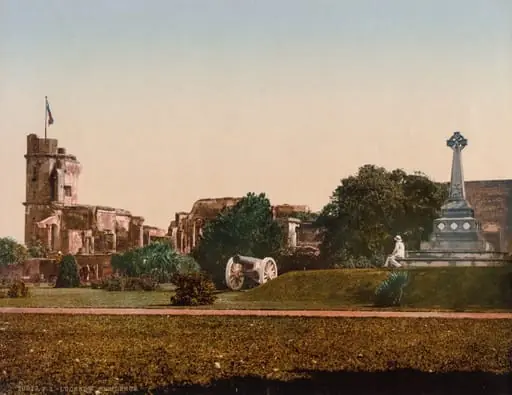 Lucknow. Residence
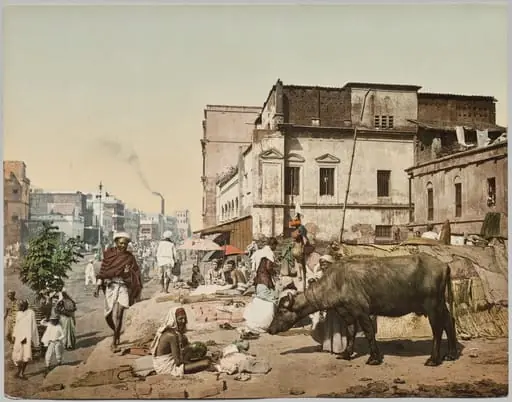 India. Calcutta. Harrison Road I with Group of Jogees, after photo by Dr. Kurt Boeck
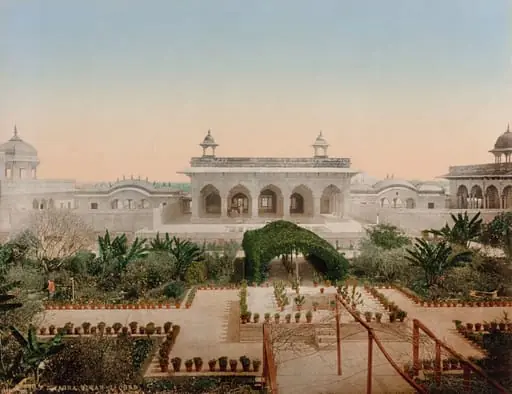 Agra. Diwan-i-Chas
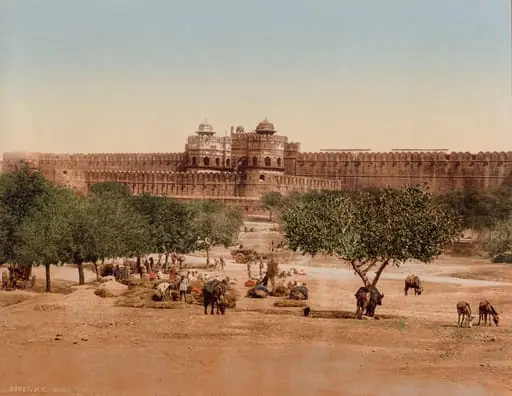 Agra. The Fort
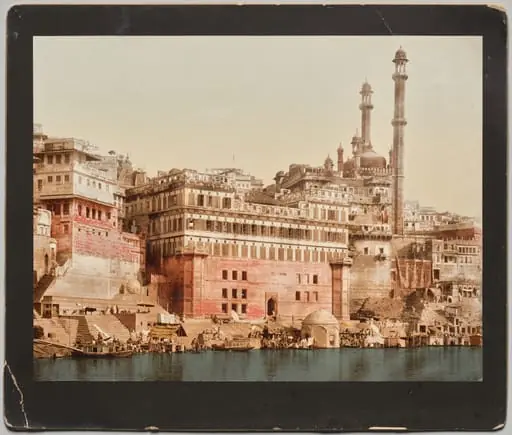 India. Benares. Aurangzeb's Mosque, after a photo by Dr. Kurt Boeck
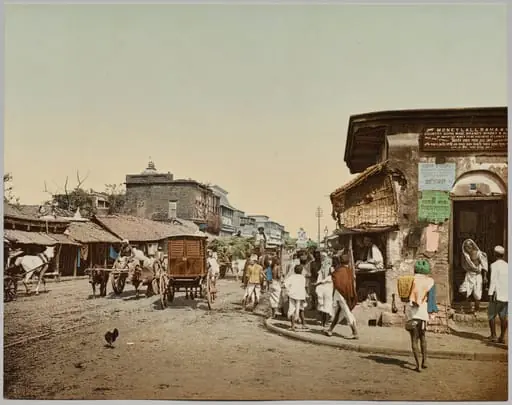 India. Calcutta. Upper Chitpore Road (A), after photo by Dr. Kurt Boeck
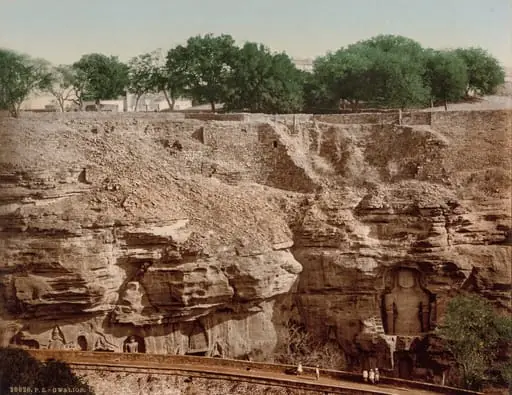 Gwalior. Urwai
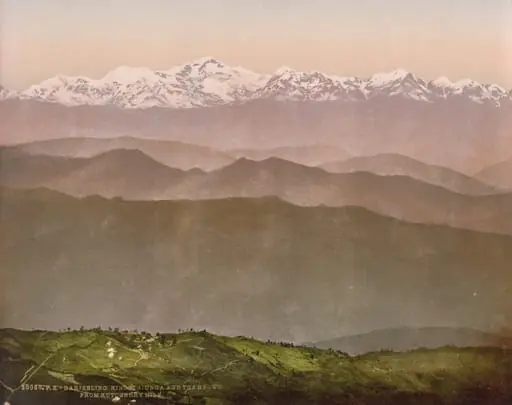 Darjeeling. Kinchinjunga and the Snows from Kutcherry Hill
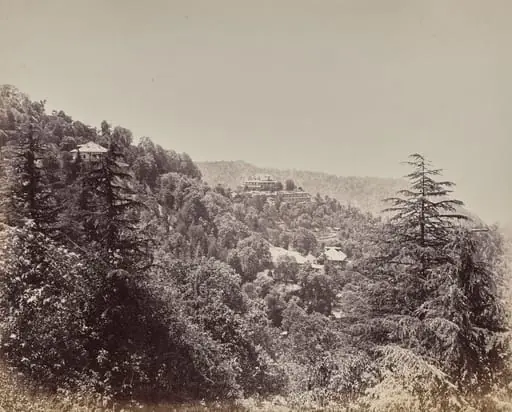 Shimla. The Yarrows and Neighboring Hills
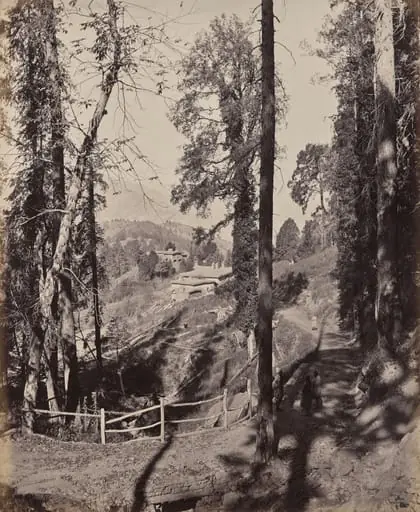 Murree. A Hill Station in the Himmalayahs, View Through the Forest
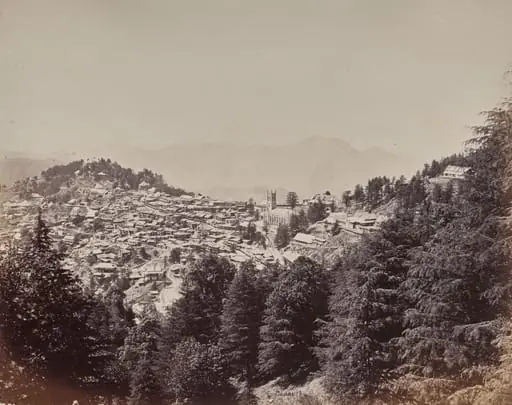 Shimla. From Mount Jakko, Looking West
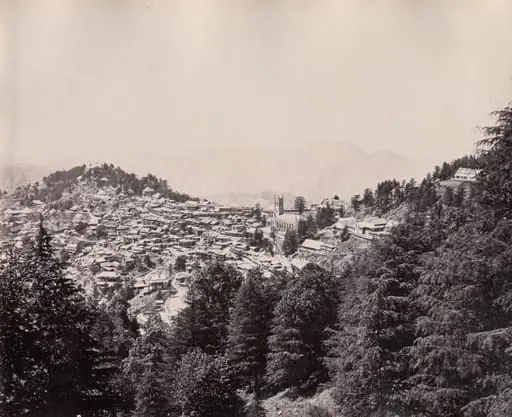 Shimla
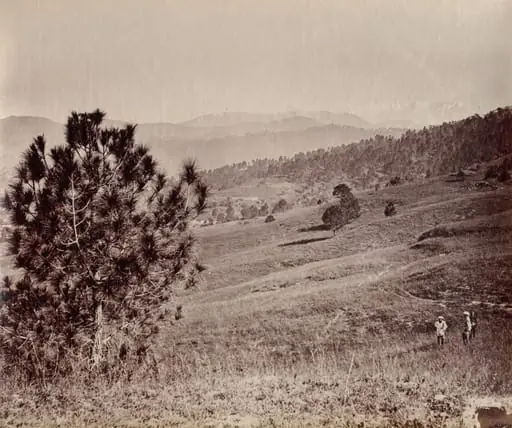 Landscape with Tree and Three Men, India
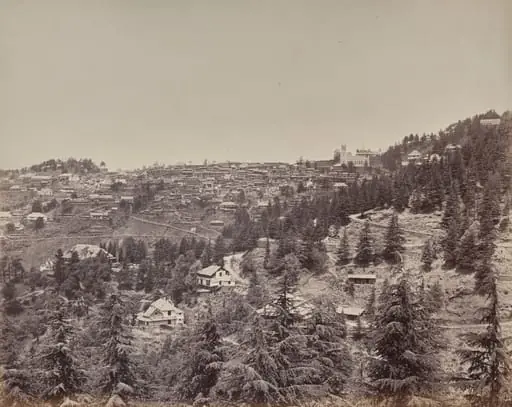 Shimla. View from Oakover House
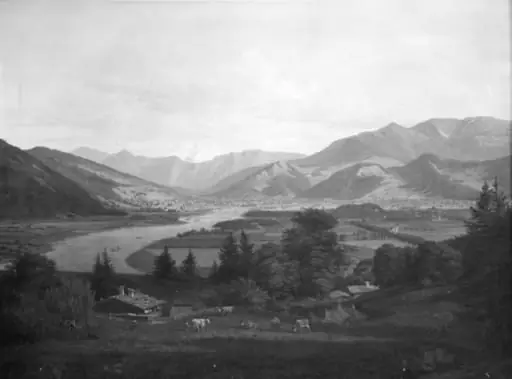 Parti af egnen ved Salzburg
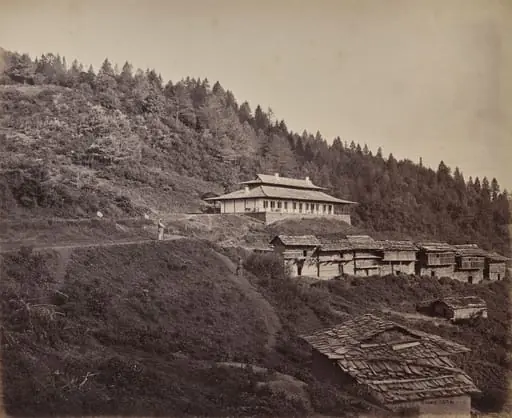 The Upper Himmalayahs. Village of Harkundu with Traveller's Bungalow in Rest-House