Artwork
The Upper Himmalayahs. Village of Harkundu with Traveller's Bungalow in Rest-House
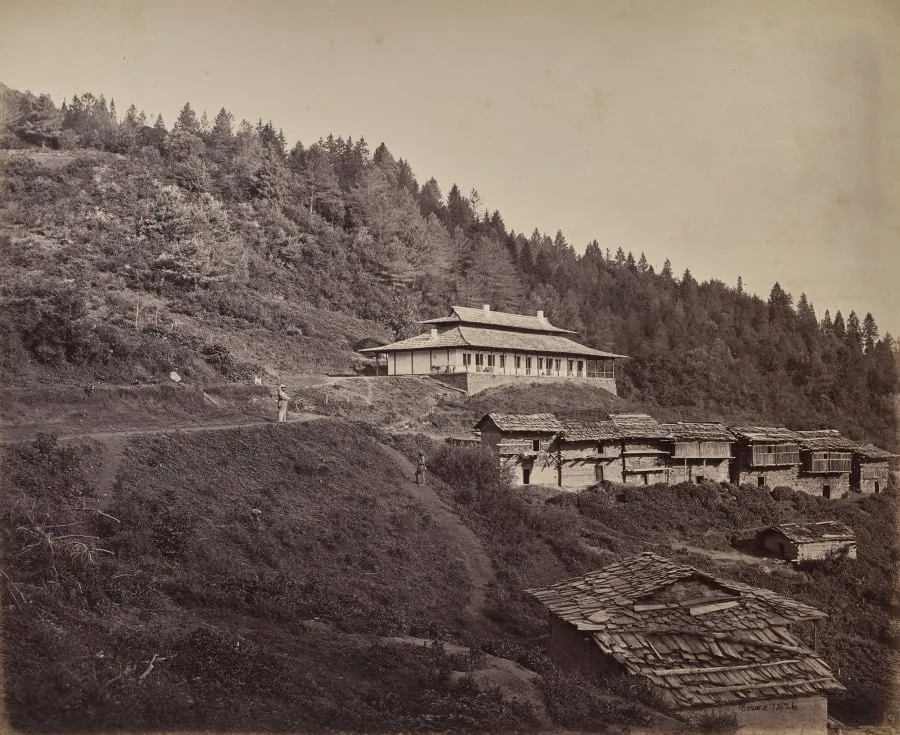
The Upper Himmalayahs. Village of Harkundu with Traveller's Bungalow in Rest-House is a photography by the Impressionist artist Samuel Bourne. It dates from 1866 and is held in the collection of the Cleveland Museum of Art. This early photograph, part of a series of fifty taken in the 1860s, depicts a small Himalayan village set among steep, verdant slopes.
About this work
You see a quiet Himalayan village nestled in steep green hills, with a small rest-house and a lone traveler standing outside.
You see a quiet Himalayan village nestled in steep green hills, with a small rest-house and a lone traveler standing outside.
This isn’t a painting—it’s an early photograph. Bourne lugged heavy cameras up narrow mountain paths in the 1860s, long before tourists or Instagram. The buildings and trees look almost untouched, frozen before modern roads or crowds.
For more of these quiet, early glimpses of India, look up Samuel Bourne (British, 1834–1912).
Overview
This early photograph, part of a series of fifty taken in the 1860s, depicts a small Himalayan village set among steep, verdant slopes. A modest rest‑house stands near a solitary traveler, offering a rare visual record of a settlement that predates modern infrastructure and tourism.
Subject & Meaning
The image captures a tranquil rural scene, emphasizing the relationship between human habitation and the surrounding landscape. The lone figure outside the rest‑house underscores the isolation of travel in the high mountains before the advent of roads and mass visitation.
Technique & Style
Created by British photographer Samuel Bourne, the picture required transporting cumbersome wet‑plate equipment along narrow mountain paths. The resulting monochrome composition retains fine detail in both architecture and foliage, characteristic of mid‑nineteenth‑century photographic practice.
History & Provenance
Taken during Bourne’s extensive Indian survey in the 1860s, the photograph belongs to an album that also includes architectural studies of major monuments such as the Taj Mahal and Delhi’s imperial mosque, documenting their pre‑restoration appearances.
Context
The work forms part of a broader visual itinerary that moves from remote Himalayan villages to major urban centers like Lahore, Delhi, Lucknow, Agra, Benares and Calcutta, illustrating the geographic and cultural diversity of British‑era India.
Legacy
As a primary source, the photograph provides scholars with valuable insight into mid‑nineteenth‑century Himalayan architecture and landscape, preserving a moment before the transformative changes of the twentieth century.
Artist & collection

Artist
Samuel Bourne was a British photographer known for his prolific seven years' work in India, from 1863 to 1870.

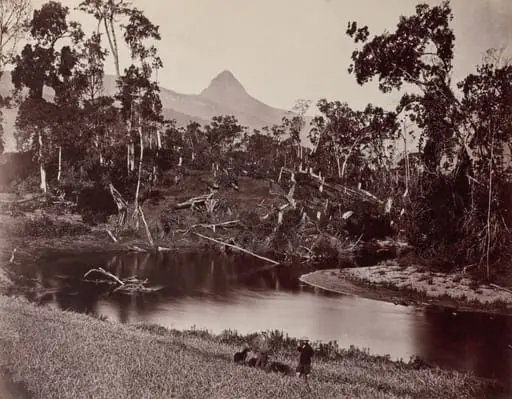 Ceylon Views to Adam's Tooth
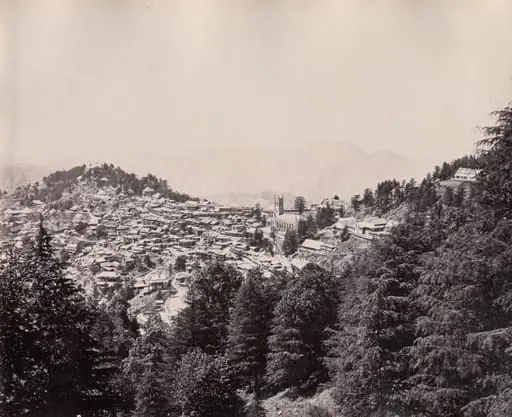 Shimla
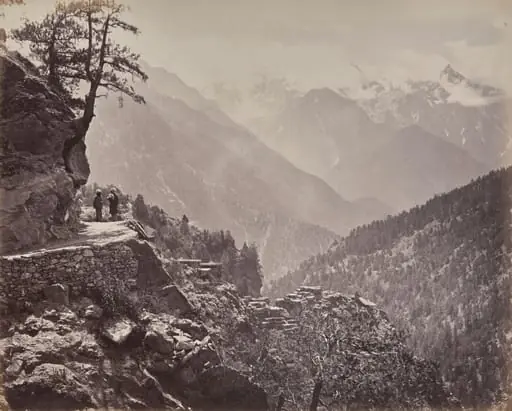 The Upper Himmalayahs. View on the New Road between India and China. Mt. Pangi with the Snowy Peaks of China in the Distance
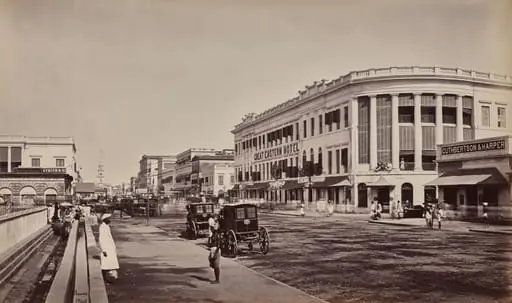 Calcutta. Old Court House Street
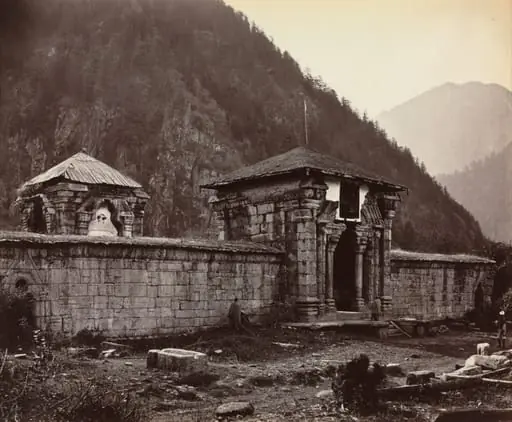 Temple at Naveshera, Kashmir, India
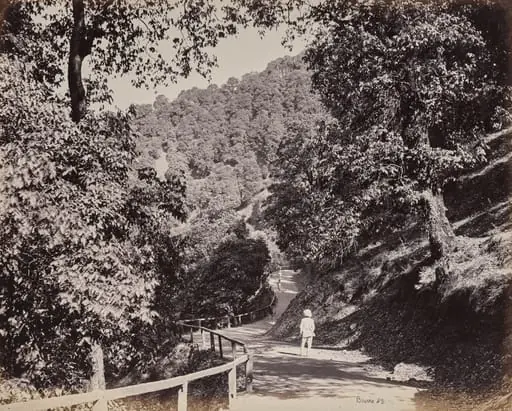 Shimla. The Mall near Rabq Lodge
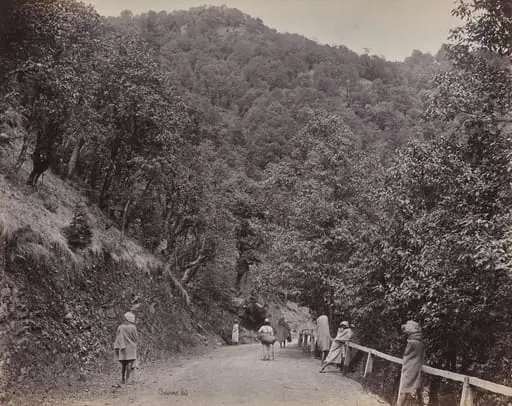 Shimla. The Mall or Principal
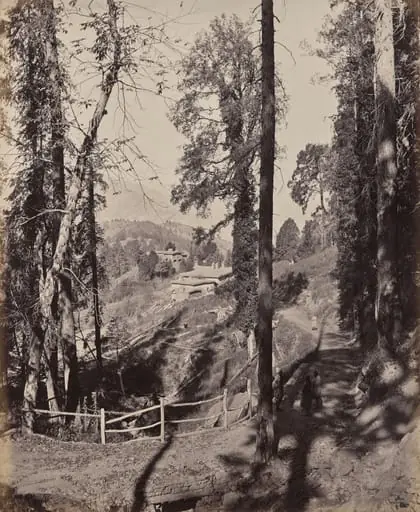 Murree. A Hill Station in the Himmalayahs, View Through the Forest
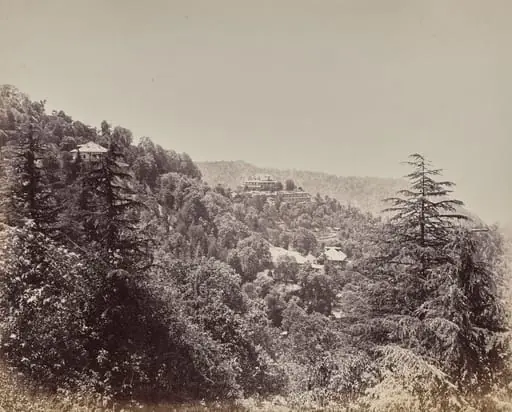 Shimla. The Yarrows and Neighboring Hills
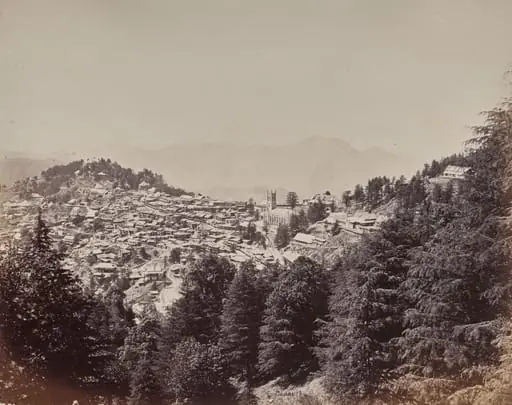 Shimla. From Mount Jakko, Looking West
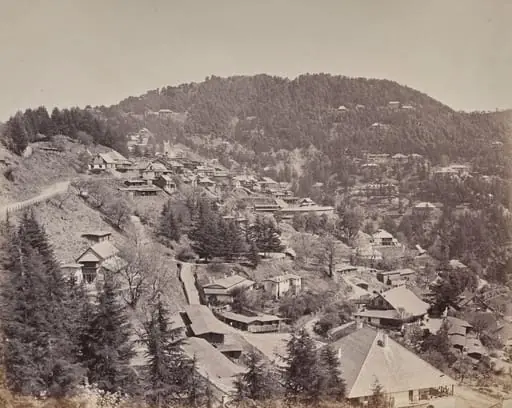 Shimla. Houses of European Residents, Looking East
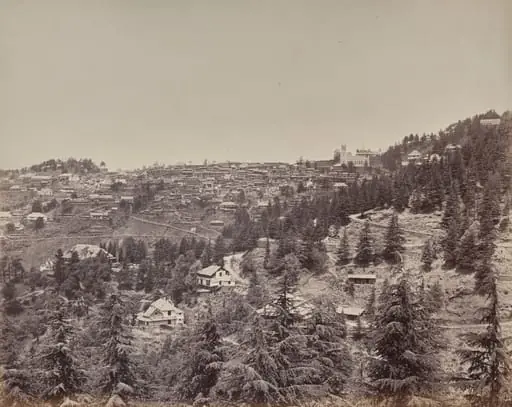 Shimla. View from Oakover House
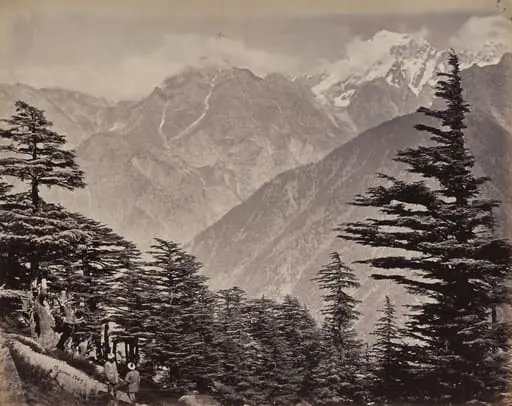 The Upper Himmalayahs. View Near China Mountains. Deoders in the Foreground
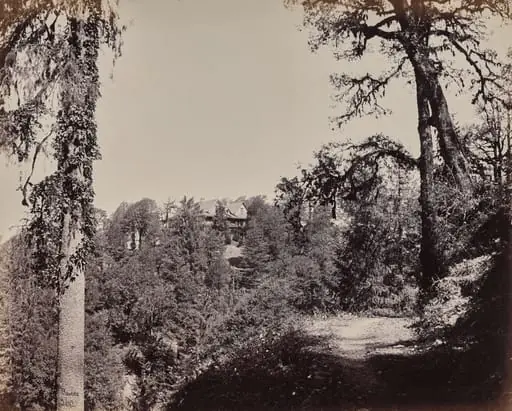 Shimla. Sir Hugh Rose's Bungalow at Mahasso
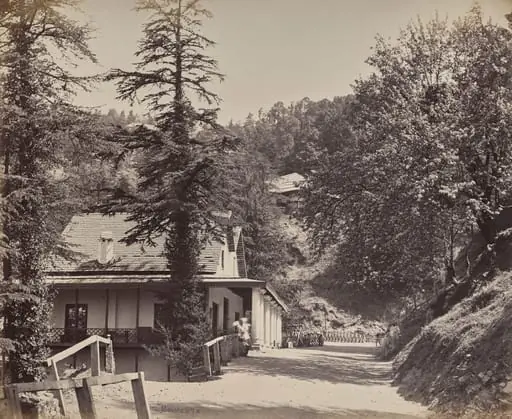 Simla. The Mall near Combermere Bridge
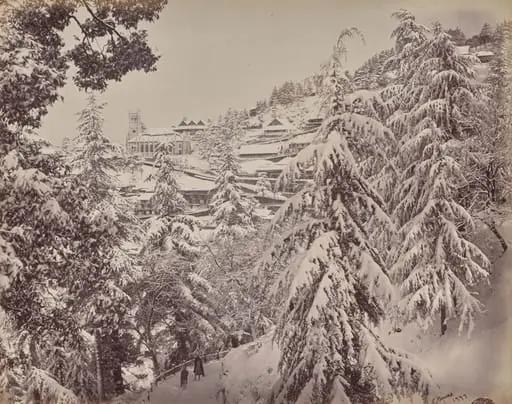 Shimla. View of the Church from Mount Jakko Looking West with Part of the Mall in Winter
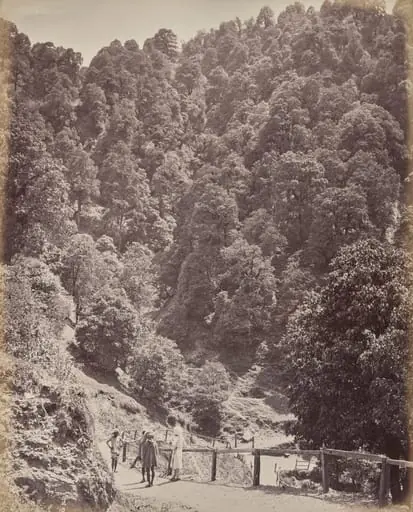 Shimla. View North of Mount Jakko
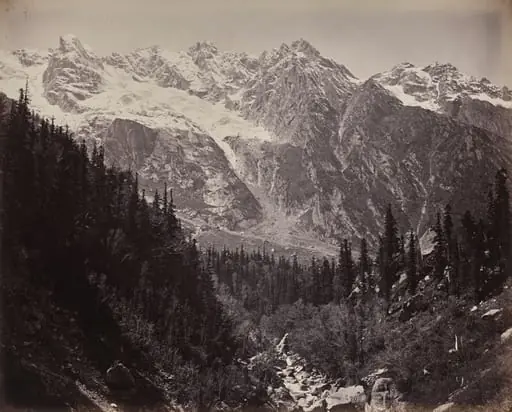 Scene in the Upper Himmalayahs. View in the Manga Valley
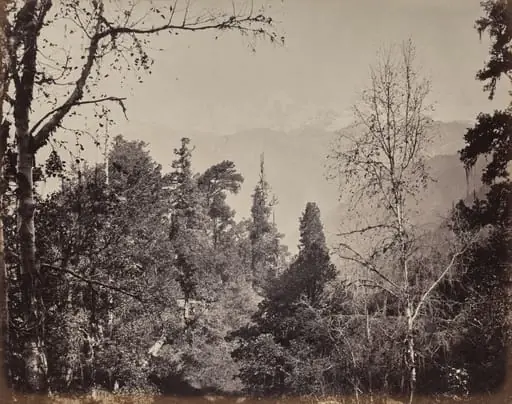 The Upper Himmalayahs. View of the Mountain of Bunderpoonch with the Jumnootri Peak, 20,458 above the Level of the Sea