Artwork
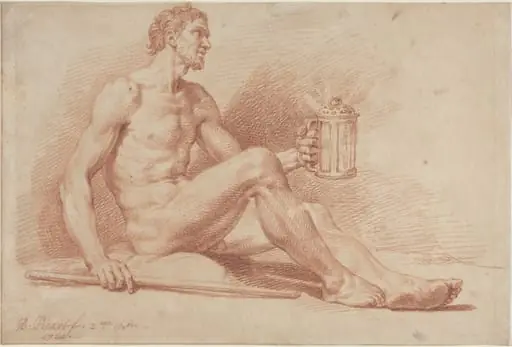
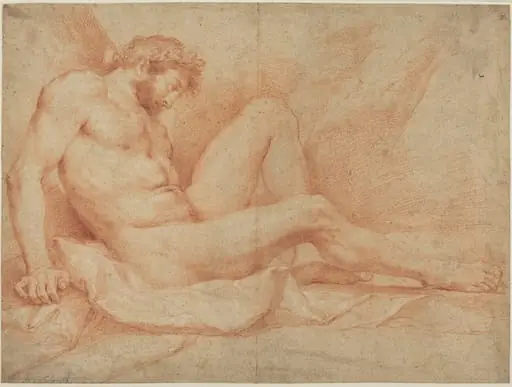
A Reclining Male Nude
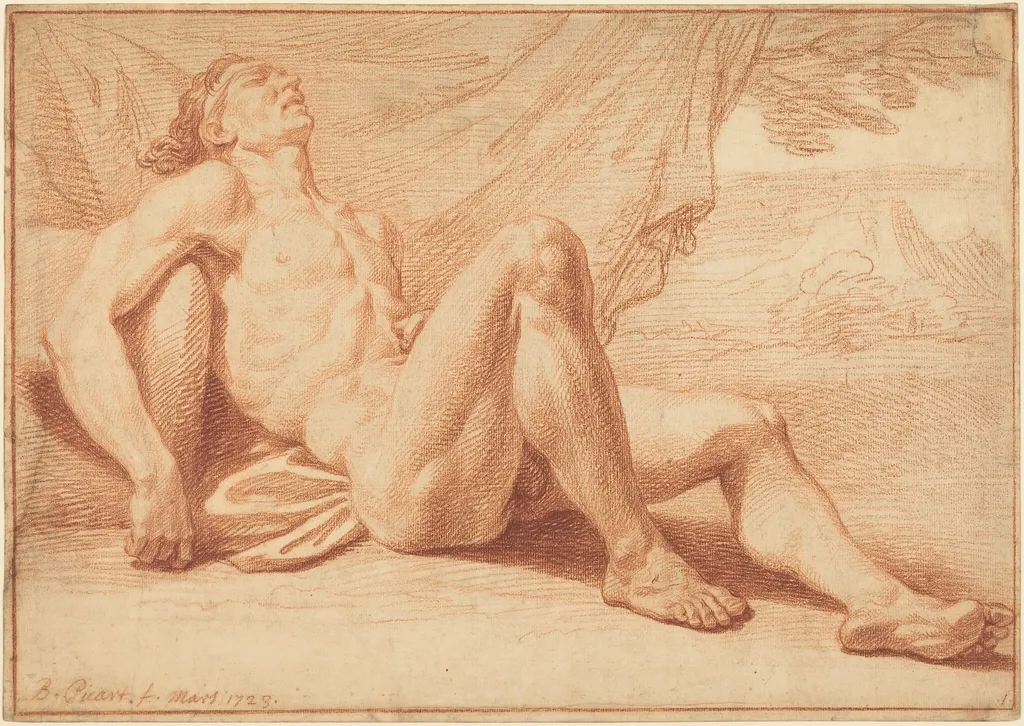
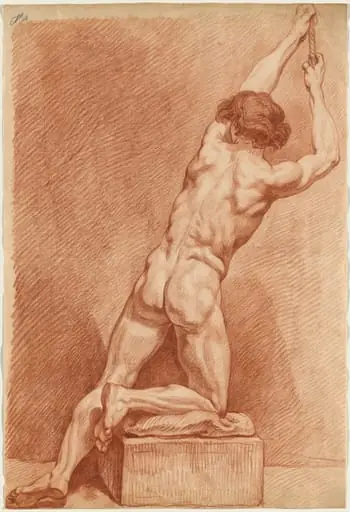
A Reclining Male Nude is a chalk drawing by the Baroque artist Bernard Picart. It dates from 1723 and is held in the collection of the National Gallery of Art.
About this work
Overview
Created in 1723 by Bernard Picart, a French draughtsman who spent much of his career in Amsterdam, this work is a red‑chalk drawing on laid paper. It belongs to the tradition of nude studies, a genre in which Picart frequently worked alongside his more extensive illustrative output.
Subject & Meaning
The composition presents a solitary male figure reclining on his side. One arm supports his head while the other rests on his abdomen; his legs are gently bent with the feet turned outward. The setting is minimal, suggested by a vague, draped backdrop and a faint suggestion of a tree branch above, focusing attention on the body's form.
Technique & Style
Picart employed red chalk, applying varying pressure to render muscular definition and subtle shadows. The medium allows for both delicate line work and richer tonal areas where the chalk is pressed more heavily. The laid paper contributes a textured surface, its visible chain lines enhancing the drawing’s tactile quality.
History & Provenance
The drawing dates to the early 1720s, a period when Picart was active in the Dutch capital, producing both prints and preparatory studies. While primarily known for his engravings on cultural and religious subjects, this nude exemplifies his broader interest in the human figure as a study of anatomy and expression.
Context
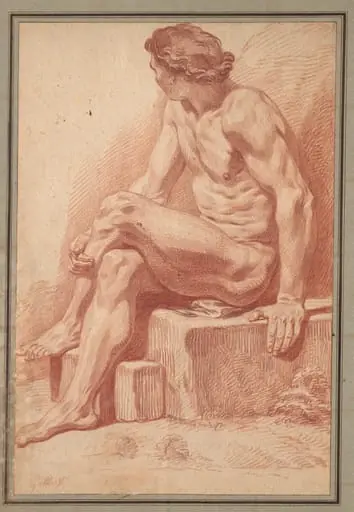
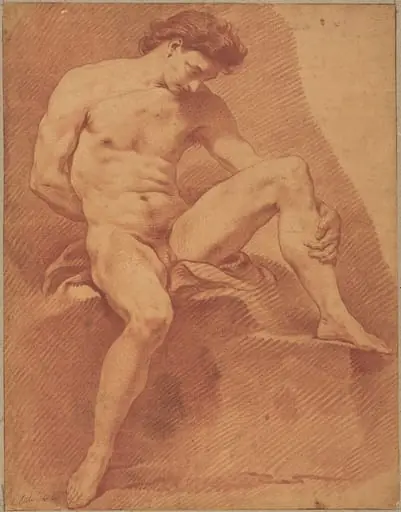
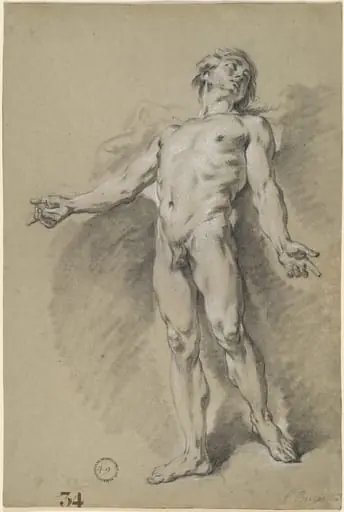
Nude studies were a common component of academic training and artistic practice in the Baroque era, serving both as exercises in proportion and as references for larger compositions. Picart’s work reflects the period’s emphasis on naturalistic observation combined with a decorative sensibility characteristic of Northern European art.
Artist & collection
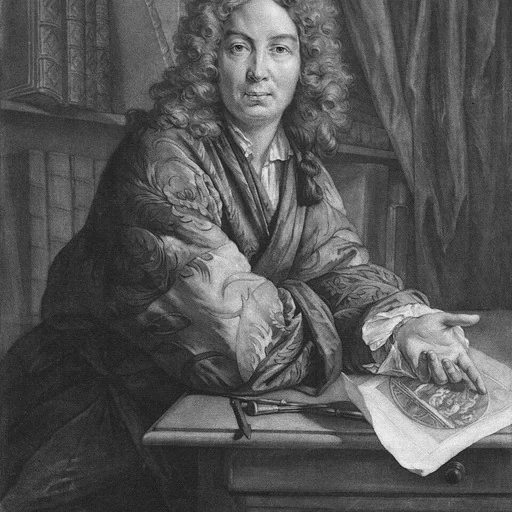
Artist
Bernard Picart or Picard (11 June 1673 – 8 May 1733), was a French draughtsman, engraver, and book illustrator in Amsterdam, who showed an interest in cultural and religious habits.