Artwork
# 7from " Livre second essais de gravjre " Second book of Engraved Designs
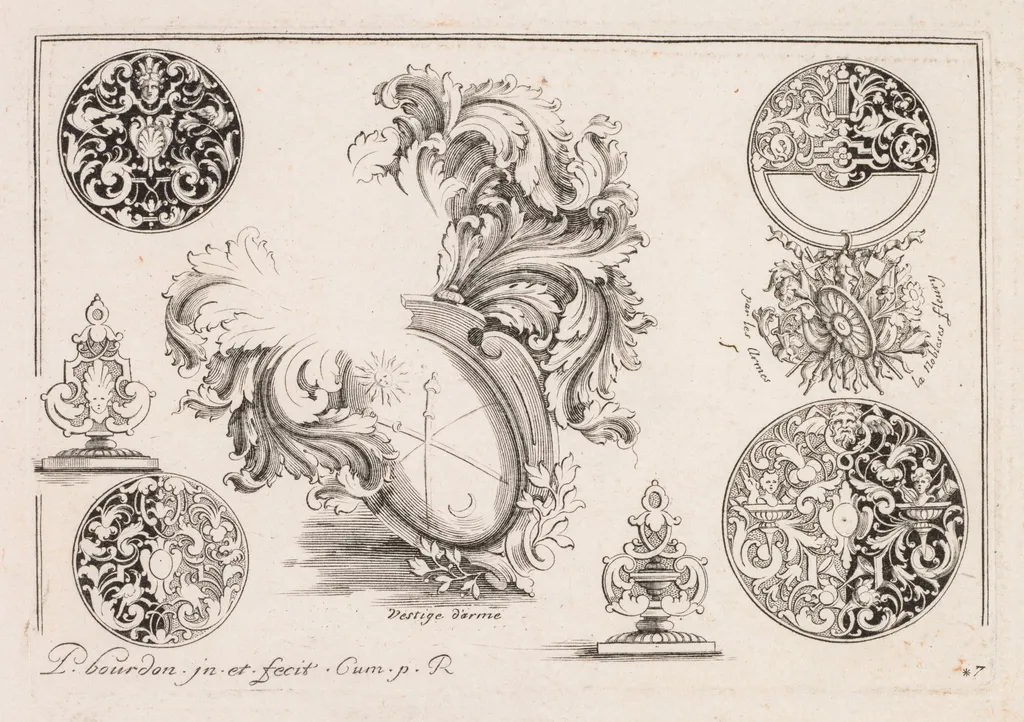
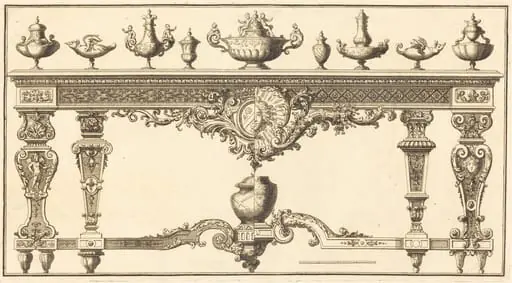
# 7from " Livre second essais de gravjre " Second book of Engraved Designs is a print by the Baroque artist Pierre Bourdon. It dates from 1703 and is held in the collection of the Cleveland Museum of Art.
About this work
Overview
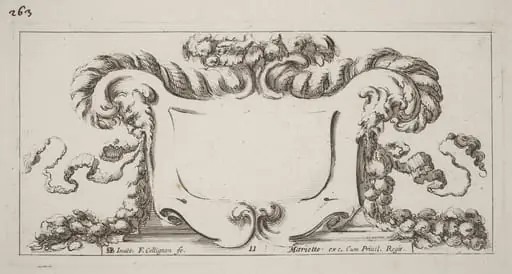
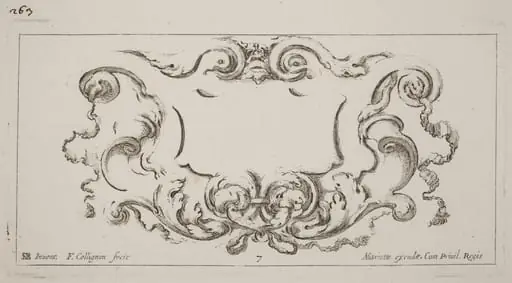
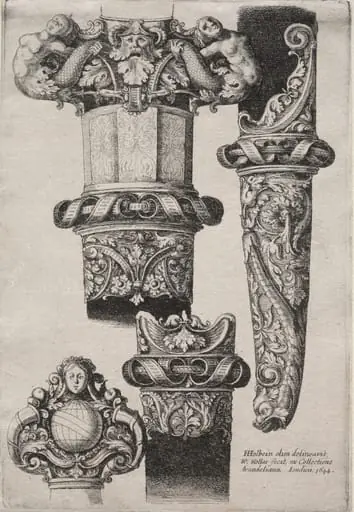
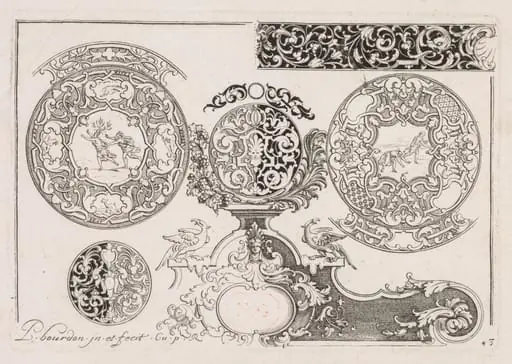
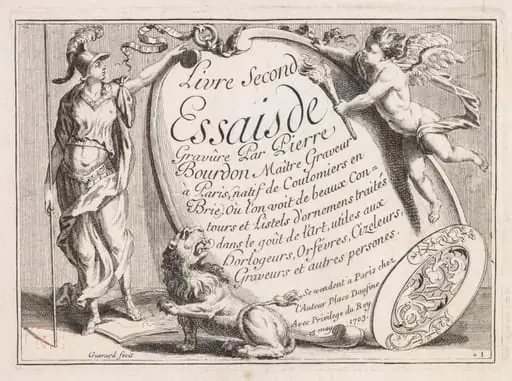
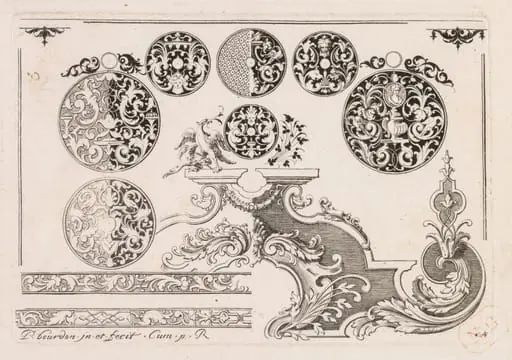
This etching is one of many plates from Pierre Bourdon’s second volume of engraved designs, published in the early 18th century. The set functions as a reference for artisans, offering standardized ornamental motifs. Its purpose was practical, yet its circulation extended beyond workshops into private collections, reflecting broader cultural interest in decorative arts during the period.
Subject & Meaning
The plate presents a dense arrangement of scrolling foliage, acanthus leaves, and rhythmic curves—standard elements of Baroque ornamentation.
The plate presents a dense arrangement of scrolling foliage, acanthus leaves, and rhythmic curves—standard elements of Baroque ornamentation. These forms were not decorative for their own sake but served as templates for metalworkers and engravers. Their repetition across surfaces implied a shared visual language among craftsmen, while also signaling refinement to non-artisans who collected such prints as cultural artifacts.
Technique & Style
Executed in fine-line etching, the design relies on controlled incisions to produce crisp, repeatable patterns. The uniformity of line and density of detail suggest a methodical approach, suited for reproduction. The style aligns with French academic traditions of ornament, emphasizing symmetry and fluidity over naturalism, reflecting the period’s preference for stylized elegance over literal representation.
History & Provenance
Bourdon’s prints were issued as part of a commercial series aimed at both tradespeople and connoisseurs. While originally intended for workshop use, surviving examples in aristocratic libraries and collections indicate they were preserved as objects of study. The Cleveland Museum of Art holds several plates from this series, suggesting their early acquisition by institutions interested in the history of design.
Context
In early 1700s France, printed pattern books were integral to the dissemination of stylistic trends. As guilds declined and artisanal knowledge became more widely accessible, such volumes bridged the gap between skilled labor and elite taste. Bourdon’s work emerged alongside similar publications by Le Pautre and Bérain, contributing to a visual culture where ornament was both functional and symbolic.
Legacy
Bourdon’s designs influenced later decorative arts manuals and remained in circulation well into the 19th century. Their preservation in museum collections underscores their role as historical documents of craft practice and aesthetic transmission. Though no longer used by artisans, they continue to inform studies on the intersection of design, commerce, and visual literacy in early modern Europe.
Artist & collection

 # 3 from " Livre second essais de Gravjre "
Second book of Engraved Designs
# 3 from " Livre second essais de Gravjre "
Second book of Engraved Designs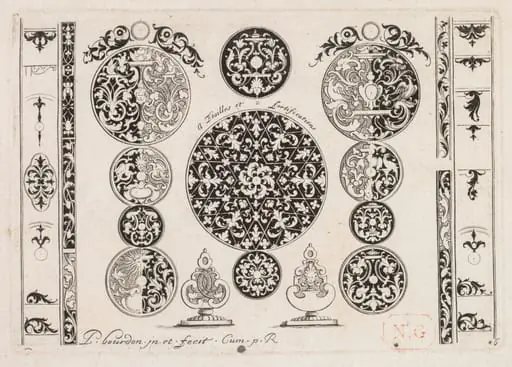 # 6 from " Livre second essais de gravjre " second book of Engraved Designs
 Goldsmith Design
 # 5 from " Livre second essais de gravjre " second book of Engraved Designs
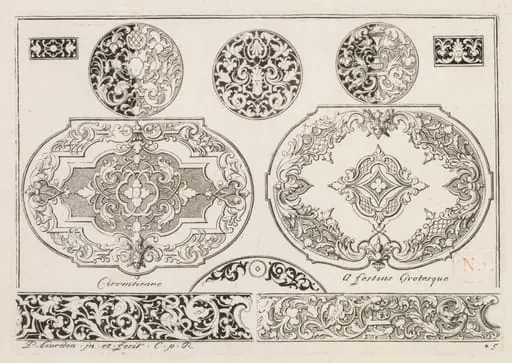 # 4 From " Livre sencond essais de gravjre " second book of Engraved designs
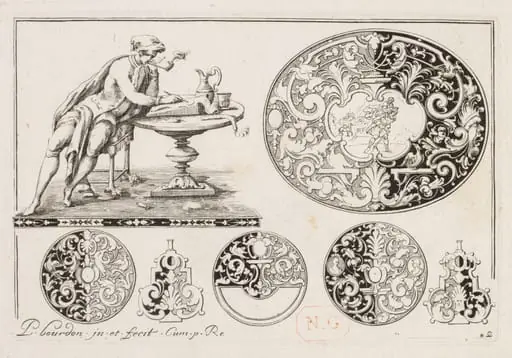 # 2 From " Livre second Cesais de Graubre "
Second book of Engraved Design
# 2 From " Livre second Cesais de Graubre "
Second book of Engraved Design