Artwork
Evening Train (Le Train du Soir)
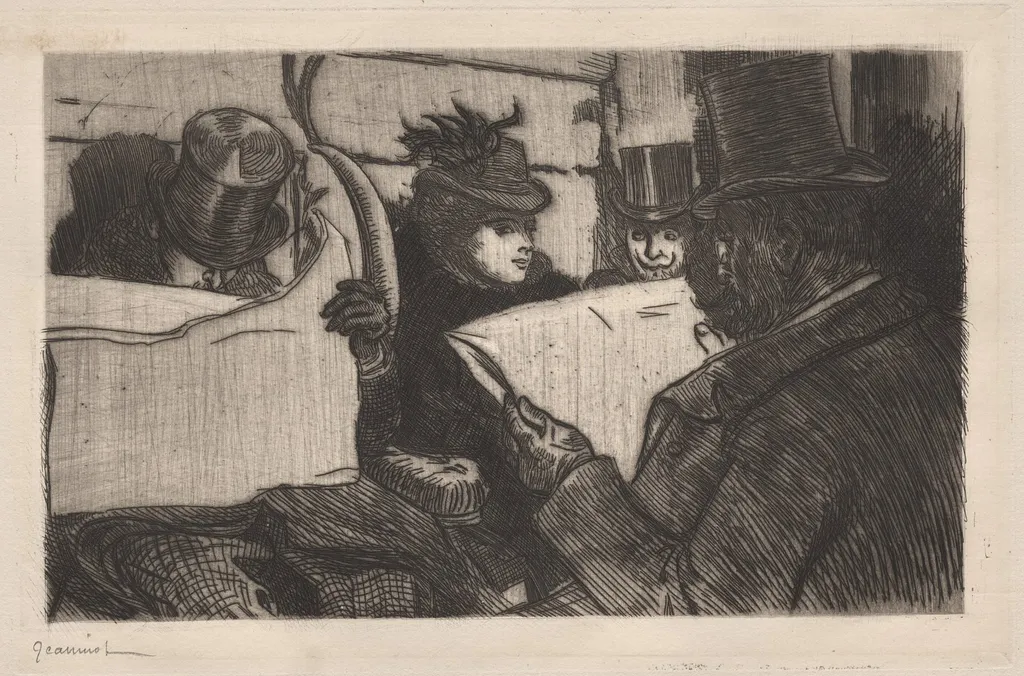
Evening Train (Le Train du Soir) is a print by the Impressionist artist Pierre Georges Jeanniot. It dates from 1897 and is held in the collection of the Cleveland Museum of Art.
About this work
Overview
Pierre-Georges Jeanniot, a Swiss-born artist active in France, produced *Evening Train (Le Train du Soir)* in 1897 as a charcoal or ink sketch.
Pierre-Georges Jeanniot, a Swiss-born artist active in France, produced *Evening Train (Le Train du Soir)* in 1897 as a charcoal or ink sketch. Though often associated with Impressionism, this work leans toward spontaneous observation, capturing a quiet moment in transit rather than a finished composition. It resides in the Cleveland Museum of Art’s print collection, reflecting Jeanniot’s sustained interest in the rhythms of urban life during the late 19th century.
Subject & Meaning
The scene depicts three figures in a dim interior—likely a railway carriage at night. A woman reads, a man leans over her shoulder, and a third sits in shadow, cane in hand. No narrative is overt; instead, the work conveys solitude and quiet intimacy amid modern travel. The figures are isolated within the frame, suggesting the transient, anonymous nature of urban commuting in an era of expanding rail networks.
Technique & Style
Jeanniot employed rapid, gestural strokes with uneven shading to suggest form without definition. Lines are loose and deliberate, avoiding refinement in favor of immediacy. The rough texture and lack of polish align with sketch-based practices common among artists documenting fleeting moments. This approach prioritizes atmosphere over detail, echoing the observational ethos of late 19th-century draftsmen focused on real-life motion.
History & Provenance
Created in 1897, the sketch entered the Cleveland Museum of Art’s collection as part of its broader acquisition of works on paper from the French and Swiss artistic circles. Jeanniot’s prints and drawings were less widely exhibited than his paintings, making this piece a rare example of his graphic work. Its preservation reflects institutional interest in the documentary value of sketches from the period.
Context
In the 1890s, Parisian artists increasingly turned to trains, stations, and public transit as subjects, drawn to their role in reshaping social interaction. Jeanniot’s sketch aligns with a broader trend among illustrators and painters who documented the anonymity and rhythm of modern life. Unlike grand historical scenes, such works valued the ordinary, echoing Realist traditions while embracing the spontaneity of Impressionist technique.
Legacy
Though not widely reproduced, *Evening Train* exemplifies how sketching functioned as both artistic practice and social record in the late 19th century. Jeanniot’s unembellished style influenced later generations of draftsmen who sought authenticity over polish. The work remains a quiet testament to the evolving relationship between technology, space, and human behavior in the modern city.
Artist & collection
Artist
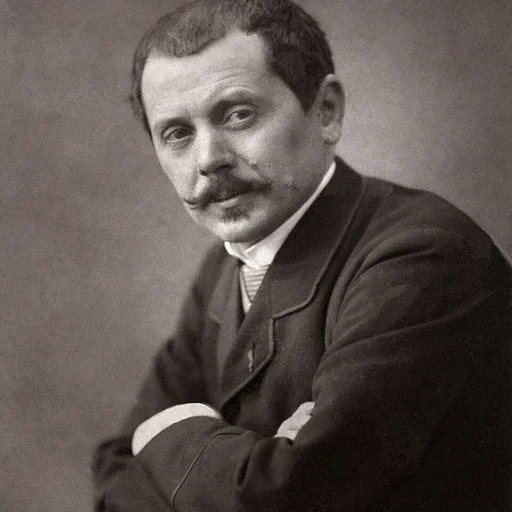
Pierre-Georges Jeanniot (1848–1934) was a Swiss-French Impressionist painter, designer, watercolorist, and engraver who was born in Geneva, Switzerland, and died in France. His work often depicts the modern life in Paris.

 Lady in Black, in a Loge, Facing Right
 Omnibus
 Le Boulevard des Italiens
 The Letter to Madame Henry (La lettre à Madame Henry)
 Smoking Strictly Prohibited
 Le bouquet (The Bouquet)
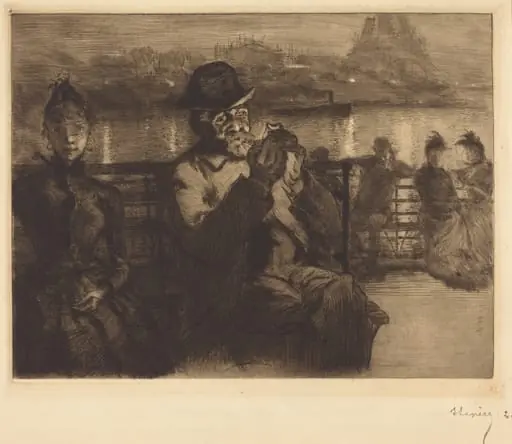 Sur la Seine, la nuit
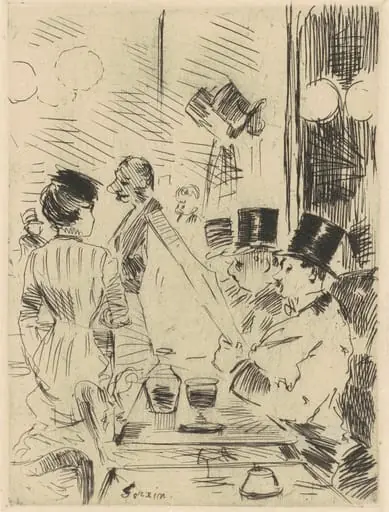 Le Cafe
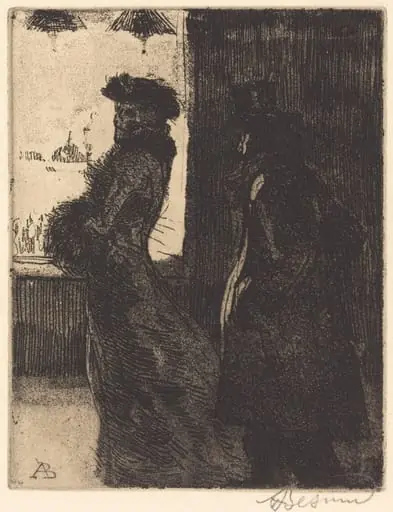 The Unknown Woman (L'inconnue)
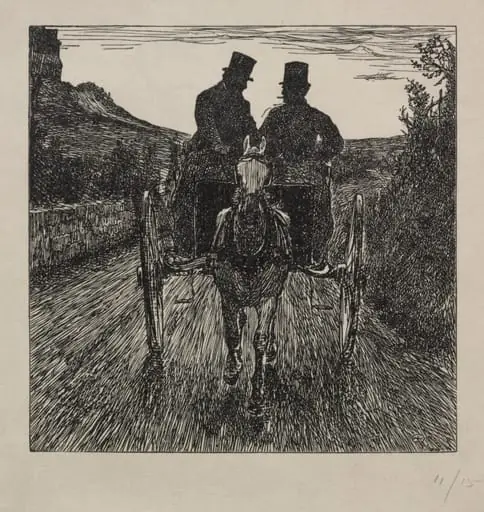 Why the Pifflers Lost their Return Match
 Doppelbildnis mit Skelett (Double Portrait with Skeleton)
 In the Subway