Artwork
Sur la Seine, la nuit
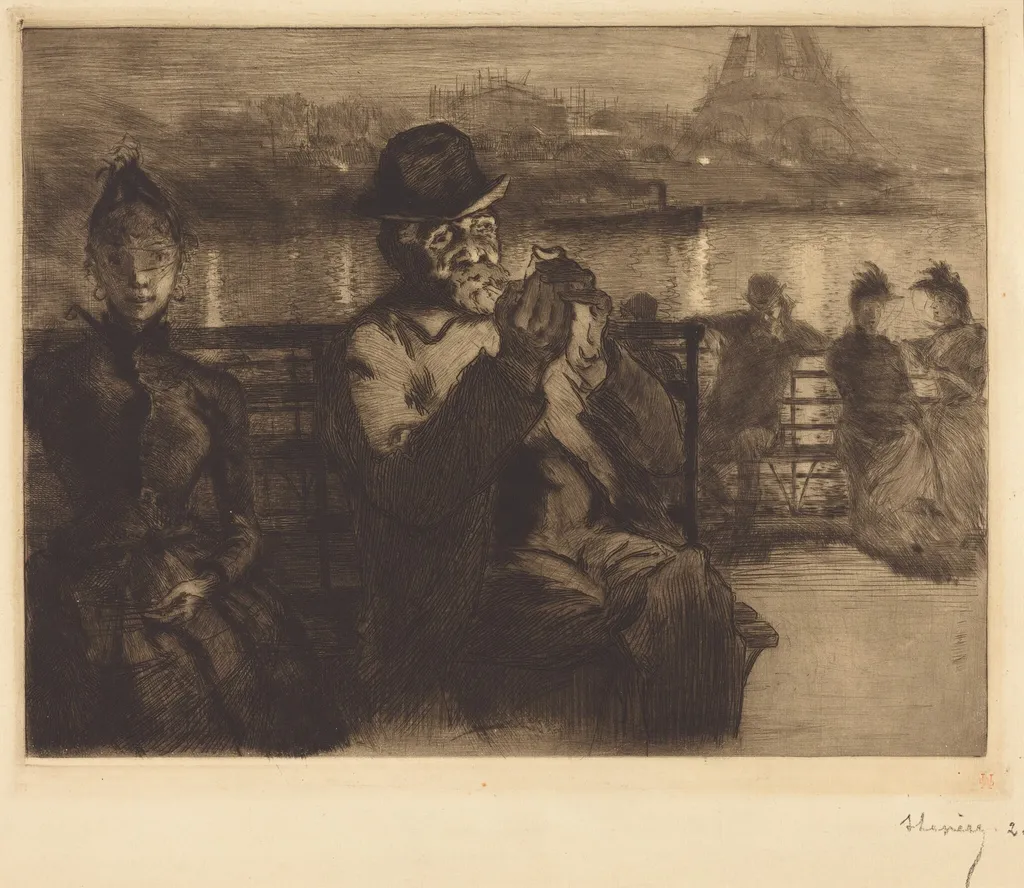
Sur la Seine, la nuit is an ink print by the Impressionist artist Auguste Lepère. It dates from 1888 and is held in the collection of the National Gallery of Art.
About this work
Overview
The work reflects his deep engagement with the material possibilities of printmaking, favoring subtle tonal variation over bold contrast.
Created in 1888, *Sur la Seine, la nuit* is a nocturnal print by French artist Auguste Lepère, executed in etching and drypoint. It captures a quiet moment along the Seine in Paris, emphasizing atmosphere over narrative. Lepère, known for his revival of traditional print techniques, used fine, incised lines to evoke the hushed stillness of the night. The work reflects his deep engagement with the material possibilities of printmaking, favoring subtle tonal variation over bold contrast.
Subject & Meaning
The scene depicts a solitary man seated on a bench, pipe in hand, while a woman stands nearby and two others move away into the distance. Their forms are indistinct, suggesting anonymity and solitude. The lack of clear identity or interaction implies a meditation on urban isolation. The dimly rendered buildings and bridge frame the figures without dominating them, reinforcing a sense of quiet, fleeting human presence amid the city’s nocturnal landscape.
Technique & Style
Lepère employed drypoint to create rich, scratchy lines that hold ink deeply, producing soft, velvety blacks. Etching provided finer, controlled contours for architectural elements. The texture of the man’s coat and beard emerges from dense, irregular strokes, while the river and sky are suggested through sparse, blurred marks. This combination of techniques gives the image a tactile, almost tactile roughness, enhancing the mood of quiet unease and atmospheric depth.
History & Provenance
The print was made during a period when Lepère was actively promoting traditional print methods in France, countering the rise of photographic reproduction. Though not widely exhibited during his lifetime, *Sur la Seine, la nuit* was included in private collections of print enthusiasts and later entered institutional holdings. Its survival reflects its status as a representative example of late 19th-century French etching, valued for its technical restraint and emotional nuance.
Context
In the 1880s, Parisian artists increasingly turned to intimate, everyday scenes as industrialization reshaped urban life. Lepère’s work aligns with this trend, echoing the quiet realism of contemporaries like Degas and Whistler. Unlike grand historical prints, his focus on solitary figures at night reflects a broader cultural interest in the psychological weight of modernity — the anonymity of the city after dark, and the fragile presence of individuals within it.
Legacy
Lepère’s prints, including this one, influenced a generation of printmakers who sought to elevate etching beyond reproduction into a medium of personal expression. His use of drypoint to convey mood over detail became a model for later artists exploring tonal subtlety. While not widely known today, *Sur la Seine, la nuit* remains a quiet testament to the power of restraint in printmaking — where absence and suggestion carry as much weight as form.
Artist & collection
Artist
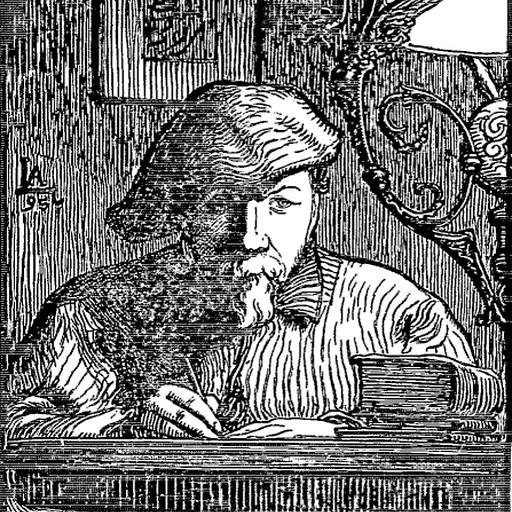
Louis-Auguste Lepère (30 November 1849 – 20 November 1918) was a French painter and etcher. Lepère is also considered a leader in the creative revival of wood engraving in Europe.

 C'est fini!...(grande planche) (It is Finished!...) (large plate)
 The Unknown Woman (L'inconnue)
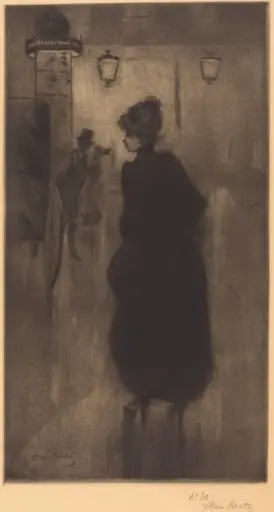 Parisian Woman (The Effect of the Night)
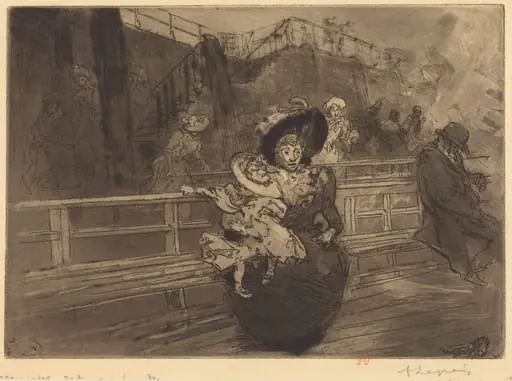 Departure for Greenwich (Depart pour Greenwich)
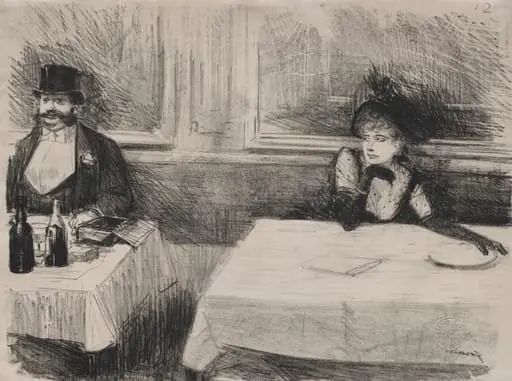 At the Restaurant
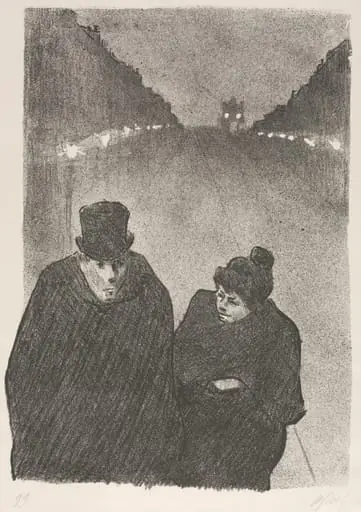 Ah, it's true, my poor old man, you would be the first to whom I would have made to miss his bus. "But I'll Miss My Bus" "My Customers Have Never Missed Their Bus"
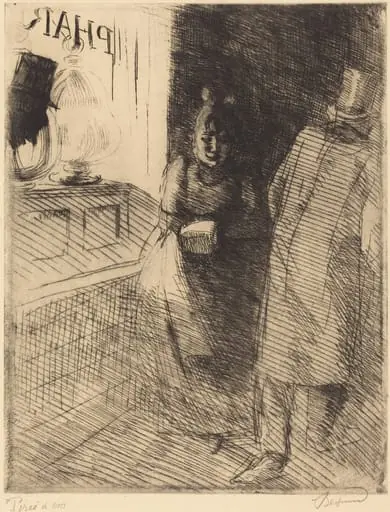 Prostitution (La Prostitution)
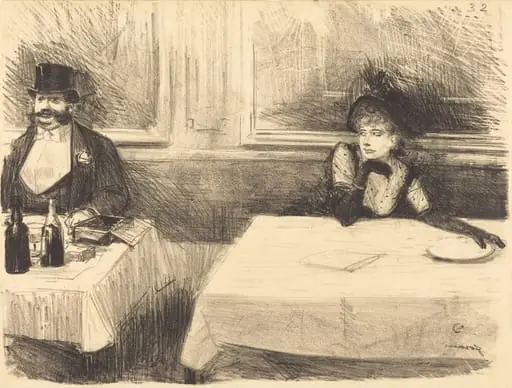 Au restaurant (At the Restaurant)
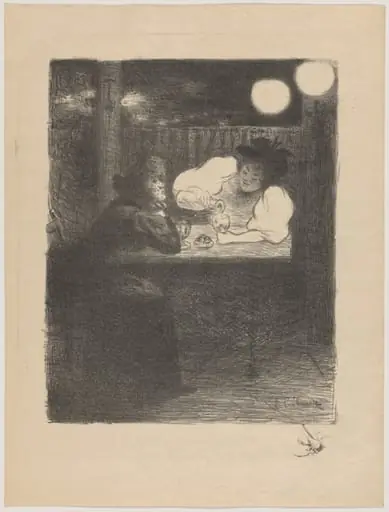 Les femmes à l'absinthe (Women with Absinthe)
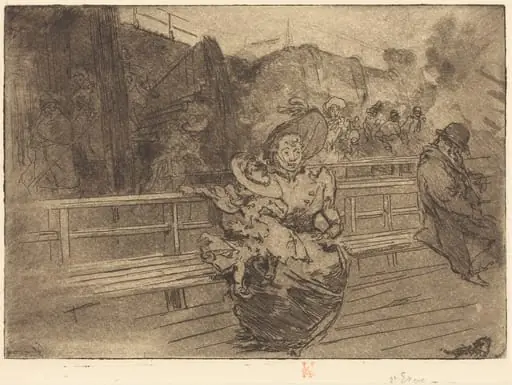 Departure for Greenwich (Depart pour Greenwich)
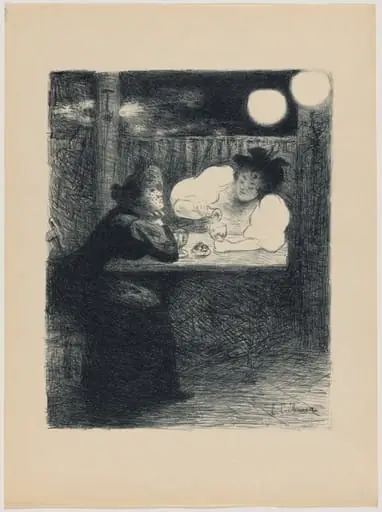 Les femmes à l'absinthe (Women with Absinthe)
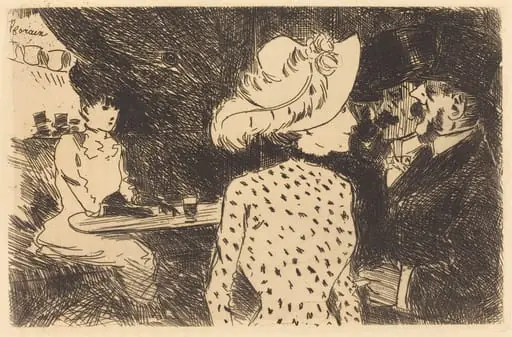 Les Folies-Bergère (planche refusée, 2e planche) (The Folies Bergère) (refused plate, second plate)