Artwork
The Three Fates, Costume Designs
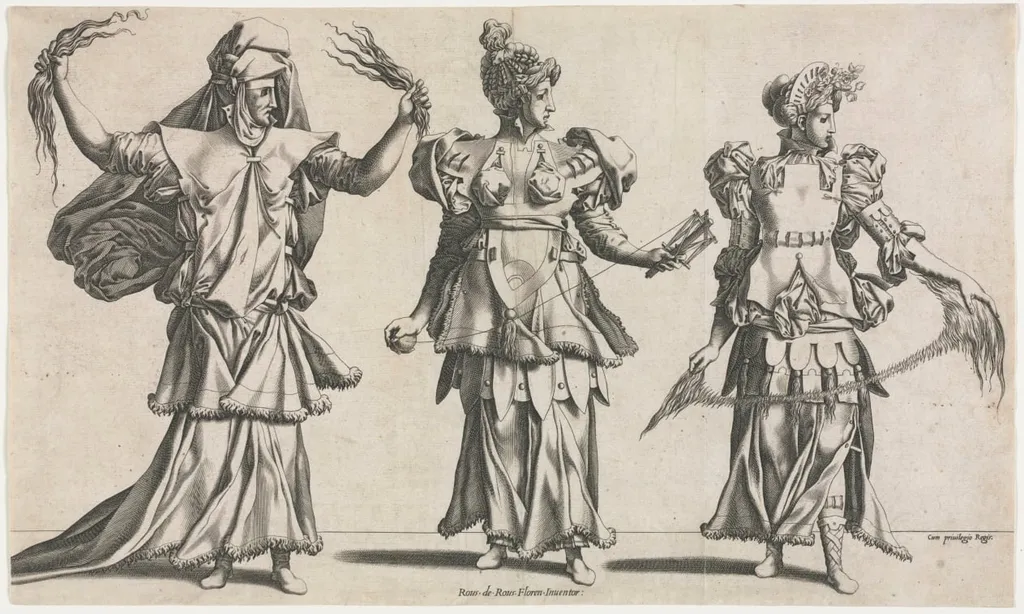
The Three Fates, Costume Designs is a print by the Renaissance artist Pierre Milan. It dates from 1534 and is held in the collection of the Cleveland Museum of Art. This engraving reproduces three costume designs originally created by Rosso Fiorentino for a masquerade at the court of Francis I of France.
About this work
Overview
This engraving reproduces three costume designs originally created by Rosso Fiorentino for a masquerade at the court of Francis I of France.
This engraving reproduces three costume designs originally created by Rosso Fiorentino for a masquerade at the court of Francis I of France. Executed by Pierre Milan, a Parisian engraver, the print translates the artist’s drawings into a refined, polished graphic format. Unlike the experimental etchings produced at Fontainebleau, Milan’s work reflects the commercial print culture of Paris, where images were made for wider circulation among aristocratic and intellectual audiences.
Subject & Meaning
The three figures depict the Moirai, or Fates, from classical mythology—Clotho, Lachesis, and Atropos—who govern the birth, measure, and end of human life. Each holds a material associated with spinning: wool, thread, and flax. Their inclusion in a courtly masquerade suggests a playful yet learned engagement with antiquity, blending mythological symbolism with the performative culture of Renaissance entertainment at the French court.
Technique & Style
Pierre Milan employed precise engraving techniques to render the figures with clarity and elegance, contrasting with the looser, more spontaneous etchings of the Fontainebleau school. His lines are controlled and even, emphasizing form and detail over expressive texture. This polished aesthetic reflects his professional training and alignment with Parisian printmaking traditions, which prioritized reproducibility and visual refinement for broader distribution.
History & Provenance
The designs were commissioned for a masquerade at Francis I’s court, likely around the 1530s, during a period of intense interest in Italian Renaissance motifs. Rosso Fiorentino, an Italian Mannerist, brought these ideas to France, while Pierre Milan, working independently in Paris, translated them into engravings. Milan’s prints circulated more widely than Fontainebleau’s limited editions, helping to disseminate the court’s visual language beyond the palace walls.
Context
The print emerges from a broader cultural moment when French royalty embraced Italian artistic styles to elevate courtly spectacle. Masquerades served as both entertainment and political theater, where classical references reinforced the monarch’s intellectual authority. Printmakers like Milan played a key role in translating ephemeral court performances into enduring images, bridging elite performance and public visual culture.
Legacy
Milan’s engravings contributed to the standardization and dissemination of the Fontainebleau style across France and beyond. By producing prints in larger quantities than their Fontainebleau counterparts, he ensured that Rosso’s designs reached collectors, artists, and patrons outside the royal circle. His work exemplifies how professional printmaking helped transform courtly aesthetics into a wider Renaissance visual vocabulary.
Artist & collection

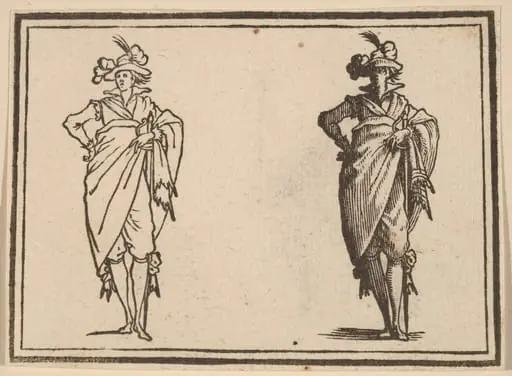 Gentleman Viewed from the Front with Hand on Hips
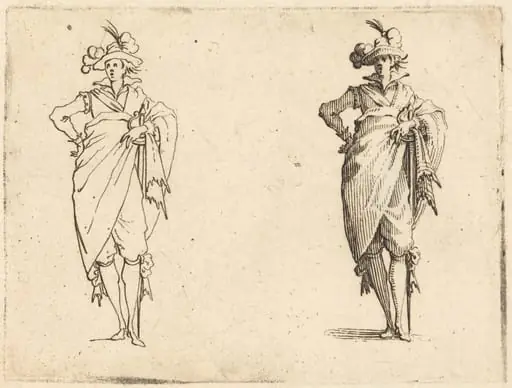 Gentleman Viewed from the Front with Hand on Hip
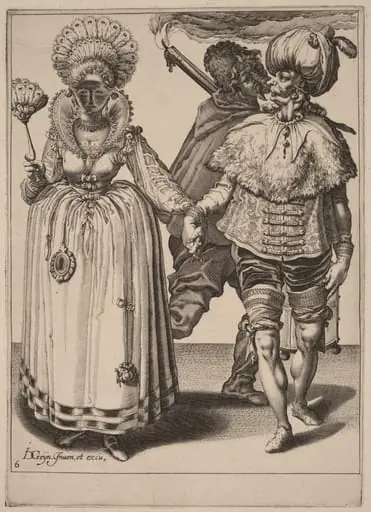 A Man with a Turban Leading a Woman Wearing Peacock Feathers
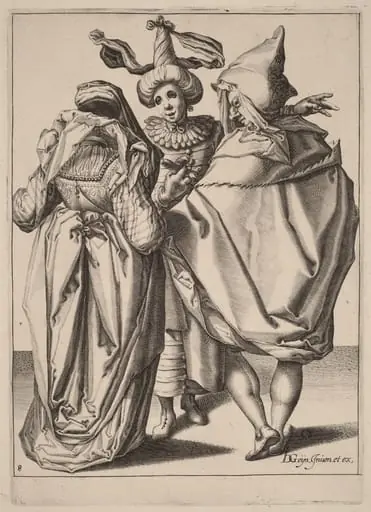 A Couple Addressing a Gesticulating Young Man
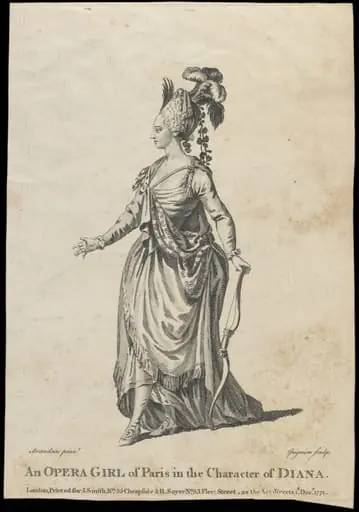 H Beard Print Collection
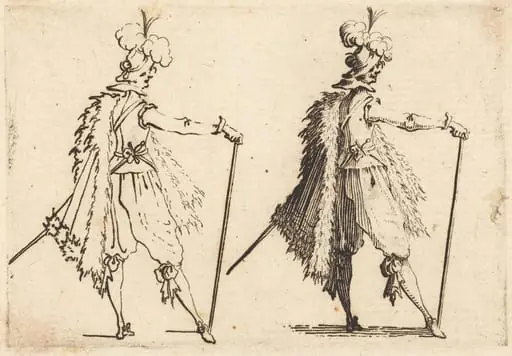 Gentleman with Cane
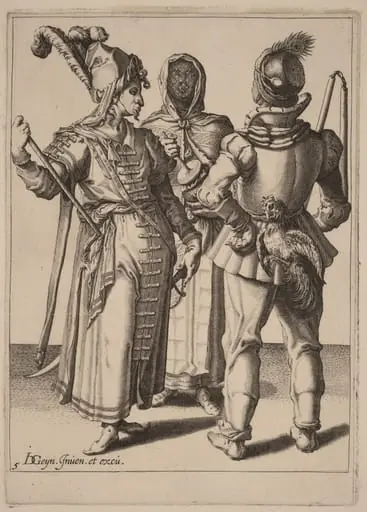 A Grandee, a Peasant, and a Veiled Woman
 Gentleman Viewed from the Side
 Gentleman Viewed from the Front with Hand on Hip
 An Old Mummer Addressing a Couple Dressed in Feathers
 Young Woman with Distaff, Facing Right
 # 4 From " Livre sencond essais de gravjre " second book of Engraved designs