Artwork
A Grandee, a Peasant, and a Veiled Woman
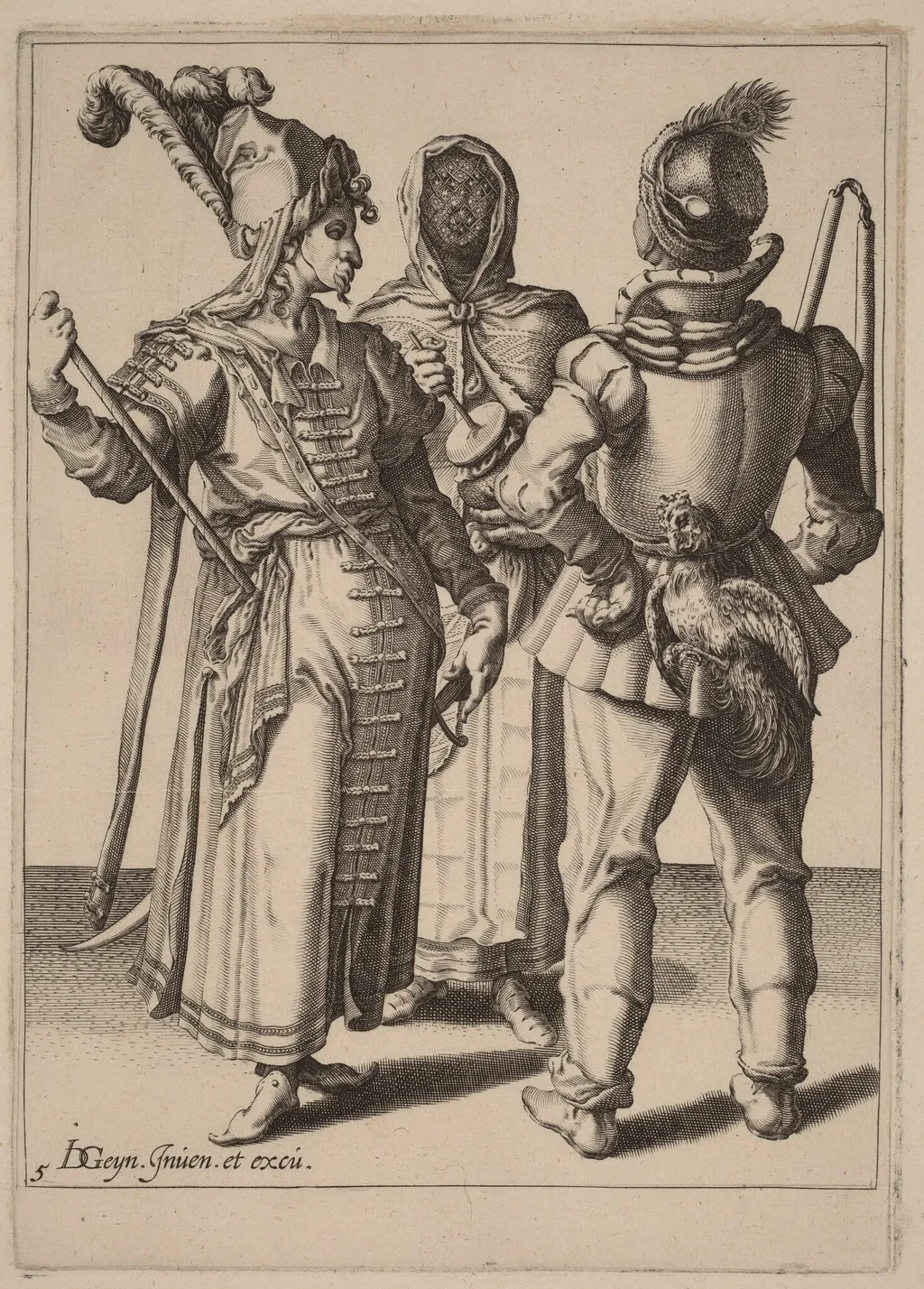
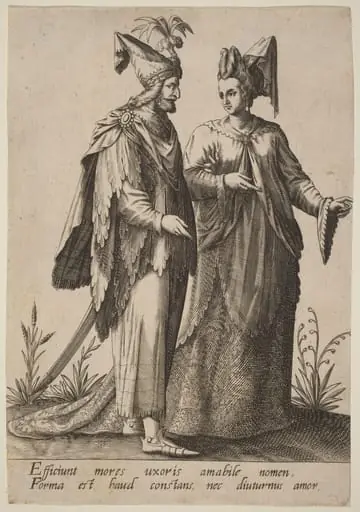
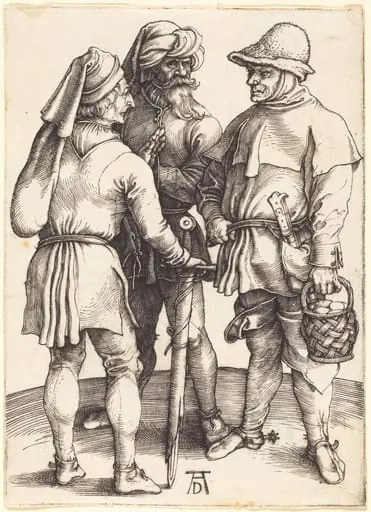
A Grandee, a Peasant, and a Veiled Woman is an ink print by the Renaissance artist Zacharias Dolendo. It dates from 1596 and is held in the collection of the National Gallery of Art. Created in 1596, this engraving presents three figures—a nobleman, a veiled woman, and a peasant—arranged in a stark interior.
About this work
Overview
Created in 1596, this engraving presents three figures—a nobleman, a veiled woman, and a peasant—arranged in a stark interior. Rendered on laid paper, the composition is marked by precise line work that emphasizes the contrast between the richly dressed aristocrat, the concealed face of the woman, and the armored figure with a sword. The scene conveys a formal, contemplative atmosphere.
Subject & Meaning
The three characters embody distinct social strata of the late‑sixteenth‑century Netherlands.
The three characters embody distinct social strata of the late‑sixteenth‑century Netherlands. The grandee, distinguished by a tall hat and buttoned robe, represents the elite; the veiled woman, her face hidden by cloth, suggests modesty or mystery; the peasant, clad in armor and bearing a sword, hints at martial virtue or the rising status of commoners. Their mutual gaze invites reflection on hierarchy and identity.
Technique & Style
Executed by incising a metal plate with fine lines, the print demonstrates the high level of control typical of Dutch engraving at the time. The artist’s use of cross‑hatching creates subtle tonal variations, while the crisp outlines delineate clothing textures and the wooden floor. The lack of background ornamentation focuses attention on the figures, highlighting the engraver’s skill in rendering detail within a limited space.
History & Provenance
The work is attributed to Zacharias Dolendo, a Leiden‑born engraver active in the late 1500s. Dolendo, who likely trained under Jacob de Ghein, was known for surpassing his brother Bartholomeus in precision. His prints often bear a personal cipher, confirming authorship. The engraving has survived on laid paper and appears in several catalogues of Dutch printmaking, tracing its passage through private and institutional collections.
Artist & collection
Artist
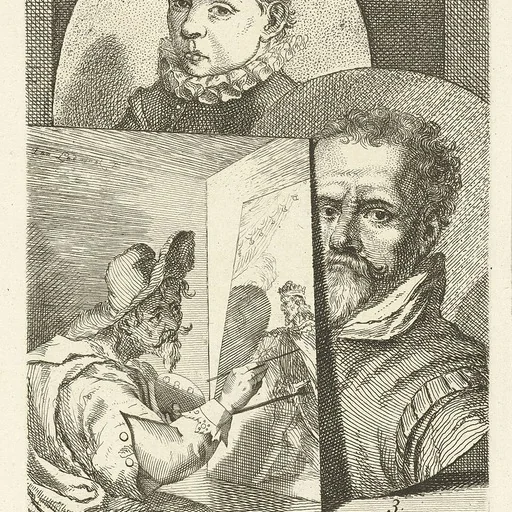
Zacharias Dolendo (1561–1601) was a Dutch engraver. He was the brother of Bartholomeus Dolendo, whom he surpassed both in style and in correctness. He was born at Leyden in 1561, and is said by Huber to have been a…

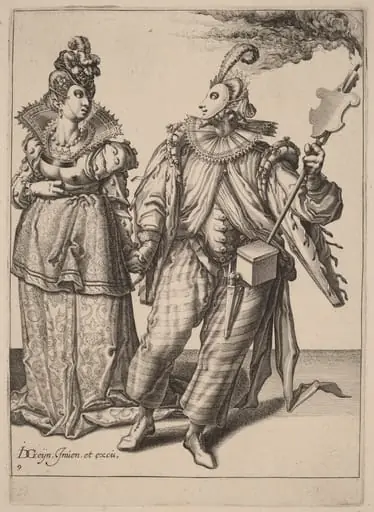 A Woman Led by a Player Holding a Torch
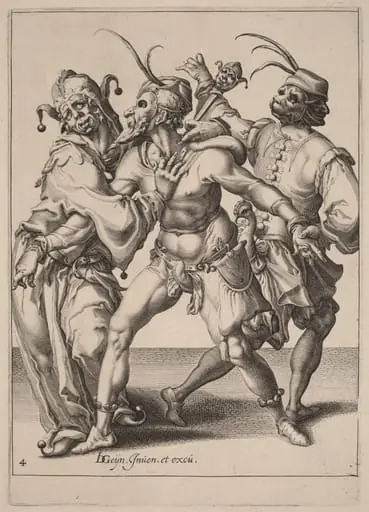 Three Dancing Mummers, Including a Jester
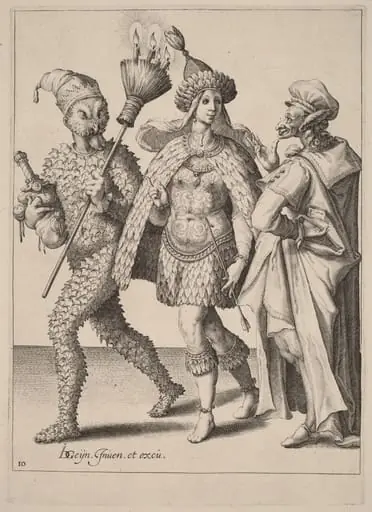 An Old Mummer Addressing a Couple Dressed in Feathers
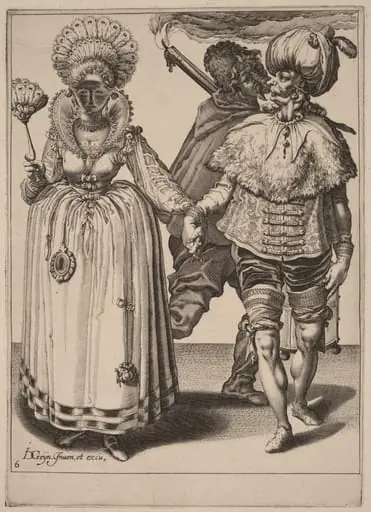 A Man with a Turban Leading a Woman Wearing Peacock Feathers
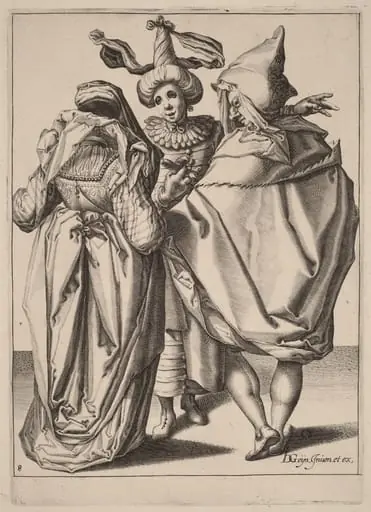 A Couple Addressing a Gesticulating Young Man
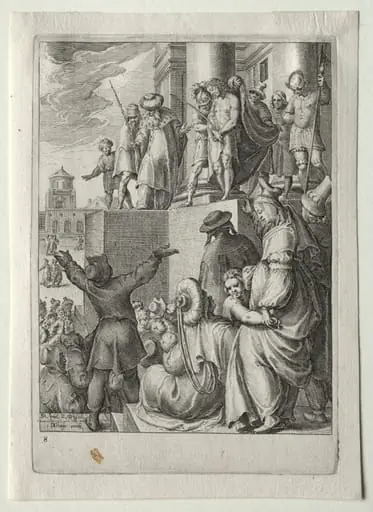 Passion Set: Ecce Homo
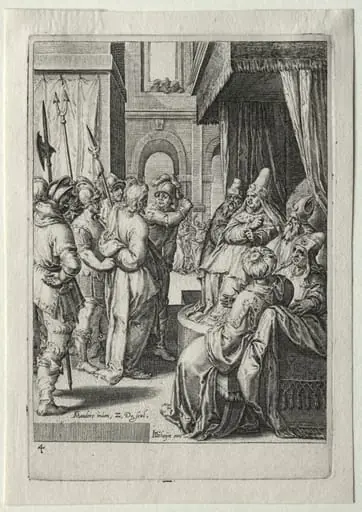 Passion Set: Christ before Herod
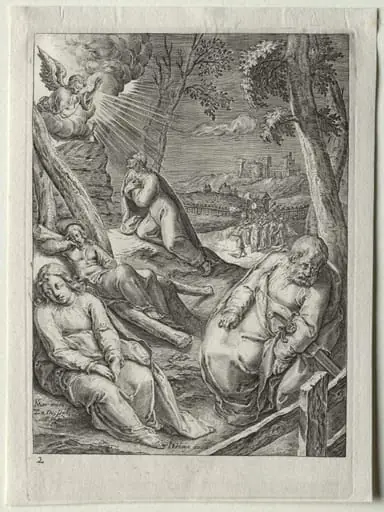 Passion Set: Christ on the Mount of Olives