Artwork
Fragments d'Architecture, Sculpture et Peinture dans le Style antique
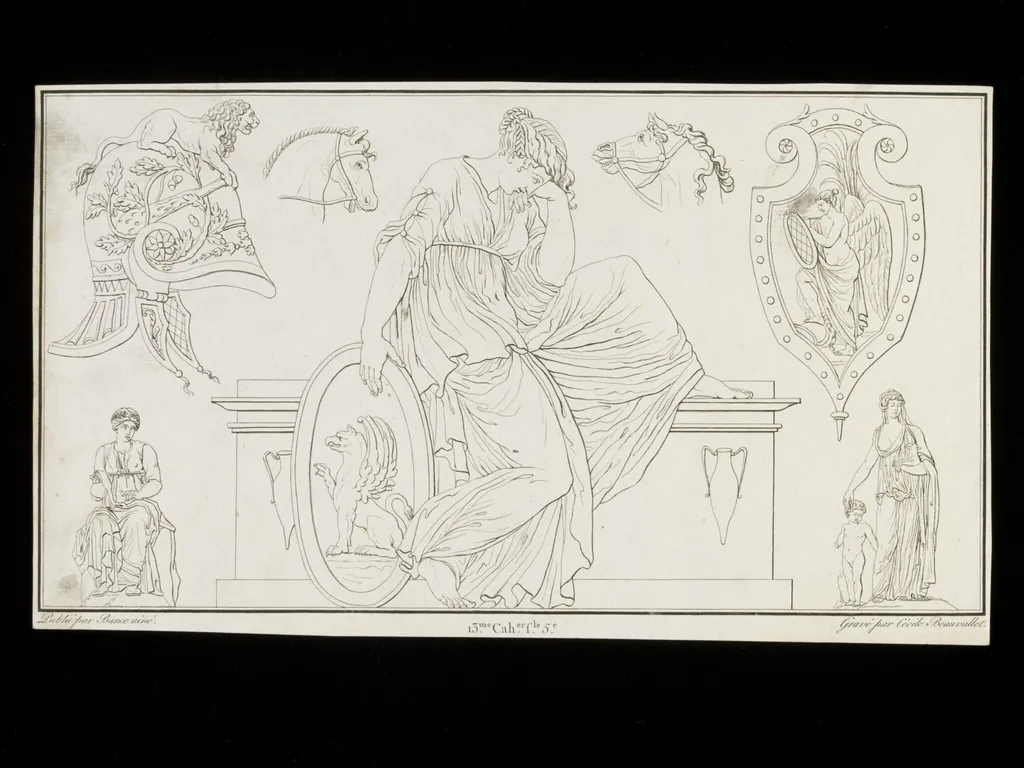
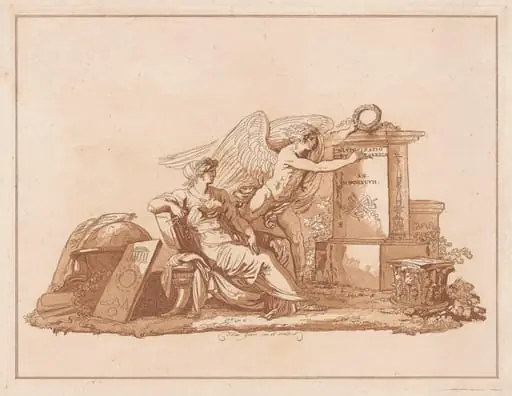
Fragments d'Architecture, Sculpture et Peinture dans le Style antique is a print by the Romanticist artist Pierre-Nicolas Beauvallet. It dates from 1805 and is held in the collection of the Victoria and Albert Museum.
About this work
Overview
Presented as a composite composition, it assembles disparate figures and objects into a single sheet, evoking the fragmented remains of ancient sites.
Created in 1805 by Pierre-Nicolas Beauvallet, this print compiles architectural, sculptural, and painterly elements inspired by antiquity. Presented as a composite composition, it assembles disparate figures and objects into a single sheet, evoking the fragmented remains of ancient sites. The work belongs to a tradition of scholarly visual cataloging, blending observation with imaginative reconstruction to suggest the aesthetic legacy of classical civilization.
Subject & Meaning
The print features seated and standing female figures alongside symbolic objects: shields bearing a horse’s head and a lyre-player, a lion sculpture, and a pedestal. These elements draw from classical mythology and iconography, though their arrangement is not historically accurate. The composition suggests a romanticized vision of antiquity—not a documented excavation, but a curated imaginary ruin, reflecting early 19th-century fascination with the past as a source of cultural ideals.
Technique & Style
Beauvallet employed fine, light linework to render each element with precision yet an airy, sketchlike quality. The absence of heavy shading and the delicate contours give the print an unfinished, ephemeral character, as if capturing fleeting impressions of ruins. This approach aligns with antiquarian illustration practices of the time, prioritizing clarity and suggestive detail over dramatic finish, inviting the viewer to mentally reconstruct the whole.
History & Provenance
The print was produced in Paris during a period of renewed interest in classical antiquity following archaeological discoveries in Italy and Greece. It entered the collection of the Victoria and Albert Museum, where it remains as part of its extensive holdings in decorative arts and print culture. Its survival reflects its role as a reference object for artists and designers engaged with neoclassical aesthetics in the early 1800s.
Context
Beauvallet’s work emerged amid a broader European movement to document and reinterpret ancient art. Architects and designers used such prints as sources for ornamentation and composition. Unlike formal archaeological records, this piece blends real motifs with invented arrangements, revealing how classical forms were adapted for contemporary taste—serving both scholarly and decorative purposes in an age of revivalism.
Legacy
Though not widely known today, the print exemplifies how antiquarian imagery functioned as a bridge between scholarship and artistic practice. Its composite structure influenced later decorative arts publications and illustrated manuals. Beauvallet’s approach—mixing observed fragments with imaginative reconstruction—became a model for how classical heritage was visually transmitted beyond academic circles into broader cultural consciousness.
Artist & collection

Artist
Pierre-Nicolas Beauvallet, was a French sculptor, draftsman and printmaker.

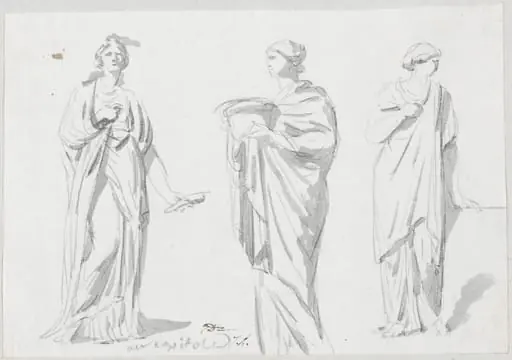 A Muse and Two Female Figures
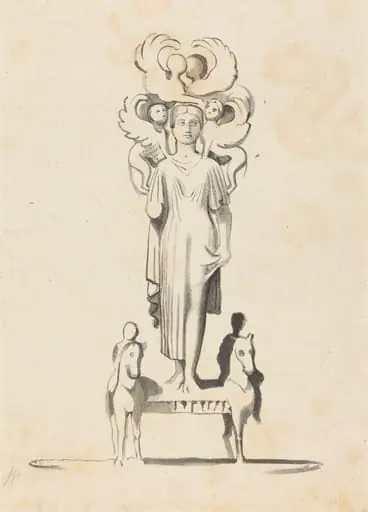 Bronze Figure of Minerva, Found in the Barrowof Achilles
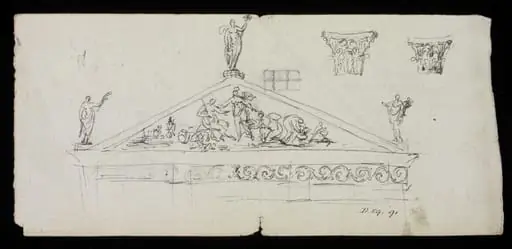 Untitled
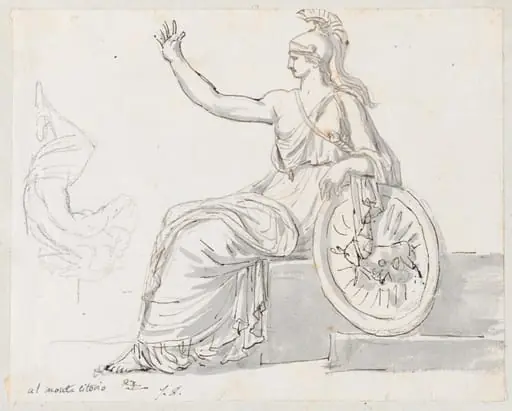 Roma, from the Base of the Antonine Column
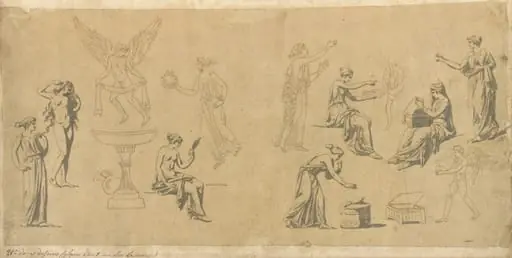 Studies of Classical Women, with Eros
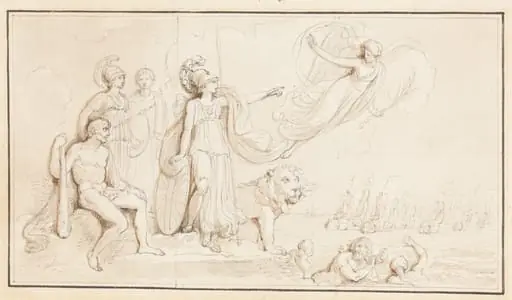 An Allegory of Britain's Naval Might
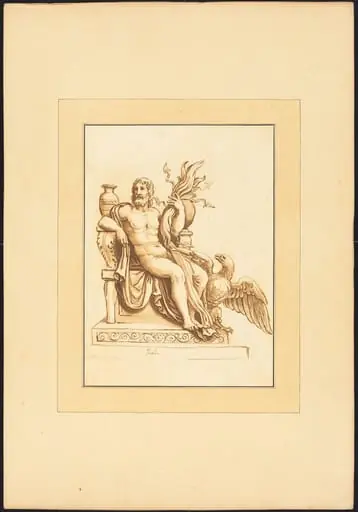 Jupiter
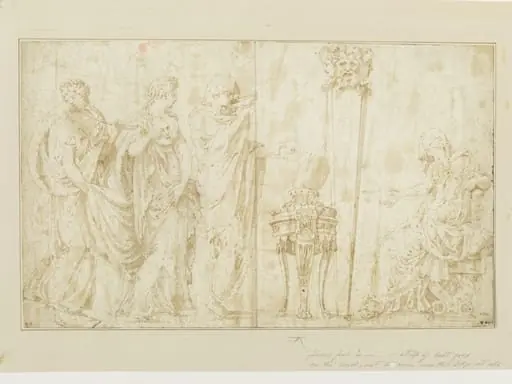 A sacrifice
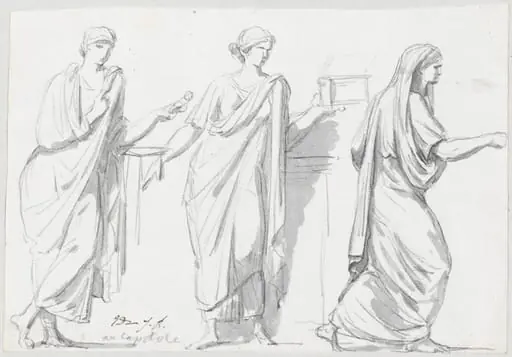 Figures from the Sarcophagus of the Muses
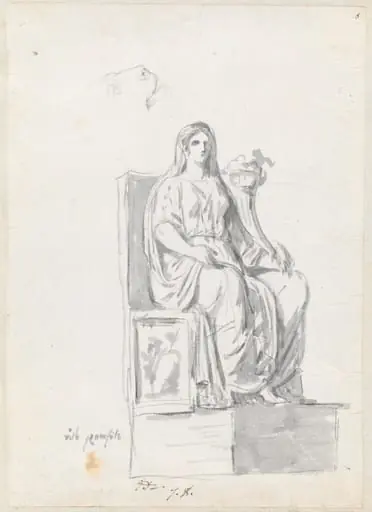 Abundance and the Face of a Lion, from the Villa Pamphili
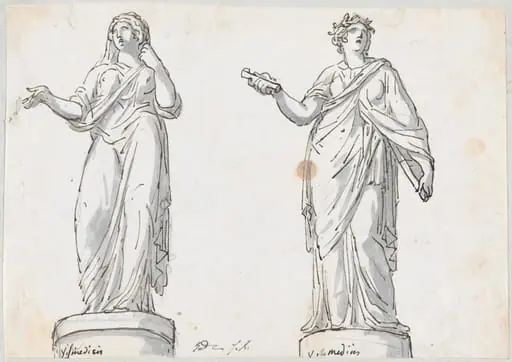 Two Female Figures from the Villa Medici
 Personification of Architecture with the Genius of the Fine Arts