Artwork
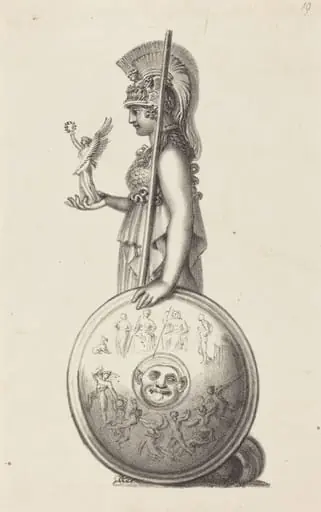
Bronze Figure of Minerva, Found in the Barrowof Achilles
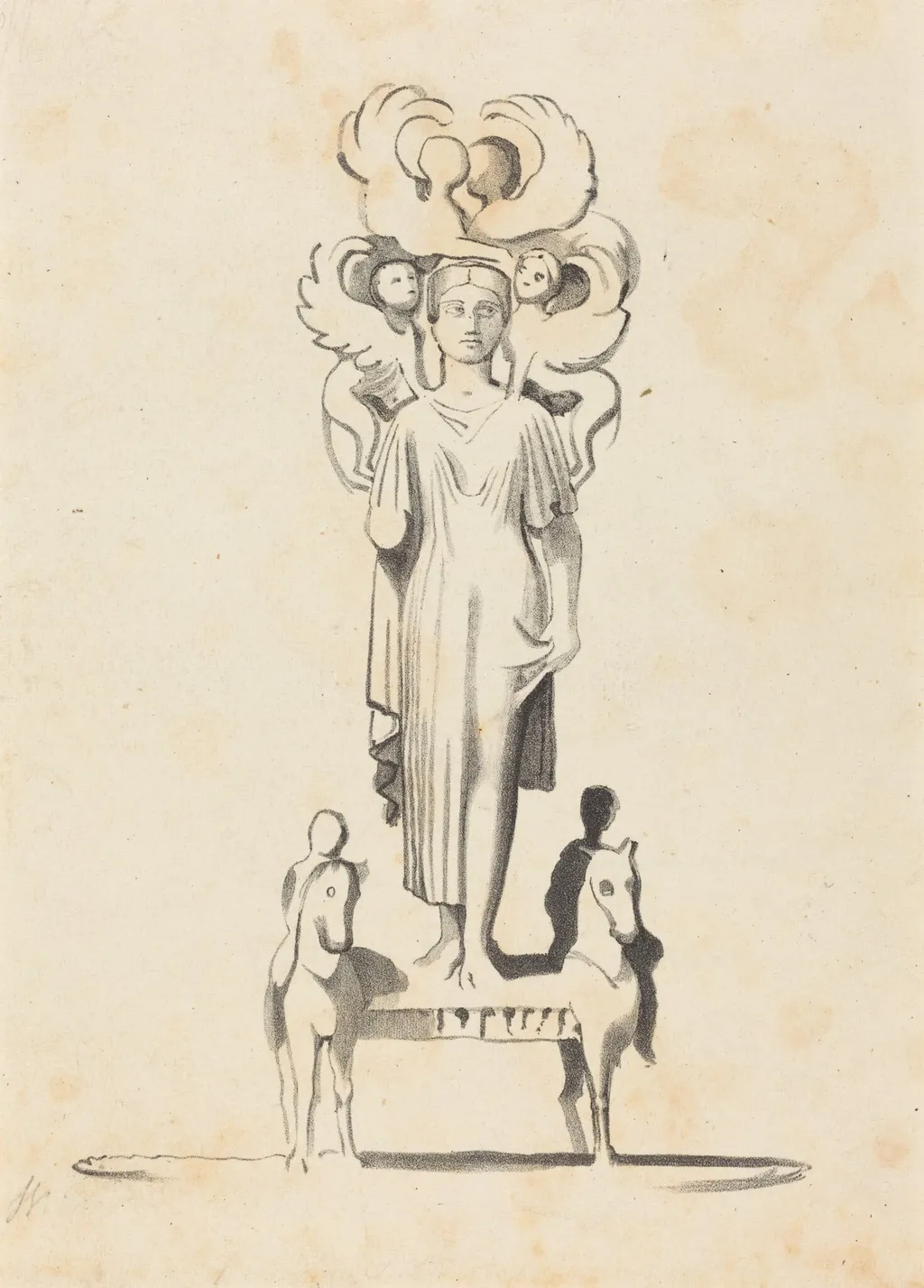
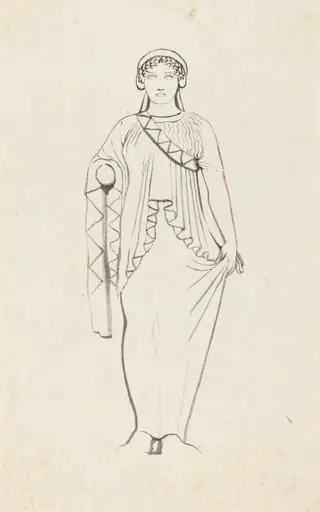
Bronze Figure of Minerva, Found in the Barrowof Achilles is an ink print by the Romanticist artist W. Walton. It dates from 1829 and is held in the collection of the National Gallery of Art. Created in 1829 by the British printmaker W.
About this work
Overview
Created in 1829 by the British printmaker W. Walton, this lithographic proof depicts a mythological scene titled Bronze Figure of Minerva, Found in the Barrow of Achilles. The work exists as a preliminary impression, lacking the final lettering that would normally accompany a finished print.
Subject & Meaning
The central figure is a towering, robed deity wearing a helmet and winged appendages, identified as Minerva, the Roman goddess of wisdom and war. Below her, two diminutive riders on horseback gaze upward, suggesting reverence or awe toward the divine presence.
Technique & Style
Walton employed a loose, sketch‑like line in this lithograph, characteristic of a study or proof stage. The drawing is rendered with fluid strokes, giving the figure a sense of immediacy, while the horses are reduced to simple, almost stick‑like outlines.
History & Provenance
The title references a supposed discovery of a bronze Minerva statue within a burial mound associated with the legendary hero Achilles. While the print itself is a 19th‑century interpretation, it reflects contemporary fascination with classical archaeology and myth.
Context
In the early 1800s, European artists frequently produced lithographic illustrations of archaeological finds, catering to a public eager for visual access to antiquity. Walton’s work fits within this trend, offering a visual narrative that blends mythic imagination with the era’s archaeological enthusiasm.
Artist & collection


![Statue of Abundance [recto], by Hubert Robert](https://artifactworldgallery.com/img/hubert-robert--statue-of-abundance-recto--af10c767ab97b269-w320.webp)