Artwork
Saint Guenole
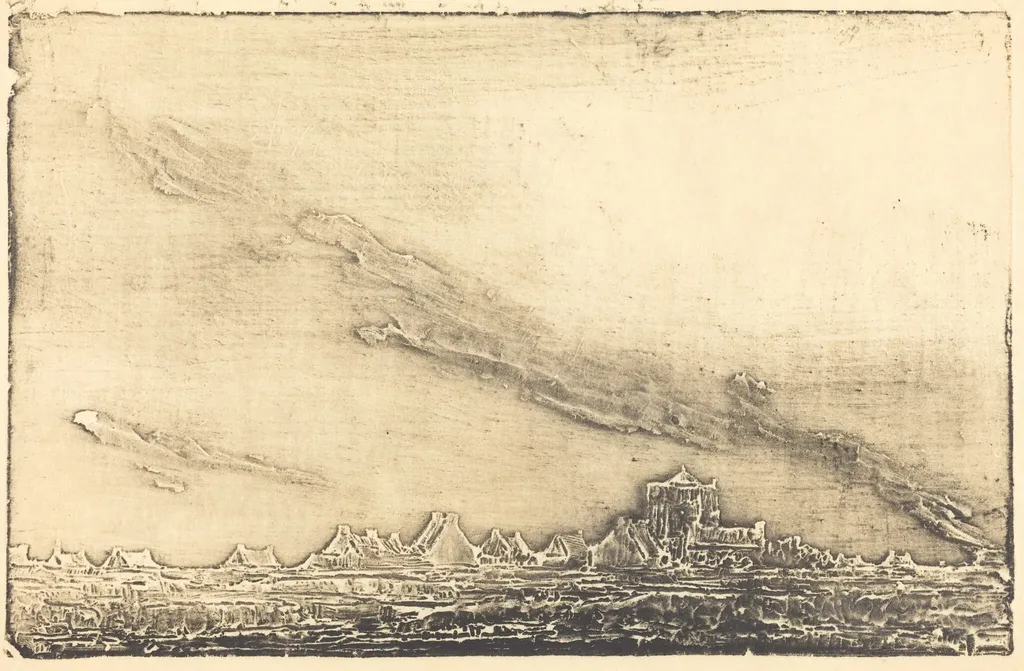
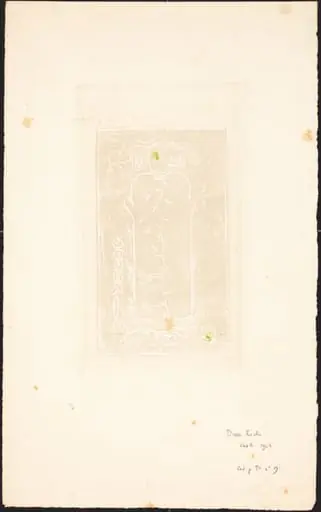
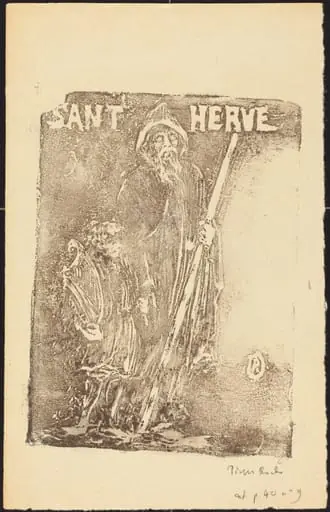
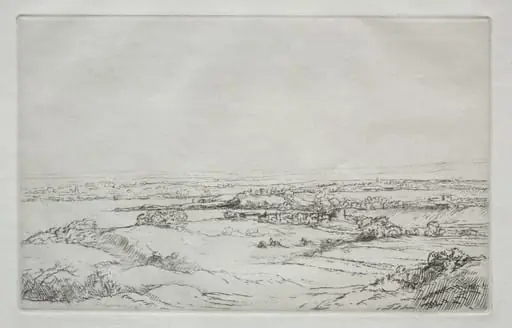
Saint Guenole is a print by the Impressionist artist Pierre Roche. It dates from 1888 and is held in the collection of the National Gallery of Art.
About this work
Overview
This print represents a rare intersection of his graphic and sculptural interests, blending religious subject matter with experimental printmaking.
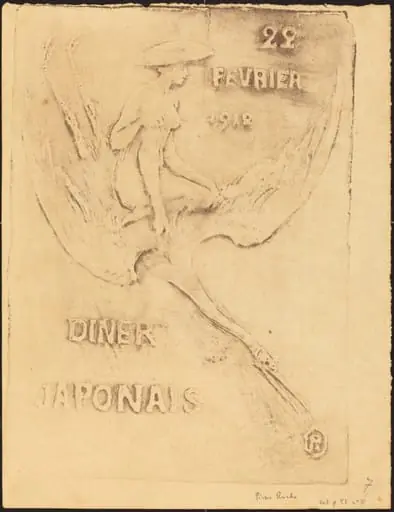
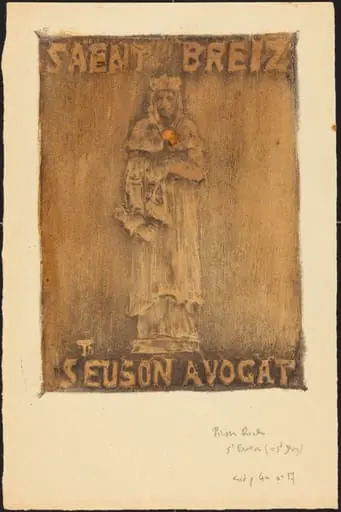
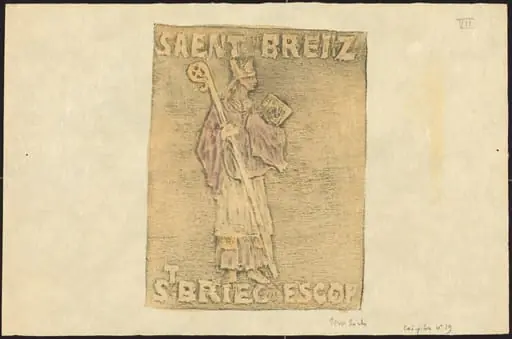
Pierre Roche produced *Saint Guenole* in 1888 as a gypsograph, a relief printing method using plaster-based matrices. Though primarily known as a painter trained at the Académie Julian, Roche was expanding into sculpture around this time, having entered a competition for a Georges Danton monument under Jules Dalou. This print represents a rare intersection of his graphic and sculptural interests, blending religious subject matter with experimental printmaking.
Subject & Meaning
The print depicts Saint Guenole, a 6th-century Breton monk, within a tranquil natural setting. Rather than emphasizing hagiographic narrative, Roche situates the figure subtly within a landscape, suggesting spiritual presence through atmosphere rather than overt symbolism. The quiet composition invites contemplation, aligning the saint’s solitude with the stillness of the environment, reflecting a devotional tone grounded in nature rather than ecclesiastical grandeur.
Technique & Style
Gypsograph allowed Roche to achieve subtle tonal gradations by pressing inked plaster reliefs onto paper. The work’s soft gray tones and muted palette evoke atmospheric depth, with the mountain range rendered in layered washes and the water’s surface suggested by minimal linear cues. The handling of light and texture recalls Impressionist concerns, though the medium limits brushwork, resulting instead in a delicate, embossed quality that emphasizes form through tone rather than line.
History & Provenance
Created in 1888, *Saint Guenole* emerged during a transitional phase in Roche’s career, as he moved from academic painting toward three-dimensional work. No public record of its early ownership exists, but its production coincides with his participation in the Danton monument competition and his continued engagement with printmaking. The piece likely remained in private hands, reflecting its niche status within 19th-century French graphic arts.
Context
In late 19th-century France, religious subjects were increasingly treated with psychological nuance rather than doctrinal rigidity. Roche’s approach aligns with broader trends among artists exploring spirituality through landscape and mood. His use of gypsograph—a technique rarely employed for religious imagery—demonstrates an interest in tactile, intimate formats, contrasting with the monumental public sculptures favored by contemporaries like Dalou.
Legacy
Though not widely exhibited or reproduced, *Saint Guenole* stands as a quiet example of Roche’s interdisciplinary experimentation. It illustrates how academic painters of the era engaged with printmaking beyond traditional etching or lithography, using unconventional materials to explore spiritual themes. The work remains a minor but distinctive artifact of fin-de-siècle French art’s quiet innovations in form and subject.
Artist & collection

Artist
Pierre Roche (Paris, 2 August 1855 – Paris, 18 January 1922), pseudonym of Pierre Henry Ferdinand Massignon, was a French sculptor, painter, ceramist and medallist.

 The Desert
 Spring at Cardross
 Rope-yards (Les corderies)
 Third Study for 'The Ballantrae Road'
 Landscape with a View toward Haarlem (The Goldweigher's Field)
 Plain near a Lake (La plaine pres du lac)
 Valley of the Tay
 Acacia
 Out of Study Window
 La Chapelle Saint-Michel à l'Estre (Second Version)
 He Maketh the Clouds His Chariot
 The Meadow near the Lake (La Plaine Près Du Lac)