Artwork
Saint Brieuc
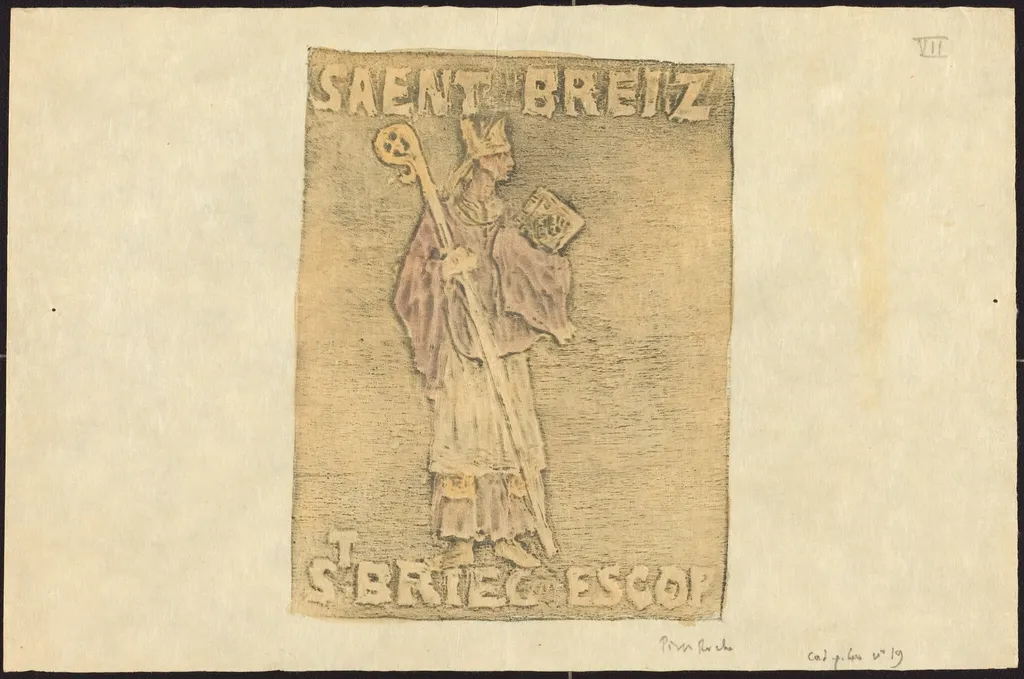
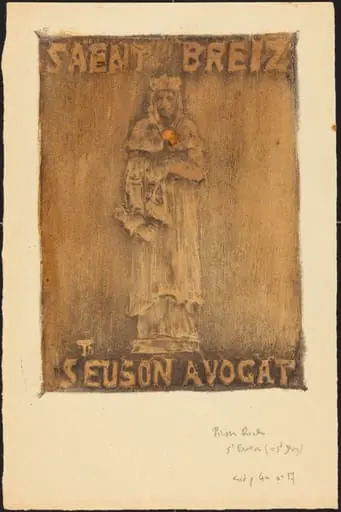
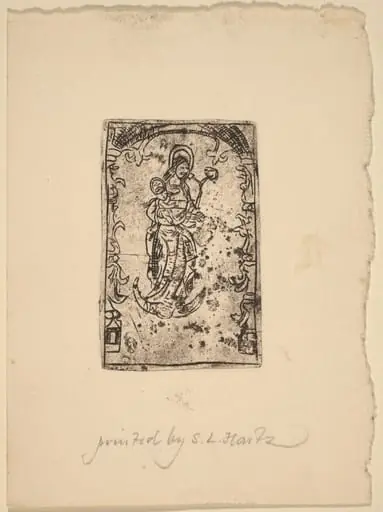
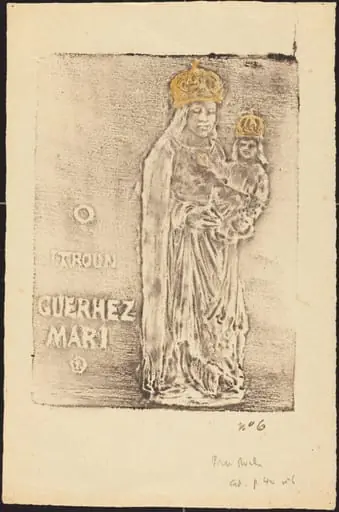
Saint Brieuc is a print by the Impressionist artist Pierre Roche. It dates from 1888 and is held in the collection of the National Gallery of Art.
About this work
Overview
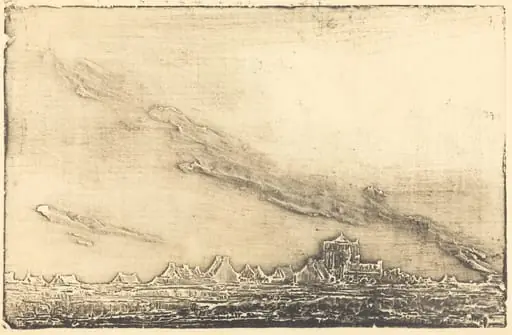
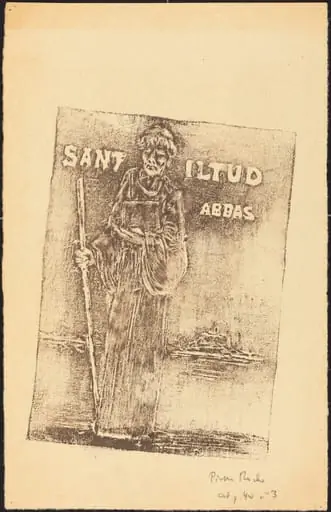
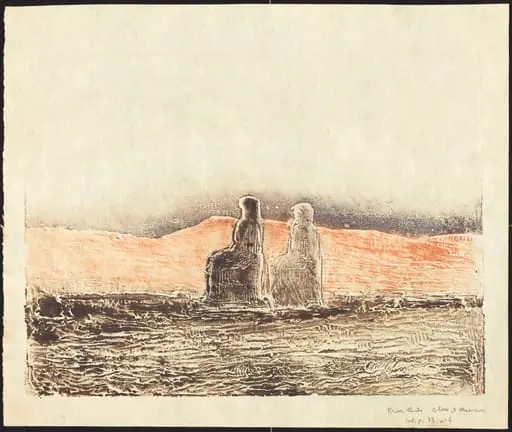
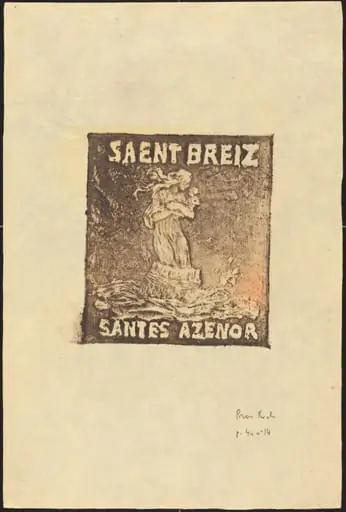
Saint Brieuc is a 1888 gypsograph print by French artist Pierre Roche, depicting a religious figure in a characteristic rough, sketchy style.
Subject & Meaning
The print portrays a robed figure identified as Saint Brieuc, holding symbolic objects: a golden ball and a small book. The plain background contrasts with the figure's textured, expressive lines.
Technique & Style
Created using a gypsograph crayon, which produces chalky marks, the work features quick, draft-like strokes. This approach aligns with the expressive immediacy of late 19th-century artistic movements, though its connection to Impressionism is more in technique than typical subject matter.
History & Provenance
Pierre Roche, initially trained in medicine, pursued art at Académie Julian. Saint Brieuc was created during his experimental period with sculpture (guided by Jules Dalou) and regular participation in the Paris Salon (1884-1889).
Context
While Roche explored various mediums (sculpture, painting, ceramics, medals), Saint Brieuc reflects his brief, yet expressive, engagement with gypsograph printing, a lesser-known aspect of his oeuvre.
Legacy
The legacy of Saint Brieuc is intertwined with Roche's broader artistic experimentation. As a gypsograph print, it showcases a transient phase in his career, with its impact felt more within the scope of his diverse artistic explorations rather than a defining work in the religious genre or Impressionist movement.
Artist & collection

Artist
Pierre Roche (Paris, 2 August 1855 – Paris, 18 January 1922), pseudonym of Pierre Henry Ferdinand Massignon, was a French sculptor, painter, ceramist and medallist.