Artwork
Saint Iltud
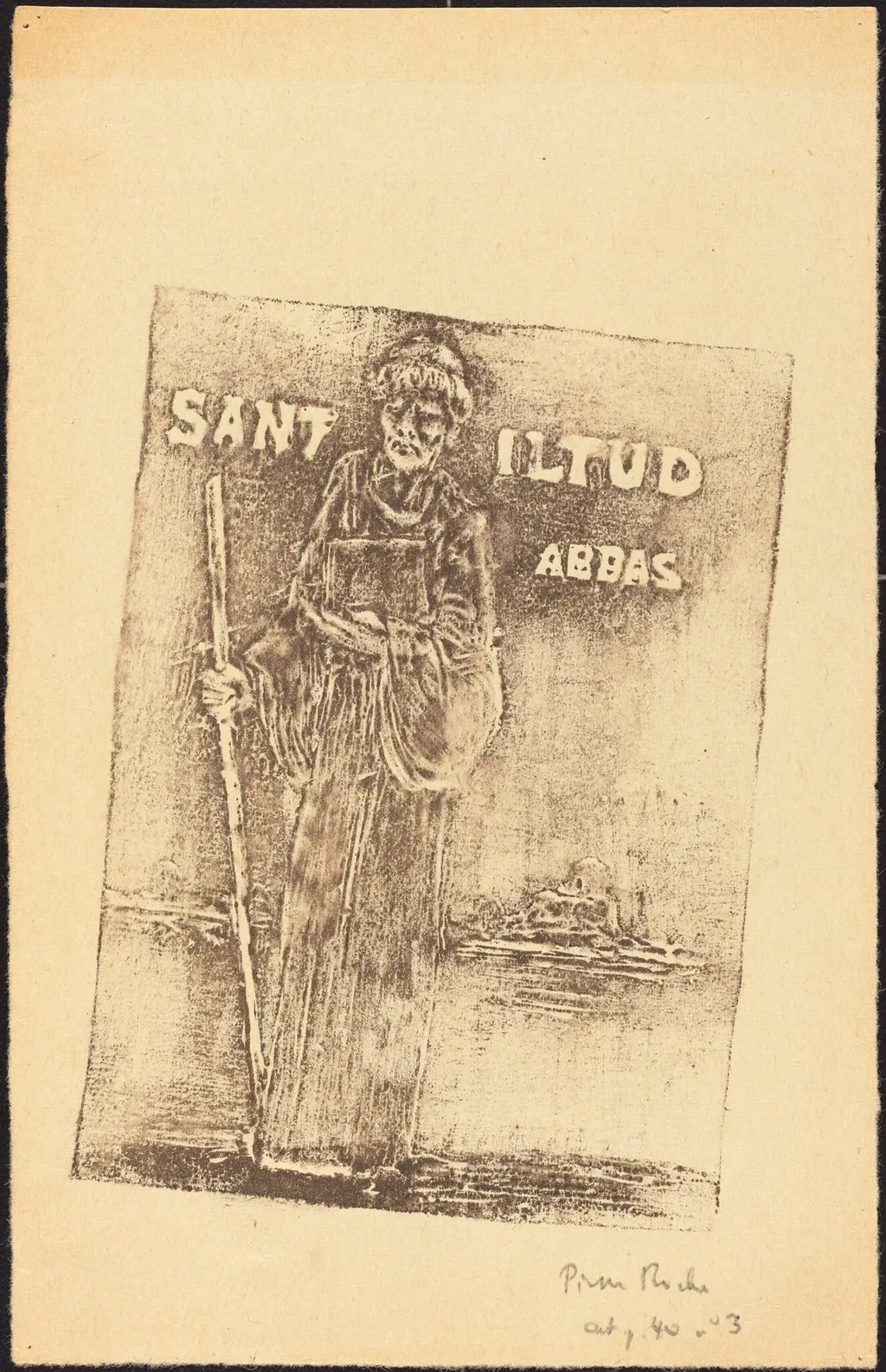
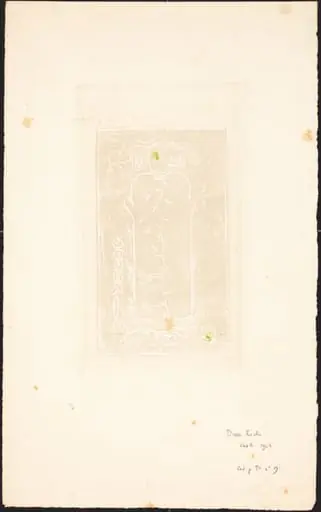
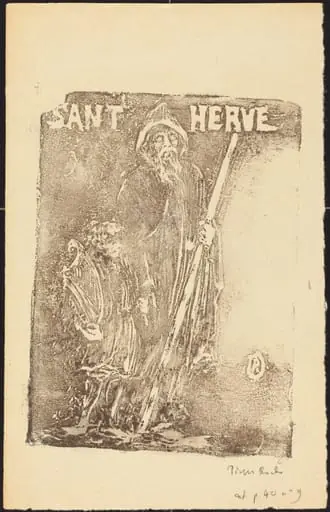
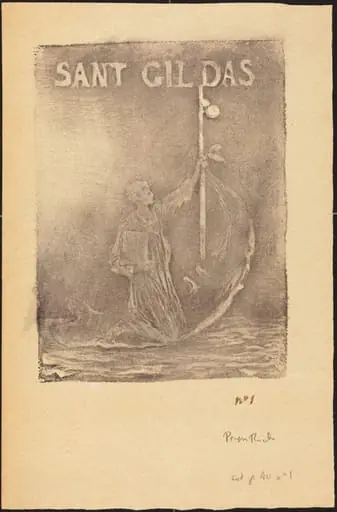
Saint Iltud is a print by the Impressionist artist Pierre Roche. It dates from 1888 and is held in the collection of the National Gallery of Art.
About this work
Overview
Saint Iltud is a 1888 print by French artist Pierre Roche, executed in the gypsograph process. Roche, who studied painting at the Académie Julian, produced this work during the early phase of his career, a period marked by regular participation in the Paris Salon. The piece belongs to his diverse output, which also encompassed sculpture, painting, and ceramic works.
Subject & Meaning
The image presents a solitary, solemn figure clothed in a long robe and holding a staff in the right hand. Rendered in muted sepia tones, the central figure stands against a darkened background that recedes through subtle shading. The serious expression and austere composition convey a contemplative, religious atmosphere typical of devotional portraiture.
Technique & Style
Created with the gypsograph method, the work reproduces a painted composition as a print, preserving the tonal range of the original. The sepia palette emphasizes chiaroscuro, while the simplified forms and restrained detail reflect Roche’s interest in rendering spiritual subjects with a calm, measured aesthetic rather than the fleeting brushwork of contemporary Impressionism.
History & Provenance
Saint Iltud was exhibited at the Paris Salon shortly after its completion, situating it within Roche’s early public reception. The print illustrates the artist’s engagement with religious iconography at a time when he was establishing his reputation across multiple media. Its provenance traces back to the Salon showing, marking it as an early documented example of his printmaking practice.
Artist & collection

Artist
Pierre Roche (Paris, 2 August 1855 – Paris, 18 January 1922), pseudonym of Pierre Henry Ferdinand Massignon, was a French sculptor, painter, ceramist and medallist.

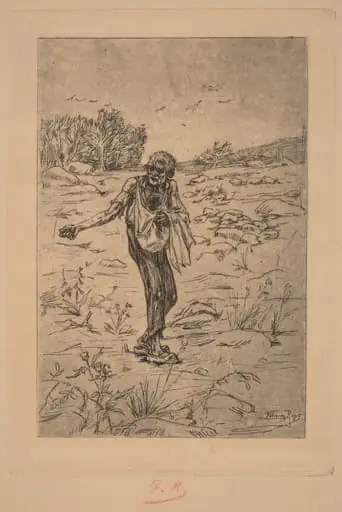 The Parable of the Sower (Le Semeur de Paraboles)
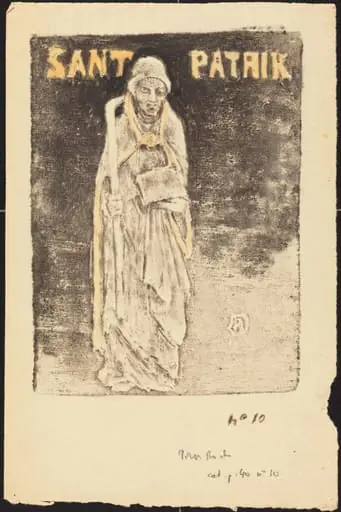 Saint Patrice
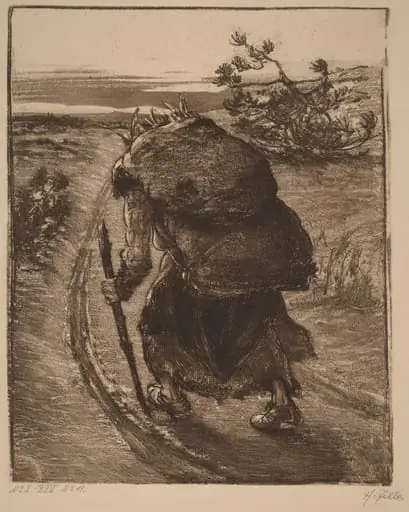 A Woman Carrying a Bundle of Sticks
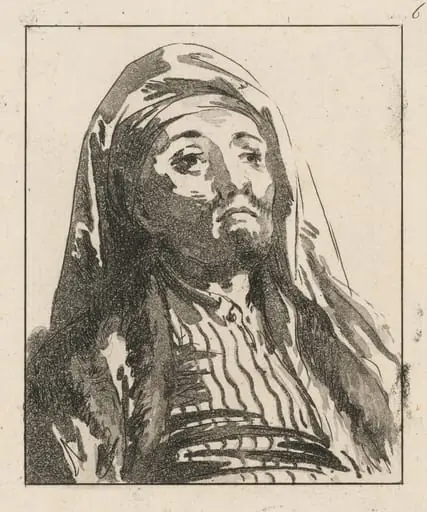 Head of a Man, Slightly Turned
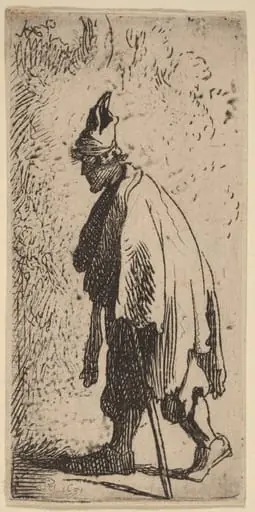 Beggar with a Stick, Walking to the Left
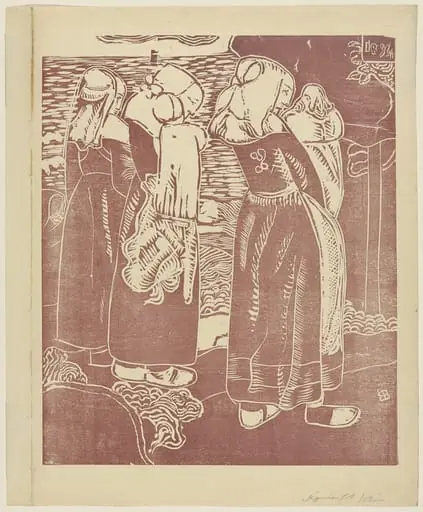 Untitled
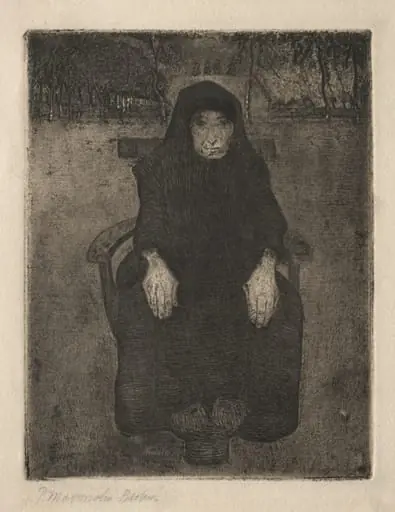 Seated Old Woman
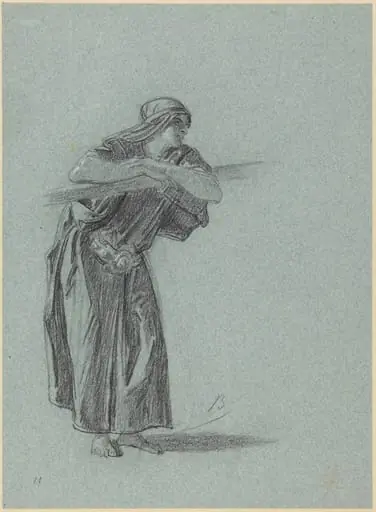 The Woman in the “Song of Songs”
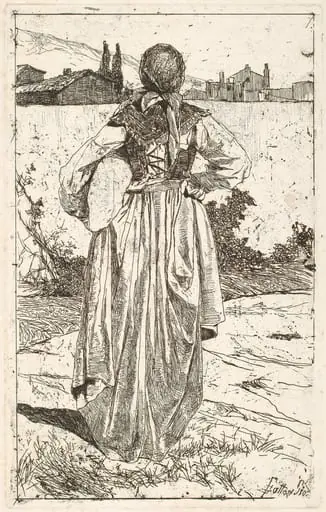 Woman of the Gabbro (Donna al gabbro)
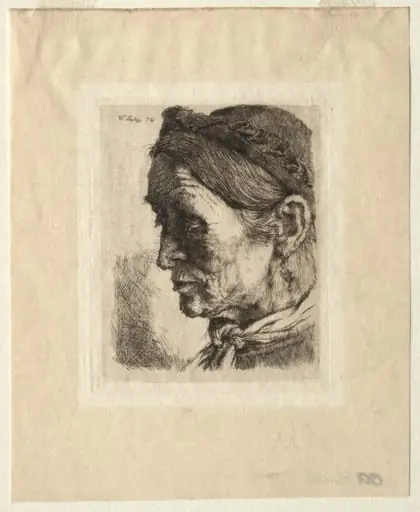 Head of a Peasant Woman
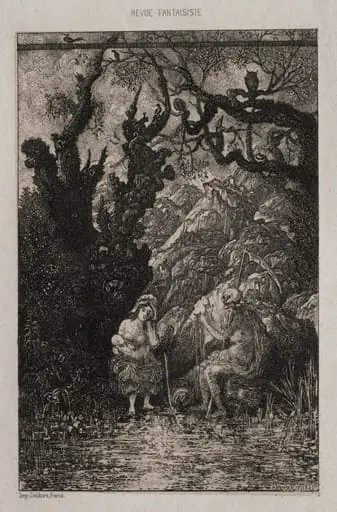 Death and the Young Mother
 Saint Geldas