Artwork
Administering the Felek or bastinado in Persia
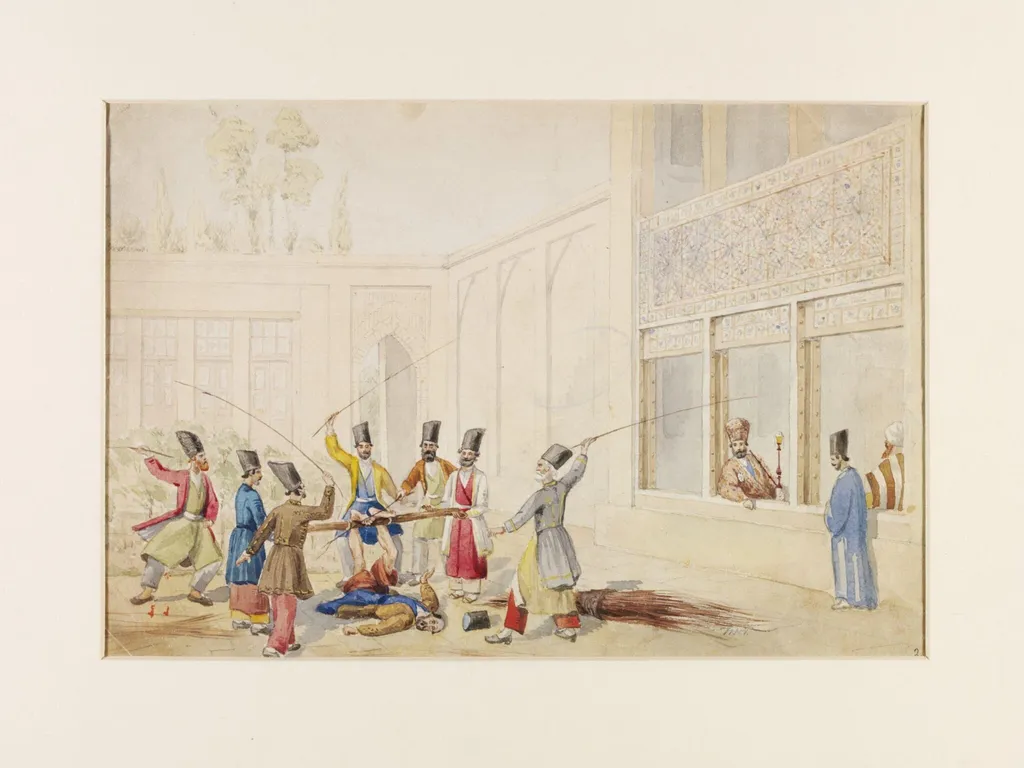
Administering the Felek or bastinado in Persia is a watercolor work on paper by the Impressionist artist William Henry Pierson. It dates from 1869 and is held in the collection of the Victoria and Albert Museum.
About this work
Overview
The composition balances gravity with visual immediacy, avoiding overt sensationalism.
This watercolor captures a judicial practice in 19th-century Persia, illustrating the administration of the felek—a form of corporal punishment involving blows to the soles of the feet. Executed in loose, vivid brushwork, the scene is rendered with attention to costume and spatial arrangement, reflecting its origin as a documentary illustration for a travel account. The composition balances gravity with visual immediacy, avoiding overt sensationalism.
Subject & Meaning
The scene depicts a bound individual lying across a wooden plank while others strike the soles of their feet with rods, a punishment intended to inflict pain without permanent injury. Onlookers, dressed in regional attire, observe or assist, suggesting a ritualized, public act of justice. A figure in a window, holding a hookah, implies surveillance or passive authority, reinforcing the institutional nature of the act within its social context.
Technique & Style
Painted in watercolor, the work employs bright, unblended hues and fluid brushstrokes to convey texture and movement. The figures are rendered with simplified forms, emphasizing gesture over individual detail. The background is lightly suggested, drawing focus to the central action. The medium’s transparency lends a sense of spontaneity, contrasting with the severity of the subject.
History & Provenance
The image was created as an illustration for F.S. Goldsmid’s 1874 travelogue, based on his eyewitness account of Persian judicial customs. It entered the collection of the Royal Geographical Society and was later acquired by a private collector through Christie’s in 1974. Its survival as a standalone work reflects its value as both ethnographic record and artistic artifact.
Context
The felek was a recognized form of punishment in Qajar-era Persia, used to extract confessions or enforce discipline. While often described in Western travel literature as exotic or barbaric, it was embedded in local legal traditions. The watercolor’s inclusion in a published account suggests its role in shaping European perceptions of Persian governance and social order.
Legacy
As a visual record of a now-obsolete practice, the work contributes to historical understanding of judicial customs in 19th-century Iran. Its preservation in institutional collections underscores its significance as a primary source for studying cross-cultural encounters and the representation of punishment in colonial-era documentation.
Artist & collection
Artist
This British artist used watercolours to record punishments in 19th-century Persia.

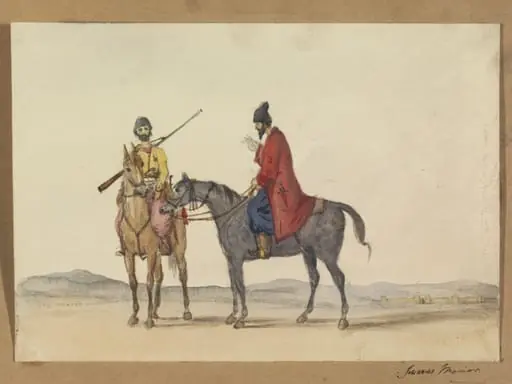 Two Persian Horsemen
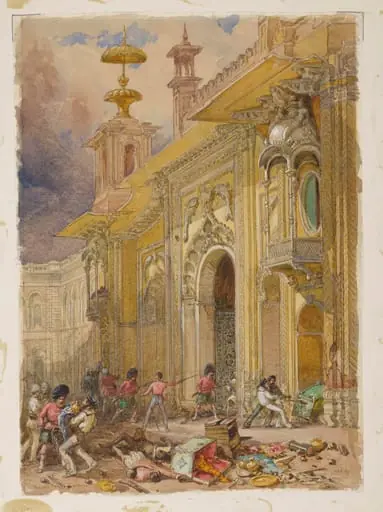 View of the Kaiser Bagh in Lucknow
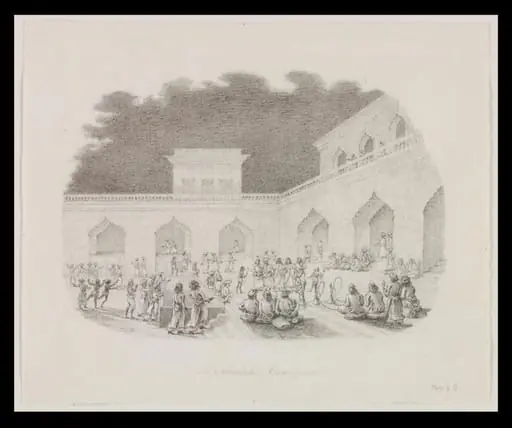 A Nautch, Cawnpoor
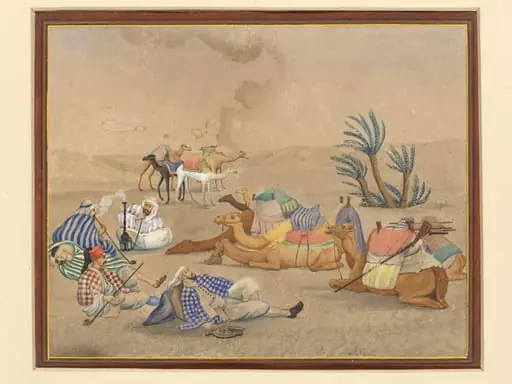 A caravan with camels resting at an oasis in the desert.
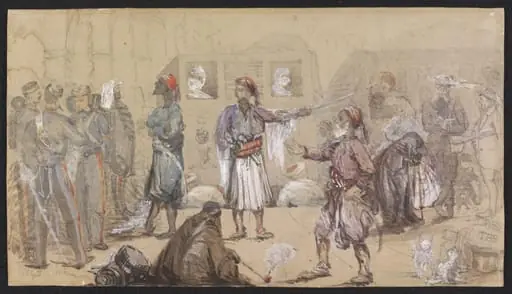 Railway Station, Alexandria
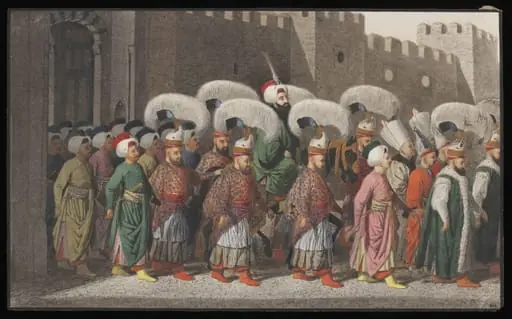 The Sultan riding out in procession to Friday Prayers
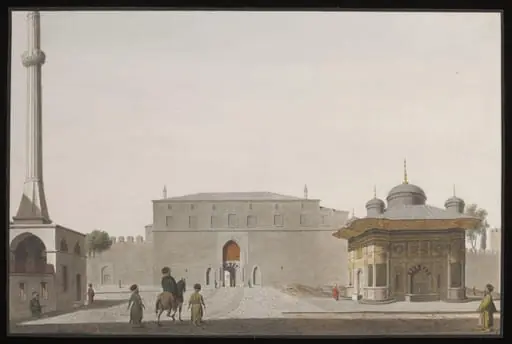 Bab-i-Hümayün (Imperial Gate) to Topkapi Sarayi, with the Fountain of Sultan Ahmet III
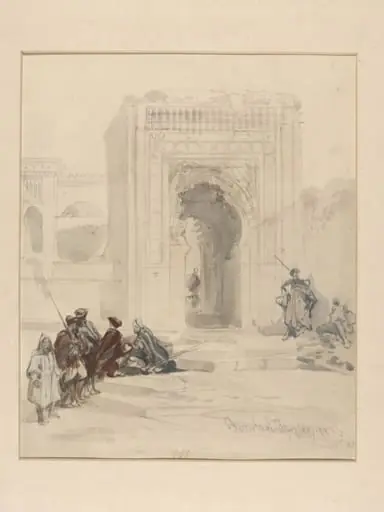 Fortress of Tangier
![Mounted crusader [?] holding discussion with standing man, by Unknown](https://artifactworldgallery.com/img/unknown--mounted-crusader-holding-discussion-with-standing-man--9b99697bca24a72f-w320.webp) Mounted crusader [?] holding discussion with standing man
Mounted crusader [?] holding discussion with standing man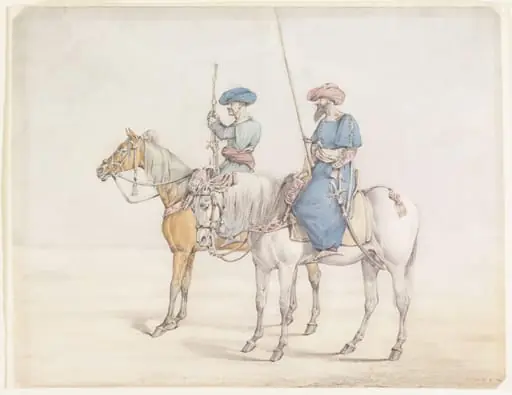 Two armed figures on horseback, probably Mamluks
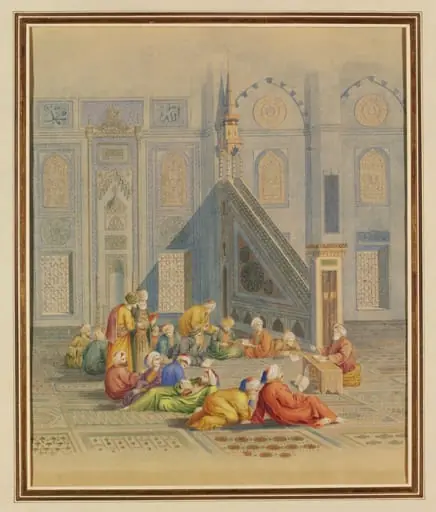 Mosquee di Chelazade
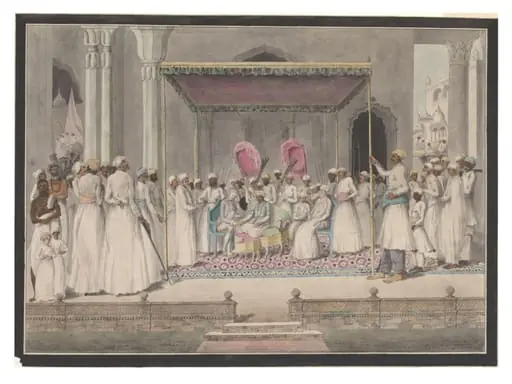 Mubarak ud-Daula, Nawab of Murshidabad, in durbar with the British Resident, Sir John Hadley D'Oyly