Artwork
Sailing Vessels: Two Galleys Sailing Behind an Armed Three-Master with Phaeton and Jupiter in the Sky
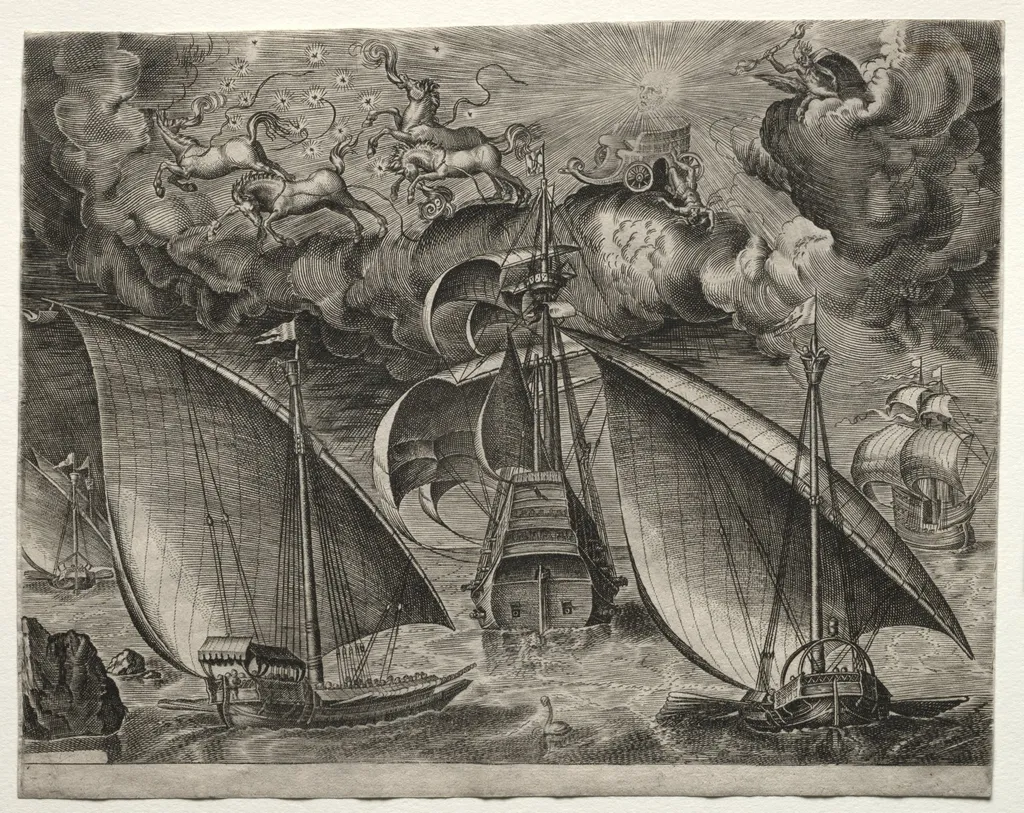
Sailing Vessels: Two Galleys Sailing Behind an Armed Three-Master with Phaeton and Jupiter in the Sky is a print by the Renaissance artist Pieter Brueghel the Elder. It dates from 1563 and is held in the collection of the Cleveland Museum of Art.
About this work
This painting is called Sailing Vessels: Two Galleys Sailing Behind an Armed Three-Master with Phaeton and Jupiter in the Sky.
It was created by Pieter Bruegel between 1561 and 1565.
The painting is an allegory, which means it has a hidden meaning behind the visible scene, and to learn more about this style, you can look up the movement: Renaissance.
Overview
Pieter Bruegel the Elder produced the print titled *Sailing Vessels: Two Galleys Sailing Behind an Armed Three-Master with Phaetaon and Jupiter in the Sky* around 1563, during the later phase of his career. The work depicts a fleet of ships on a turbulent sea, with mythological figures positioned above the vessels, and is executed as an allegorical composition rather than a straightforward maritime scene.
Subject & Meaning
The image juxtaposes two modest galleys with a heavily armed three‑master, suggesting a hierarchy of power among the vessels. Above them, the figures of Phaetaon and Jupiter hint at classical references, inviting viewers to interpret the scene as a moral or philosophical commentary on ambition, authority, or the relationship between earthly and divine forces.
Technique & Style
Created as a print, Bruegel employed intricate line work and cross‑hatching to render atmospheric effects and the texture of water. The composition reflects his characteristic attention to detail and his ability to integrate landscape elements with narrative content, extending the genre scenes for which he is celebrated into a more expansive, allegorical format.
Context
By the early 1560s, religious subjects were losing prominence in Northern European art, and artists like Bruegel began to explore secular and mythological themes. This work exemplifies that shift, aligning with the broader Renaissance interest in classical mythology and the use of allegory to convey complex ideas within a visual framework.
History & Provenance
The print was produced between 1561 and 1565, a period when Bruegel was actively publishing a series of engravings and woodcuts. While the original plate’s ownership history is not fully documented, the work has been included in several collections of Renaissance prints, reflecting its continued relevance to scholars of Bruegel’s oeuvre.
Artist & collection
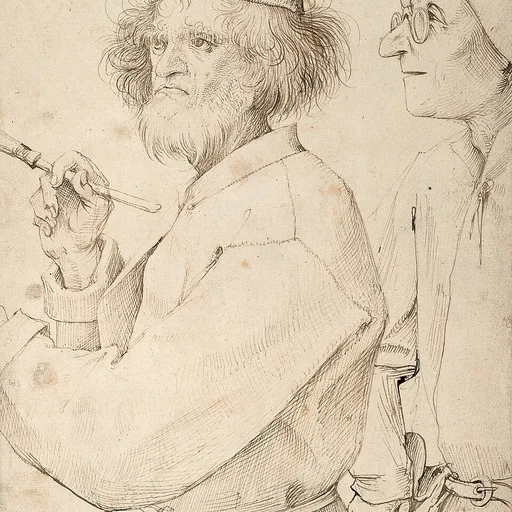
Artist
Pieter Bruegel (also Brueghel or Breughel) the Elder ( BROY-gəl, US also BROO-gəl; Dutch: ; c.

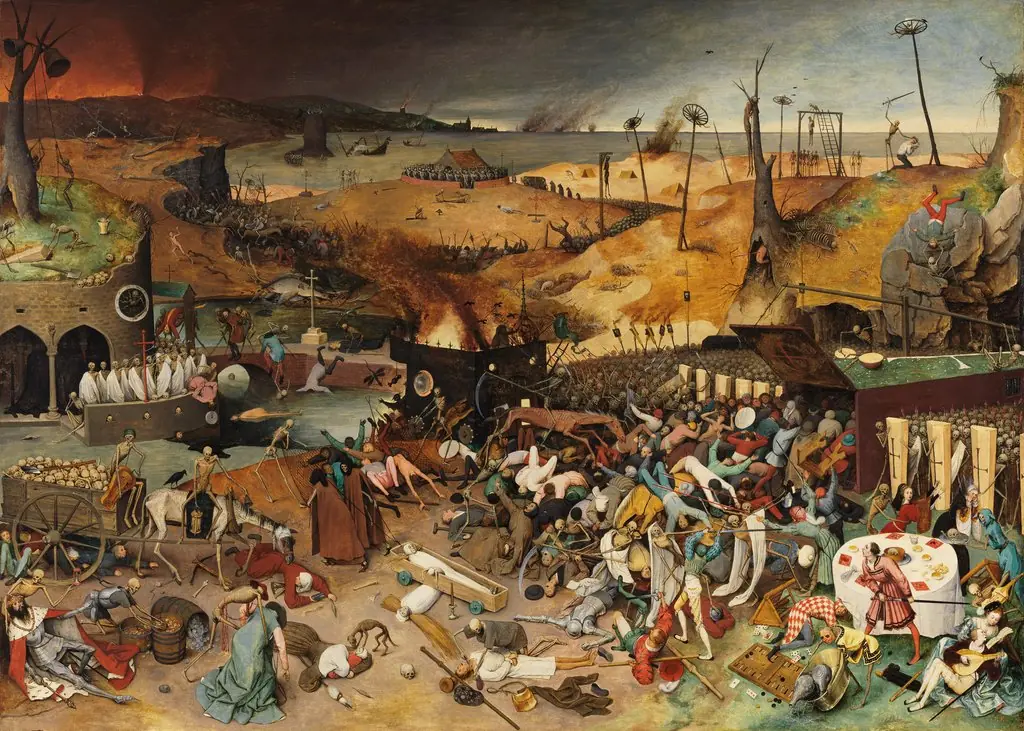
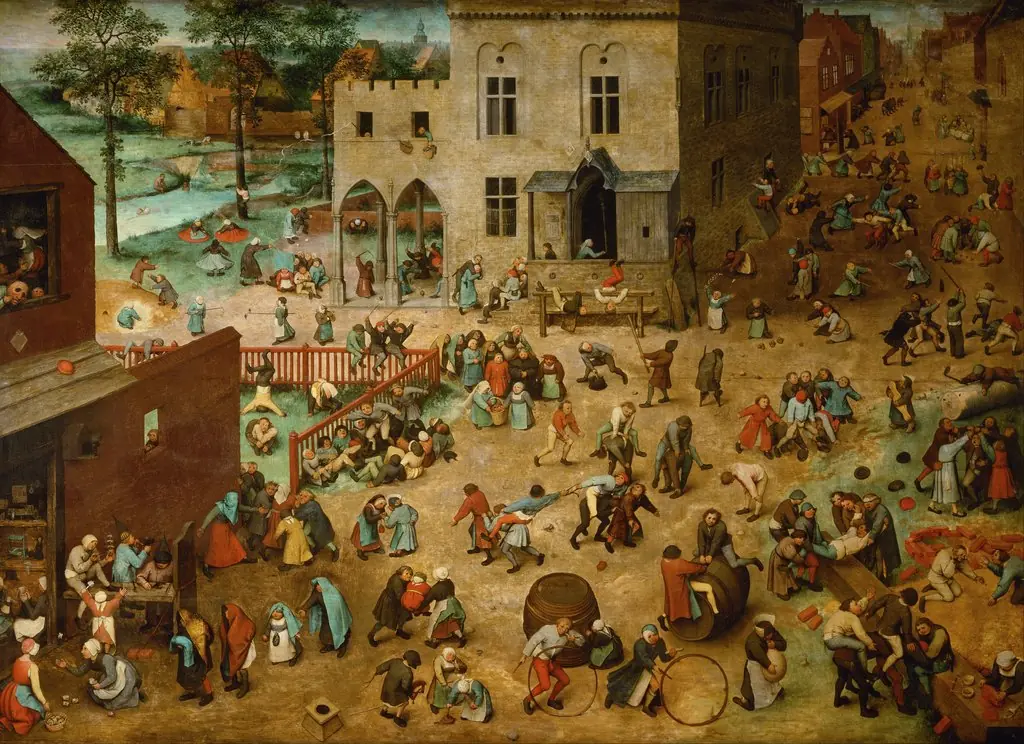
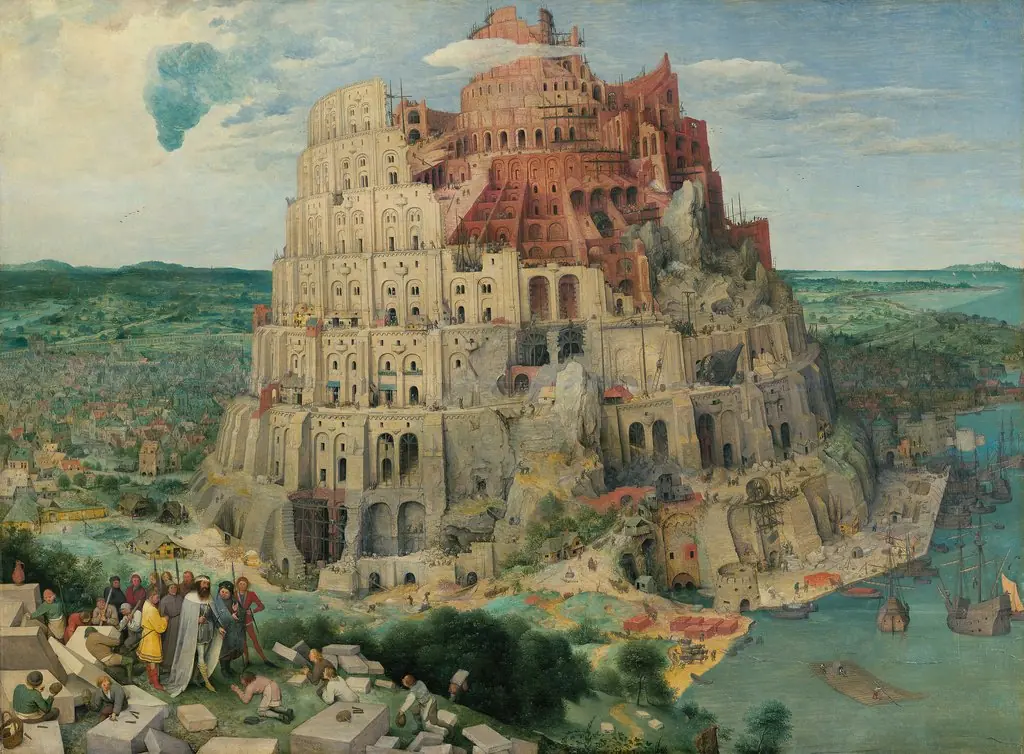
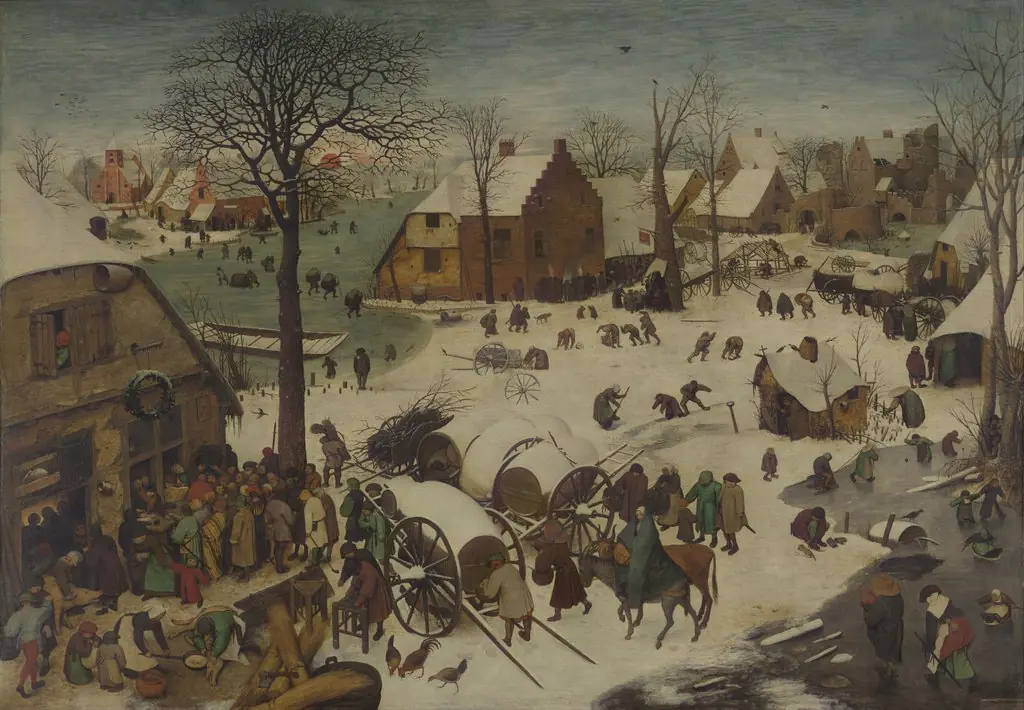
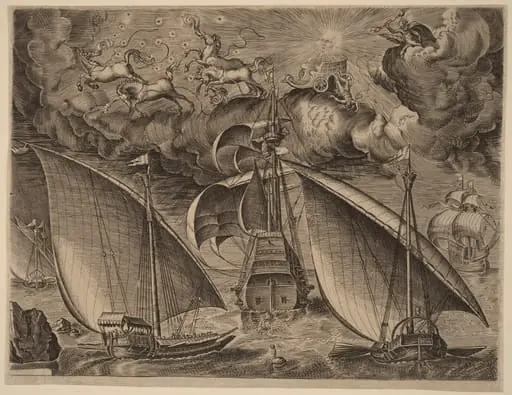 Two Galleys behind an Armed Three-Master with Phaethon and Jupiter in the Sky
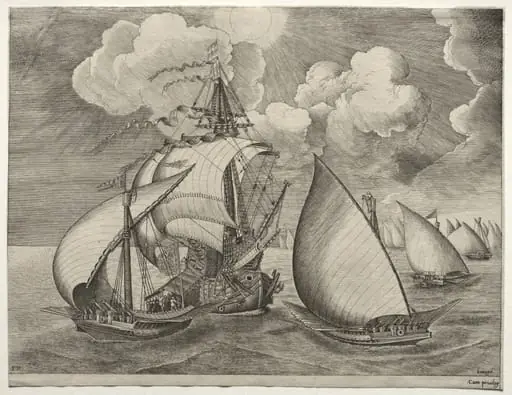 Sailing Vessels: A Fleet of Galleys Escorted by a Caravel
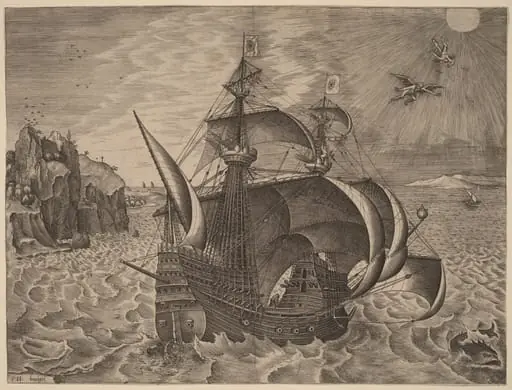 Armed Three-Master with Daedalus and Icarus in the Sky
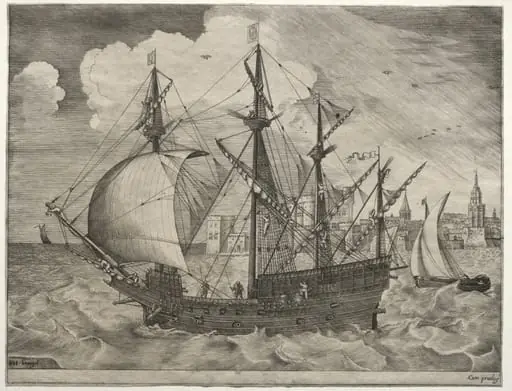 Sailing Vessels: Armed Four-Master Putting Out to Sea
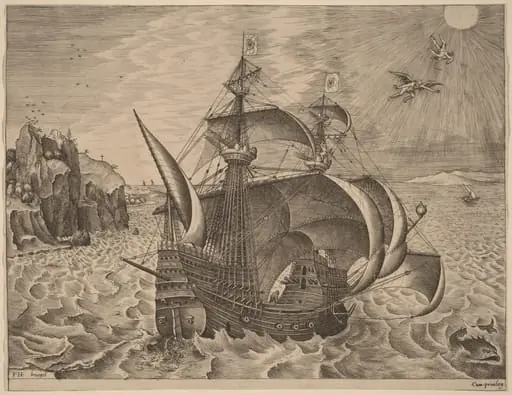 Armed Three-Master with Daedalus and Icarus in the Sky
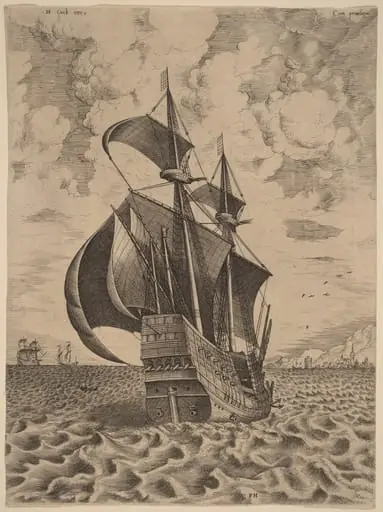 Armed Four-Master Sailing towards a Port
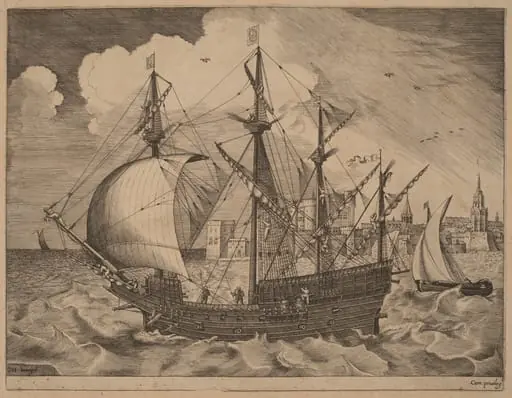 Armed Four-Master Putting Out to Sea
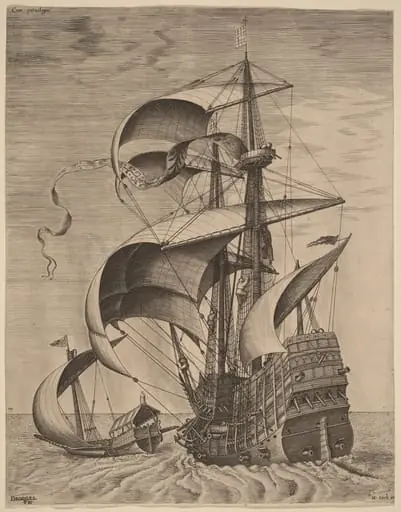 Armed Three-Master on the Open Sea, Accompanied by a Galley
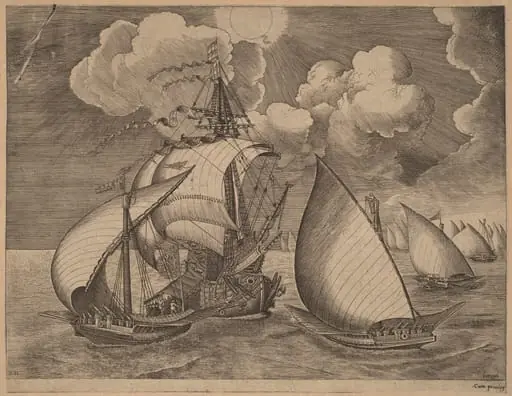 A Fleet of Galleys Escorted by a Caravel
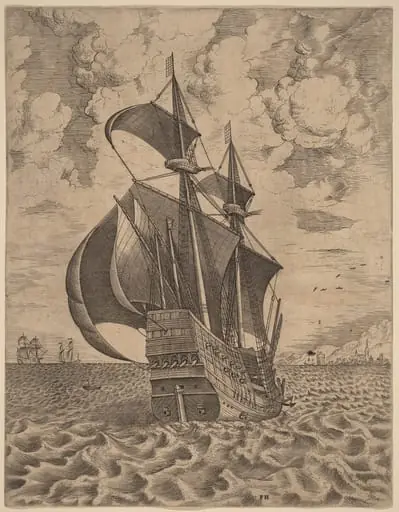 Armed Four-Master Sailing towards a Port
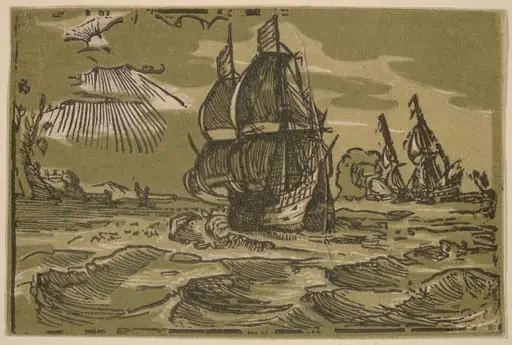 Two Three-Master Ships off a Coastline
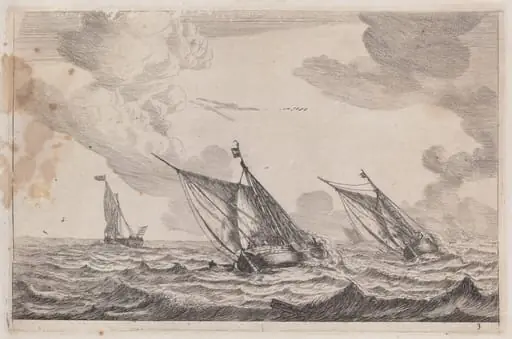 Three Sailing Vessels at Choppy Sea