Artwork
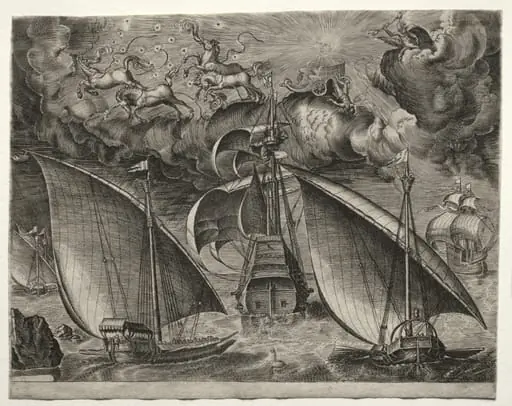
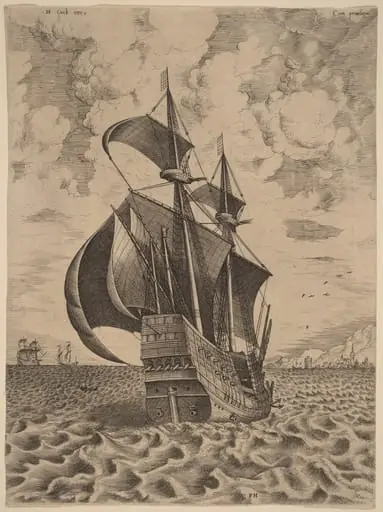
Two Galleys behind an Armed Three-Master with Phaethon and Jupiter in the Sky
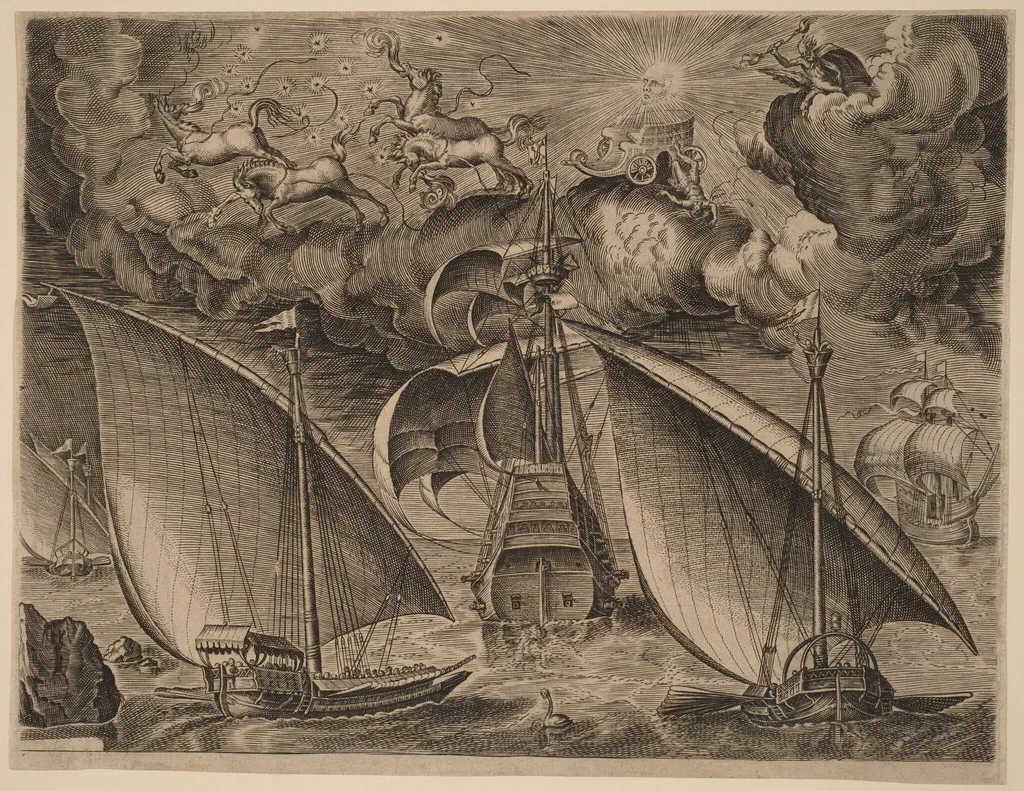
Two Galleys behind an Armed Three-Master with Phaethon and Jupiter in the Sky is an ink print by the Renaissance artist Cornelis Cort. It dates from 1565 and is held in the collection of the National Gallery of Art.
About this work
Overview
Created in 1565 by Dutch engraver Cornelis Cort, this print combines maritime realism with classical mythology. Executed in fine-line engraving on laid paper, it portrays three vessels on turbulent seas beneath a celestial drama. Cort, who worked in Italy under the name Cornelio Fiammingo, was known for translating paintings into detailed prints, bridging Northern and Italian artistic traditions.
Subject & Meaning
The scene juxtaposes a heavily armed three-masted ship with two smaller galleys, all navigating rough waters. Above, the myth of Phaethon—son of Helios, who lost control of the sun chariot—is rendered with Jupiter hurling a thunderbolt to stop him. The pairing of naval activity and divine intervention suggests a parallel between human ambition and cosmic order, common in Renaissance allegory.
Technique & Style
The contrast between the detailed vessels and the ethereal mythological figures demonstrates his skill in balancing realism with symbolic imagery.
Cort employed precise, controlled engraving lines to model light and shadow across the ships’ hulls, rigging, and churning waves. The sky’s turbulent clouds and winged horses are rendered with dynamic, intersecting strokes that convey motion and tension. The contrast between the detailed vessels and the ethereal mythological figures demonstrates his skill in balancing realism with symbolic imagery.
History & Provenance
Cort produced this work during his final dozen years in Italy, where he collaborated with artists and publishers to disseminate compositions by leading painters. Though the original painting it may have reproduced is now lost, the engraving circulated widely among collectors and scholars, contributing to the spread of Italianate themes in Northern European print culture.
Context
In mid-16th-century Europe, maritime power and classical mythology were frequently linked in visual culture. Naval scenes reflected rising seafaring states, while myths like Phaethon’s served as moral warnings. Cort’s fusion of these elements catered to educated audiences familiar with both contemporary politics and ancient literature, reinforcing the era’s humanist ideals.
Legacy
Cort’s engraving exemplifies the Northern Renaissance’s capacity to adapt Italian subjects through meticulous printmaking. His technique influenced later engravers in the Netherlands and beyond, helping establish print as a medium for complex narrative and allegorical expression. Though not widely exhibited today, the work remains a key example of cross-cultural artistic exchange in the 1500s.
Artist & collection

Artist
Cornelis Cort (c. 1533 – c. 17 March 1578) was a Dutch engraver and draughtsman. He spent the last 12 years of his life in Italy, where he was known as Cornelio Fiammingo.

 Sailing Vessels: Two Galleys Sailing Behind an Armed Three-Master with Phaeton and Jupiter in the Sky
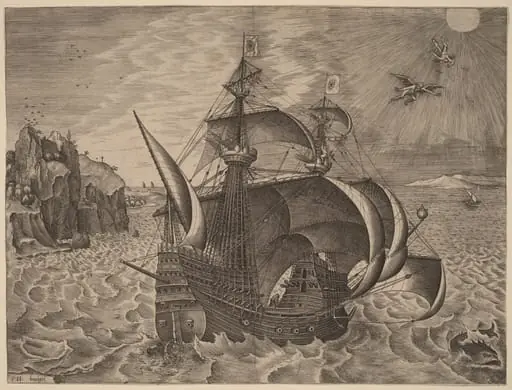 Armed Three-Master with Daedalus and Icarus in the Sky
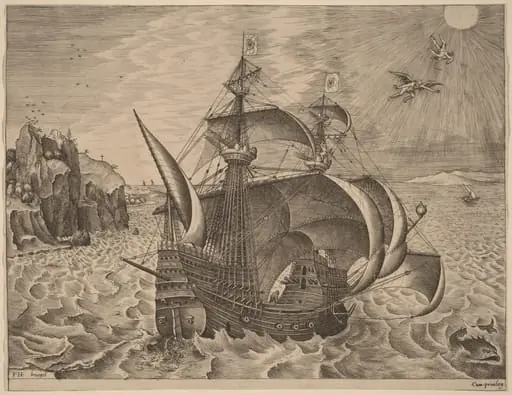 Armed Three-Master with Daedalus and Icarus in the Sky
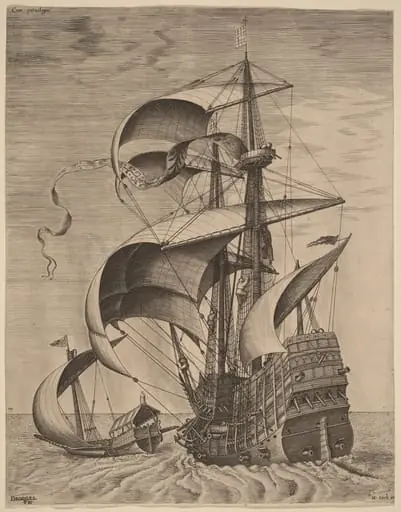 Armed Three-Master on the Open Sea, Accompanied by a Galley
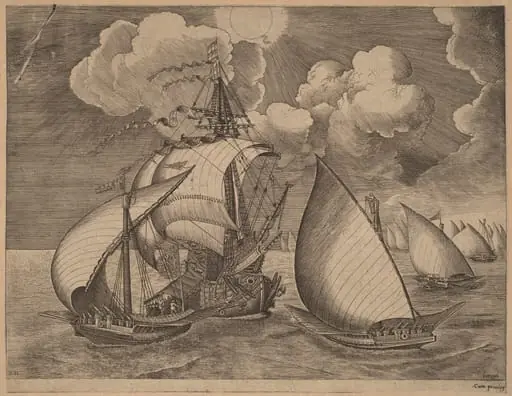 A Fleet of Galleys Escorted by a Caravel
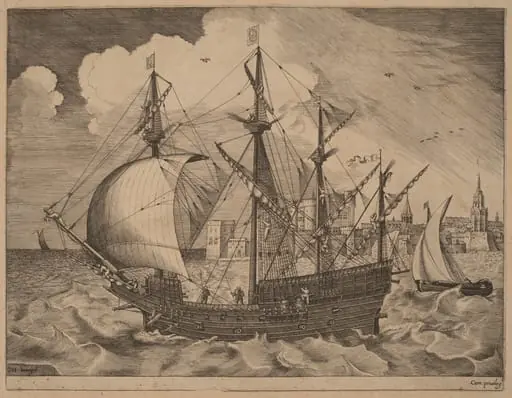 Armed Four-Master Putting Out to Sea
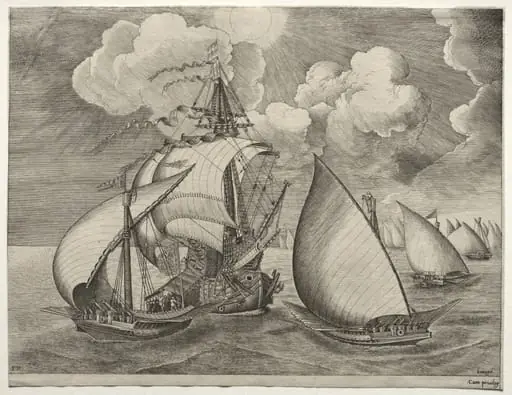 Sailing Vessels: A Fleet of Galleys Escorted by a Caravel
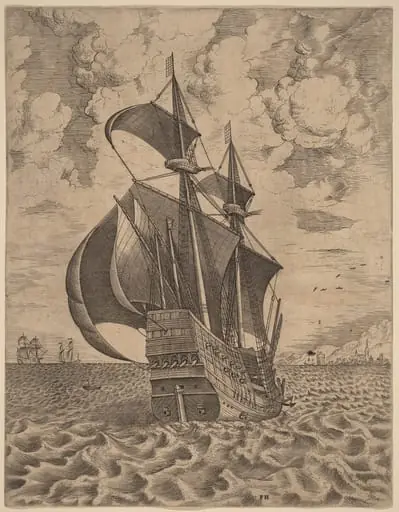 Armed Four-Master Sailing towards a Port
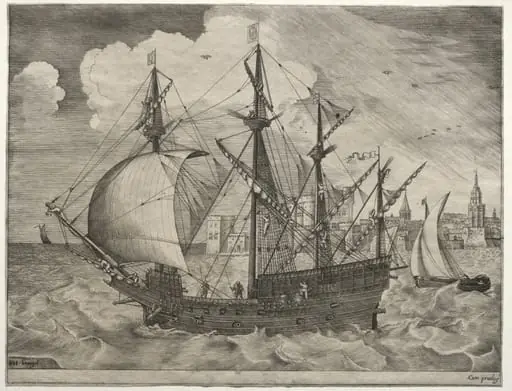 Sailing Vessels: Armed Four-Master Putting Out to Sea
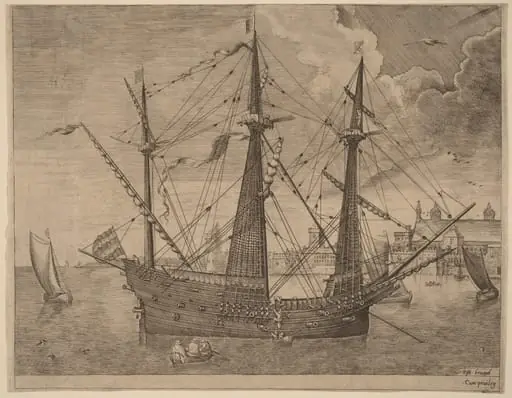 Armed Three-Master Anchored near a City
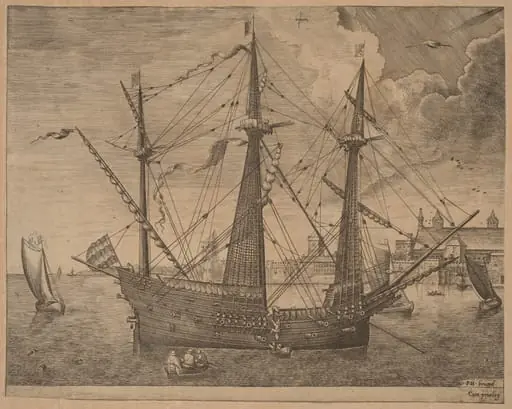 Armed Three-Master Anchored Near a City
 Armed Four-Master Sailing towards a Port