Artwork
Pieter Brueghel de Oude. Nederlandse spreekwoorden Detail: Wilde beeren, die zijn bij den ander gheeren
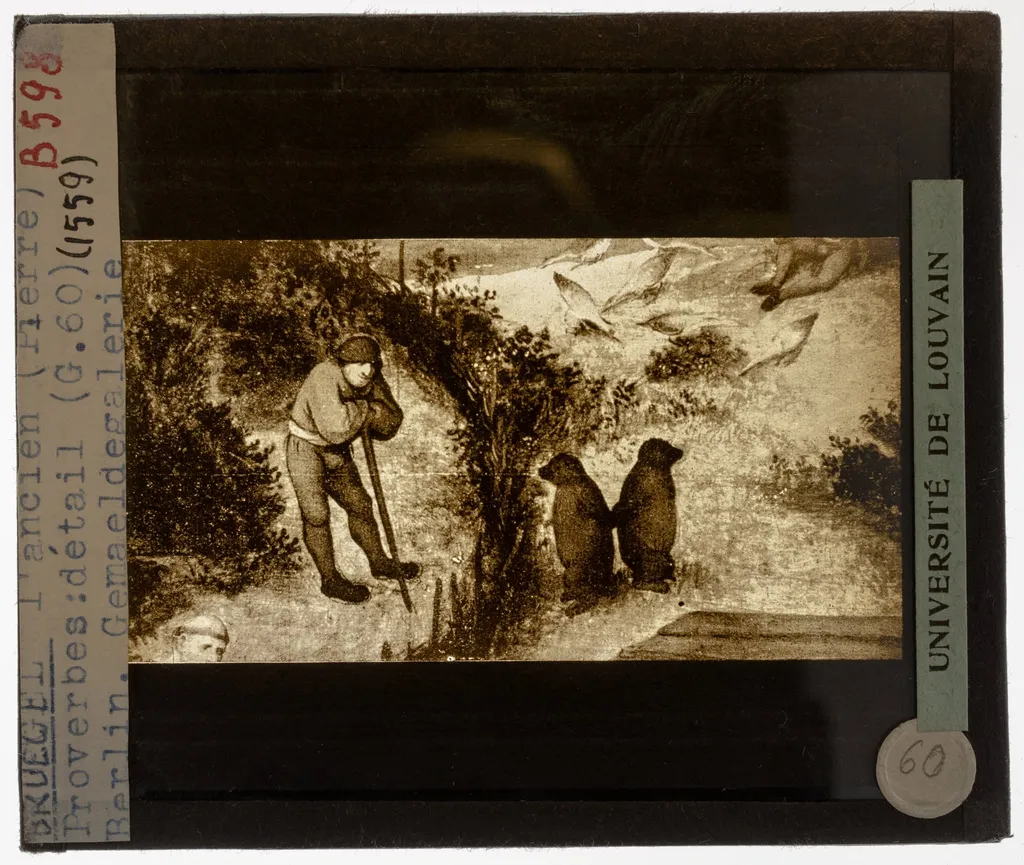
Pieter Brueghel de Oude. Nederlandse spreekwoorden Detail: Wilde beeren, die zijn bij den ander gheeren is an unspecified painting by the Northern Renaissance artist Pieter Brueghel the Elder. It dates from 1559 and is held in the collection of the Catholic University of Leuven.
About this work
Overview
The work exemplifies the Northern Renaissance interest in detailed, narrative-driven genre painting.
Pieter Bruegel the Elder’s 1559 oil on panel presents a bustling tableau of village life, populated by figures engaged in ordinary tasks and a few surreal touches. The composition is dense, with numerous characters and animals sharing the space, illustrating a scene drawn from a Dutch proverb about wild berries that belong to another. The work exemplifies the Northern Renaissance interest in detailed, narrative-driven genre painting.
Subject & Meaning
The painting visualizes a popular saying that warns against taking what is not one's own, using the image of people reaching for berries that grow elsewhere. Everyday activities—children at play, market stalls, and domestic chores—are interwoven with symbolic elements, such as a floating fish, to underscore the moral lesson while reflecting the humor and complexity of 16th‑century folk wisdom.
Technique & Style
Executed in oil on wooden panel, Bruegel employs a fine, layered brushwork that captures texture in foliage, fabric, and animal fur. The palette is earthy, with muted greens and browns punctuated by brighter accents. Light falls unevenly across the scene, creating subtle chiaroscuro that models forms and guides the viewer’s eye through the crowded composition, a hallmark of Northern Renaissance realism.
History & Provenance
Created in 1559, the painting entered various private collections before being acquired by the Staatliche Museen zu Berlin, where it remains on display. Documentation traces its movement from the Low Countries to Germany, with the work recorded in the museum’s catalogue by the early 20th century. Its provenance reflects the broader European interest in Bruegel’s genre scenes during the 19th and 20th centuries.
Context
Bruegel’s oeuvre frequently explored proverbs and moralizing themes, situating ordinary people within allegorical frameworks. This work aligns with his series of proverb paintings, which combined social observation with didactic content. The piece also reflects the period’s fascination with the everyday, as artists turned away from purely religious subjects to depict the lived experiences of common folk.
Artist & collection
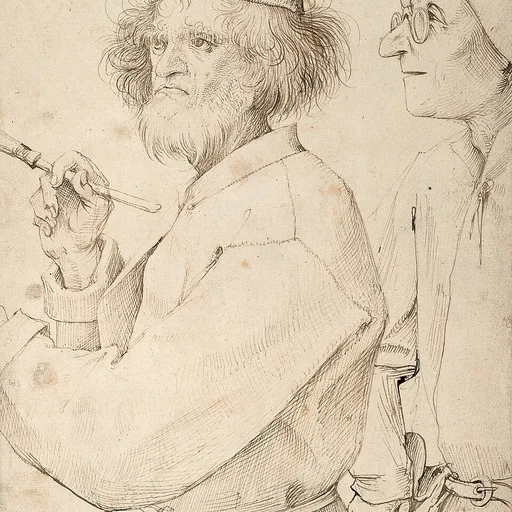
Artist
Pieter Bruegel (also Brueghel or Breughel) the Elder ( BROY-gəl, US also BROO-gəl; Dutch: ; c.
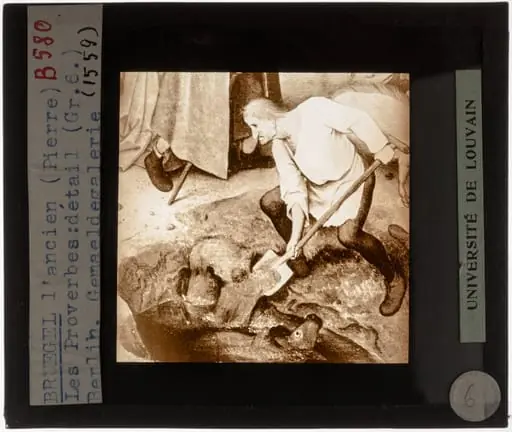 Pieter Brueghel de Oude. Nederlandse spreekwoorden Detail: Als 't kalf verdronken is, dempt men de put
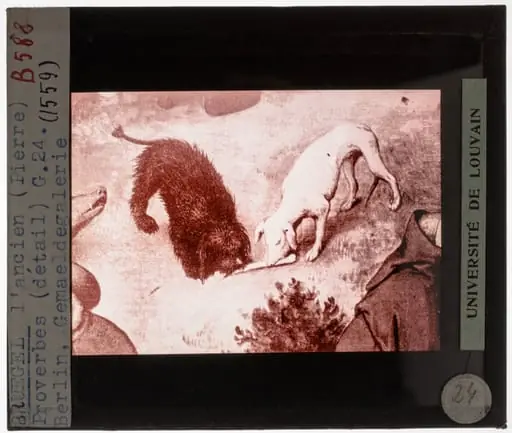 Pieter Brueghel de Oude. Nederlandse spreekwoorden Detail: Twee honden aan een been, komen zelden overeen
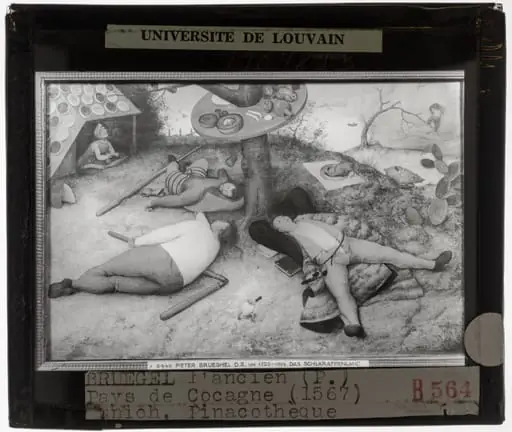 Pieter Brueghel de Oude. Luilekkerland
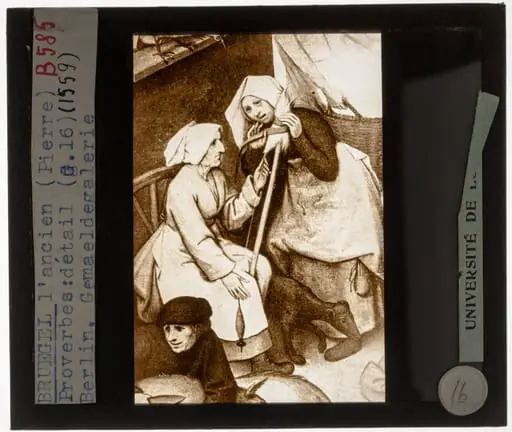 Pieter Brueghel de Oude. Nederlandse spreekwoorden Detail: De ene rokkent wat de andere spint
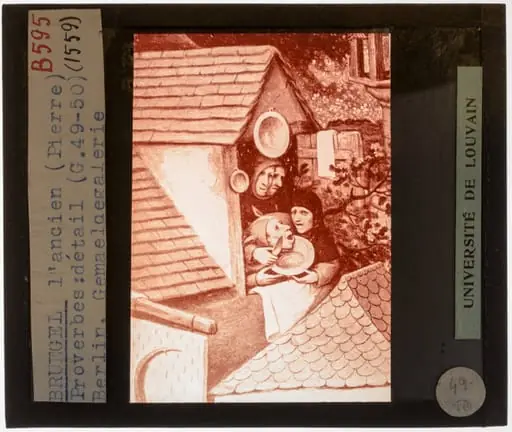 Pieter Brueghel the Elder. Dutch proverbs Detail: Two proverbs
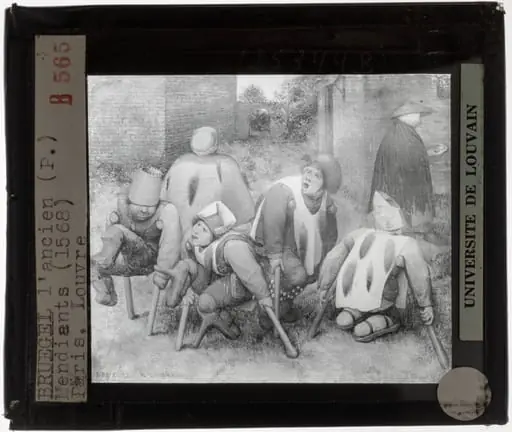 Pieter Brueghel de Oude. De Kreupelen
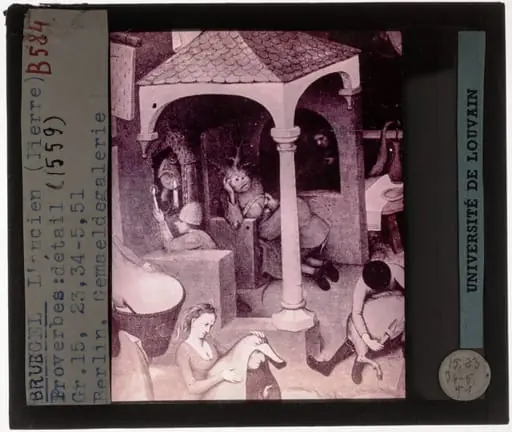 Pieter Brueghel de Oude. Nederlandse spreekwoorden Detail: Vijf spreekwoorden
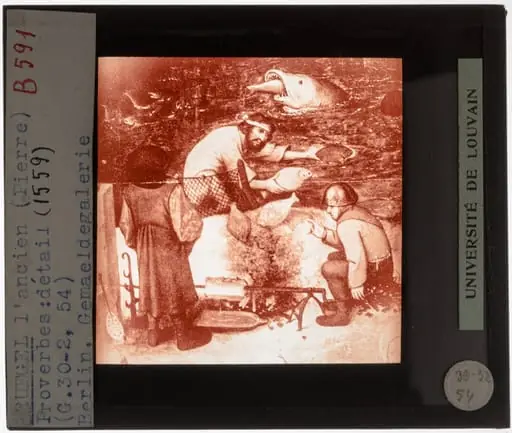 Pieter Brueghel the Elder. Dutch proverbs Detail: Five proverbs
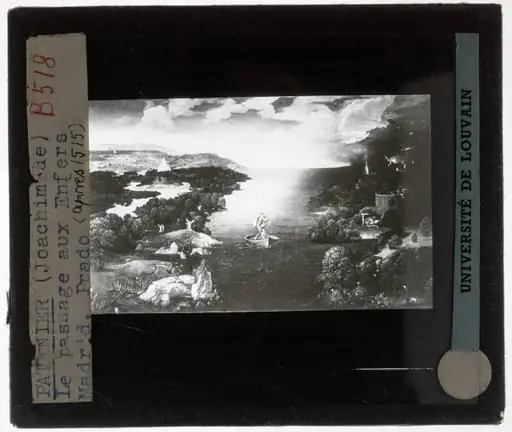 Joachim Patinir. De oversteek naar de onderwereld
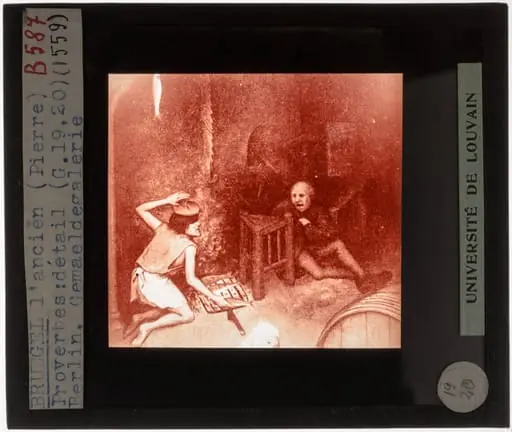 Pieter Brueghel de Oude. Nederlandse spreekwoorden Detail: Twee spreekwoorden
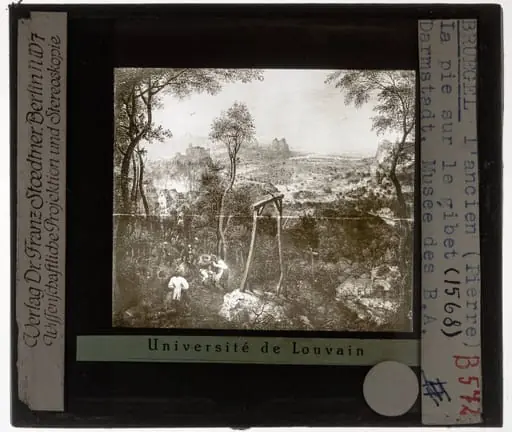 Pieter Brueghel the Elder. Magpie on the Gallows
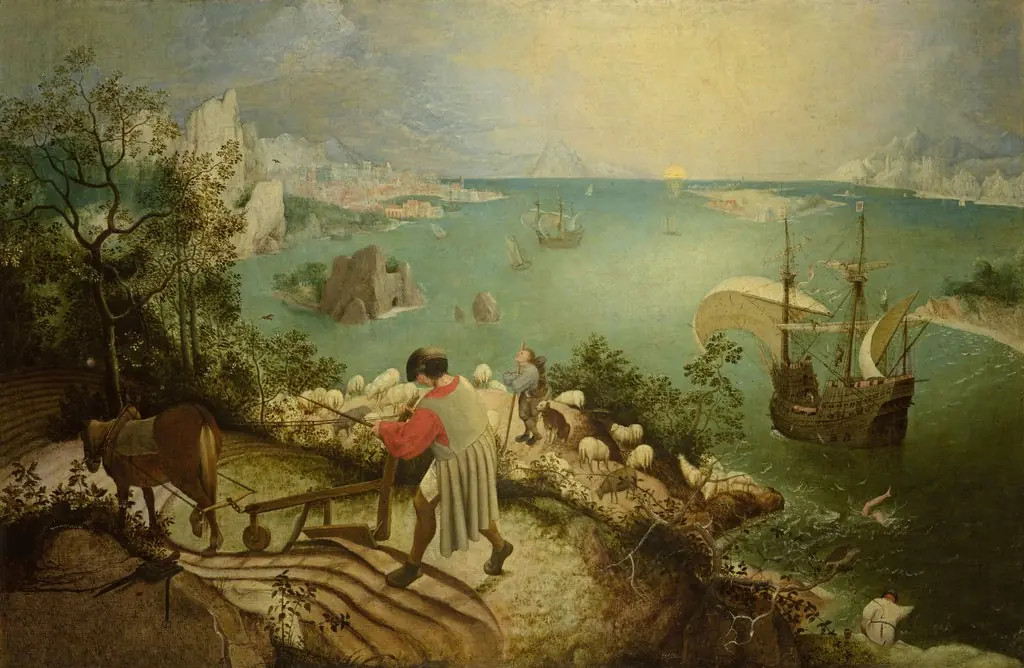
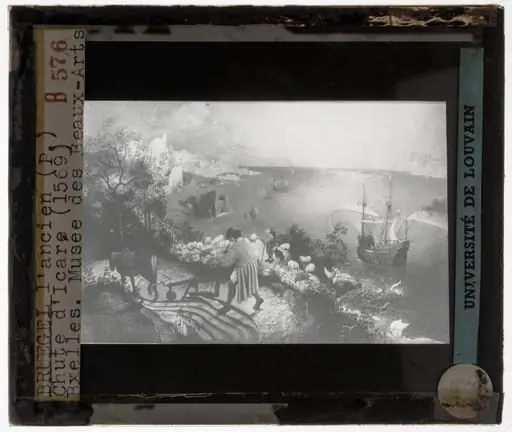 Pieter Brueghel de Oude. De val van Icarus