Artwork
Pieter Brueghel the Elder. Dutch proverbs Detail: Five proverbs
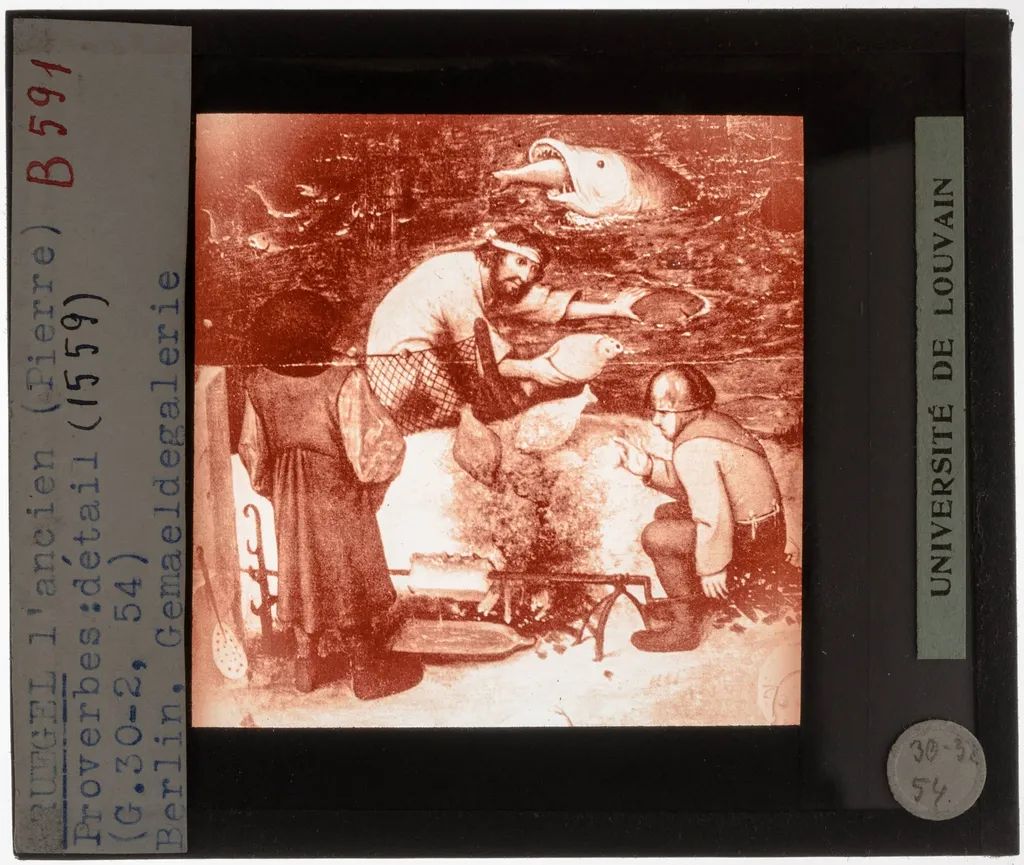
Pieter Brueghel the Elder. Dutch proverbs Detail: Five proverbs is an unspecified painting by the Northern Renaissance artist Pieter Brueghel the Elder. It dates from 1559 and is held in the collection of the Catholic University of Leuven.
About this work
Overview
The composition is notable for embedding five distinct Dutch proverbs within the scene, each illustrated through the actions of the townspeople.
Pieter Brueghel the Elder’s 1559 oil on panel presents a bustling village tableau populated by numerous figures engaged in everyday tasks. The composition is notable for embedding five distinct Dutch proverbs within the scene, each illustrated through the actions of the townspeople. The work exemplifies the Northern Renaissance’s interest in detailed genre scenes that combine narrative depth with social commentary.
Subject & Meaning
The painting functions as a visual collection of popular sayings, using the villagers’ behavior to embody each proverb’s moral or humorous lesson. By portraying these idioms in situ, Brueghel offers insight into 16th‑century attitudes toward work, folly, and communal life, inviting viewers to decode the layered symbolism embedded in the crowd’s activities.
Technique & Style
Executed in oil on wooden panel, the work displays Brueghel’s characteristic fine brushwork and meticulous attention to texture, from the thatched roofs to the intricate costumes. The balanced perspective and crowded composition reflect the Northern Renaissance’s emphasis on realism and narrative complexity, while the muted palette underscores the earthy atmosphere of a Flemish village.
History & Provenance
Created in 1559, the painting entered the collection of the Staatliche Museen zu Berlin, where it remains on display. Earlier documentation links the work to a series of Brueghel prints that circulated in the Low Countries, and it was later reproduced in academic slide collections at KU Leuven and the Université de Louvain during the 19th and early 20th centuries.
Context
During Brueghel’s career, genre scenes depicting peasant life and moralizing themes were in high demand, reflecting a broader cultural fascination with everyday experience. The inclusion of proverbs aligns the work with contemporary literary traditions that used folk sayings to critique social behavior, situating the painting within both visual and textual discourses of its time.
Artist & collection
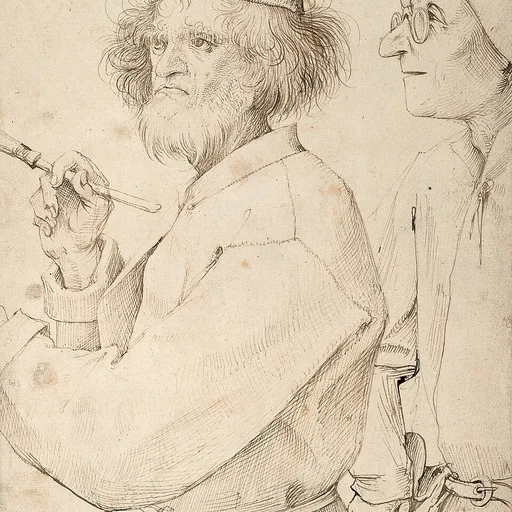
Artist
Pieter Bruegel (also Brueghel or Breughel) the Elder ( BROY-gəl, US also BROO-gəl; Dutch: ; c.
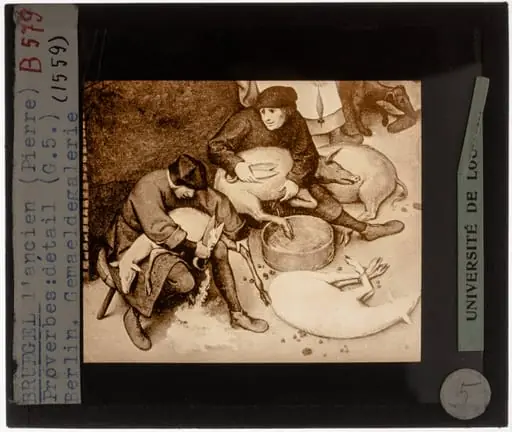 Pieter Brueghel the Elder. Dutch Proverbs Detail: One shears the sheep, the other the pigs
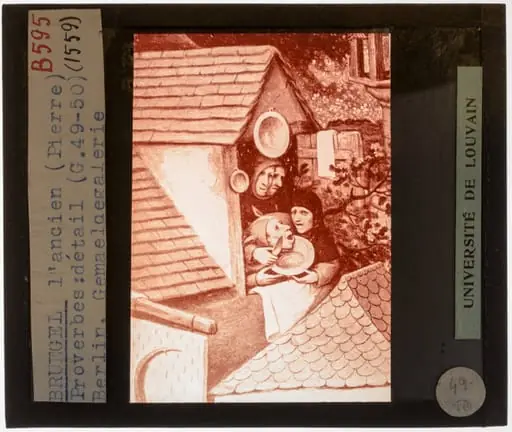 Pieter Brueghel the Elder. Dutch proverbs Detail: Two proverbs
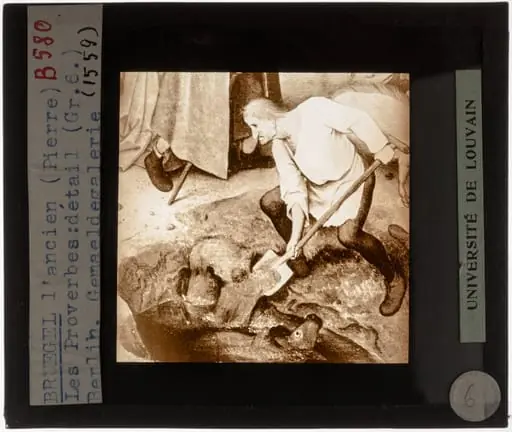 Pieter Brueghel de Oude. Nederlandse spreekwoorden Detail: Als 't kalf verdronken is, dempt men de put
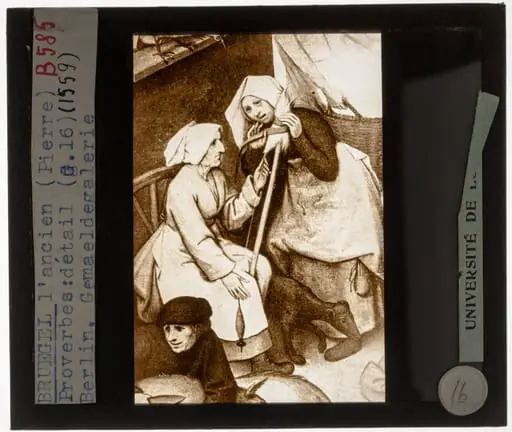 Pieter Brueghel de Oude. Nederlandse spreekwoorden Detail: De ene rokkent wat de andere spint
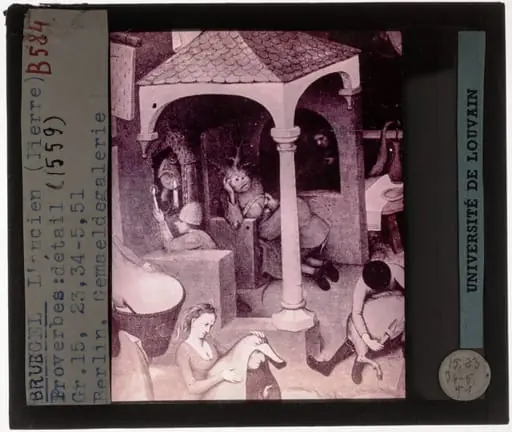 Pieter Brueghel de Oude. Nederlandse spreekwoorden Detail: Vijf spreekwoorden
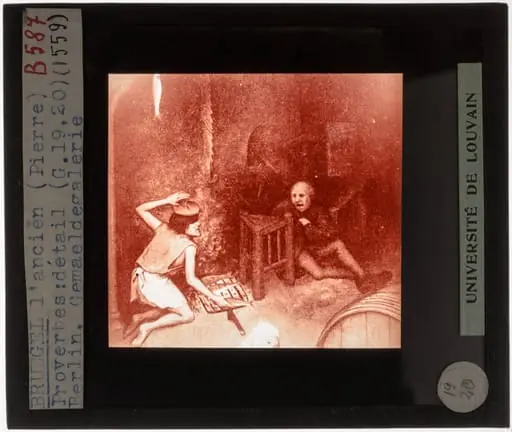 Pieter Brueghel de Oude. Nederlandse spreekwoorden Detail: Twee spreekwoorden
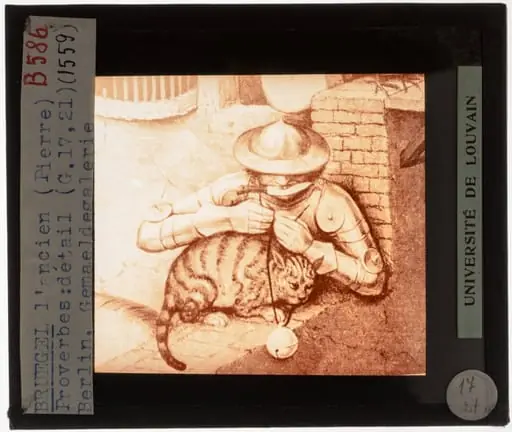 Pieter Brueghel de Oude. Nederlandse spreekwoorden Detail: De kat de bel aanbinden
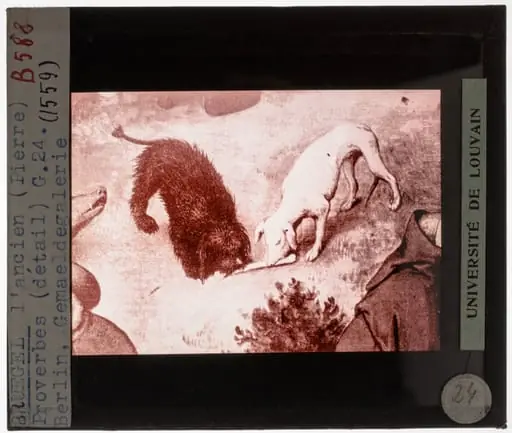 Pieter Brueghel de Oude. Nederlandse spreekwoorden Detail: Twee honden aan een been, komen zelden overeen
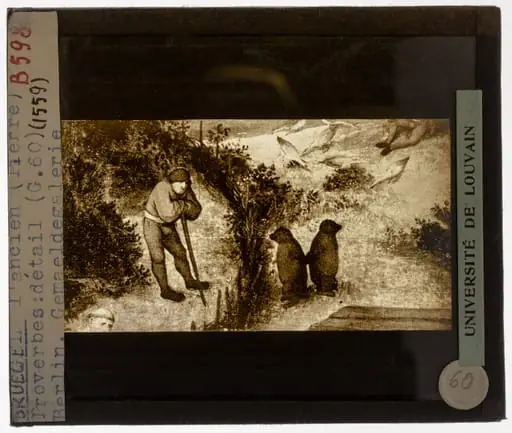 Pieter Brueghel de Oude. Nederlandse spreekwoorden Detail: Wilde beeren, die zijn bij den ander gheeren
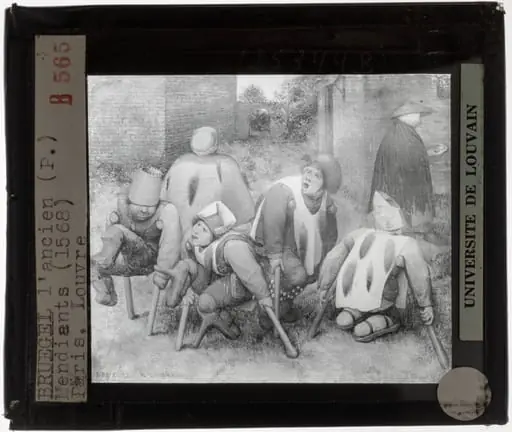 Pieter Brueghel de Oude. De Kreupelen
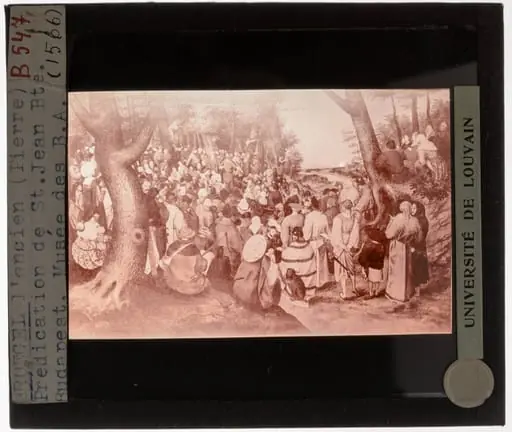 Pieter Brueghel de Oude. Prediking van Johannes de Doper