Artwork
Pieter Brueghel de Oude. Nederlandse spreekwoorden Detail: Twee honden aan een been, komen zelden overeen
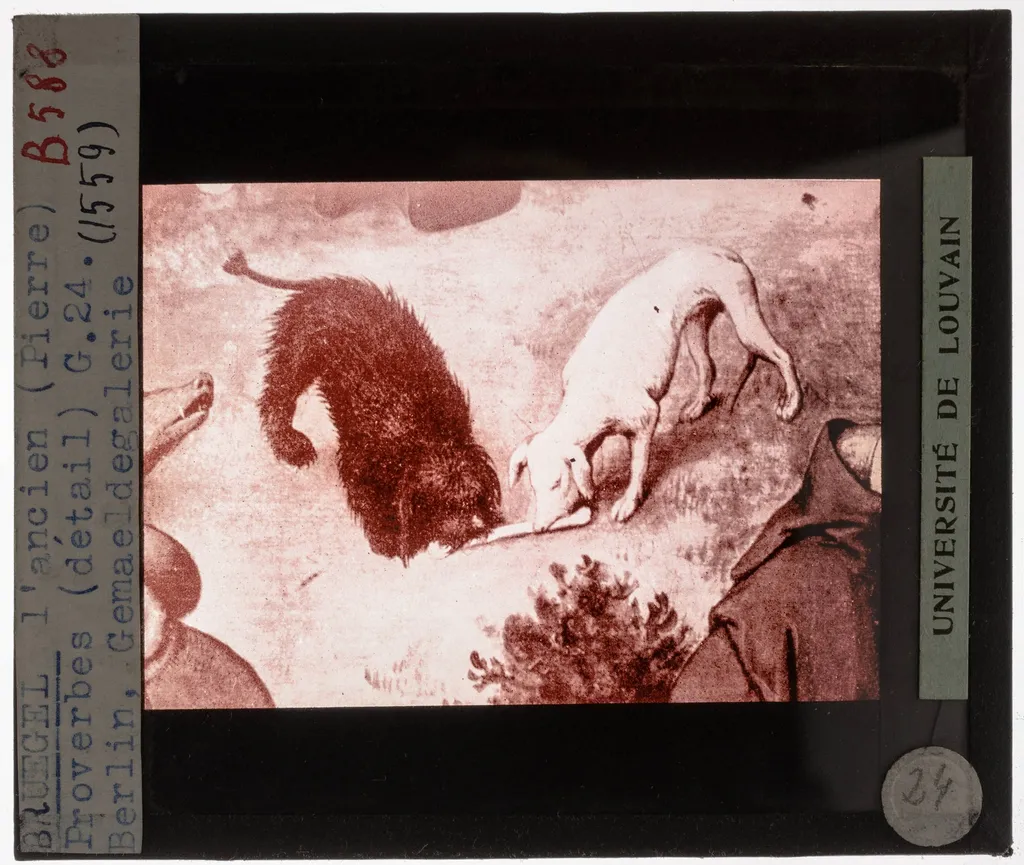
Pieter Brueghel de Oude. Nederlandse spreekwoorden Detail: Twee honden aan een been, komen zelden overeen is an unspecified painting by the Northern Renaissance artist Pieter Brueghel the Elder. It dates from 1559 and is held in the collection of the Catholic University of Leuven.
About this work
Overview
Pieter Brueghel the Elder's 'Nederlandse spreekwoorden' (Dutch Proverbs) is a 1559 oil-on-panel painting depicting a chaotic scene where everyday objects and people are used in unconventional ways to illustrate common sayings of the time.
Subject & Meaning
The painting visually interprets numerous Dutch proverbs, such as 'Twee honden aan een been, komen zelden overeen' (Two dogs at one bone seldom agree), using absurd and humorous scenarios to convey the meanings of these phrases.
Technique & Style
Executed in the Northern Renaissance style, the work showcases Brueghel's mastery of oil on panel, characterized by detailed, bustling compositions that invite close observation to decipher the various proverbial references.
History & Provenance
Created in 1559, the painting is now housed at the Staatliche Museen zu Berlin, Germany. Historical documentation includes its inclusion in a glass slide collection at KU Leuven (Université de Louvain) between 1839 and 1939, with an unknown photographer.
Context
Part of the 16th-century Northern Renaissance, 'Nederlandse spreekwoorden' reflects the era's interest in allegory and the everyday life of the common people, distinguishing it from the more religious themes prevalent at the time.
Artist & collection
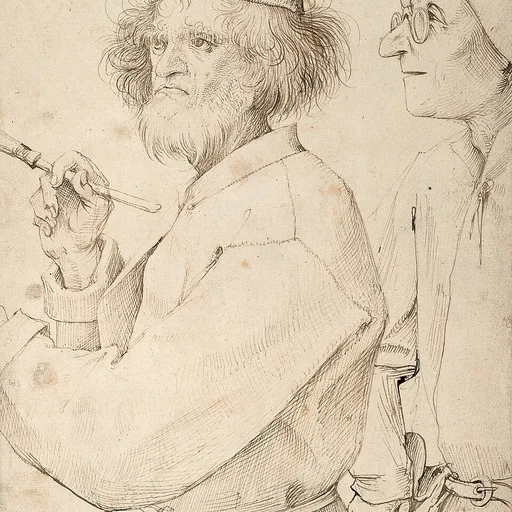
Artist
Pieter Bruegel (also Brueghel or Breughel) the Elder ( BROY-gəl, US also BROO-gəl; Dutch: ; c.
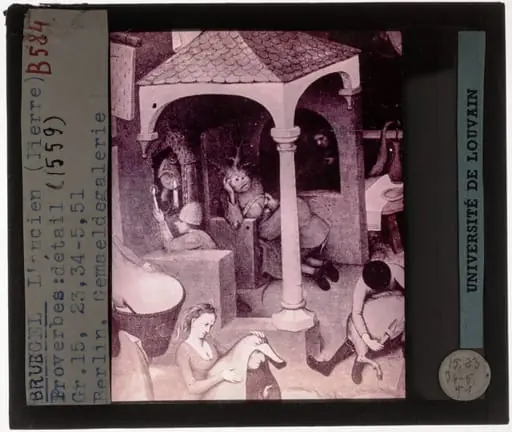 Pieter Brueghel de Oude. Nederlandse spreekwoorden Detail: Vijf spreekwoorden
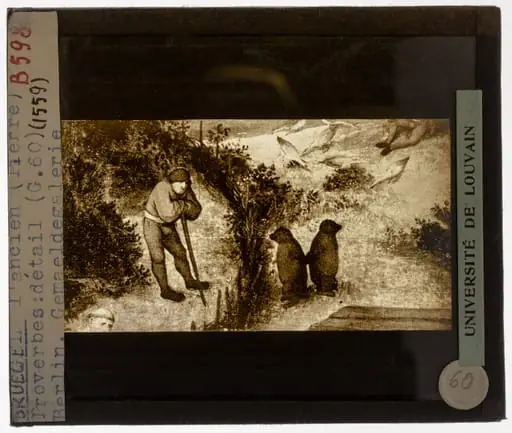 Pieter Brueghel de Oude. Nederlandse spreekwoorden Detail: Wilde beeren, die zijn bij den ander gheeren
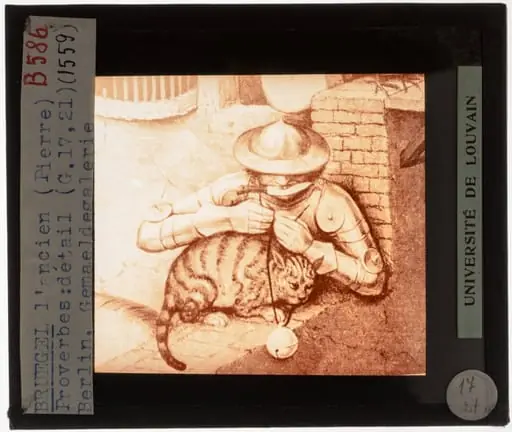 Pieter Brueghel de Oude. Nederlandse spreekwoorden Detail: De kat de bel aanbinden
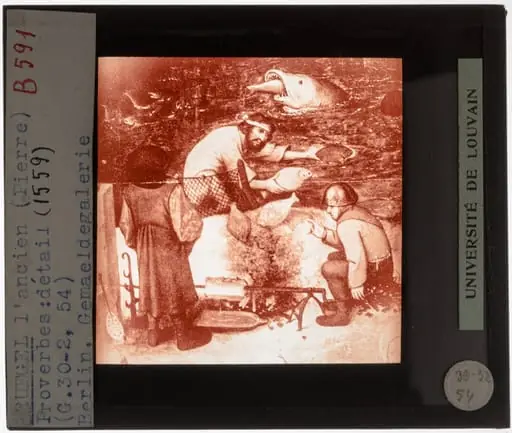 Pieter Brueghel the Elder. Dutch proverbs Detail: Five proverbs
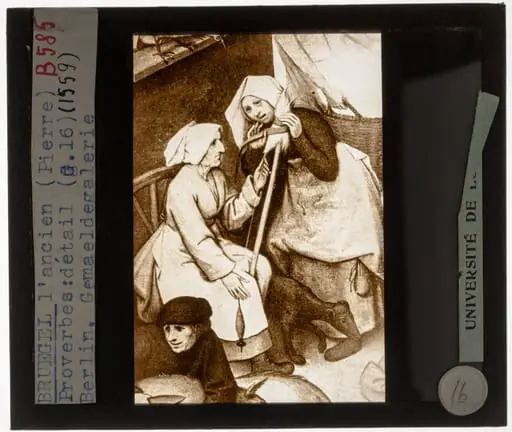 Pieter Brueghel de Oude. Nederlandse spreekwoorden Detail: De ene rokkent wat de andere spint
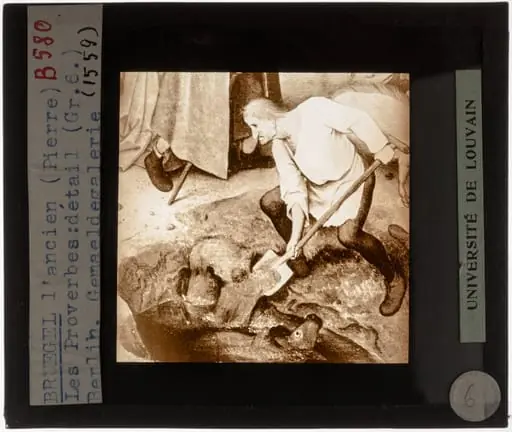 Pieter Brueghel de Oude. Nederlandse spreekwoorden Detail: Als 't kalf verdronken is, dempt men de put
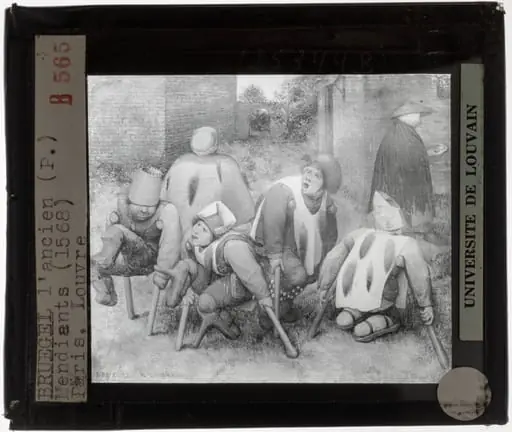 Pieter Brueghel de Oude. De Kreupelen
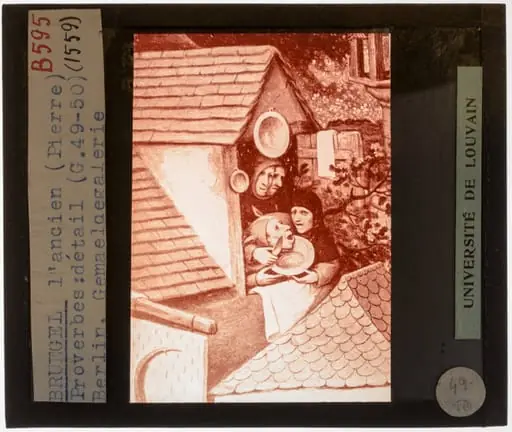 Pieter Brueghel the Elder. Dutch proverbs Detail: Two proverbs
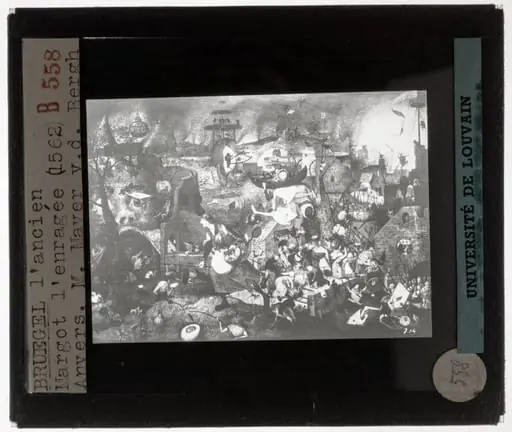 Pieter Brueghel de Oude. Dulle Griet
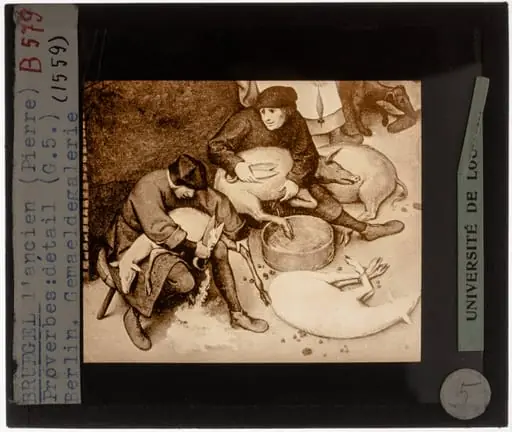 Pieter Brueghel the Elder. Dutch Proverbs Detail: One shears the sheep, the other the pigs
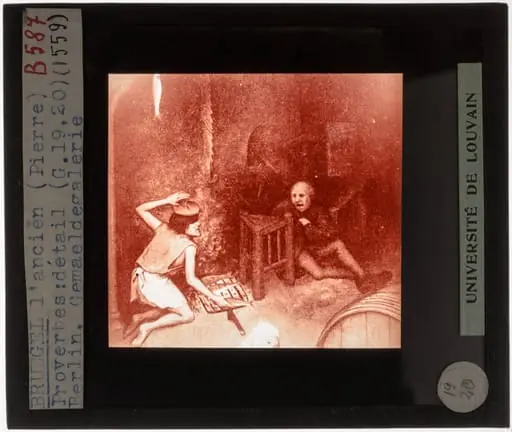 Pieter Brueghel de Oude. Nederlandse spreekwoorden Detail: Twee spreekwoorden
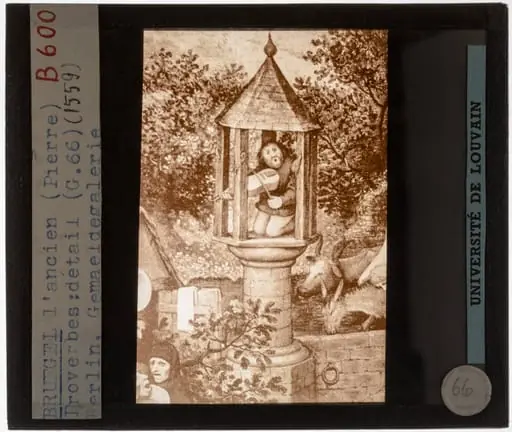 Pieter Brueghel de Oude. Nederlandse spreekwoorden Detail: Hij speelt op die kake