Artwork
Pieter Brueghel the Elder. Dutch proverbs Detail: One must bend, if one is to get through the world
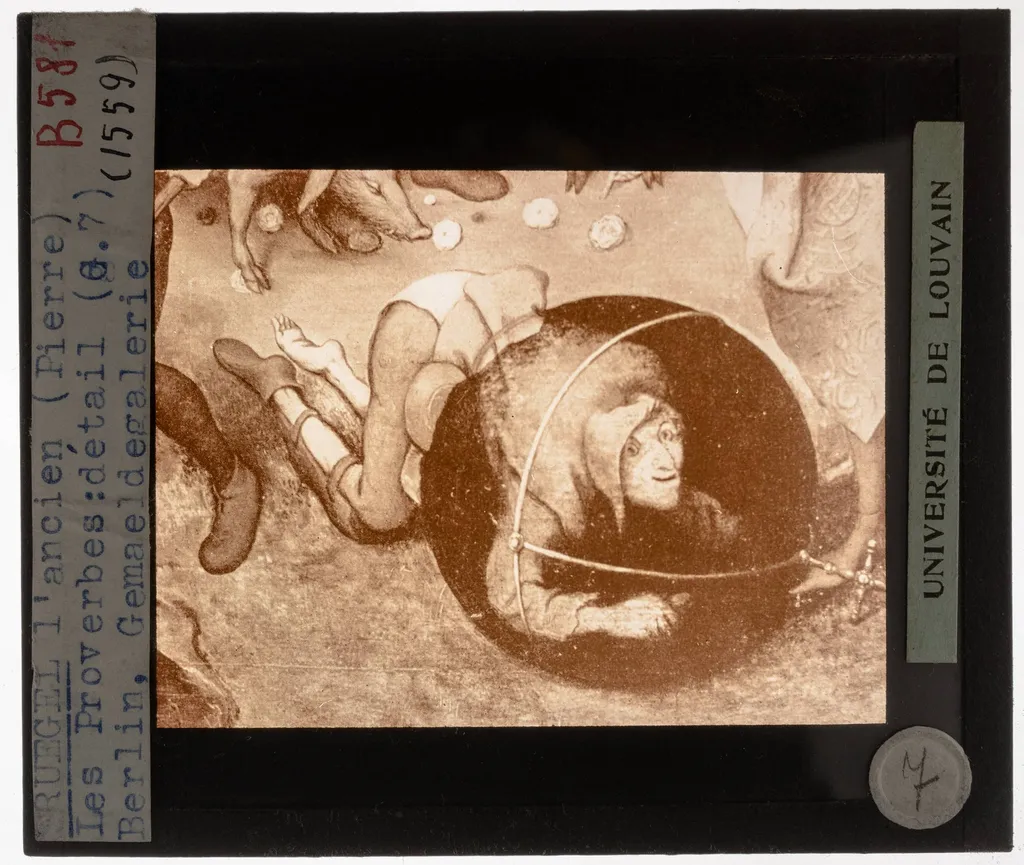
Pieter Brueghel the Elder. Dutch proverbs Detail: One must bend, if one is to get through the world is an unspecified painting by the Northern Renaissance artist Pieter Brueghel the Elder. It dates from 1559 and is held in the collection of the Catholic University of Leuven. Created in 1559, this oil-on-panel work by Pieter Bruegel the Elder exemplifies Northern Renaissance painting.
About this work
Overview
Created in 1559, this oil-on-panel work by Pieter Bruegel the Elder exemplifies Northern Renaissance painting. The composition depicts a bustling village scene filled with figures engaged in a variety of odd activities, each illustrating a proverb or moral lesson. The piece is part of the collection of the Staatliche Museen zu Berlin in Germany.
Subject & Meaning
The central motif portrays a crowded street where individuals perform exaggerated gestures—such as a man bending to crawl through a doorway or another balancing a Bible on his posterior—each visual pun representing a proverb. The Latin inscription on the work declares, "The world is a haystack, and we are all striving to get the best straw out of it," underscoring the theme of human striving and folly.
Technique & Style
Bruegel employs a detailed, panoramic perspective typical of his era, filling the panel with more than one hundred distinct proverbs. The fine brushwork and muted palette convey the everyday life of a 16th‑century Flemish village while allowing each anecdotal vignette to stand out within the crowded composition.
History & Provenance
The painting was documented in the KU Leuven glass slide archive, covering works from 1839 to 1939, though the original photographer remains unidentified. Today it resides in the Staatliche Museen zu Berlin, where it is catalogued among the museum’s Northern Renaissance holdings.
Context
Bruegel’s allegorical approach mirrors the crowded, moralizing scenes of Hieronymus Bosch, yet his focus remains on secular village life rather than infernal realms. The work reflects the 16th‑century Flemish interest in visualizing popular sayings, serving both as entertainment and moral instruction.
Artist & collection
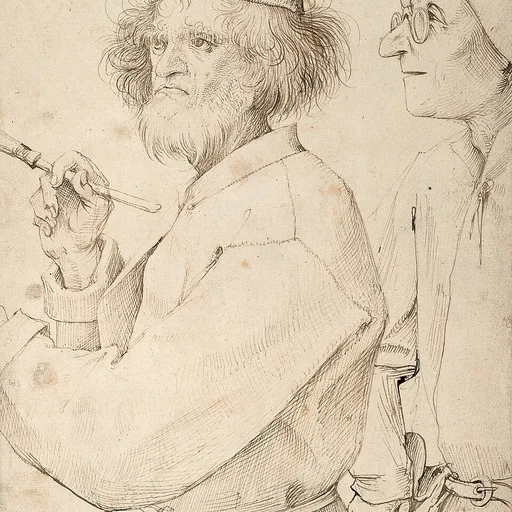
Artist
Pieter Bruegel (also Brueghel or Breughel) the Elder ( BROY-gəl, US also BROO-gəl; Dutch: ; c.
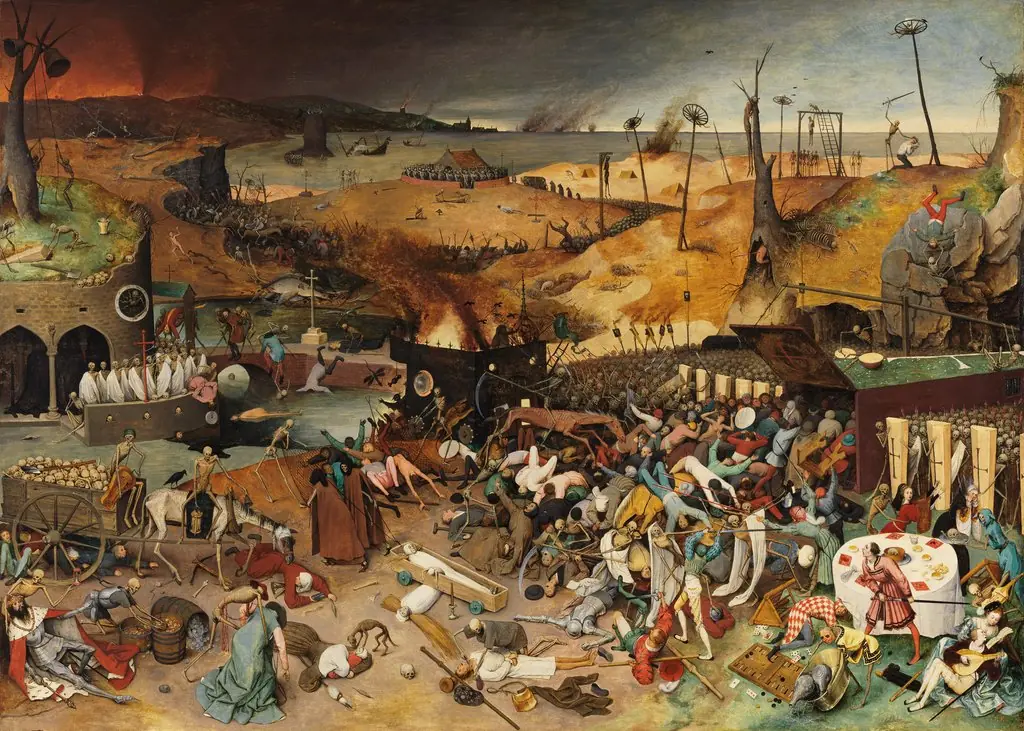
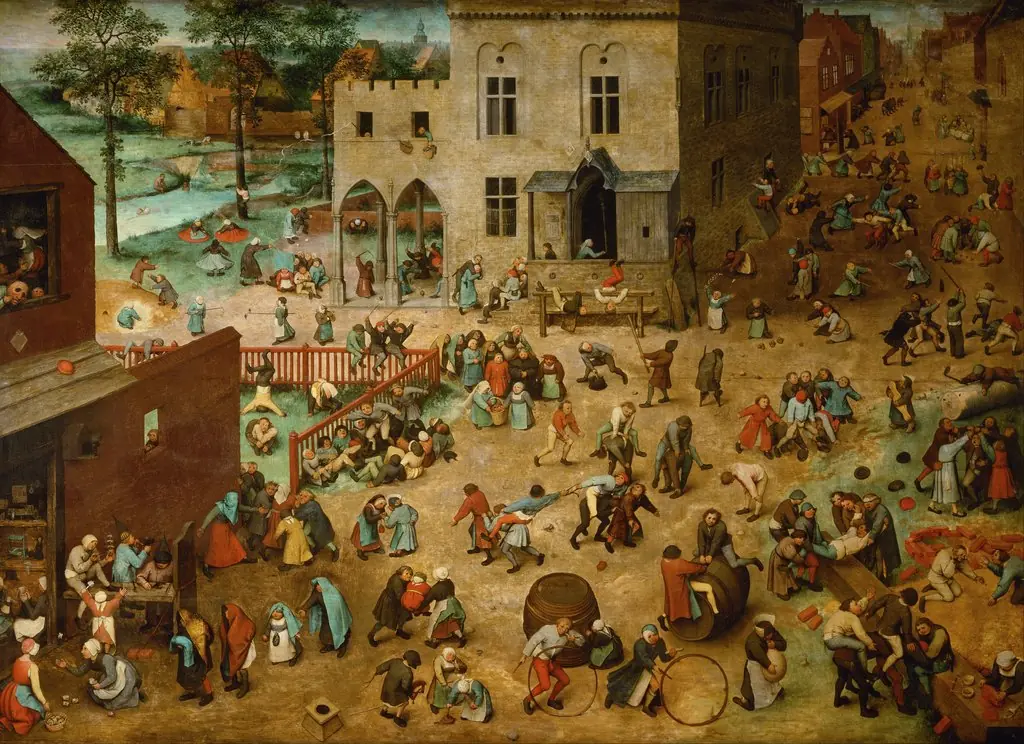
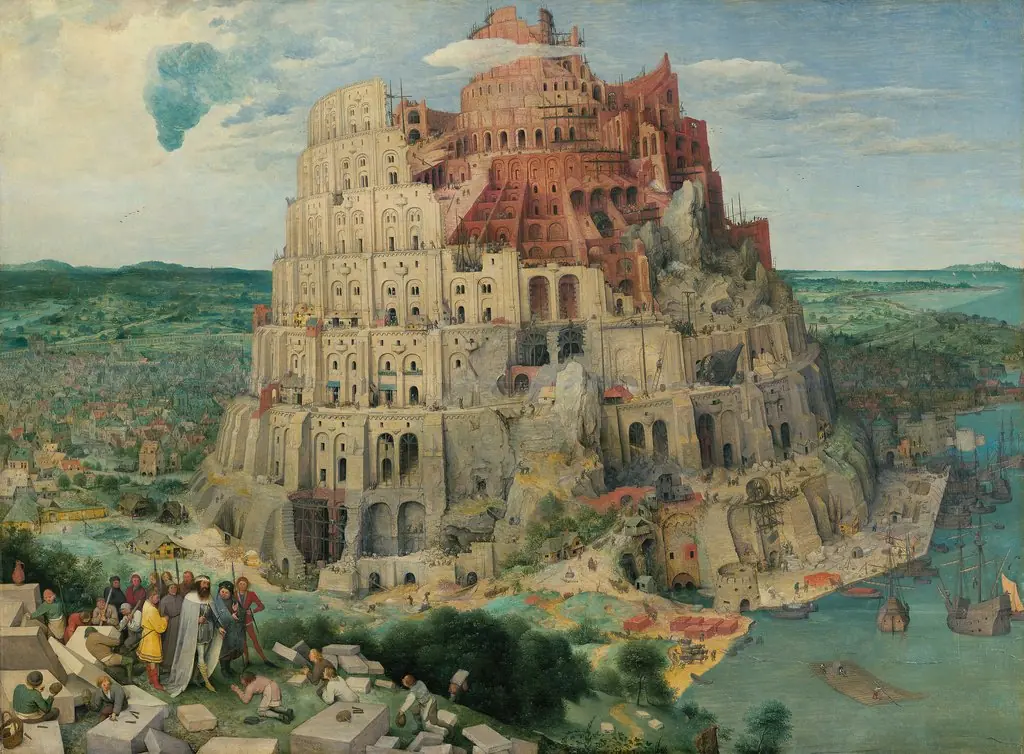
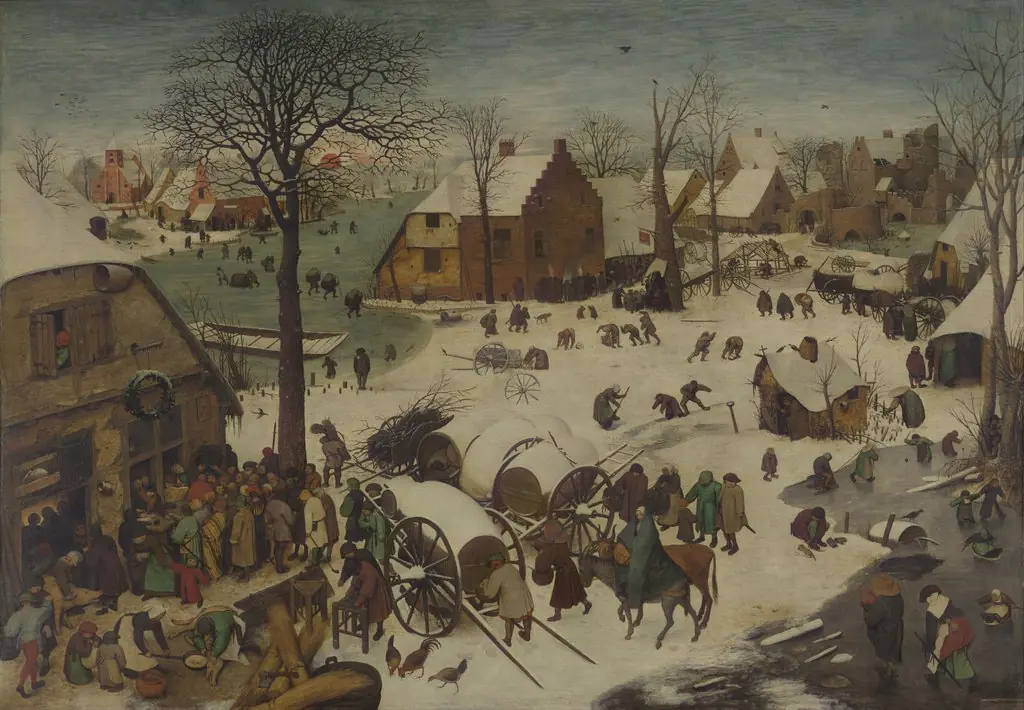
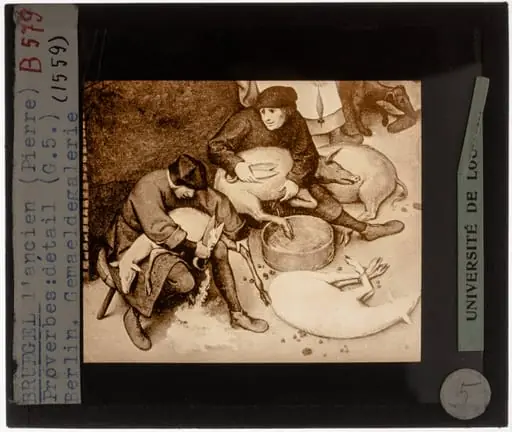 Pieter Brueghel the Elder. Dutch Proverbs Detail: One shears the sheep, the other the pigs
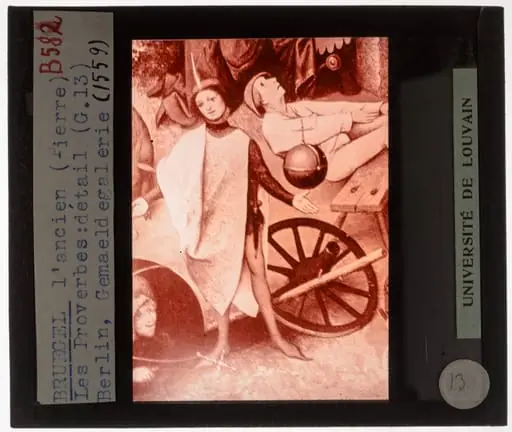 Pieter Brueghel the Elder. Dutch Proverbs Detail: He makes the world go round on his thumb
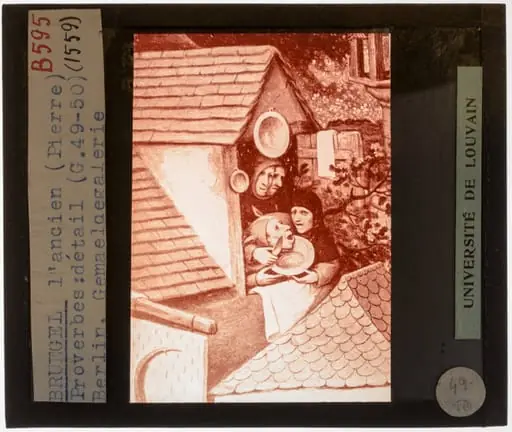 Pieter Brueghel the Elder. Dutch proverbs Detail: Two proverbs
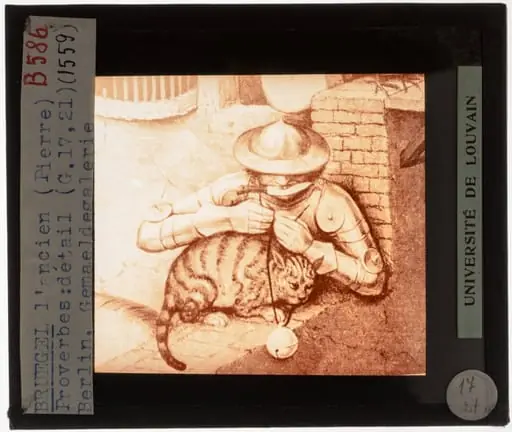 Pieter Brueghel de Oude. Nederlandse spreekwoorden Detail: De kat de bel aanbinden
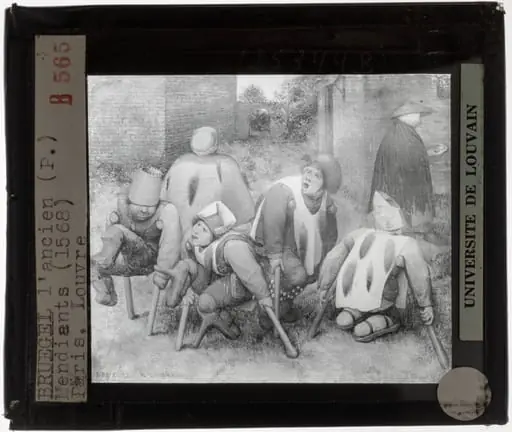 Pieter Brueghel de Oude. De Kreupelen
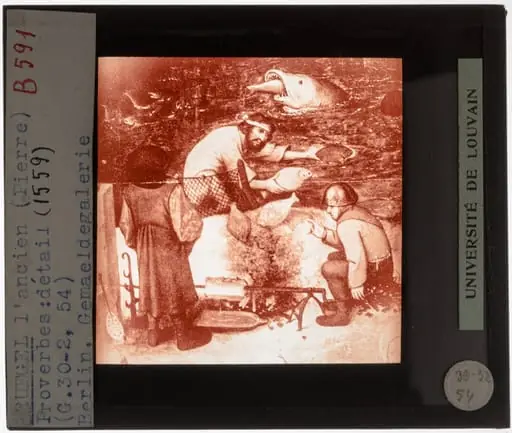 Pieter Brueghel the Elder. Dutch proverbs Detail: Five proverbs
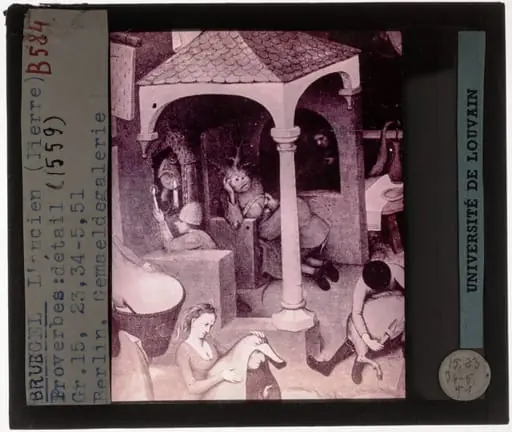 Pieter Brueghel de Oude. Nederlandse spreekwoorden Detail: Vijf spreekwoorden
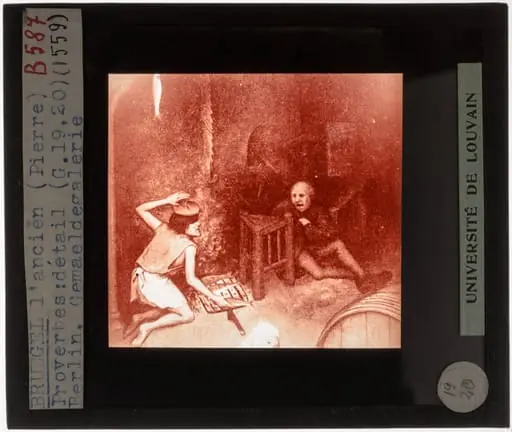 Pieter Brueghel de Oude. Nederlandse spreekwoorden Detail: Twee spreekwoorden
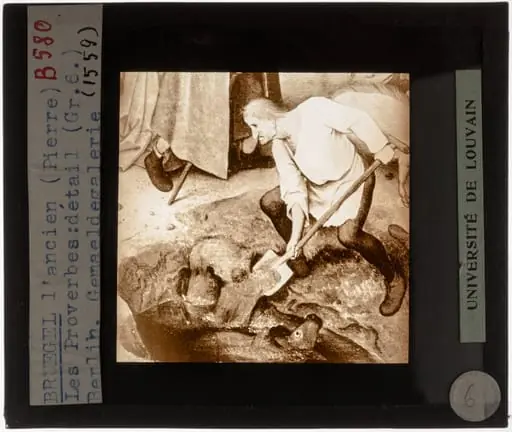 Pieter Brueghel de Oude. Nederlandse spreekwoorden Detail: Als 't kalf verdronken is, dempt men de put
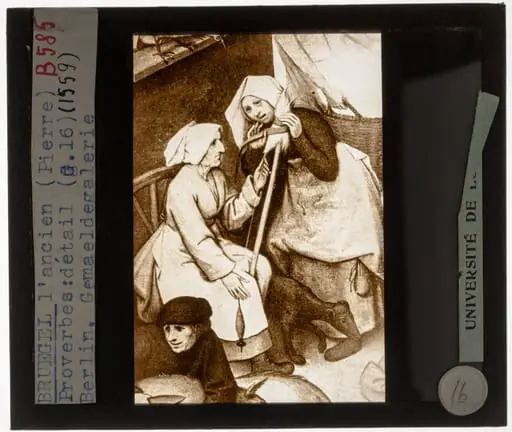 Pieter Brueghel de Oude. Nederlandse spreekwoorden Detail: De ene rokkent wat de andere spint
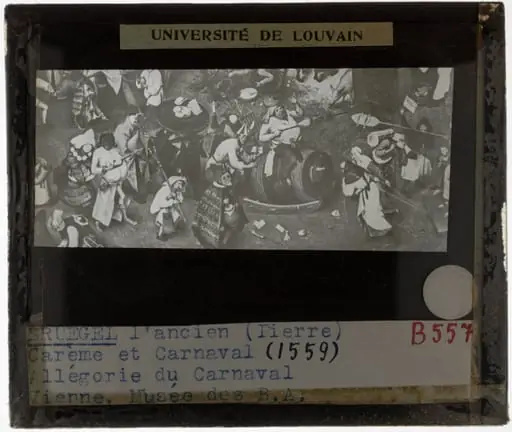 Pieter Brueghel de Oude. Strijd tussen Carnaval en Vasten Detail: Allegorie van Carnaval