Artwork
Pieter Brueghel de Oude. Nederlandse spreekwoorden Detail: De kat de bel aanbinden
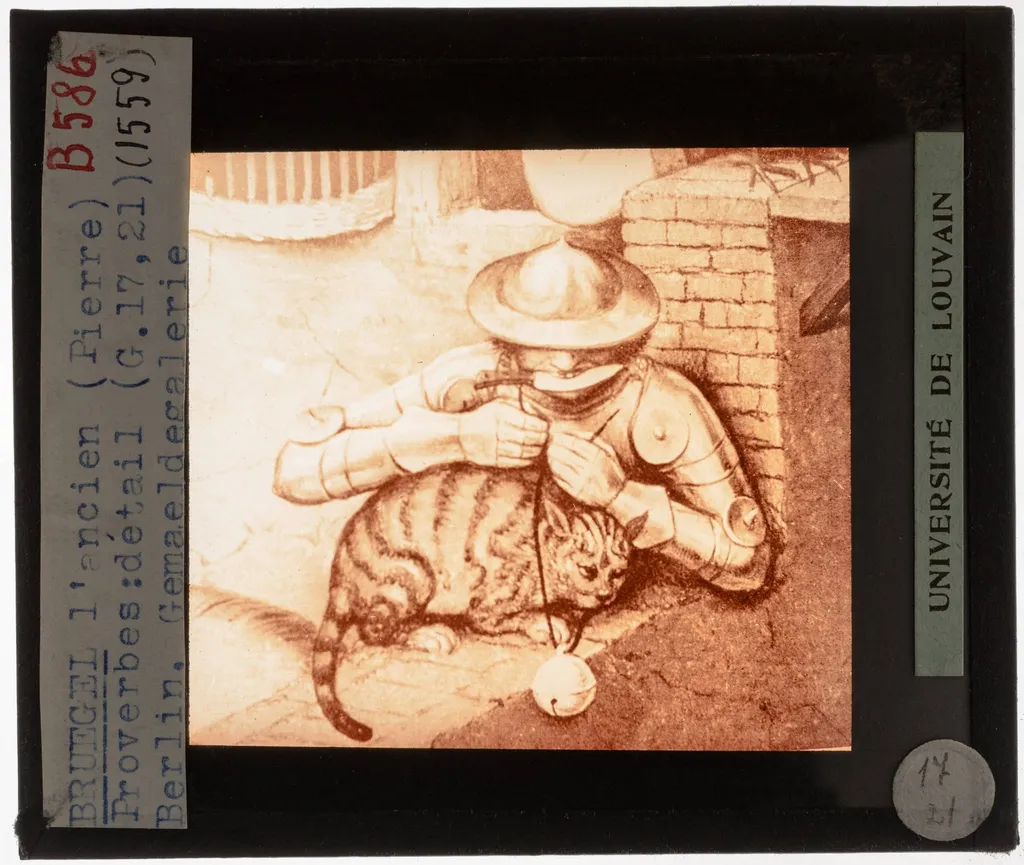
Pieter Brueghel de Oude. Nederlandse spreekwoorden Detail: De kat de bel aanbinden is an unspecified painting by the Northern Renaissance artist Pieter Brueghel the Elder. It dates from 1559 and is held in the collection of the Catholic University of Leuven. Created in 1559, this oil‑on‑panel work by Pieter Bruegel the Elder depicts a bustling Dutch village scene filled with everyday activity.
About this work
Overview
Created in 1559, this oil‑on‑panel work by Pieter Bruegel the Elder depicts a bustling Dutch village scene filled with everyday activity. The composition is populated by numerous figures, rooftops and fields beneath an open sky, each element contributing to a dense tableau that functions as a visual collection of popular sayings.
Subject & Meaning
The painting serves as an illustrated anthology of Dutch proverbs; more than one hundred idioms are embedded within the crowd’s actions. A central figure is shown fastening a bell to a cat, a literal rendering of the expression “to bell the cat,” which conveys the idea of undertaking a risky or impossible task.
Technique & Style
Executed in the Northern Renaissance tradition, Bruegel employs meticulous oil painting techniques to render fine details on a wooden panel. The artist’s characteristic use of vivid coloration and precise linear perspective creates depth, while the crowded composition reflects his interest in genre scenes and moral allegory.
History & Provenance
The work entered the collection of the Staatliche Museen zu Berlin, Germany, where it remains on display. Its early documentation traces back to the 19th‑century glass‑slide archives of the Université de Louvain, though the original photographer of those records is unknown.
Context
Bruegel’s interest in proverbs aligns with a broader 16th‑century Flemish tradition of embedding moral lessons in genre painting. The piece anticipates his later, more famous proverb series and reflects contemporary social commentary on the everyday lives of common folk in the Low Countries.
Artist & collection
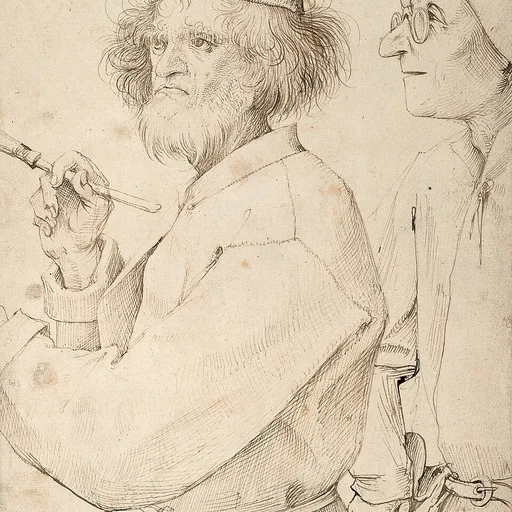
Artist
Pieter Bruegel (also Brueghel or Breughel) the Elder ( BROY-gəl, US also BROO-gəl; Dutch: ; c.
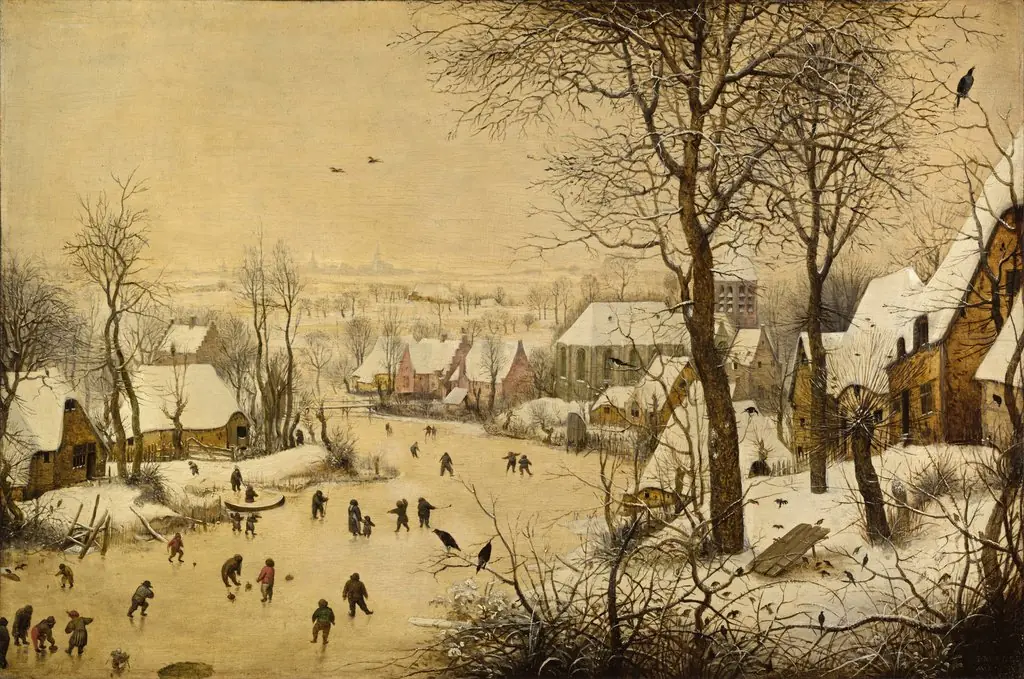
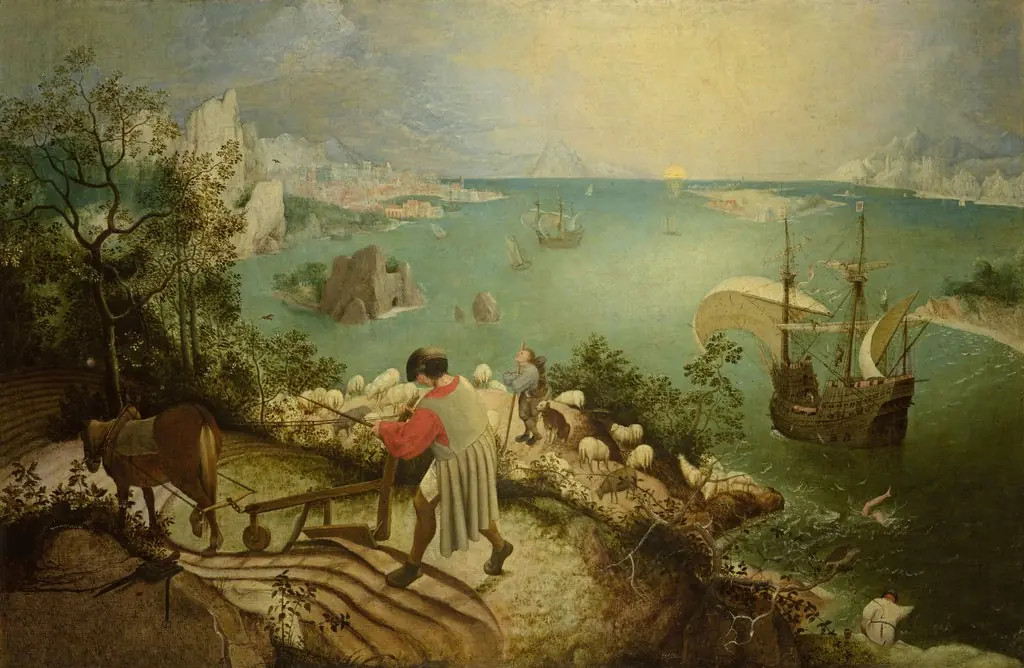
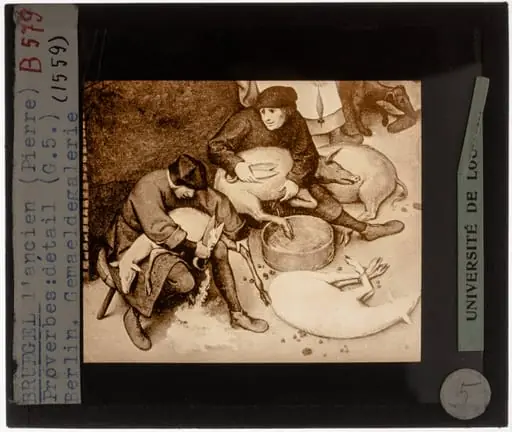 Pieter Brueghel the Elder. Dutch Proverbs Detail: One shears the sheep, the other the pigs
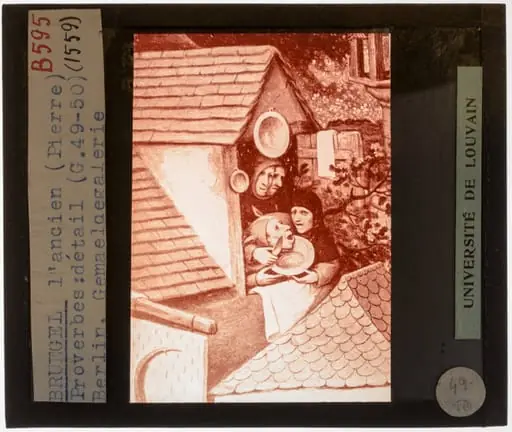 Pieter Brueghel the Elder. Dutch proverbs Detail: Two proverbs
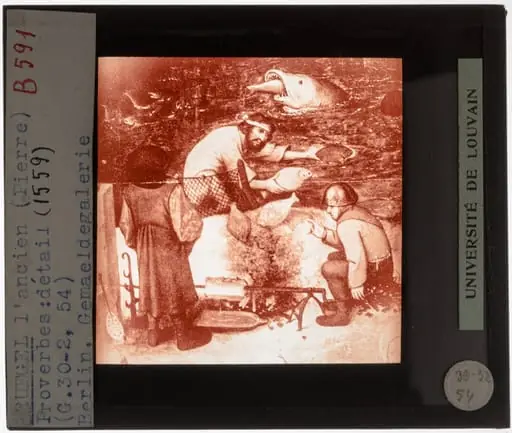 Pieter Brueghel the Elder. Dutch proverbs Detail: Five proverbs
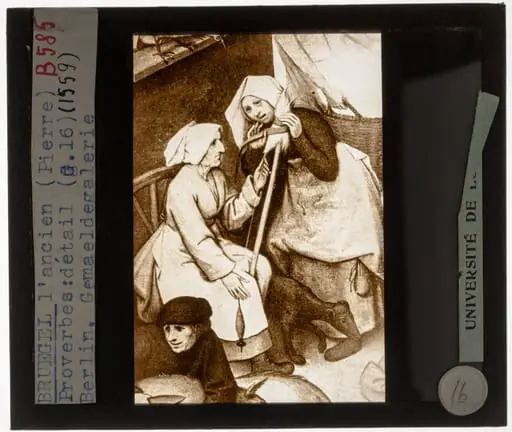 Pieter Brueghel de Oude. Nederlandse spreekwoorden Detail: De ene rokkent wat de andere spint
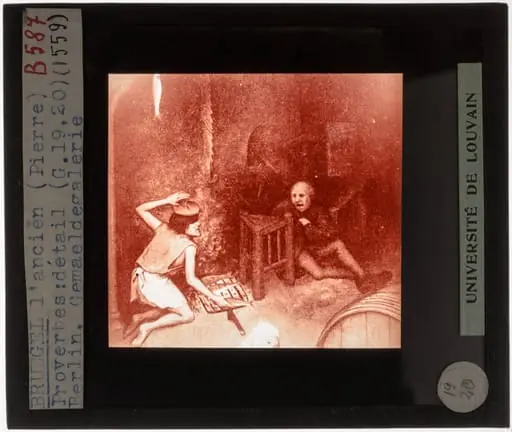 Pieter Brueghel de Oude. Nederlandse spreekwoorden Detail: Twee spreekwoorden
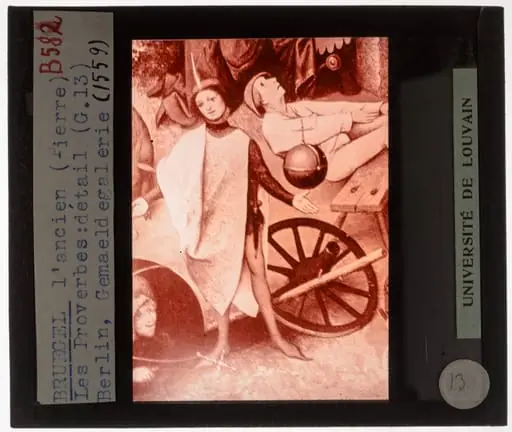 Pieter Brueghel the Elder. Dutch Proverbs Detail: He makes the world go round on his thumb
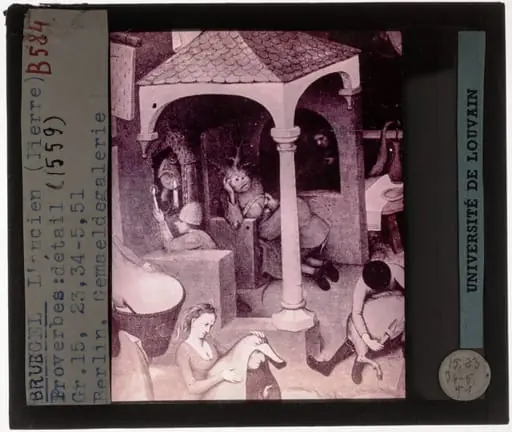 Pieter Brueghel de Oude. Nederlandse spreekwoorden Detail: Vijf spreekwoorden
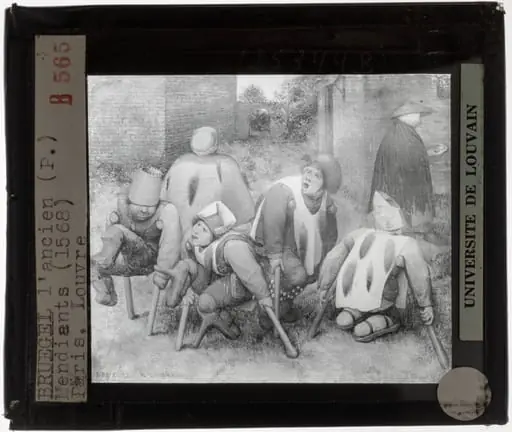 Pieter Brueghel de Oude. De Kreupelen
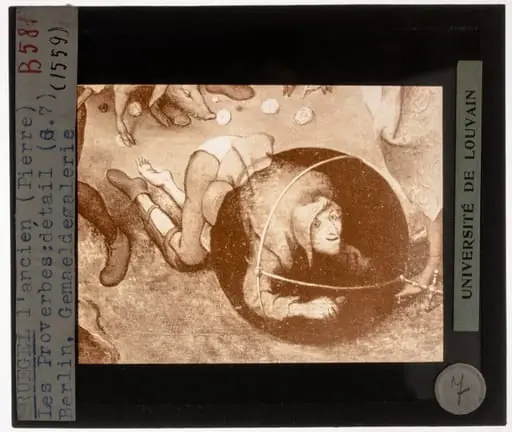 Pieter Brueghel the Elder. Dutch proverbs Detail: One must bend, if one is to get through the world
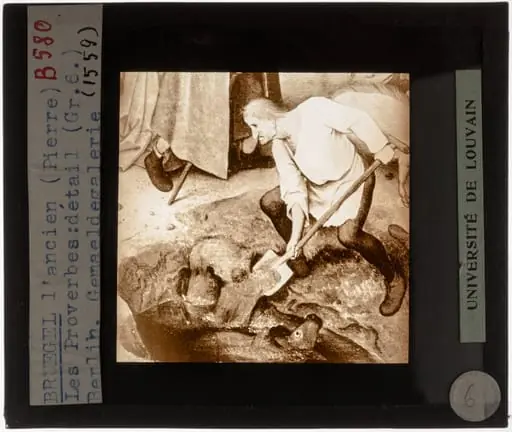 Pieter Brueghel de Oude. Nederlandse spreekwoorden Detail: Als 't kalf verdronken is, dempt men de put
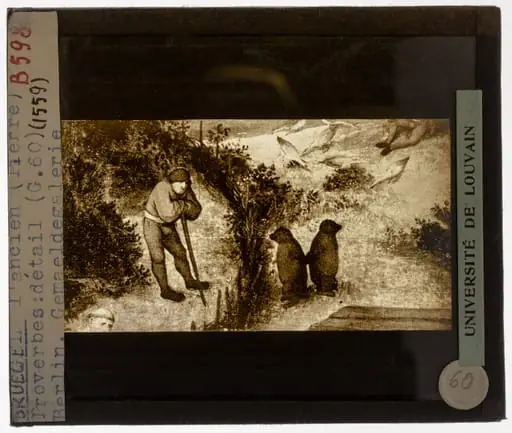 Pieter Brueghel de Oude. Nederlandse spreekwoorden Detail: Wilde beeren, die zijn bij den ander gheeren
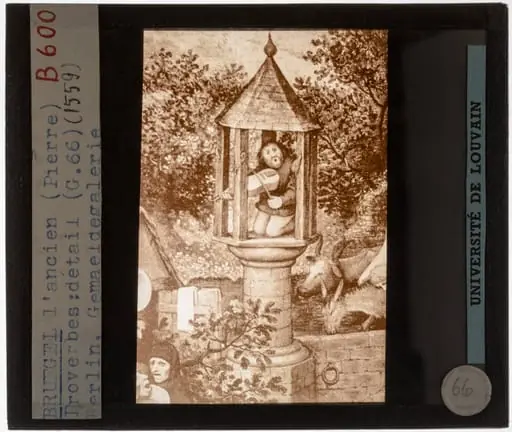 Pieter Brueghel de Oude. Nederlandse spreekwoorden Detail: Hij speelt op die kake