Artwork
Cottage on the Waterside
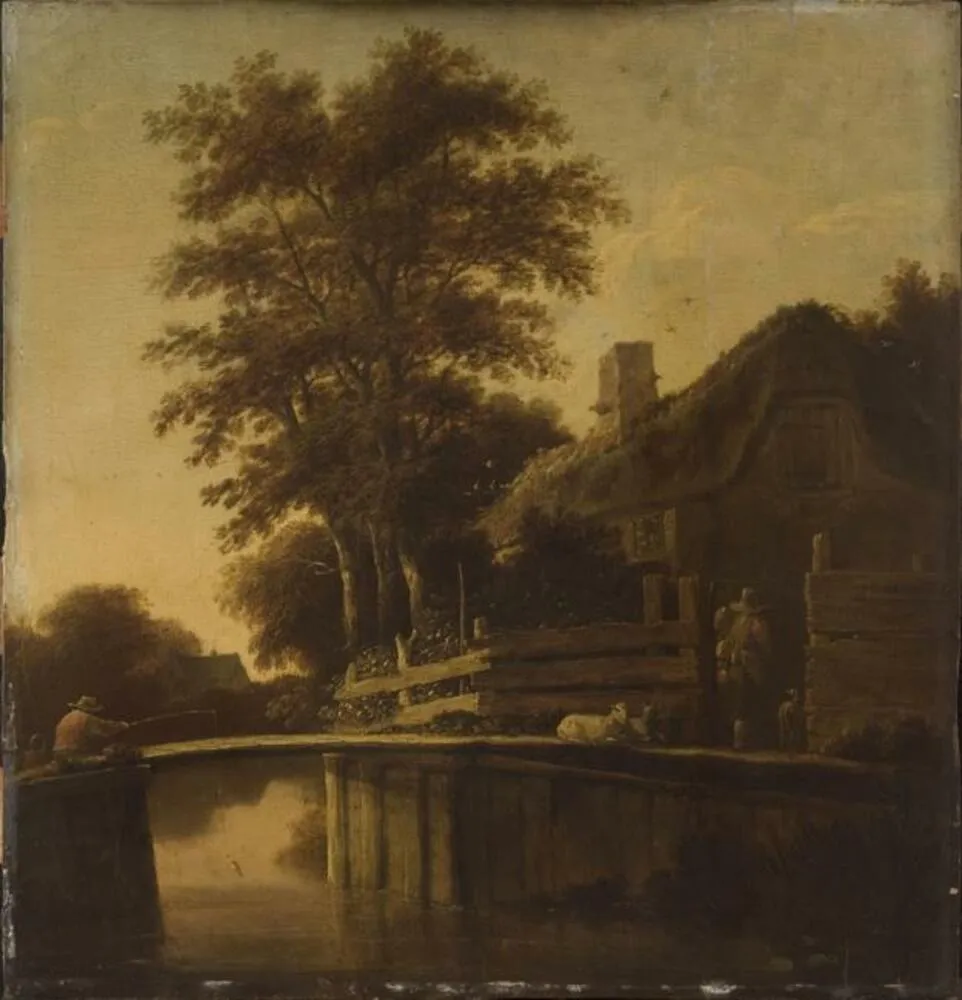
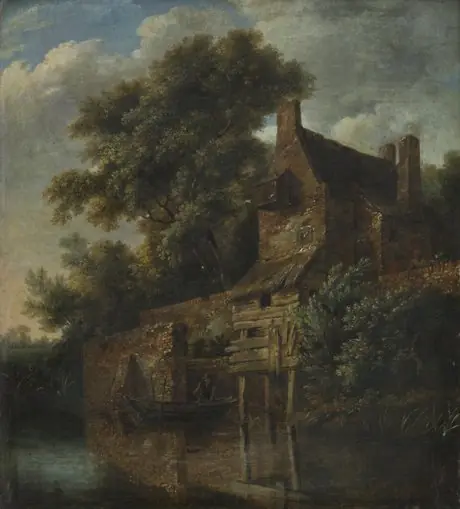
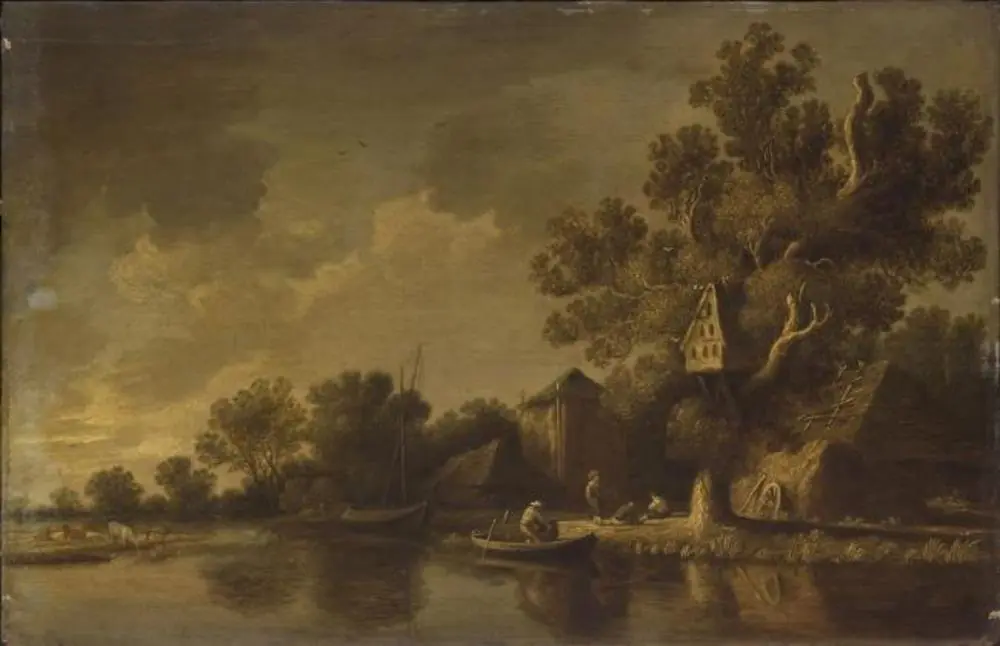
Cottage on the Waterside is an oil painting by the Dutch Golden Age artist Pieter de Bloot. It dates from 1637 and is held in the collection of the Philadelphia Museum of Art.
About this work
Overview
Working within the Dutch Golden Age, he specialized in quiet rural scenes, often capturing modest dwellings and everyday figures in natural settings.
Pieter de Bloot, a Dutch artist active in the early 17th century, painted *Cottage on the Waterside* in 1637. Working within the Dutch Golden Age, he specialized in quiet rural scenes, often capturing modest dwellings and everyday figures in natural settings. This oil on panel work exemplifies his preference for unembellished landscapes, reflecting the era’s broader interest in terrestrial tranquility over grand narratives.
Subject & Meaning
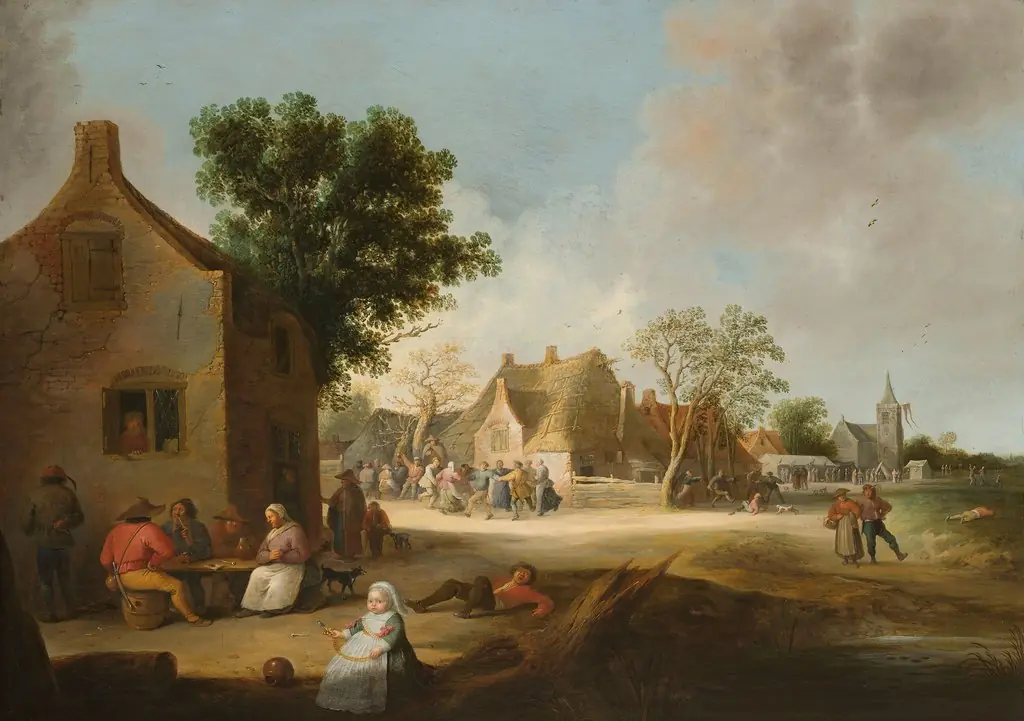
The painting depicts a humble cottage beside still water, accompanied by a lone figure seated on a low wall, engaged in fishing. A tree frames the foreground, while a few animals rest near the structure. The absence of dramatic action or human interaction emphasizes solitude and stillness. These elements suggest an appreciation for the rhythm of rural life, valued not as idealized pastoral fantasy but as observed reality.
Technique & Style
De Bloot employed muted earth tones and soft transitions to convey atmospheric calm. Brushwork is restrained, avoiding theatrical lighting or exaggerated contrast. The composition is balanced yet informal, with the cottage placed slightly off-center to allow space for the water and sky. His handling of light suggests subtle chiaroscuro, enhancing depth without drawing attention to technique itself.
History & Provenance
Created in 1637, the painting remained within private Dutch collections until entering the Philadelphia Museum of Art’s holdings. Its documented history is limited, as de Bloot’s oeuvre was never widely celebrated during his lifetime. The work’s survival and eventual institutional acquisition reflect a 20th-century reevaluation of minor Dutch genre painters and their contribution to landscape tradition.
Context
During the Dutch Golden Age, landscape painting flourished as a distinct genre, supported by a growing merchant class seeking art that mirrored their environment. De Bloot’s work aligns with contemporaries like Jacob van Ruisdael, though his scale and ambition were more modest. His focus on rural solitude resonated with broader cultural values of humility and domestic harmony.
Legacy
Though not among the most prominent figures of his time, de Bloot’s paintings contribute to the understanding of everyday visual culture in 17th-century Holland. *Cottage on the Waterside* endures as a quiet testament to the appeal of unadorned nature and the dignity of rural observation. It remains a representative example of the genre’s quieter, more introspective strand.
Artist & collection
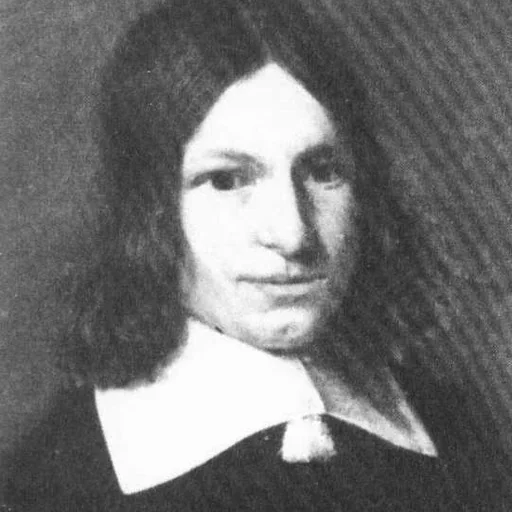
Artist
Pieter de Bloot (1601 – c. 6 November 1658) was a Dutch painter. De Bloot, who was born and died in Rotterdam, primarily painted landscapes and genre works, especially of countryside views and peasant subjects. He also…