Artwork
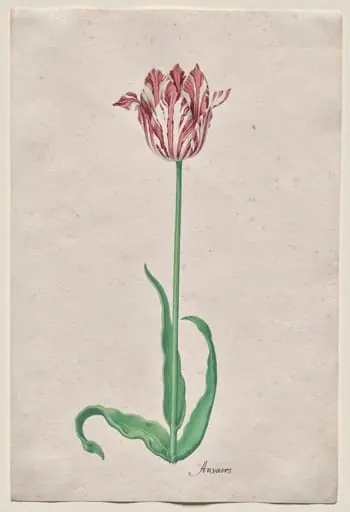
Study of a Tulip (Perregoen Machieu)
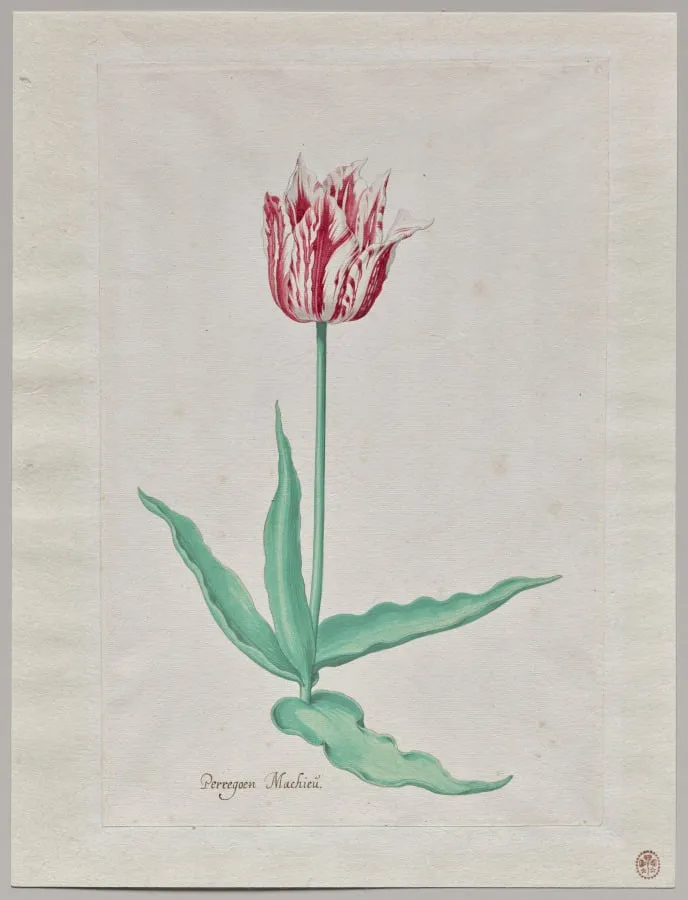
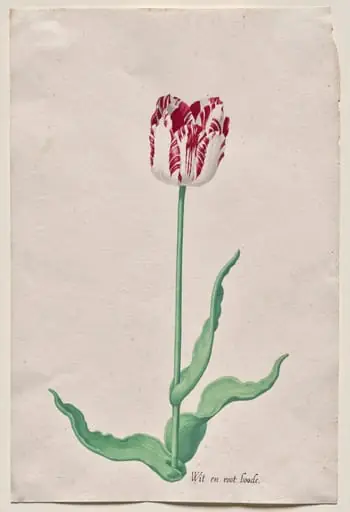
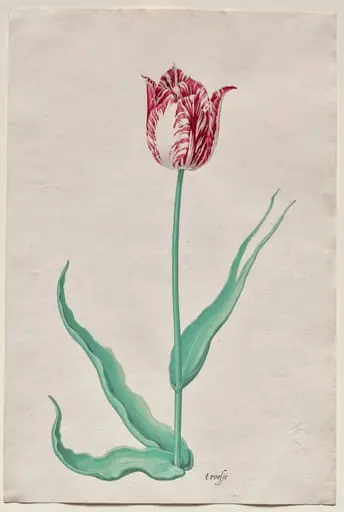
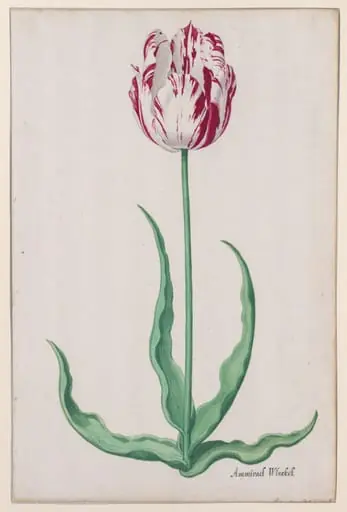
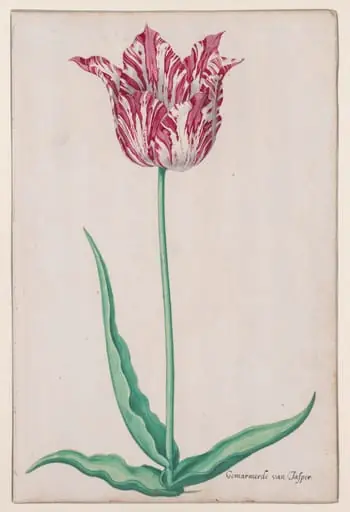
Study of a Tulip (Perregoen Machieu) is a drawing by the Baroque artist Pieter Holsteyn II. It dates from 1645 and is held in the collection of the Cleveland Museum of Art. The drawing depicts a single tulip with alternating red and white bands across its petals, set against an unadorned background.
About this work
Overview
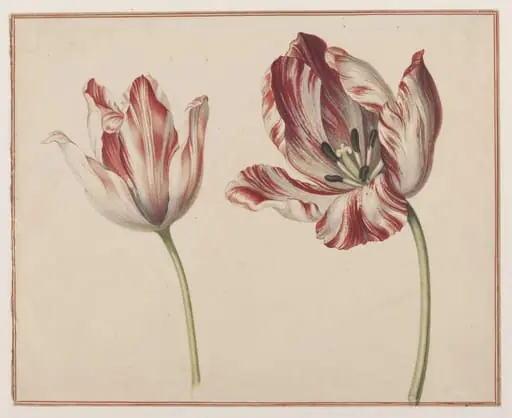
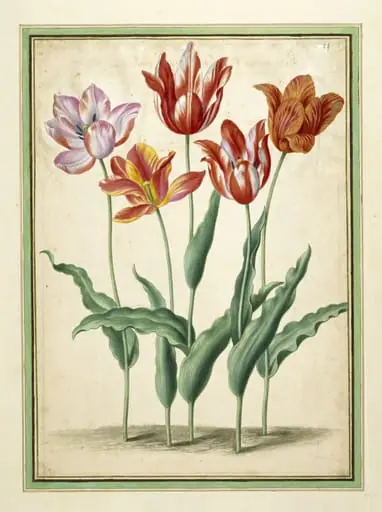
The drawing depicts a single tulip with alternating red and white bands across its petals, set against an unadorned background. Executed as a botanical illustration, the work records the flower’s distinctive variegation, a feature that made such specimens highly prized in the Dutch Republic during the early 17th century.
Subject & Meaning
Striped tulips, known as "broken" tulips, were coveted status objects in the period of tulip mania, when their market values sometimes exceeded those of substantial urban properties. The drawing therefore functioned not merely as a naturalistic study but as a visual catalogue of a luxury commodity that signified wealth and taste among collectors.
Technique & Style
Created by Pieter Holsteyn II, the piece employs fine pen work and delicate washes to render the flower’s form and the subtle contrast of the colored bands. The artist’s precise line and restrained shading reflect the Dutch tradition of scientific illustration, where accuracy was prioritized over decorative embellishment.
History & Provenance
The image formed part of a larger “tulip book,” a printed or manuscript volume used by growers to advertise and document rare cultivars. Such books circulated among merchants and enthusiasts during the speculative tulip market of the 1630s, providing a reference for buyers and a record of the horticultural trends of the era.
Context
Tulip mania arose in a flourishing Dutch economy where horticulture intersected with finance. The virus‑induced streaks that produced the striking coloration were unknown to contemporaries, yet they amplified demand. Artists like Holsteyn supplied the visual evidence that underpinned the trade, linking art, commerce, and botany in a unique cultural moment.
Artist & collection