Artwork
King David Handing the Letter to Uriah
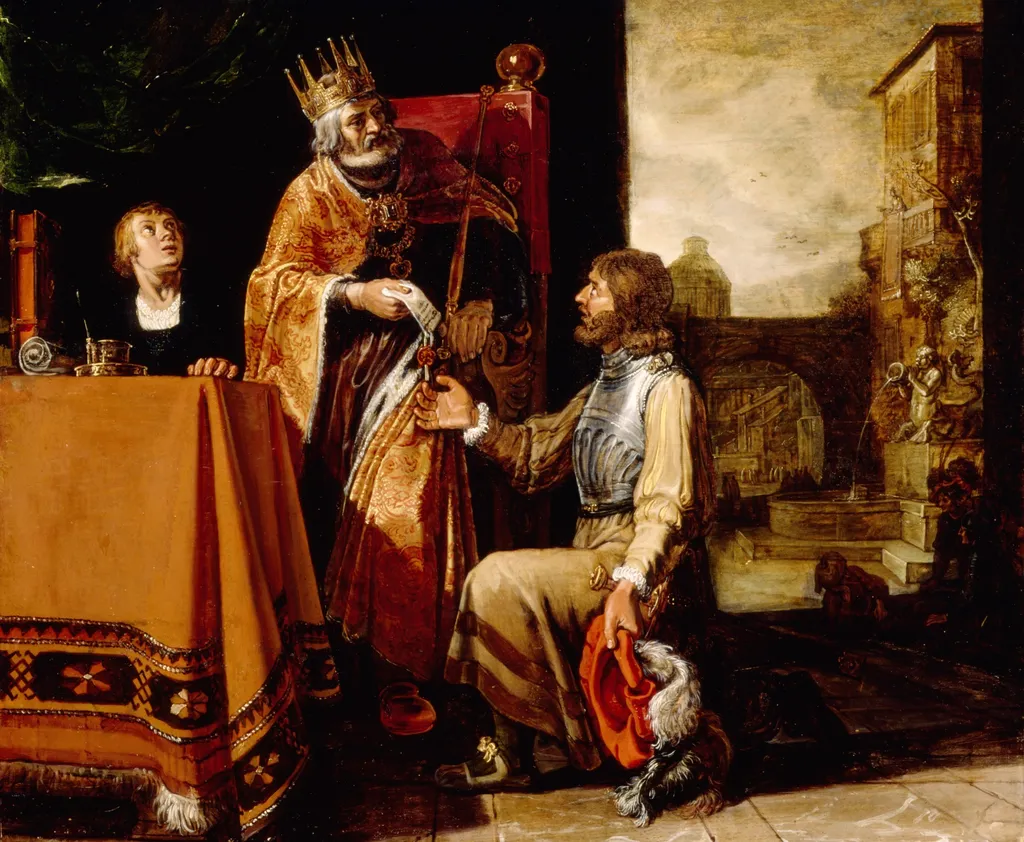
King David Handing the Letter to Uriah is an oil painting by the Early Baroque Italian artist Pieter Lastman. It dates from 1611 and is held in the collection of the Kunsthistorisches Museum.
About this work
Overview
Pieter Lastman’s 1611 oil painting, *King David Handing the Letter to Uriah*, presents a biblical episode in a composition that reflects the early Baroque sensibility of Italy. Executed for the Kunsthistorisches Museum, the work illustrates the moment when the Israelite monarch entrusts a written message to the soldier Uriah, a scene charged with moral and political weight.
Subject & Meaning
In the picture, David, robed and crowned, extends the missive to a kneeling Uriah, whose simpler attire underscores his subordinate status.
The narrative derives from the Old Testament account in which King David seeks to manipulate Uriah’s loyalty by delivering a letter that will lead to Uriah’s death. In the picture, David, robed and crowned, extends the missive to a kneeling Uriah, whose simpler attire underscores his subordinate status. A woman, positioned at a nearby table, watches the exchange, hinting at the domestic repercussions of the king’s scheme.
Technique & Style
Lastman employs pronounced chiaroscuro, using strong contrasts of light and shadow to model the figures and give the scene a three‑dimensional presence. The foreground is rendered with meticulous detail, especially in the hands and facial expressions, while the background recedes into a muted cityscape under a cloudy sky, creating depth and a somber atmosphere.
History & Provenance
Completed in 1611, the painting entered the collection of the Kunsthistorisches Museum in Vienna, where it remains on display. The work belongs to the period when Lastman was establishing his reputation in the Dutch Republic, shortly before he would become a pivotal instructor to artists such as Rembrandt van Rijn and Jan Lievens.
Context
The composition reflects the influence of Italian Baroque painters, whose dramatic lighting and narrative intensity were being assimilated by Dutch artists of the early 17th century. Lastman’s focus on the precise rendering of hands and facial gestures aligns with his broader interest in conveying psychological nuance within historical subjects.
Own this work as a print
Artist & collection
Artist
Pieter Lastman (1583–1633) was a Dutch painter. Lastman is considered important because of his work as a painter of history pieces and because his pupils included Rembrandt and Jan Lievens. In his paintings Lastman paid…

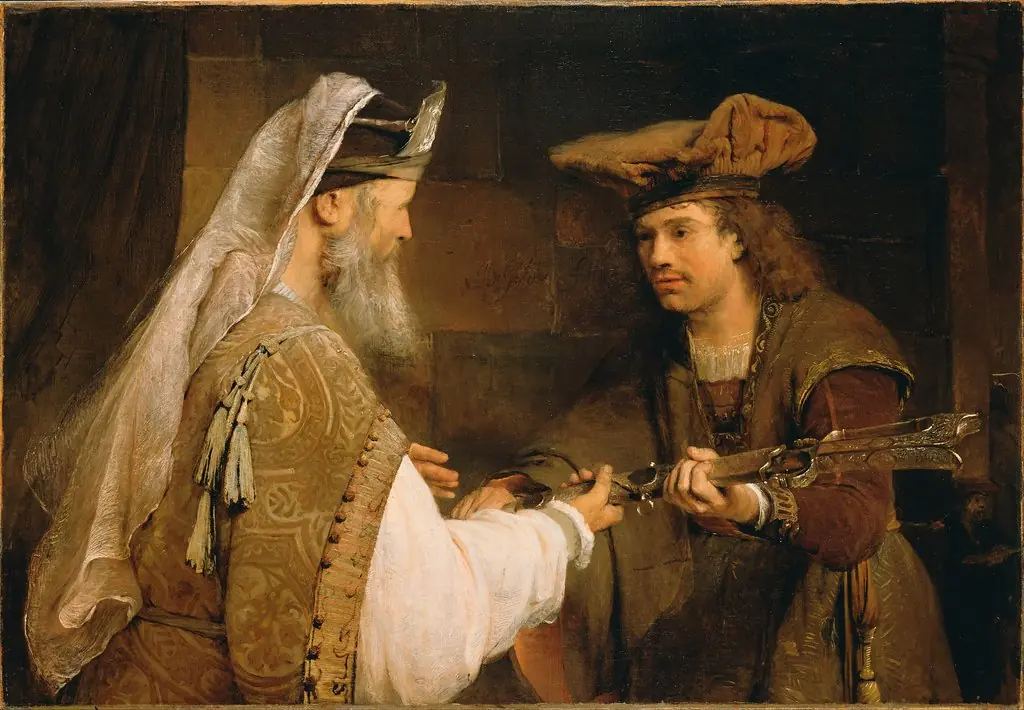 Ahimelech Giving the Sword of Goliath to David
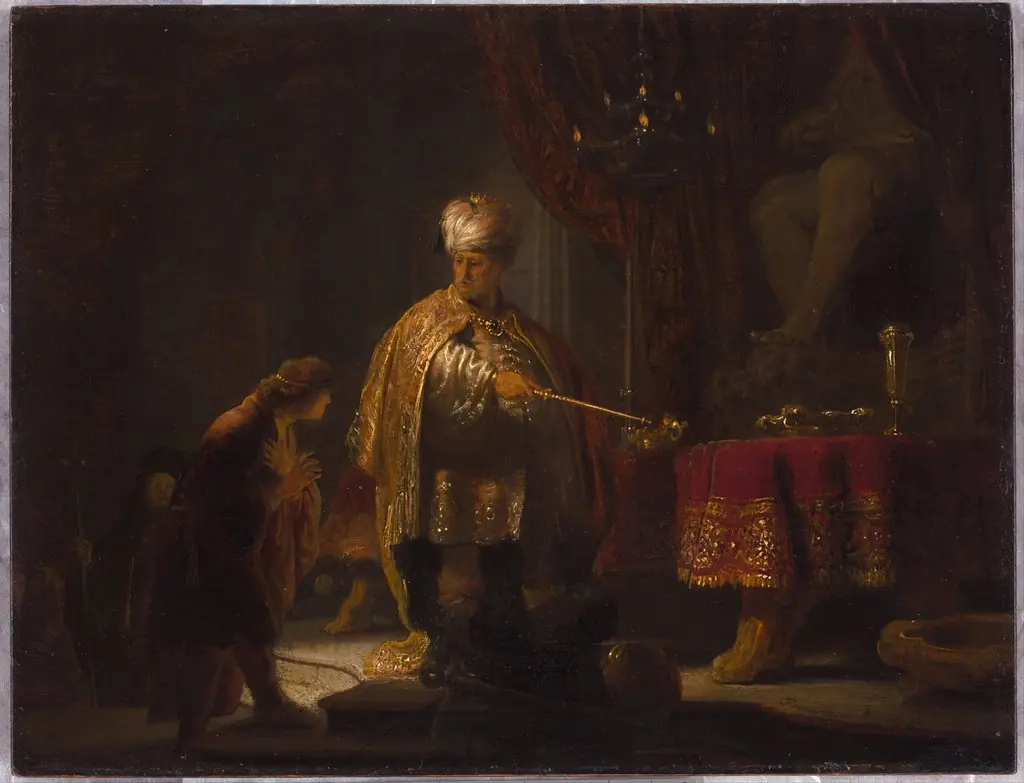 Daniel and Cyrus Before the Idol Bel
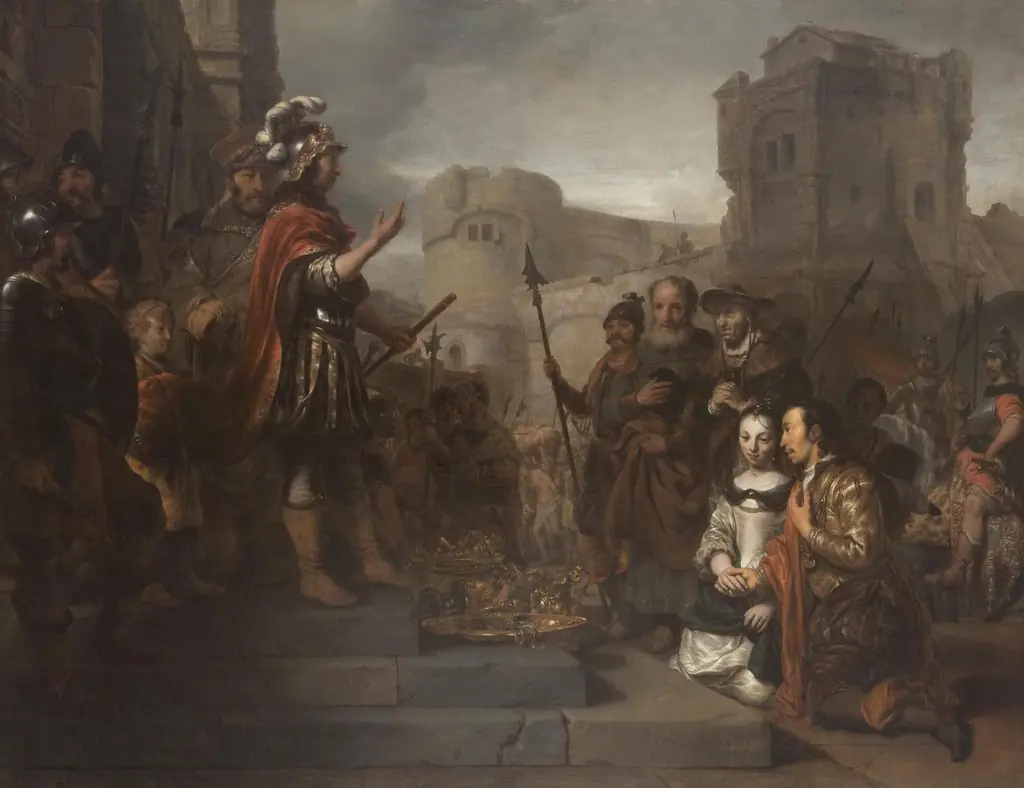 The Continence of Scipio
 Queen of Sheba before Solomon
 Casimir the Great
 Leopold the Saint rejects the imperial crown
 Theodosius and Saint Ambrose
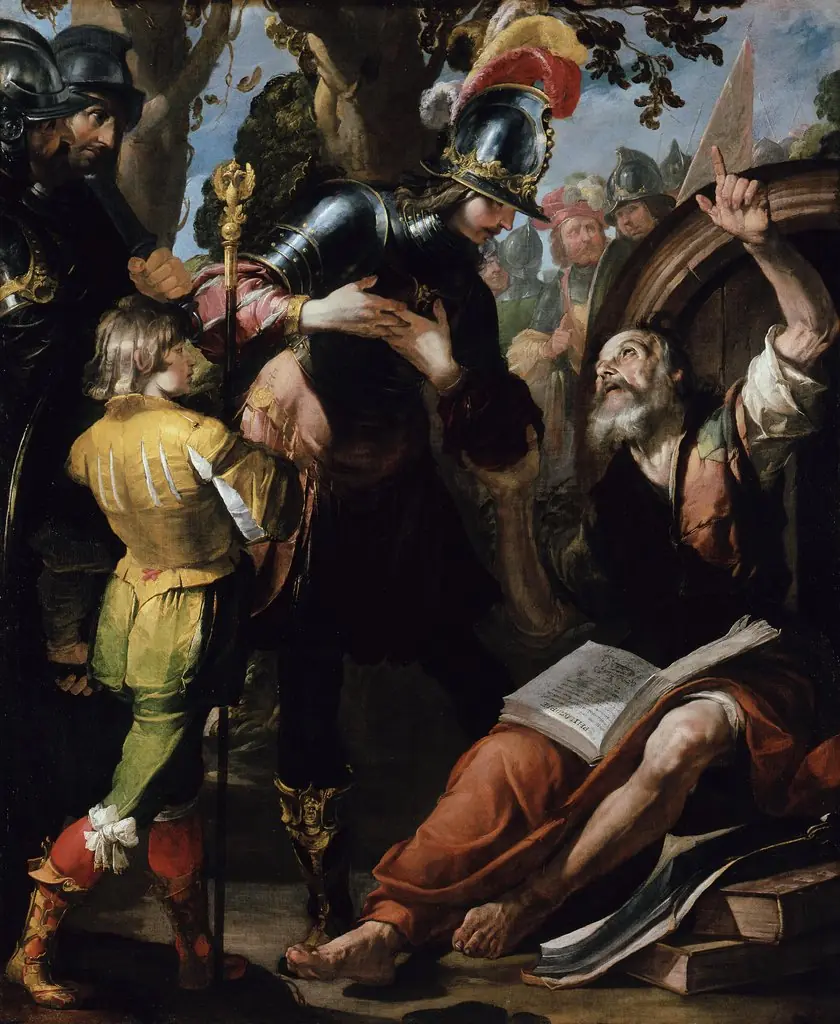 Alexander and Diogenes
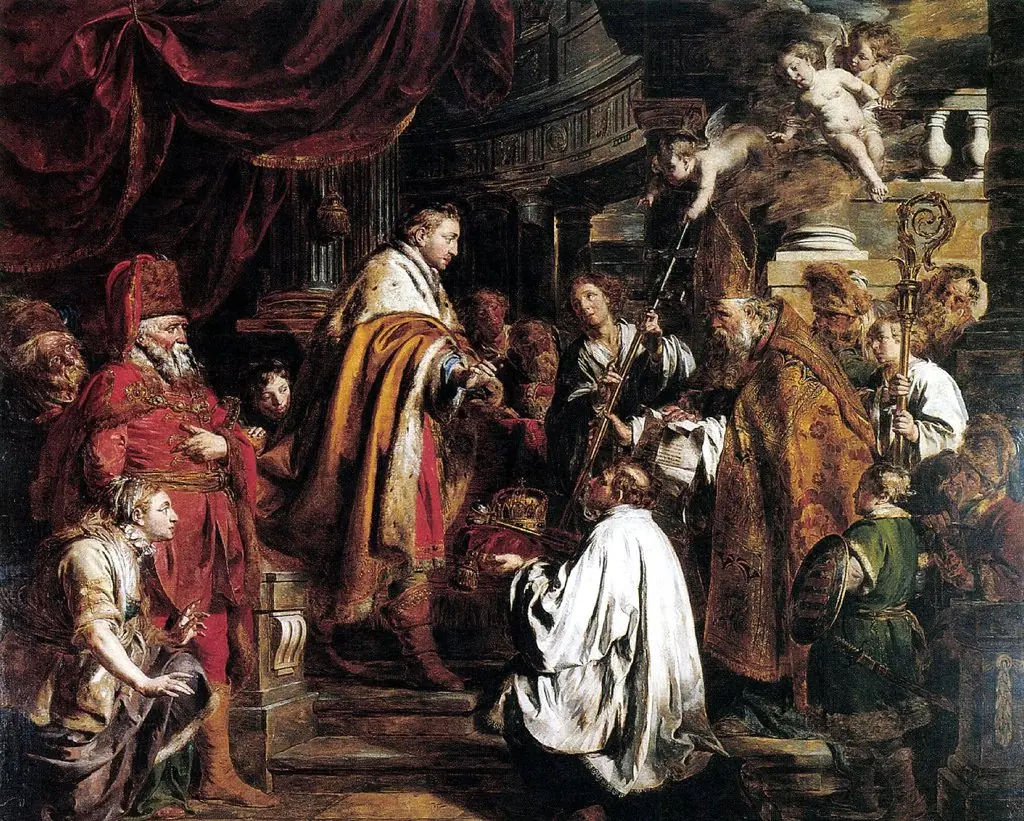 Saint Stephen, king of Hungary Receiving the Legate
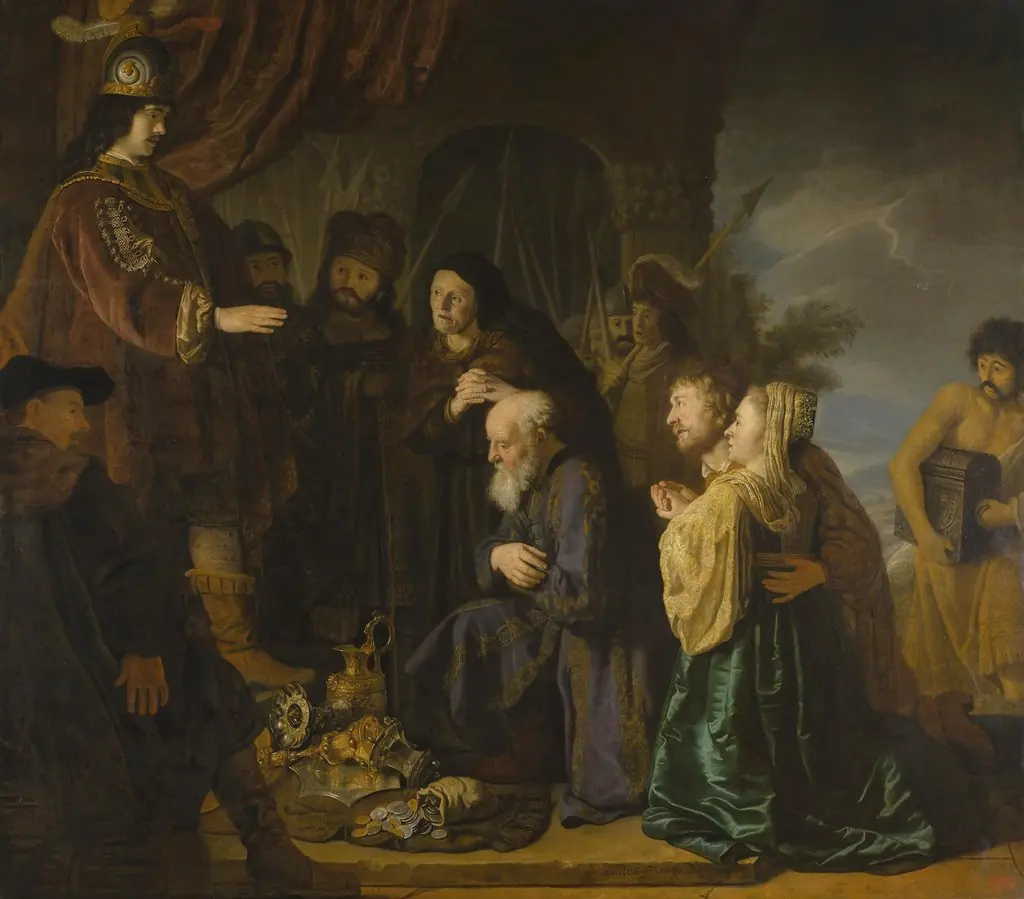 The Magnanimity of Scipio Africanus