Artwork
David with the Head of Goliath
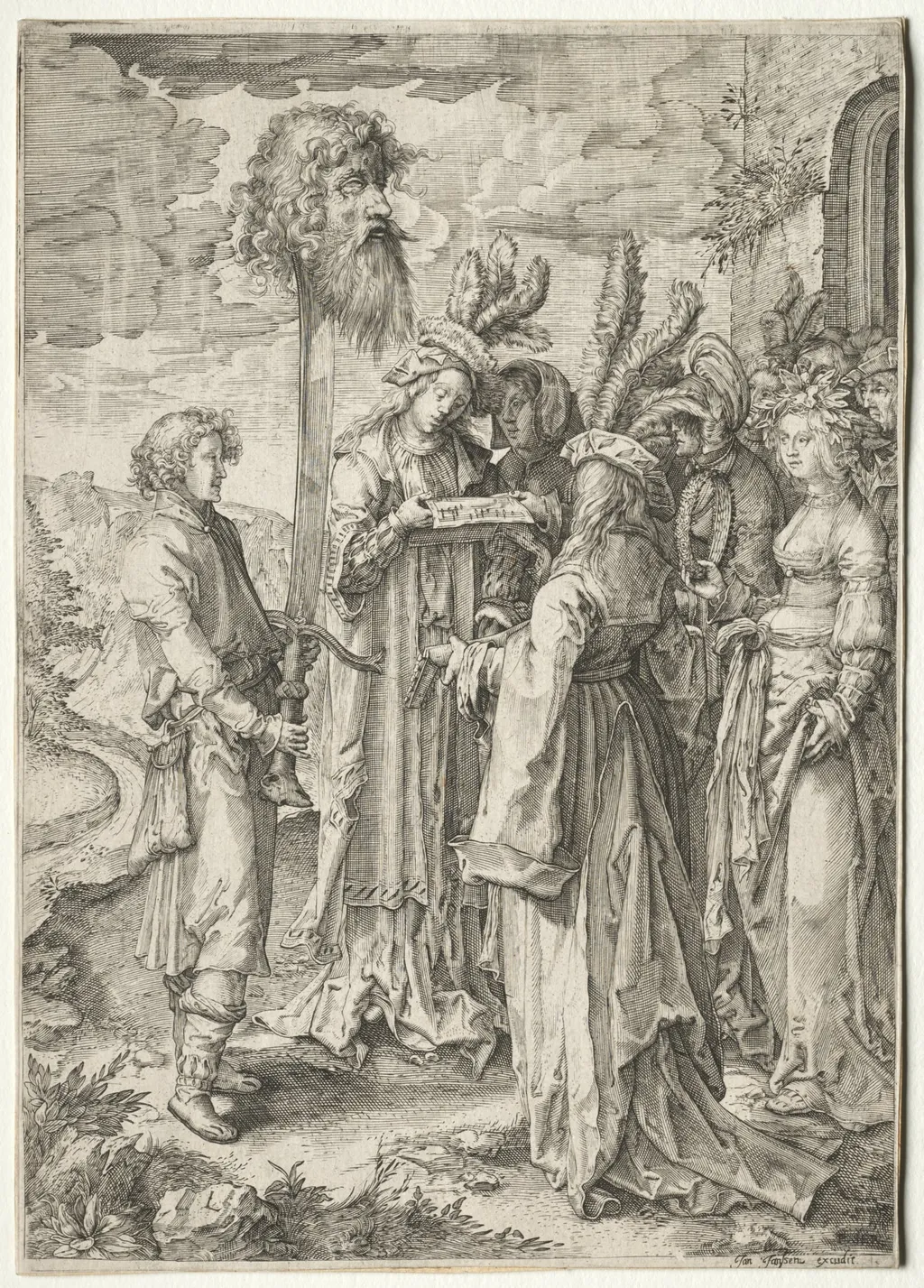
David with the Head of Goliath is a print by the Baroque artist Pieter Serwouters. It dates from 1630 and is held in the collection of the Cleveland Museum of Art.
About this work
This painting shows a young man holding a giant’s bloody head by its hair. Sunlight cuts across David’s face and armor. His sword is long and curved.
Artists often painted David after the fight. This one adds a detail: David’s lips are open, like he’s singing. The Old Testament says David loved music.
Look up this artist’s name next: Pieter Serwouters (Flemish, 1586–1657).
Overview
The scene captures David standing victorious, gripping Goliath’s severed head by the hair while holding a long, curved sword.
This print by Pieter Serwouters depicts the biblical hero David moments after slaying the Philistine giant Goliath. The scene captures David standing victorious, gripping Goliath’s severed head by the hair while holding a long, curved sword. His mouth is slightly open, suggesting a song of praise, aligning with scriptural accounts of David’s musical devotion. The composition emphasizes light falling across his armor and face, heightening the moment’s solemnity.
Subject & Meaning
David’s triumph over Goliath symbolizes divine favor overcoming overwhelming odds. The act of singing as he holds the head reflects his identity as a psalmist and worshipper, as described in the Books of Chronicles. This portrayal moves beyond mere victory to convey spiritual gratitude, framing the battle not just as physical conquest but as an act of sacred testimony. The imagery reinforces the idea of music as worship, central to David’s legacy.
Technique & Style
Serwouters employs chiaroscuro to model David’s form, with sharp contrasts between light and shadow defining his armor and facial expression. The sword’s curved blade and the texture of Goliath’s hair are rendered with precise, linear detail typical of Flemish engraving traditions. The open mouth, a subtle but deliberate choice, introduces narrative motion, suggesting sound and emotion where the medium is static, enhancing the scene’s psychological depth.
History & Provenance
Pieter Serwouters, active in Antwerp during the early 17th century, produced prints primarily for devotional and educational audiences. This work likely circulated among religious households or institutions, reinforcing biblical narratives through accessible imagery. While specific early ownership records are sparse, its stylistic alignment with other Flemish prints of the period suggests it was part of a broader devotional print culture centered on Old Testament heroes.
Context
In the decades following the Council of Trent, Catholic regions emphasized visual storytelling to reinforce scriptural teachings. David, as both warrior and musician, served as a model of piety and divine service. Serwouters’ depiction aligns with Counter-Reformation ideals, presenting biblical figures as morally instructive. The inclusion of music as an active element in the scene reflects contemporary theological interest in liturgical expression and the soul’s response to grace.
Legacy
Serwouters’ print contributes to a long tradition of David imagery in Northern European art, where his dual identity as king and psalmist was frequently explored. While not widely reproduced today, the work exemplifies how printmakers translated complex theological themes into intimate, emotionally resonant scenes. Its focus on quiet devotion rather than violent spectacle distinguishes it from more dramatic renditions, offering a contemplative counterpoint to the era’s prevailing visual narratives.
Artist & collection

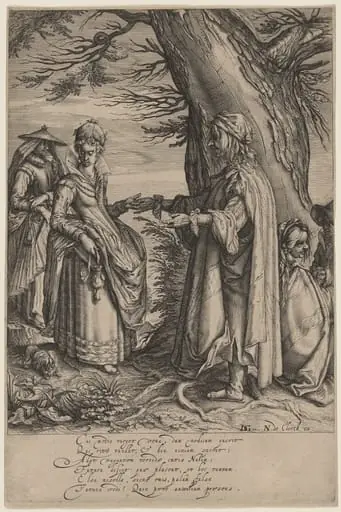 The Fortune Teller
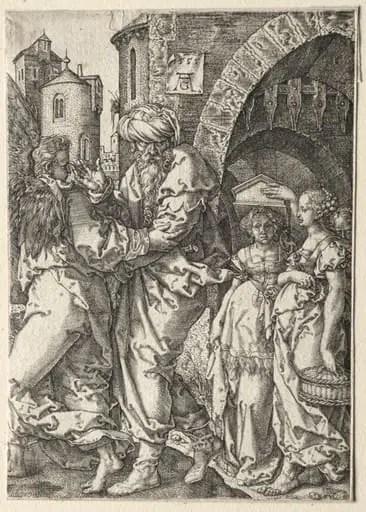 The Story of Lot: Lot and His Family Fleeing Sodom
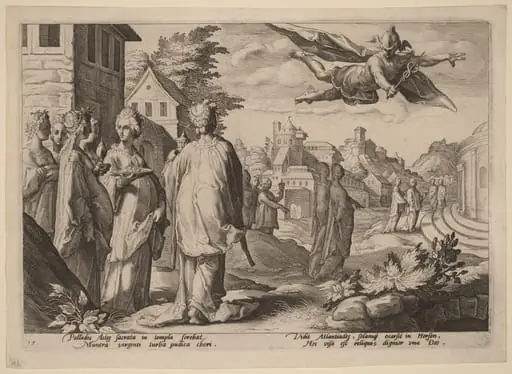 Mercury Falling in Love with Herse
 Turpe senex miles...
 Ahijah and Jeroboam
 The Story of Lot
 The Two Couples in the Forest
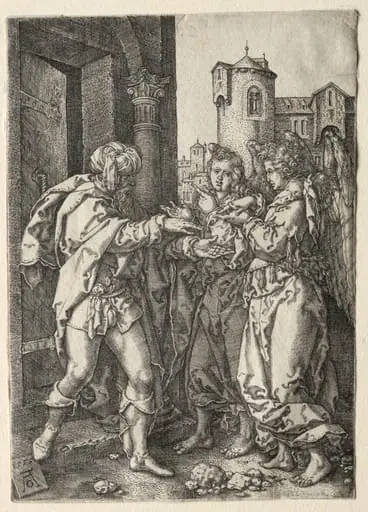 The Story of Lot: Lot Welcomes the Angels
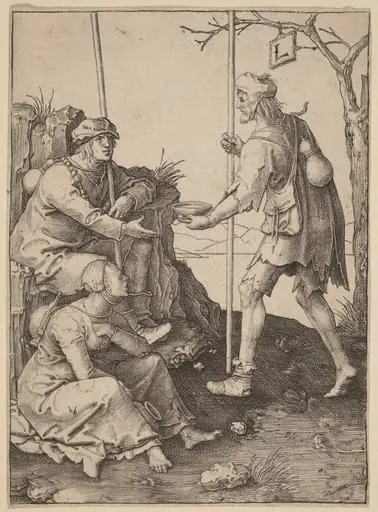 The Beggars
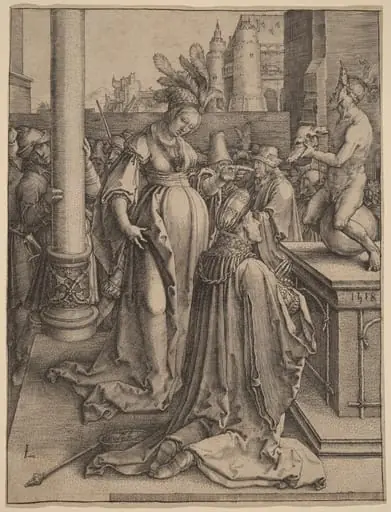 Solomon's Idolatry
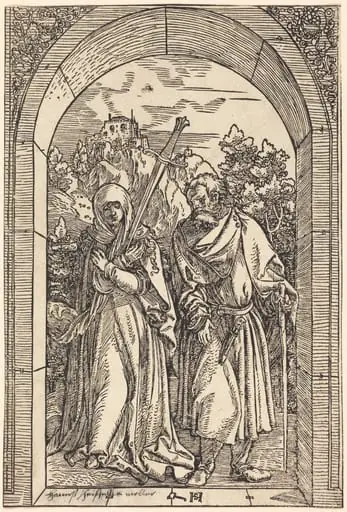 Mater Dolorosa and Saint Joseph
 The Passion: Christ Presented to the People