Artwork
Portrait of Emperor Charles V
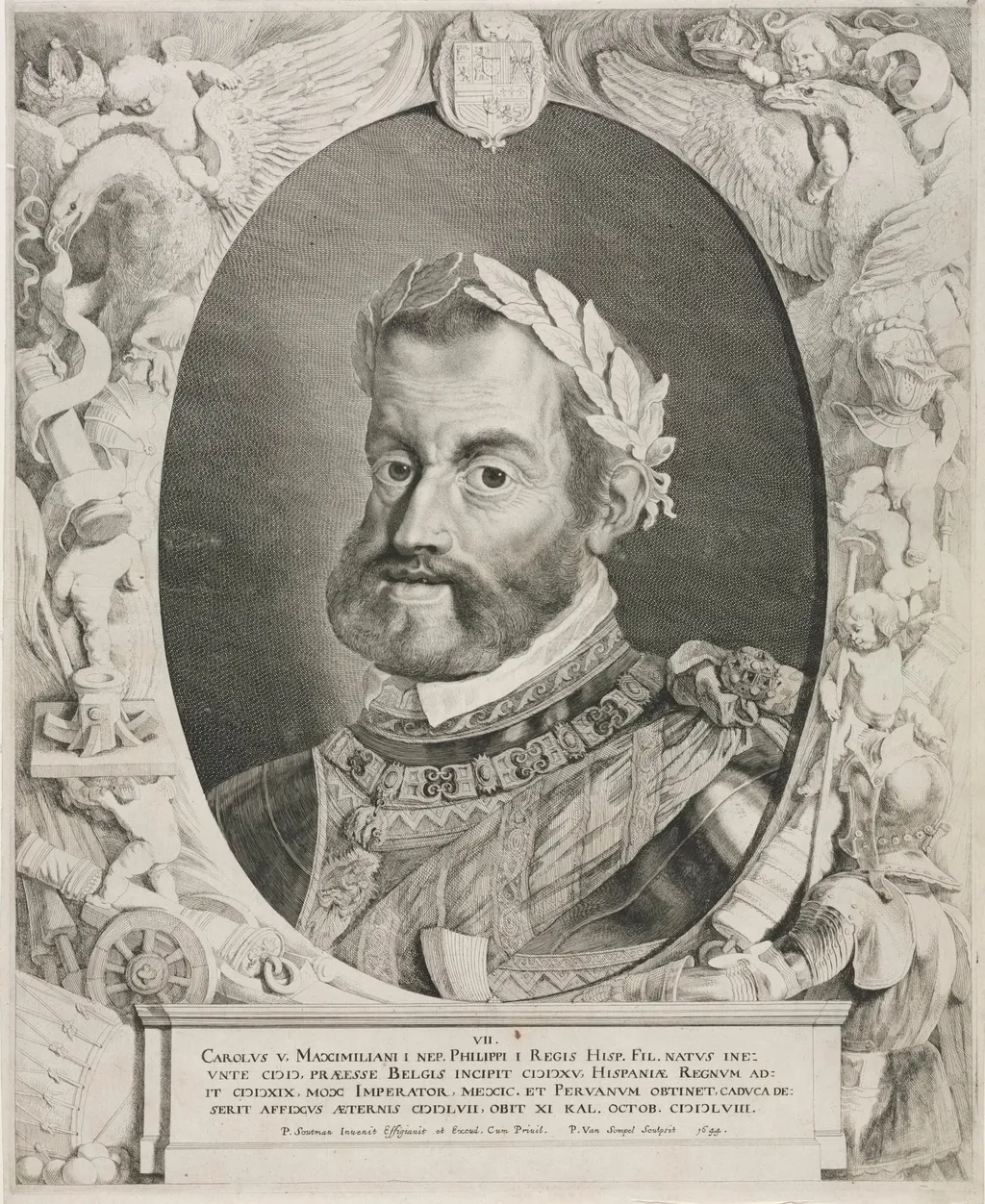
Portrait of Emperor Charles V is a print by the Baroque artist Pieter van Sompel. It dates from 1644 and is held in the collection of the Cleveland Museum of Art.
About this work
Overview
Created nearly a century after Charles’s death, it is not a contemporary likeness but a posthumous representation intended to convey imperial authority.
This print, produced in 1644 by Pieter van Sompel, depicts Emperor Charles V in a formal, seated posture. Created nearly a century after Charles’s death, it is not a contemporary likeness but a posthumous representation intended to convey imperial authority. The work resides in the collection of The Cleveland Museum of Art, where it serves as an example of 17th-century printmaking traditions rooted in earlier portraiture.
Subject & Meaning
Charles V is portrayed with solemn dignity, his expression restrained and gaze direct, reinforcing his historical role as a ruler of vast territories. His elaborate attire and ornate jewelry are not merely decorative but symbolize imperial status and the continuity of Habsburg power. The image functions as a visual assertion of legacy, aligning the emperor with enduring ideals of governance and nobility.
Technique & Style
Van Sompel employed fine line work and careful tonal gradations to render texture and volume. The play of light across the emperor’s garments and face demonstrates an understanding of chiaroscuro, enhancing three-dimensionality without overt realism. Details such as fabric folds and metallic embellishments are rendered with precision, reflecting the printmaker’s skill in translating painted compositions into engraved form.
History & Provenance
The print was made in 1644, long after Charles V’s 1558 abdication and death, suggesting it was part of a broader 17th-century interest in historical imperial imagery. Its presence in The Cleveland Museum of Art indicates acquisition during the 20th century, likely as part of a growing collection of European prints emphasizing dynastic portraiture and early modern visual culture.
Context
In the mid-17th century, prints of past rulers were commonly circulated to reinforce political legitimacy and historical continuity, especially amid the upheavals of the Thirty Years’ War. Van Sompel’s work fits within a tradition of reproductive engraving that preserved and disseminated iconic images of monarchs, often based on earlier paintings now lost or inaccessible.
Legacy
Though not widely known today, this print exemplifies how posthumous portraiture sustained the visual memory of rulers across generations. It reflects the enduring appeal of Charles V as a symbol of centralized authority and the role of print media in shaping historical perception, offering insight into how power was visually constructed in early modern Europe.
Artist & collection

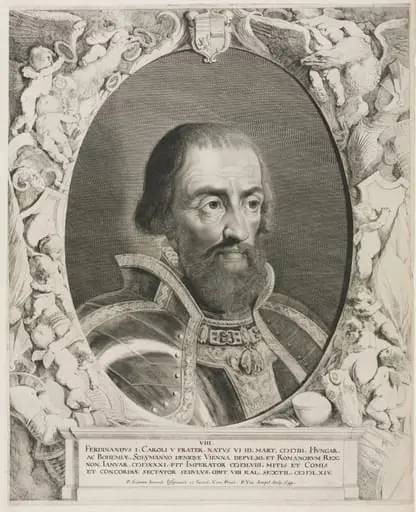 Portrait of Emperor Ferdinand I, from the series Imperatores Domus Austriacæ ...
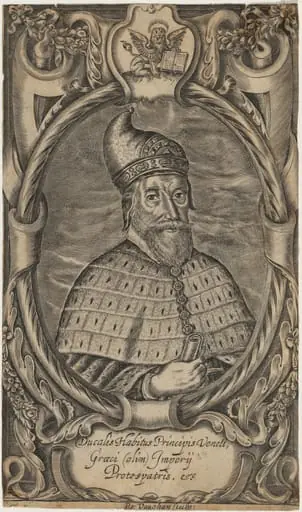 A Venetian Doge
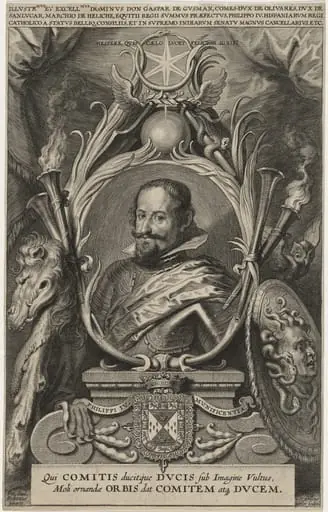 Gaspar de Guzman, Count of Olivares and Duke of San Lucas
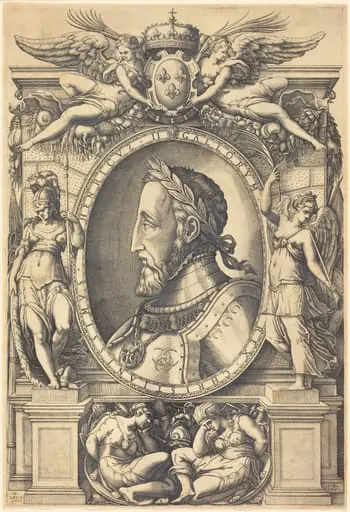 Henri II, King of France
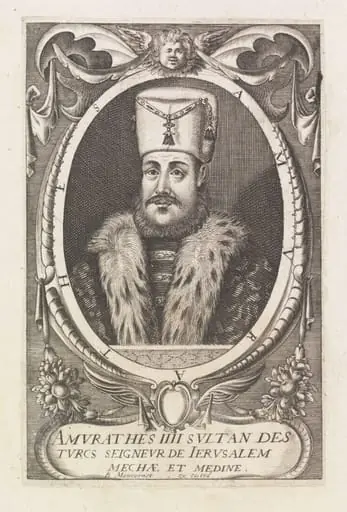 Turkish sultans, sultanas and other historical figures
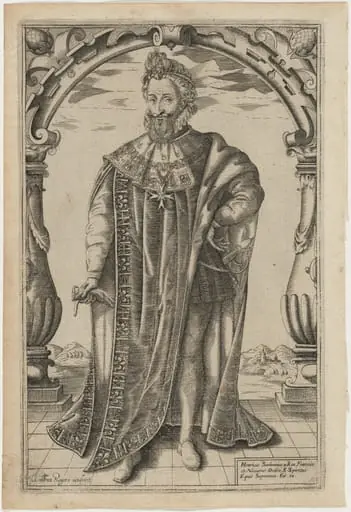 Henry IV of France
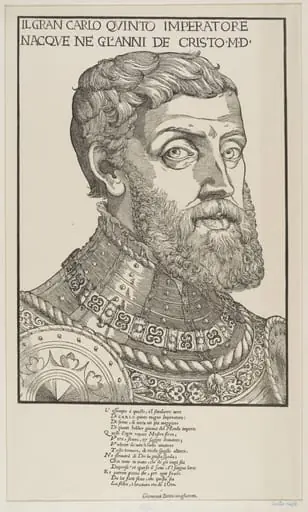 Il Gra Carlo Quinto imperatore nacque n Gl'anni de Cristo MD
 Matthias, Roman Emperor
 Gustavus Adolphus
 Sigismund Bathori, Prince of Transylvania