Artwork
Henry IV of France
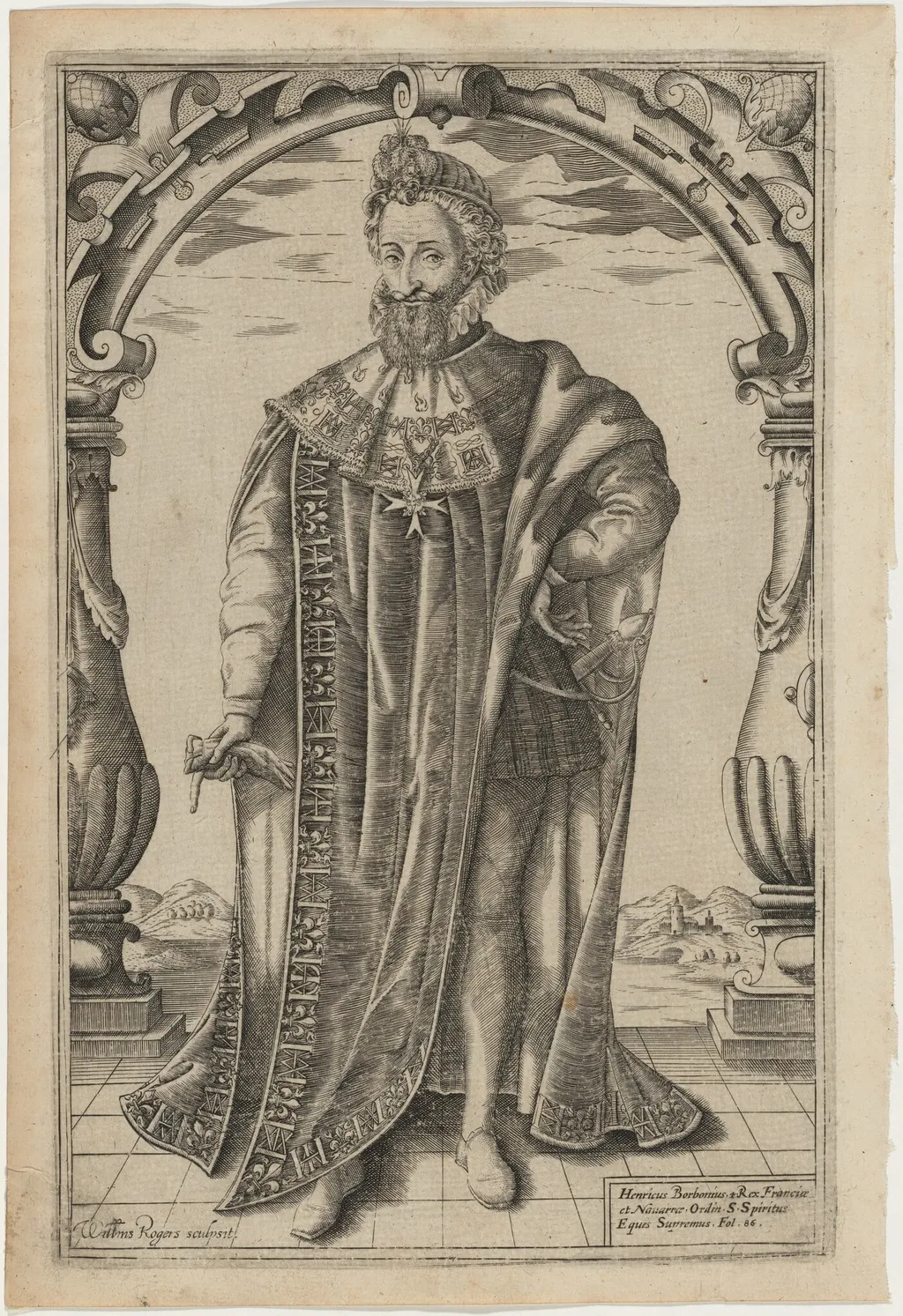
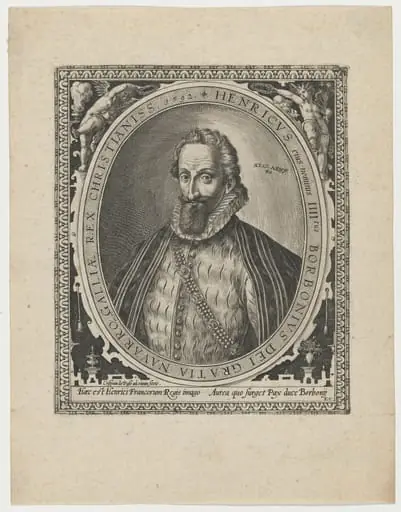
Henry IV of France is an ink print by the Baroque artist William Rogers. It dates from 1602 and is held in the collection of the National Gallery of Art.
About this work
Overview
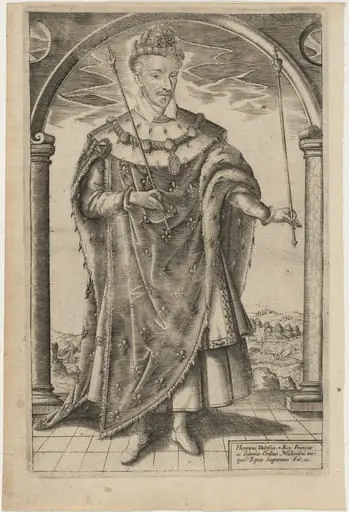
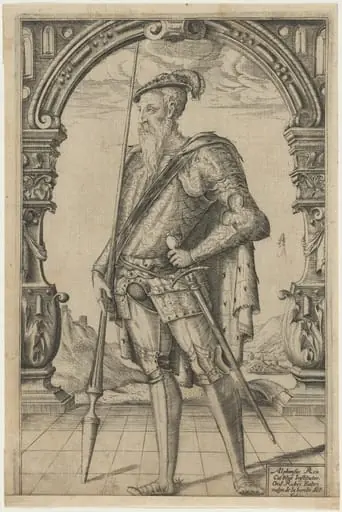
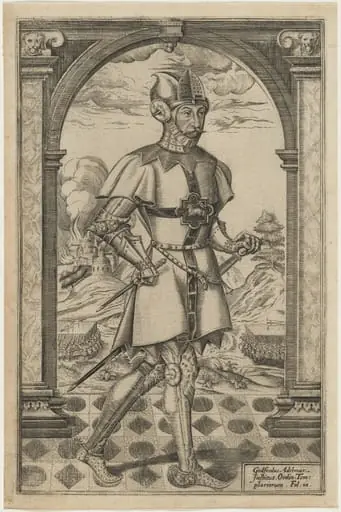
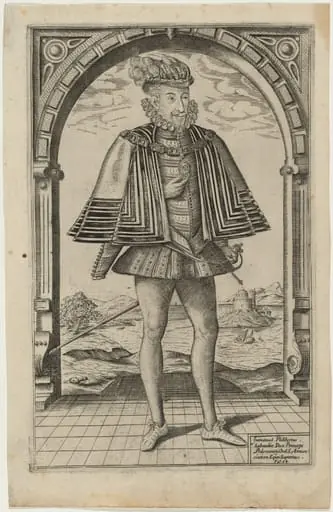
William Rogers’ 1602 engraving presents a portrait of Henry IV of France. Rendered in black and white, the image shows the monarch in elaborate attire, his left hand placed on his hip and his right hand gripping a sword hilt. Behind him an ornamental arch frames the figure, its swirling motifs punctuated by miniature depictions of ships and architectural forms.
Subject & Meaning
The work depicts Henry IV, the first Bourbon king of France, emphasizing his regal authority through sumptuous clothing and martial accoutrements.
The work depicts Henry IV, the first Bourbon king of France, emphasizing his regal authority through sumptuous clothing and martial accoutrements. The richly detailed robe, complete with numerous buttons and a broad sash bearing heraldic symbols, signals both his royal status and his role as a military leader, while the surrounding architectural and nautical motifs suggest the breadth of his realm and its maritime interests.
Technique & Style
Executed as an engraving, Rogers incised the image onto a metal plate, creating a dense network of fine lines that generate tonal variation and texture. The technique allows for precise rendering of fabric folds, facial features, and ornamental background elements, producing a crisp, linear quality characteristic of early 17th‑century English printmaking.
History & Provenance
The print dates to 1602, a period when Henry IV’s reign was still ongoing. Rogers, an English engraver active in the late 16th and early 17th centuries, produced the portrait likely for distribution among collectors and admirers of the French monarch. Surviving copies are found in several European print collections, indicating its circulation among contemporary audiences.
Context
Created during the early years of the Bourbon dynasty, the engraving reflects the political climate of post‑Wars of Religion France, when Henry IV sought to consolidate power and project a unified royal image. The inclusion of naval and architectural motifs aligns with contemporary propaganda that highlighted the king’s ambition to strengthen France’s infrastructure and overseas presence.
Legacy
While not as widely reproduced as later royal portraits, Rogers’ engraving contributes to the visual record of Henry IV’s iconography. It exemplifies the role of print media in disseminating royal imagery across borders, influencing how foreign courts and the public visualized the French sovereign in the early modern period.
Artist & collection