Artwork
Hindoo temple sculptures
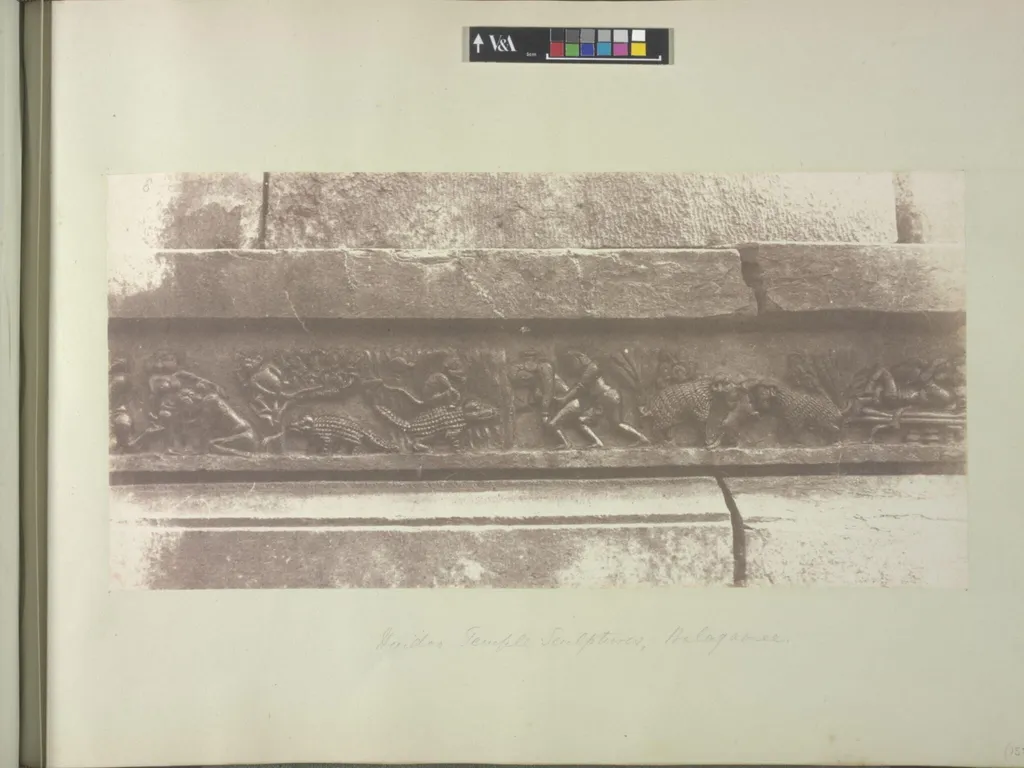
Hindoo temple sculptures is a photographic photography by the Impressionist artist William Henry Pigou. It dates from 1855 and is held in the collection of the Victoria and Albert Museum.
About this work
Overview
The photograph serves as a historical record rather than an artistic composition, emphasizing fidelity to the original carving's condition.
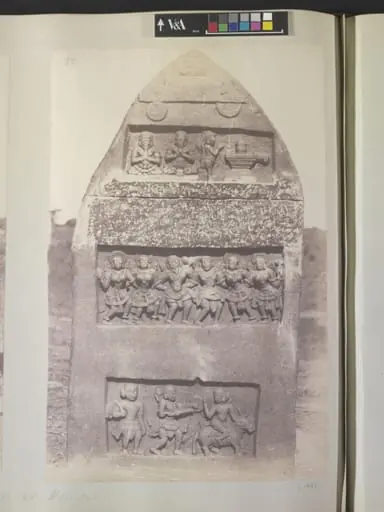
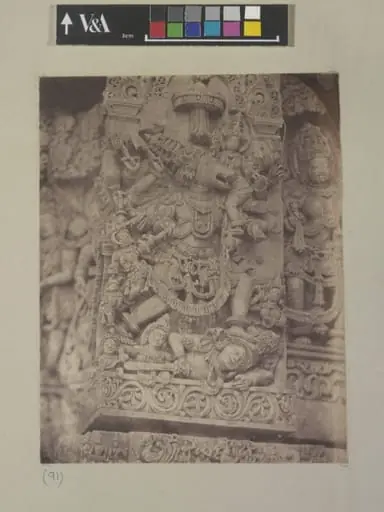
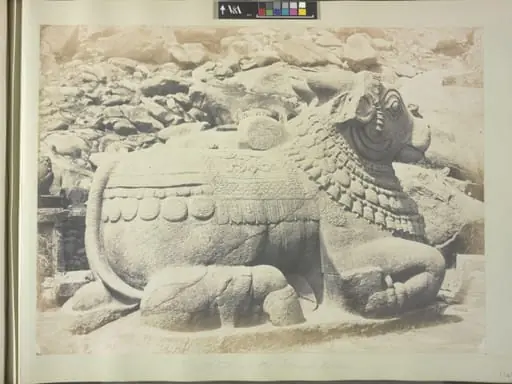
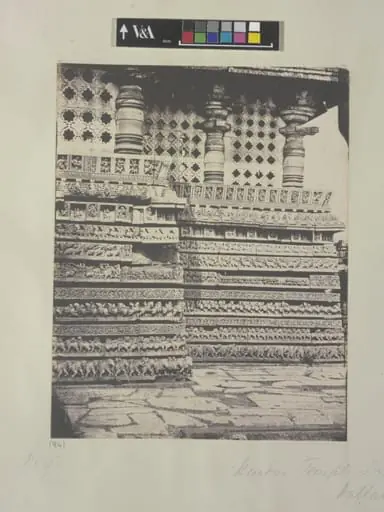
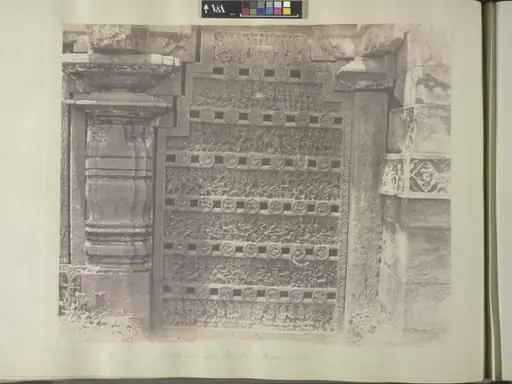
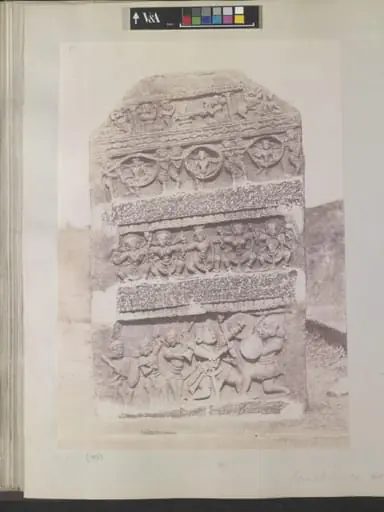
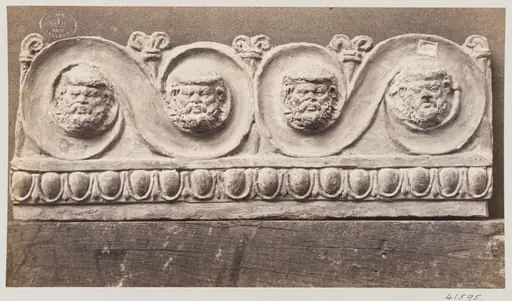
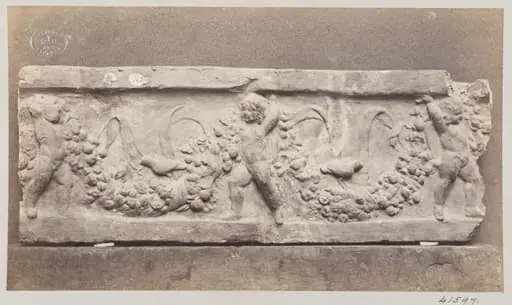
This photograph, taken around 1855 by William Henry Pigou, captures a section of stone relief from a South Asian temple. The image preserves details of a weathered frieze, likely from a Hindu sacred structure, recorded during a period of increasing colonial interest in documenting indigenous artistic heritage. The photograph serves as a historical record rather than an artistic composition, emphasizing fidelity to the original carving's condition.
Subject & Meaning
The carved figures appear in a continuous, rhythmic arrangement, suggesting a ceremonial procession or mythological narrative. Some figures hold staffs or animals, common symbols in Hindu iconography denoting divine attributes or narrative roles. The scene’s ambiguity reflects the loss of contextual knowledge over time, yet the composition retains the formal language of temple art meant to convey cosmic order and sacred story.
Technique & Style
The relief is shallow, with forms barely raised from the stone surface, typical of South Indian temple decoration. Details are softened by erosion, and the carving’s edges are worn, indicating centuries of exposure. Pigou’s photograph renders these subtle contours with careful lighting, emphasizing texture and depth without enhancing or altering the original’s fragmented state.
History & Provenance
The photograph was made during the mid-nineteenth century, when British colonial administrators and scholars systematically documented India’s architectural remains. Pigou’s image likely originated from a temple site in Tamil Nadu or Karnataka, regions rich in Chola or Hoysala sculpture. The original stone fragment is now lost or inaccessible, making the photograph a key surviving record.
Context
In the 1850s, European institutions began collecting photographic records of non-European art as part of broader ethnographic and antiquarian efforts. This image reflects a shift from romanticized illustration to documentary precision. The Victoria and Albert Museum, then newly established, acquired such works to support academic study and preserve visual evidence of cultures perceived as vanishing.
Legacy
Pigou’s photograph remains a critical resource for scholars studying the deterioration of South Asian temple art. It exemplifies early photographic documentation’s role in preserving cultural heritage amid neglect or decay. The image continues to inform conservation efforts and comparative studies, offering insight into the original appearance of sculptures now lost to time or environmental damage.
Artist & collection
Artist
This guy lugged a giant glass-plate camera through southern India in the 1850s, dodging lizards and temple priests alike.