Artwork
The Admiralty
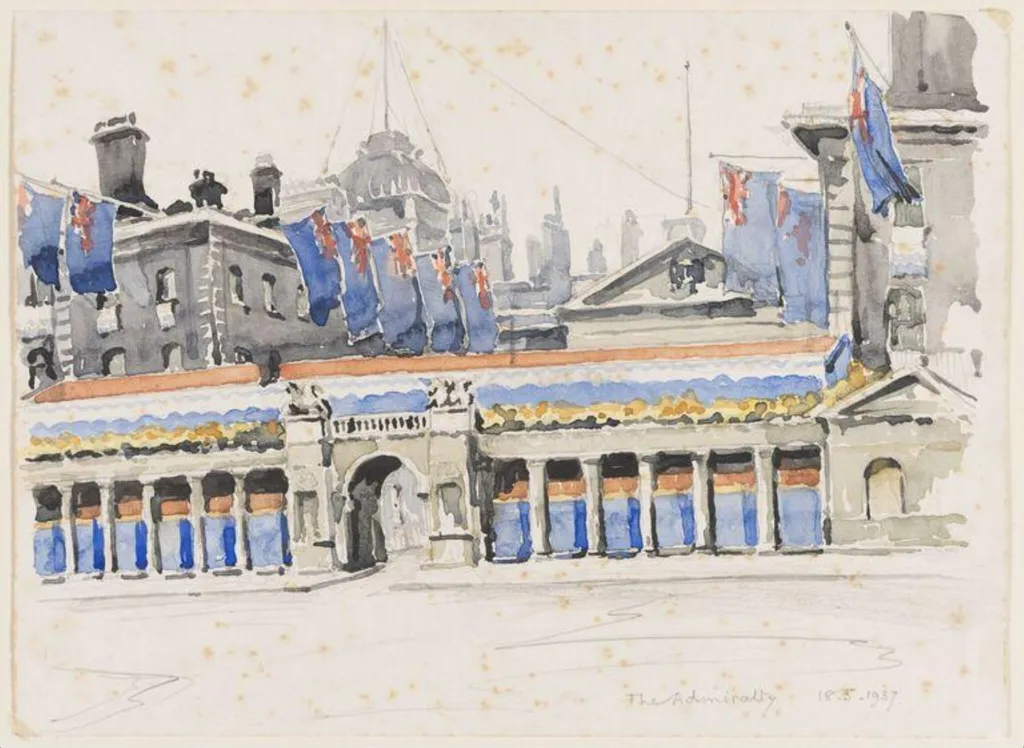
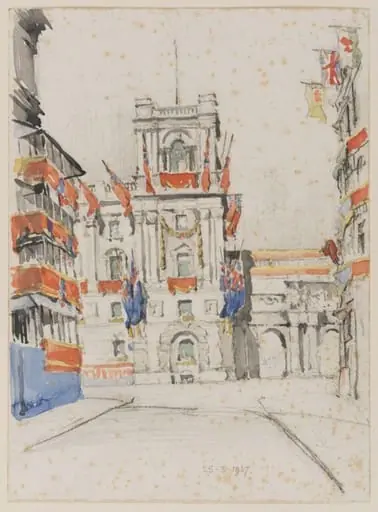
The Admiralty is a watercolor work on paper by Pile. It dates from 1937 and is held in the collection of the Victoria and Albert Museum. Created in 1937, this watercolour portrays a view of Westminster in London, rendered with delicate washes and precise detail.
About this work
Overview
It resides in the collection of the Victoria and Albert Museum, where it exemplifies early 20th-century British watercolour practice.
Created in 1937, this watercolour portrays a view of Westminster in London, rendered with delicate washes and precise detail. The artist, Pile, captured the scene with a soft, atmospheric quality typical of his approach to urban landscapes. The work is signed and dated in pencil, confirming its origin and timing. It resides in the collection of the Victoria and Albert Museum, where it exemplifies early 20th-century British watercolour practice.
Subject & Meaning
The composition centers on a prominent public building with a colonnade and a blue flag bearing a red cross—likely the Palace of Westminster. Surrounding structures frame the scene, suggesting the layered character of London’s civic architecture. No figures are present, emphasizing the quiet dignity of the built environment. The image conveys a sense of stillness, inviting contemplation rather than narrative.
Technique & Style
Pile employed transparent watercolour washes to achieve a luminous, ethereal effect. Architectural details—columns, awnings, window frames—are rendered with fine brushwork, while the sky and distant buildings are softened through layered glazing. The palette is restrained, dominated by white, pale blue, and muted gold, enhancing the hazy, early-morning light. Texture is suggested rather than defined, aligning with the medium’s inherent delicacy.
History & Provenance
The watercolour entered the Victoria and Albert Museum’s collection following its creation in 1937. Its provenance is not publicly documented beyond the artist’s hand and the museum’s acquisition records. It has remained in institutional care since, with no known exhibitions or private ownership prior to its accession. The work’s preservation reflects its status as a representative example of Pile’s output.
Context
In the 1930s, British watercolourists often turned to urban and architectural subjects as a counterpoint to romanticized rural scenes. Pile’s focus on Westminster aligns with a broader interest in documenting the nation’s civic landmarks during a period of social and political change. His approach avoided grandeur, instead emphasizing quiet observation and the subtle interplay of light on stone and fabric.
Legacy
Pile’s watercolours, including this one, are valued for their understated precision and sensitivity to architectural form. Though not widely exhibited, his works contribute to the understanding of interwar British watercolour as a medium for quiet documentation. This piece remains a reference point for studies of London’s architectural representation in 20th-century art.
Artist & collection

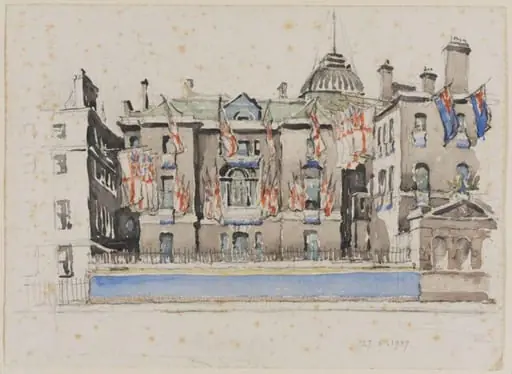 The Horse Guards
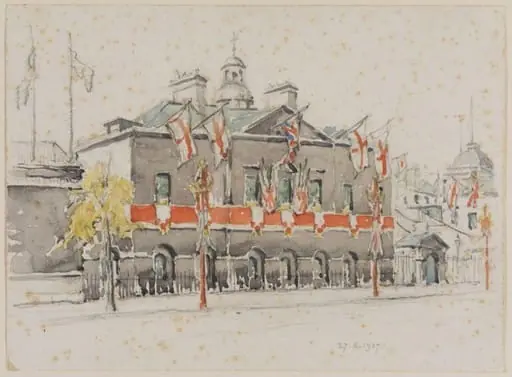 The Horse Guards. South wing
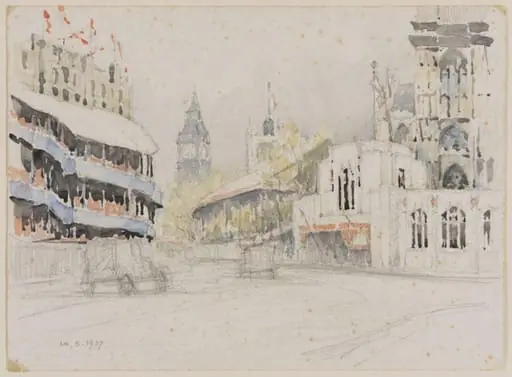 Entrance to Westminster Abbey with Big Ben in the distance
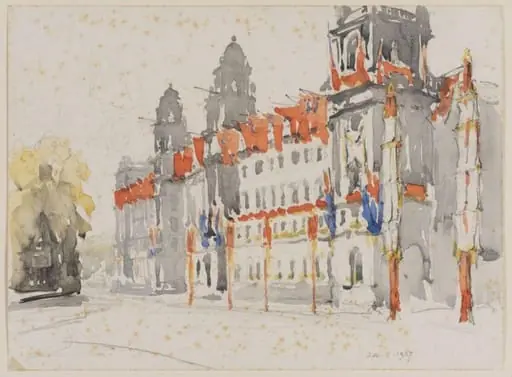 Foriegn Office looking down Whitehall
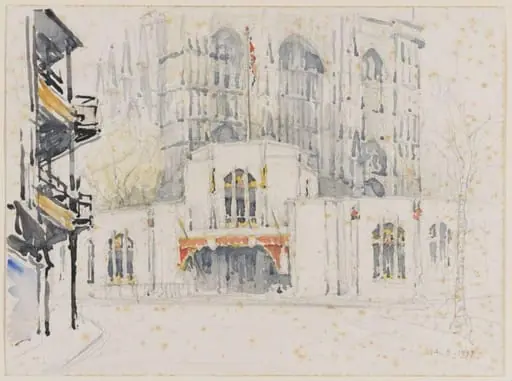 Westminster Abbey with stands
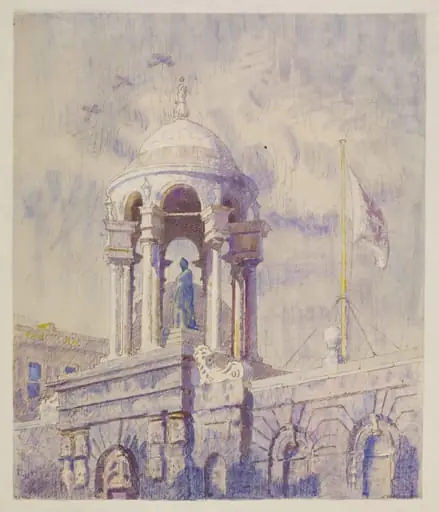 The Dome of Queen's College, Oxford
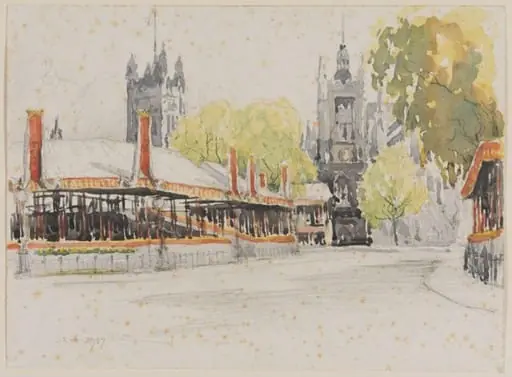 St. Margarets with stands
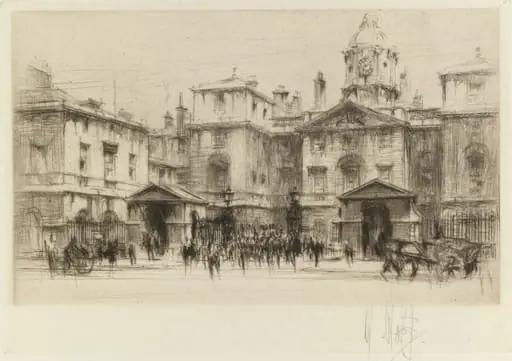 London Set: Horseguards
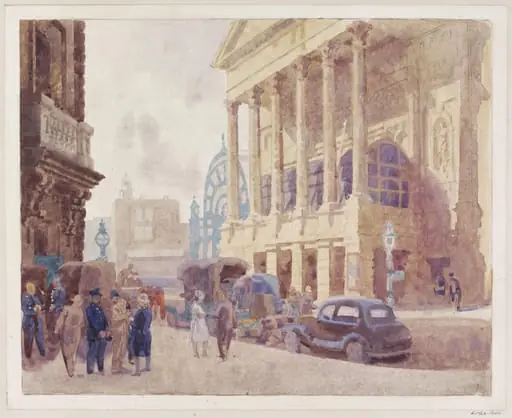 Covent Garden Opera House; The Colonnade
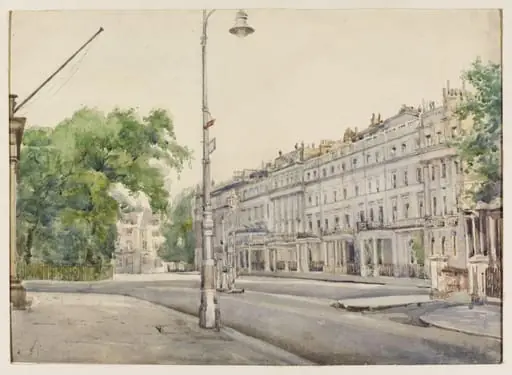 Belgrave Square