Artwork
London Set: Horseguards
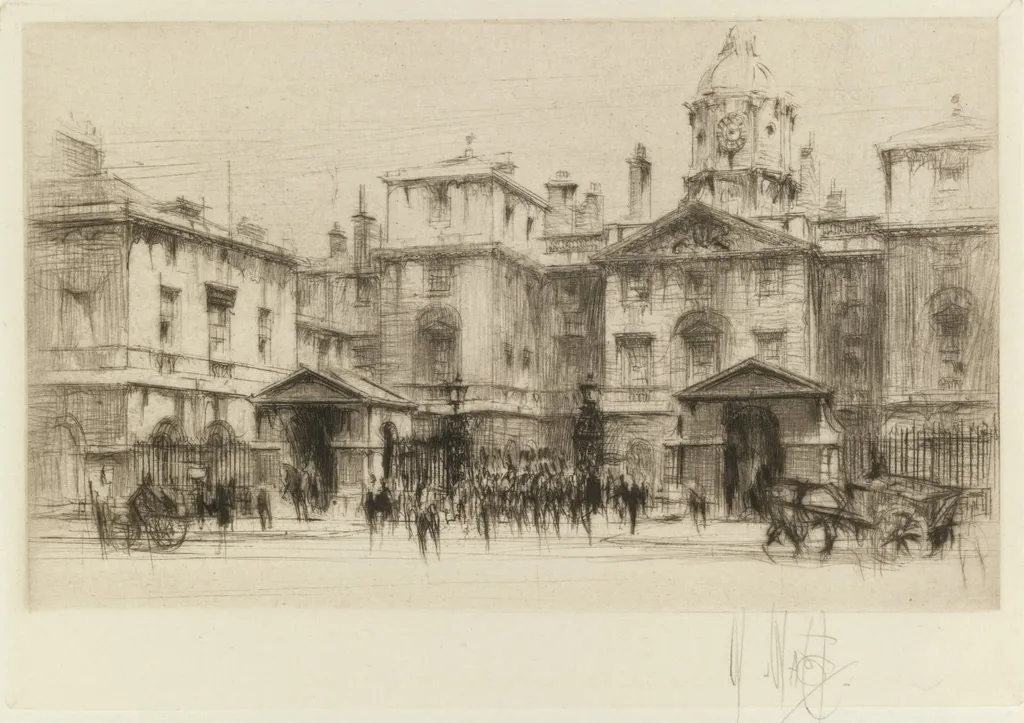
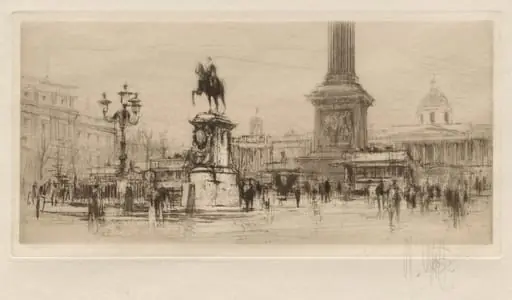
London Set: Horseguards is a print by William Walcot. It dates from 1924 and is held in the collection of the Cleveland Museum of Art.
About this work
The artist's use of light and shadow creates a sense of depth and atmosphere, drawing the viewer's eye into the scene.
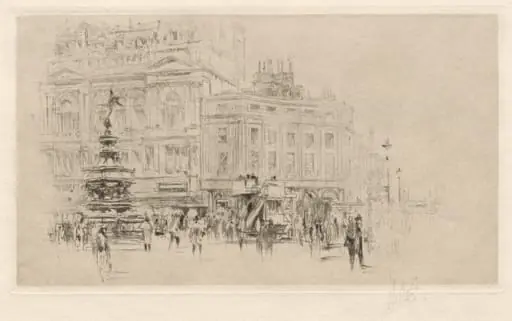
This painting depicts a bustling street scene in London, with a large building at its center. The structure features a prominent clock tower and a fenced courtyard, where a group of people are gathered. In the foreground, horse-drawn carriages are visible, adding to the sense of activity.
The artist's use of light and shadow creates a sense of depth and atmosphere, drawing the viewer's eye into the scene. The level of detail in the painting suggests that it was created with care and attention.
To learn more about the artist behind this work, explore the paintings of William Walcot (British, 1874–1943).
Overview
London Set: Horseguards, executed in 1924 by British artist William Walcot, is a print held in the collection of the Cleveland Museum of Art. The image captures a lively London street, centered on a substantial building with a clock tower and a fenced courtyard occupied by a small crowd. Horse‑drawn carriages populate the foreground, emphasizing the urban bustle of the period.
Subject & Meaning
The composition presents a snapshot of early twentieth‑century city life, juxtaposing architectural prominence with everyday activity. The clock tower serves as a visual anchor, while the gathering in the courtyard suggests a moment of communal pause amid the flow of traffic, reflecting the rhythm of public and private spaces in metropolitan London.
Technique & Style
Walcot employs a careful balance of light and shadow to model depth, allowing the architectural forms to recede behind the foreground carriages. Fine line work and meticulous detailing convey texture in both stone and horse‑drawn vehicles, while tonal contrasts generate atmospheric perspective, guiding the eye through the layered scene.
History & Provenance
Created in 1924, the print entered the Cleveland Museum of Art’s holdings through acquisition (specific acquisition details are not publicly recorded). It remains a representative example of Walcot’s printmaking output during his mature period, when he documented urban environments with precision.
Artist & collection

Artist
William Walcot RE was a Russian-Scottish architect, graphic artist and etcher, notable as a architect of refined Art Nouveau in Moscow, Russia.

 The Venice Set: The Library of St. Mark’s
 London Set: Piccadilly Circus (with Criterion Theatre)
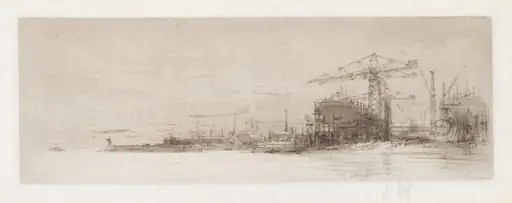 The Clyde from the series The Arteries of Great Britain
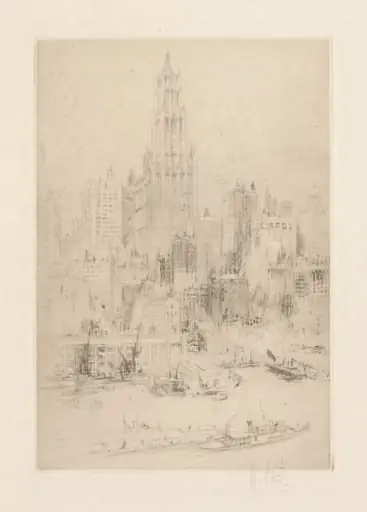 Downtown Manhattan from the East River, with the Woolworth Building
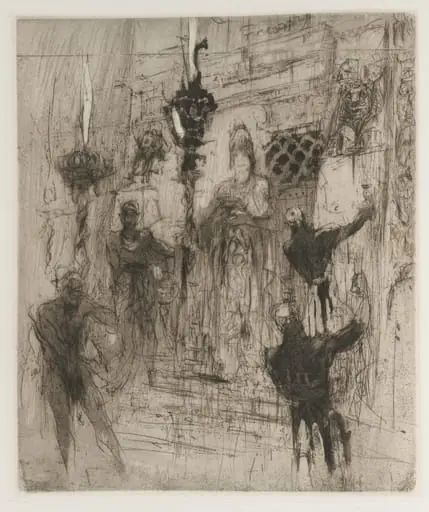 Herodias
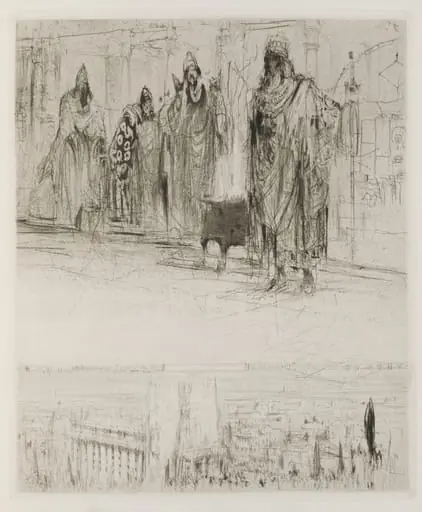 Herodias: Page 13, The tetrarch was awaited by several Galileans, the master of scribes, the chief of the land steward, the manager of the salt mines, and a Jew from Babylon commanding his troops on horse
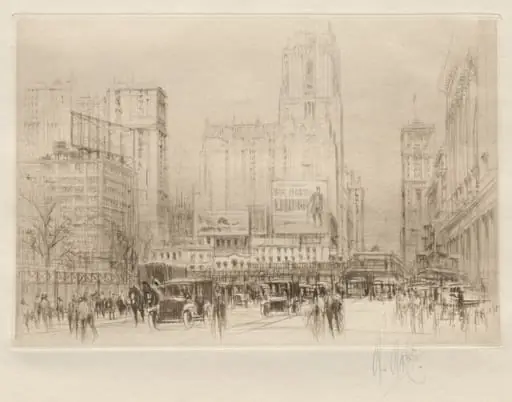 Forty-second Street NY
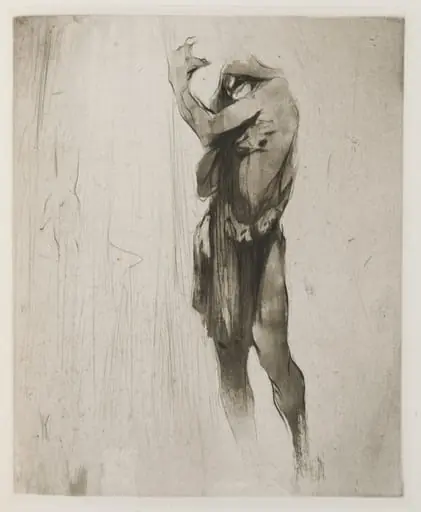 Herodias: Page 27, The voice rose: Woe to thee, Pharisees and Sadducees, race of vipers, bursting with pride!