Artwork
Covent Garden Opera House; The Colonnade
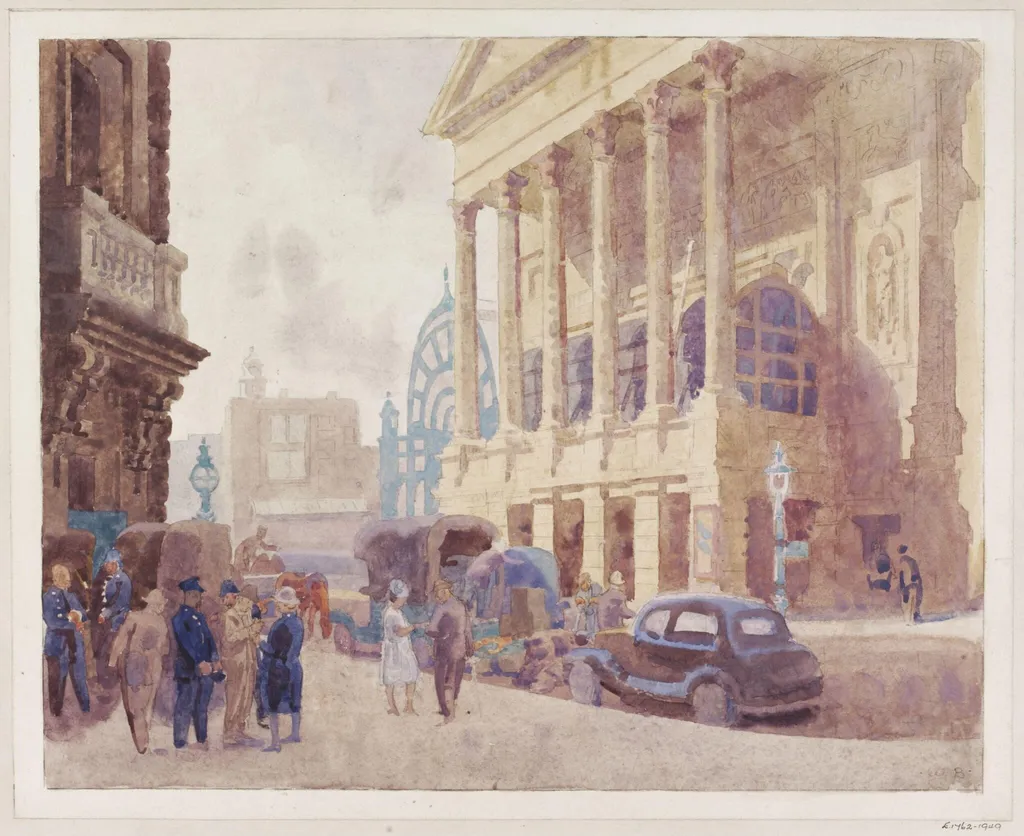
Covent Garden Opera House; The Colonnade is a watercolor work on paper by the Impressionist artist Bayes. It dates from 1940 and is held in the collection of the Victoria and Albert Museum.
About this work
Overview
Painted in 1940 by Graham Bayes, this watercolour captures the colonnade of the Royal Opera House in Covent Garden as seen from across the street.
Painted in 1940 by Graham Bayes, this watercolour captures the colonnade of the Royal Opera House in Covent Garden as seen from across the street. Created during the Second World War as part of the Recording Britain project, the work reflects a deliberate effort to preserve visual records of culturally significant architecture amid wartime uncertainty. The piece is signed and dated by the artist and remains part of the official Recording Britain archive.
Subject & Meaning
The scene portrays the opera house’s colonnade in a state of partial decay, with broken windows and weathered stonework. Yet life continues around it: pedestrians in civilian and military attire move through the street, accompanied by a horse-drawn cart and a parked car. The juxtaposition of architectural ruin and daily routine suggests resilience, not despair, framing the building as a quiet witness to ordinary endurance during wartime.
Technique & Style
Bayes employs a restrained watercolour technique, using soft washes of blue, grey, and brown to convey atmosphere rather than detail. The brushwork is deliberate but unobtrusive, allowing the muted tones to unify the composition. Light is diffused, enhancing the sense of quiet observation. The lack of sharp lines or dramatic contrast reinforces the painting’s contemplative tone, aligning with the project’s documentary intent.
History & Provenance
Commissioned under the Recording Britain initiative, this work was one of hundreds produced between 1939 and 1945 to document the nation’s architectural heritage. Led by Sir Kenneth Clark, the project employed artists to record sites deemed vulnerable to wartime damage or modernization. Bayes’s watercolour entered the collection upon completion and has remained in institutional custody since, preserved as part of Britain’s wartime cultural record.
Context
The Recording Britain project emerged as a response to the threat of aerial bombardment and urban transformation during the war. Artists were sent across the country to capture landscapes, buildings, and street scenes before they vanished. Covent Garden, though not a frontline target, symbolized a cultural anchor in London’s evolving urban fabric. Bayes’s depiction reflects this broader mission: to preserve visual memory amid disruption.
Legacy
The painting endures as a quiet testament to the Recording Britain project’s goals. It offers no grand narrative, but instead a subtle, unembellished record of a place and moment. Its value lies in its restraint—capturing not just architecture, but the rhythm of life persisting around it. Today, it remains a key reference for understanding how art responded to national crisis through observation rather than spectacle.
Artist & collection
Artist
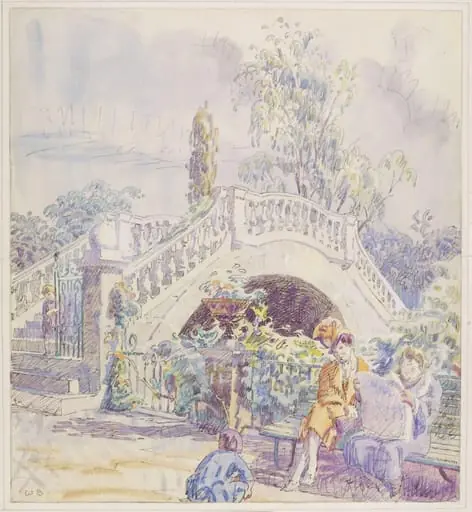
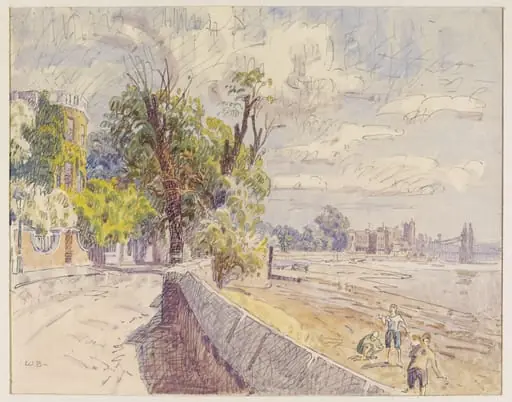
This artist painted watercolours around London in the 1940s. They captured quiet spots like The Gateway at Royal Naval College, Greenwich, The Garden at York House in Twickenham, and London Dock, Wapping. Each sheet…

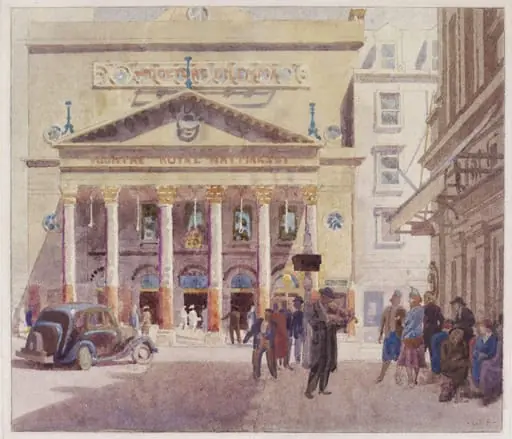 Porch of the Haymarket Theatre
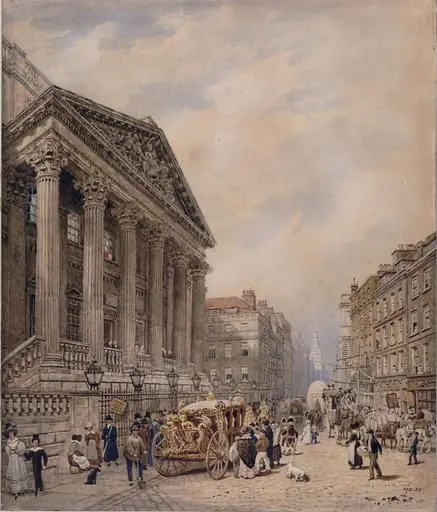 Mansion House and the Poultry, looking down Cheapside
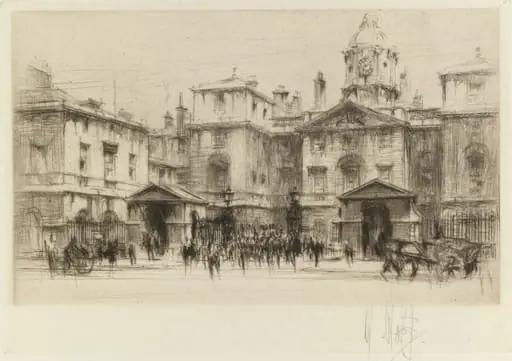 London Set: Horseguards
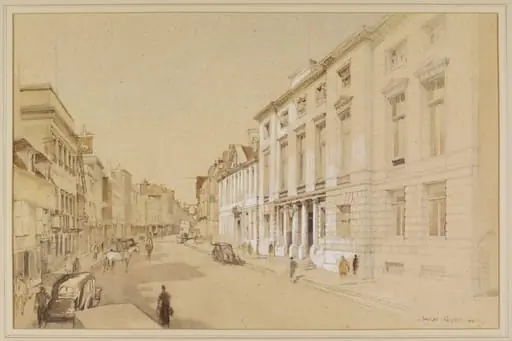 The County Hall and High Street, Lewes
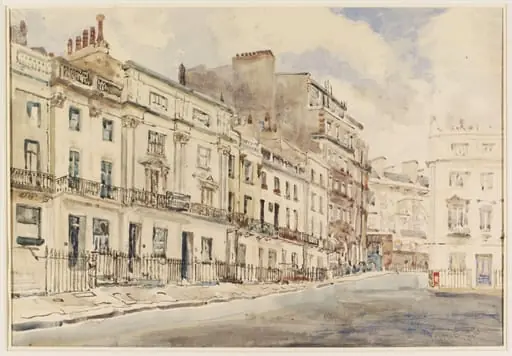 Victoria Square S.W.1.
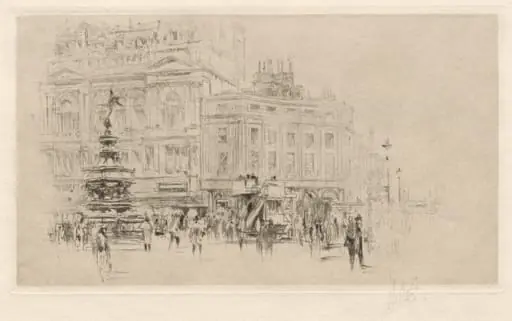 Picadilly Circus
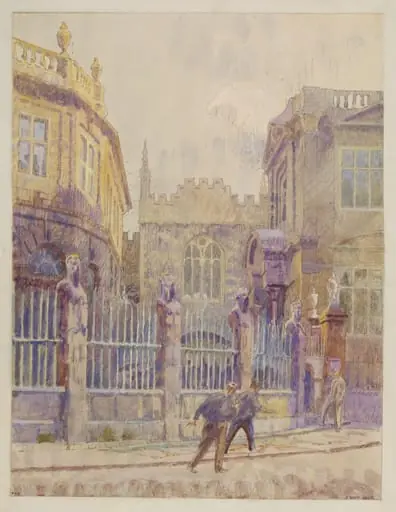 Corner of the Sheldonian, Oxford
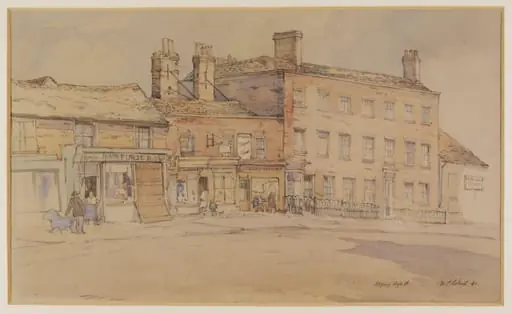 Epping High Street
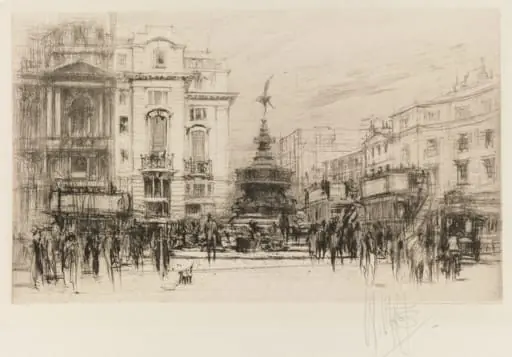 London Set: Piccadilly Circus (with Criterion Theatre)
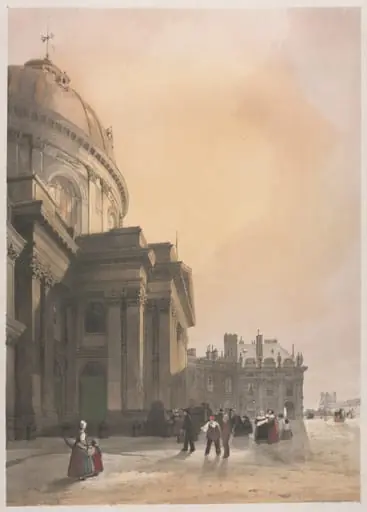 Picturesque Architecture in Paris, Ghent, Antwerp, Rouen: La Chapelle de l'Institut, Paris
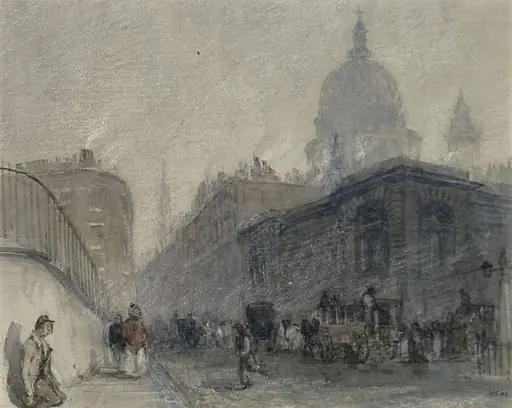 Solitude: View of Newgate Street, looking east, showing the old prison and St. Paul's
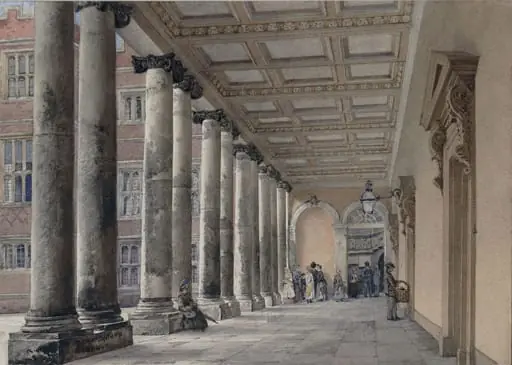 Colonnade in the Clock Court of Hampton Court Palace