Artwork
Belgrave Square
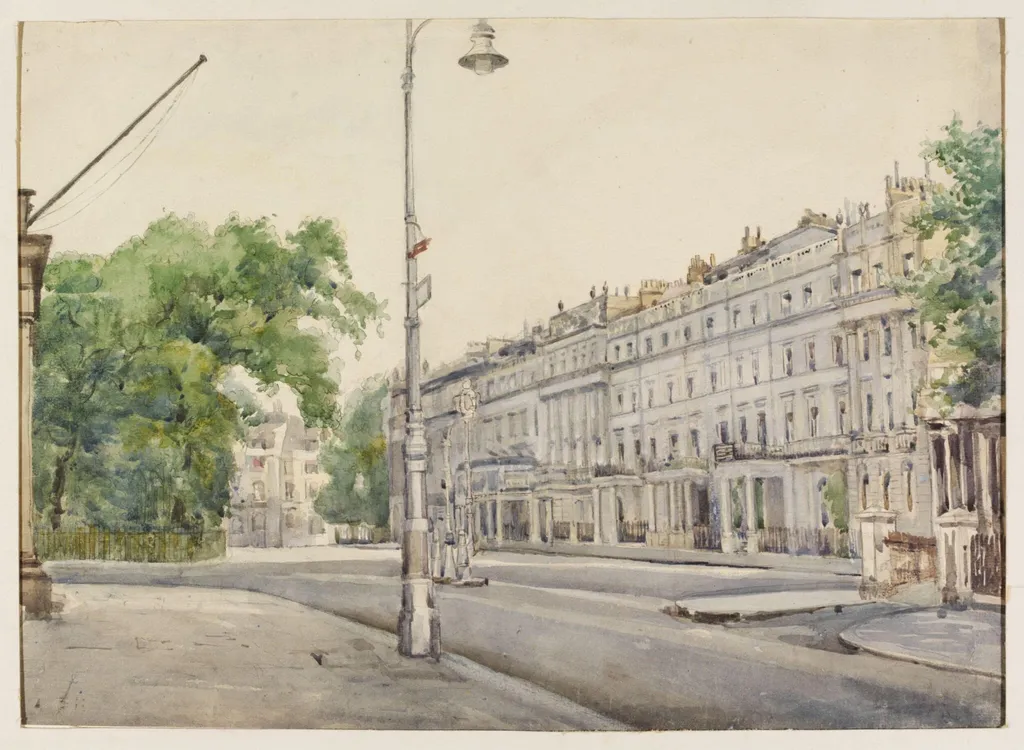
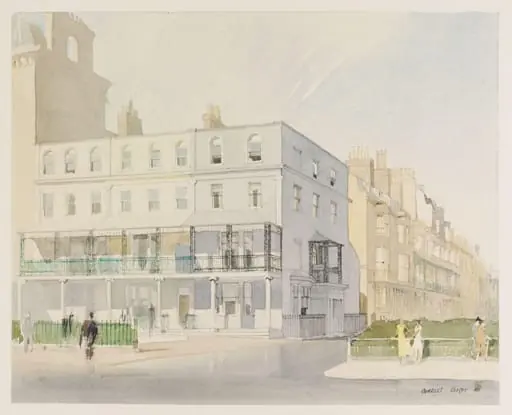
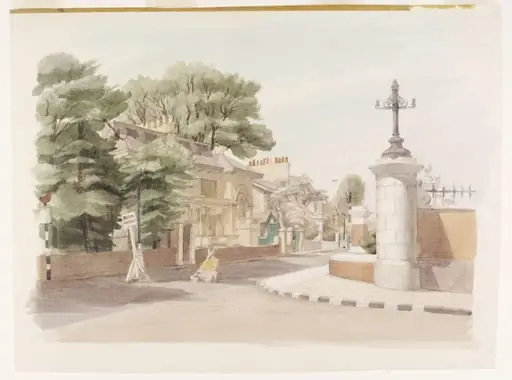
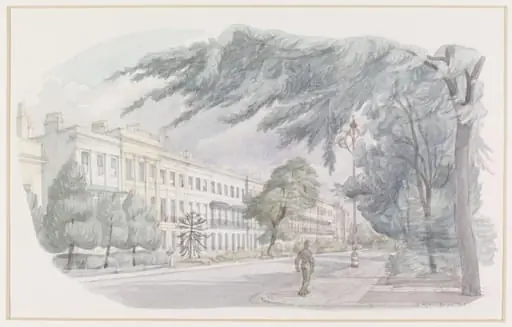
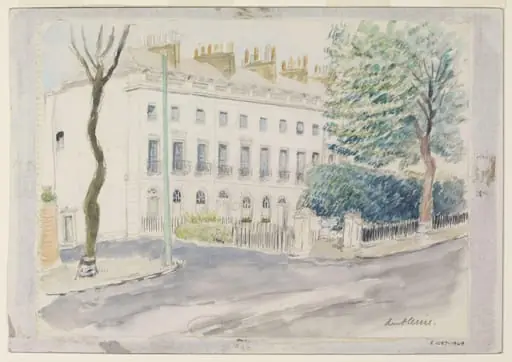
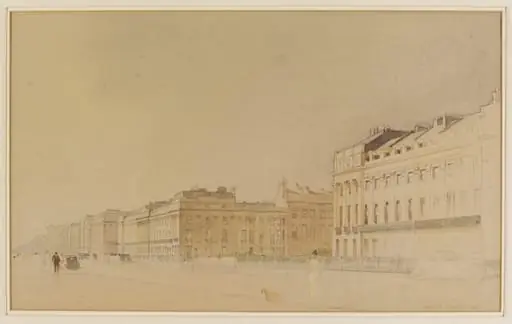
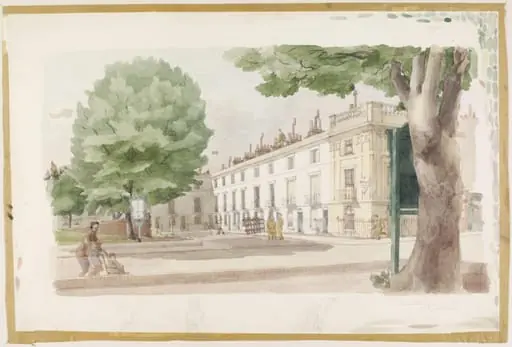
Belgrave Square is a watercolor work on paper by the Impressionist artist Ediss. It dates from 1938 and is held in the collection of the Victoria and Albert Museum.
About this work
Overview
The work reflects a deliberate effort to preserve a sense of place amid national uncertainty.
This watercolour, created by artist Ediss in the early 1940s, is part of the Recording Britain project, a government-backed effort to visually archive the nation’s architectural character during wartime. Commissioned by the Ministry of Labour and National Service and supported by the Pilgrim Trust, the initiative enlisted artists to capture landscapes and urban scenes deemed at risk from bombing or urban renewal. The work reflects a deliberate effort to preserve a sense of place amid national uncertainty.
Subject & Meaning
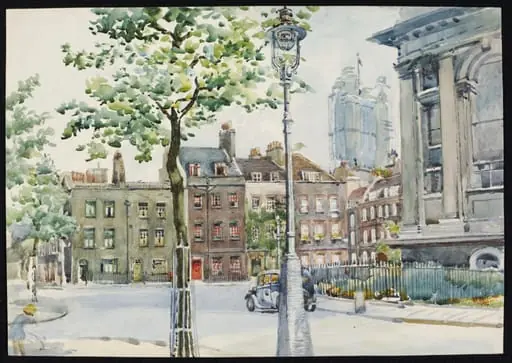
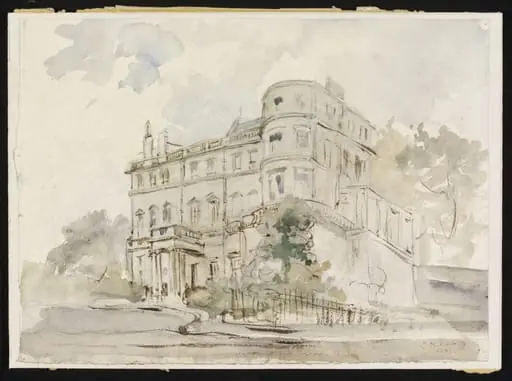
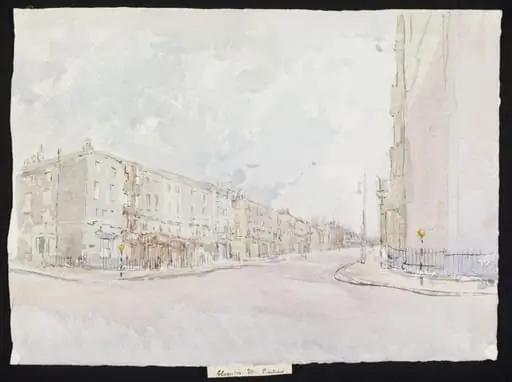
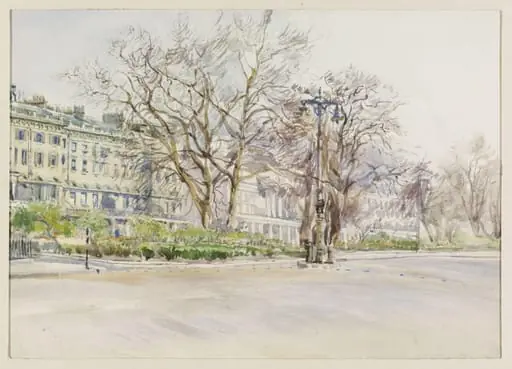
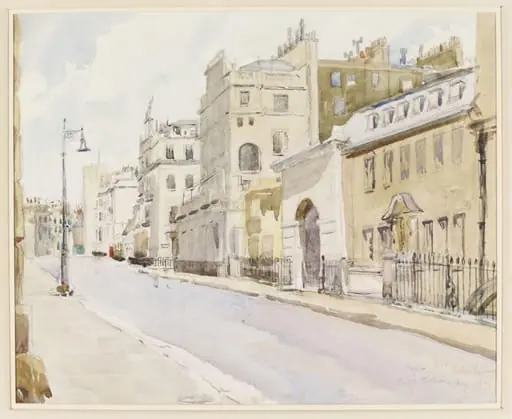
The painting depicts Belgrave Square, a stately London square known for its elegant Georgian townhouses. Rendered without human presence or vehicles, the scene conveys stillness and solitude, evoking a quiet moment in a city under strain. The absence of activity suggests both the emptiness of wartime streets and a contemplative focus on enduring structures, framing architecture as a silent witness to historical upheaval.
Technique & Style
Ediss employed loose, fluid watercolour brushwork to suggest form rather than define it precisely. Soft washes of pale tones—beige, grey, and muted green—create a subdued atmosphere, while delicate detailing on cornices and window frames hints at architectural grandeur without overt realism. The minimalism of the composition, with its empty sidewalk and lone tree, reinforces a sense of calm restraint characteristic of the project’s aesthetic.
History & Provenance
The work was produced between 1940 and 1943 as part of the Recording Britain collection, curated under the direction of Sir Kenneth Clark. After completion, it entered the collection of the Victoria and Albert Museum, where it remains today alongside hundreds of other works from the initiative. Its preservation reflects the project’s success in safeguarding visual records of Britain’s built heritage during a period of widespread destruction and change.
Context
Created during the Blitz and amid fears of cultural loss, the Recording Britain project responded to anxieties about the erasure of traditional landscapes and architecture. Artists like Ediss were tasked with documenting scenes that embodied national identity—not through grand monuments, but through everyday streets and residential squares. This quiet corner of Belgrave Square became a symbol of resilience in ordinary places.
Legacy
The watercolour endures as part of a significant archive that shaped postwar attitudes toward heritage conservation. Its understated beauty and documentary purpose influenced later efforts to record and protect Britain’s architectural fabric. Today, it stands as a quiet testament to the role of art in preserving collective memory during times of crisis, valued for its historical clarity rather than its artistic flourish.
Artist & collection
Artist
Ediss painted London’s quiet streets and squares in delicate watercolours during the early 1940s.