Artwork
Jerusalem
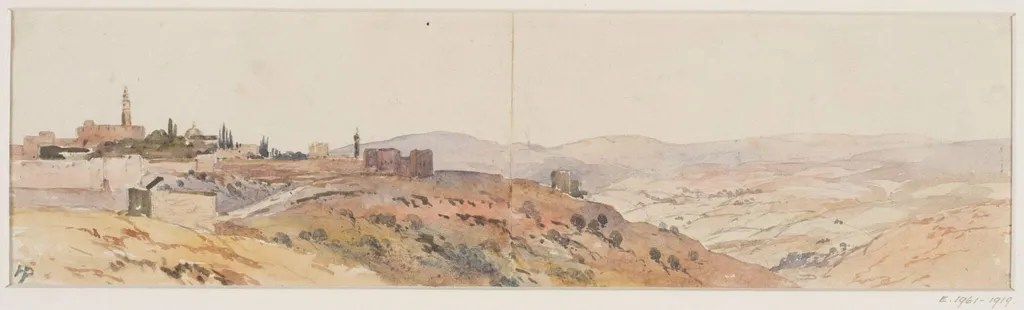
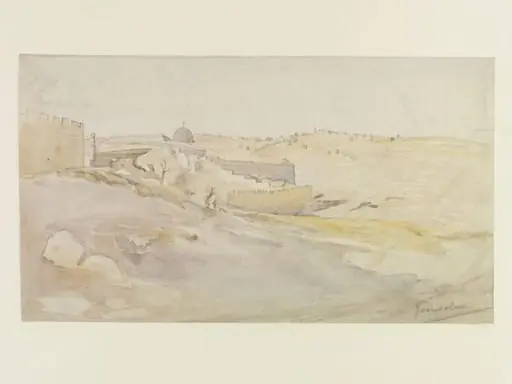
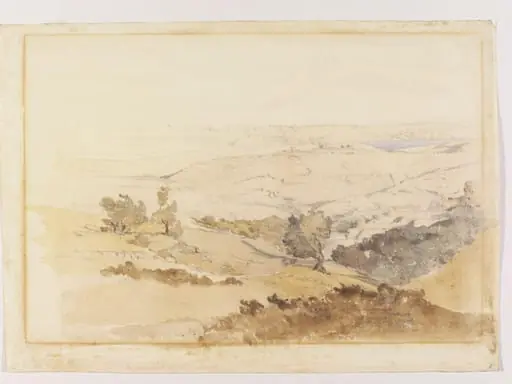
Jerusalem is a drawing by the Romanticist artist Henry RI Pilleau. It dates from 1815 and is held in the collection of the Victoria and Albert Museum.
About this work
Overview
Created in 1815 by Henry RI Pilleau, this drawing is a modest, on-site study of Jerusalem, now part of the Victoria and Albert Museum’s collection.
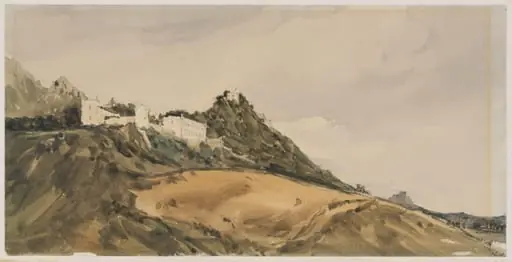
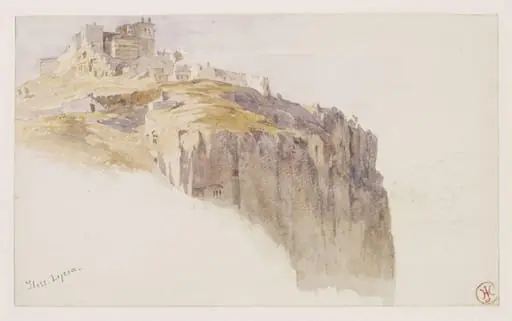
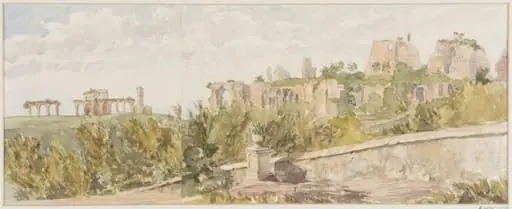
Created in 1815 by Henry RI Pilleau, this drawing is a modest, on-site study of Jerusalem, now part of the Victoria and Albert Museum’s collection. Executed in delicate pencil and wash, it captures a fleeting impression rather than a polished composition. The work reflects the tradition of topographical sketching common among 19th-century travelers and artists documenting distant landscapes with minimal embellishment.
Subject & Meaning
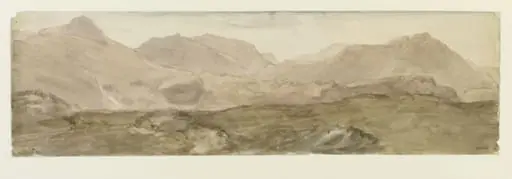
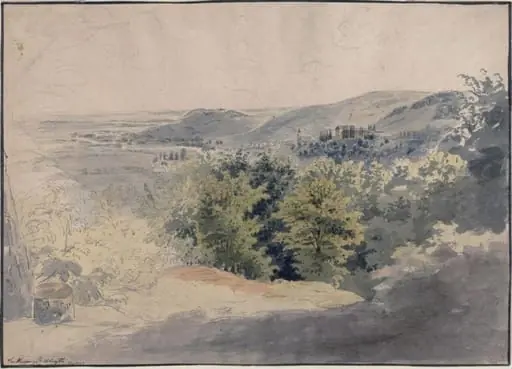
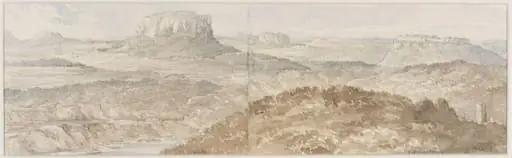
The drawing depicts Jerusalem as a distant, weathered cityscape dominated by a single prominent tower and fragmented walls. The barren foreground, marked by rocky terrain and sparse vegetation, emphasizes isolation and decay. There is no human presence, suggesting a contemplative, almost melancholic engagement with the city’s ancient remains, possibly reflecting the artist’s response to its historical weight rather than its religious significance.
Technique & Style
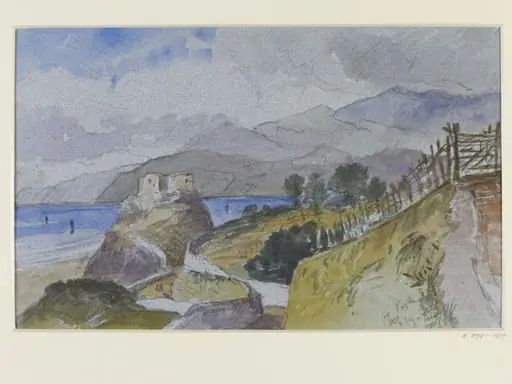
Pilleau employed light, rapid strokes to suggest texture and form, avoiding heavy detail. Soft washes of pale blue and warm earth tones create a muted atmosphere, reinforcing the sense of distance and time. The sketchlike quality—loose contours, minimal shading—indicates a spontaneous, observational approach, typical of field studies made during travel, prioritizing immediacy over finish.
History & Provenance
The drawing entered the Victoria and Albert Museum’s collection as part of its broader holdings in 19th-century British topographical art. Its origin lies in Pilleau’s travels, though specific details of its creation in Jerusalem are undocumented. It was likely made during a journey through the Levant, preserved not as a finished work but as a personal record of a landscape encountered en route.
Context
In the early 1800s, European artists increasingly traveled to the Middle East, producing sketches to document ancient sites. Pilleau’s work aligns with this trend, influenced by the growing interest in biblical geography and archaeological curiosity. Unlike grander, idealized depictions, his approach is restrained, reflecting a shift toward empirical observation over romanticized interpretation.
Legacy
Though not widely exhibited or reproduced, the drawing contributes to a quieter archive of 19th-century travel sketches that prioritize authenticity over spectacle. It stands as an example of how artists engaged with distant places through direct observation, offering a modest but valuable record of how Jerusalem appeared to a passing viewer in the early 1800s.
Artist & collection
Artist
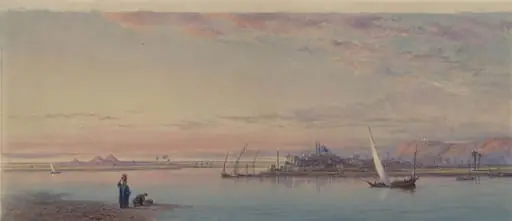
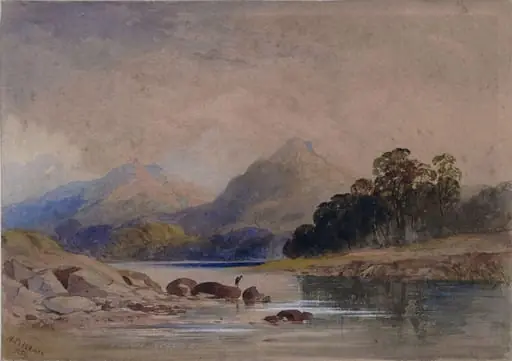
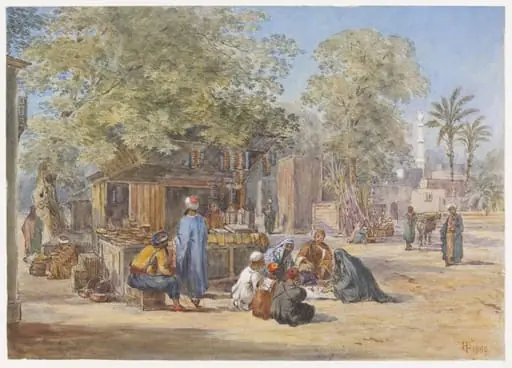
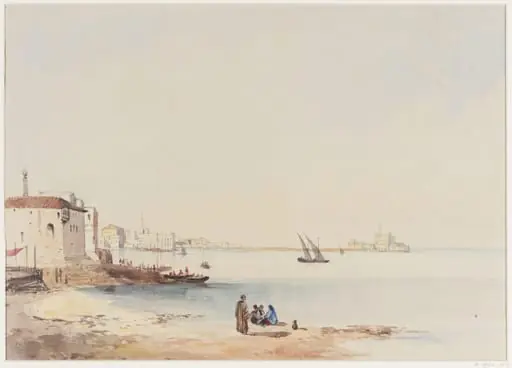
Henry Pilleau put brush to paper in Egypt and the Levant, leaving small watercolors of rivers and ports.