Artwork
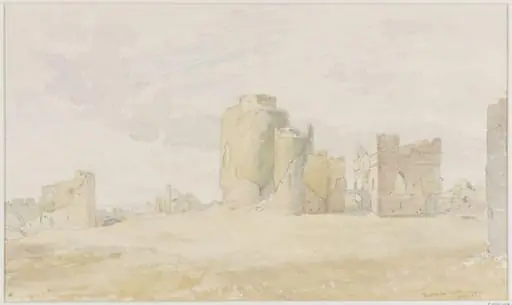
Palace of the Ceasars, Rome
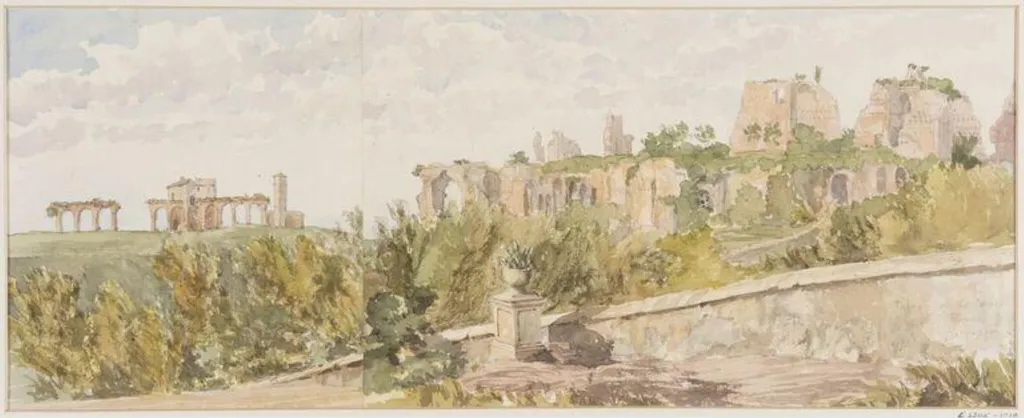
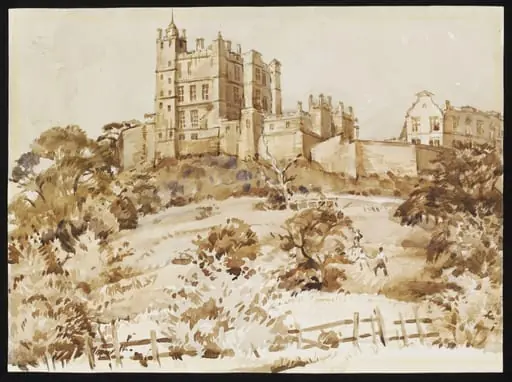
Palace of the Ceasars, Rome is a watercolor work on paper by the British Romanticist artist Thomas Brittain Vacher. It dates from 1857 and is held in the collection of the Victoria and Albert Museum.
About this work
Overview
The Palace of the Ceasars, Rome watercolour presents a serene landscape of ancient Roman ruins set against a soft, pale sky with scattered light clouds. The composition balances distant architectural remnants with a intimate, verdant foreground.
Subject & Meaning
The subject is the poignant coexistence of ancient Roman structures in various states of decay, overgrown with greenery, juxtaposed with a humble, everyday foreground scene, evoking a sense of the passage of time and the intersection of history and mundane life.
Technique & Style
Executed in loose, almost sketchy brushstrokes, the watercolour embodies an early adherence to Realist principles, prioritizing the truthful depiction of light, color, and everyday scenes over more ornate or romanticized treatments.
Context
Created during a period of artistic transition, this work reflects the burgeoning interest in Realism, which sought to represent ordinary life and landscapes in a straightforward, unromanticized manner, diverging from prevailing aesthetic norms.
Legacy
While specific impact on the broader art historical canon is not detailed, the piece contributes to the narrative of 19th-century artistic shifts towards realism, capturing a moment in the evolution of landscape and historical scene depiction.
Artist & collection
Artist
This guy painted watercolors like he was racing the sunset—sketching castles, cliffs, and crumbling ruins before the light ran out.

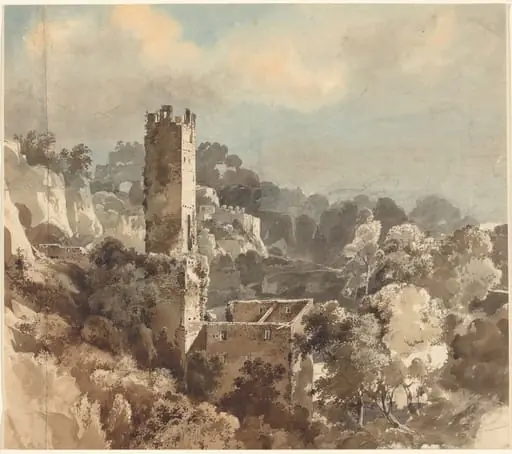 Ruins of a Fortified Tower among Wooded Hills
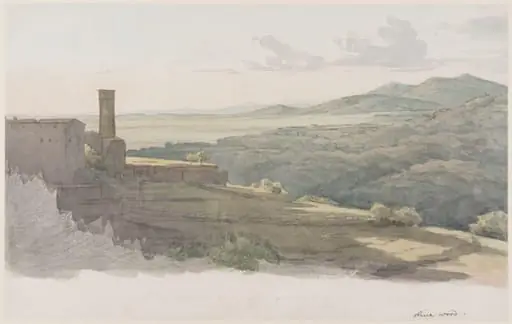 Villa of Maecenas at Tivoli
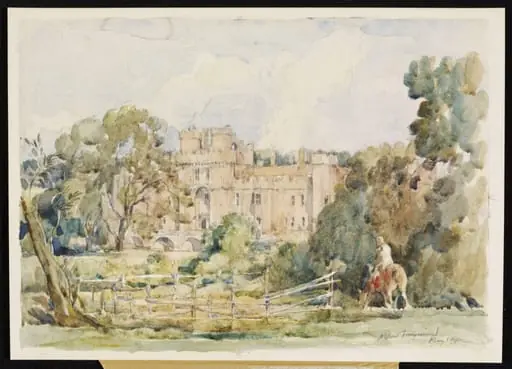 Herstmonceux Castle
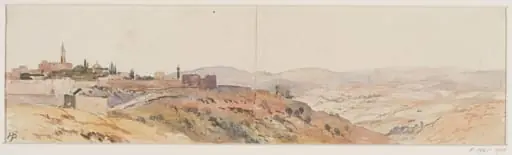 Jerusalem
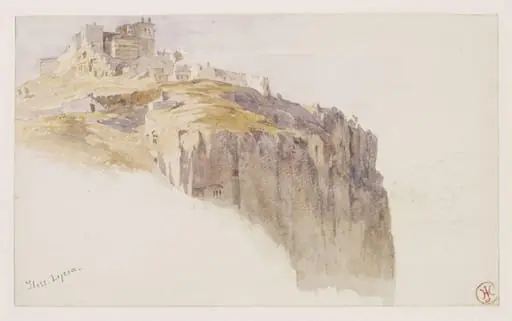 Tloss
Tloss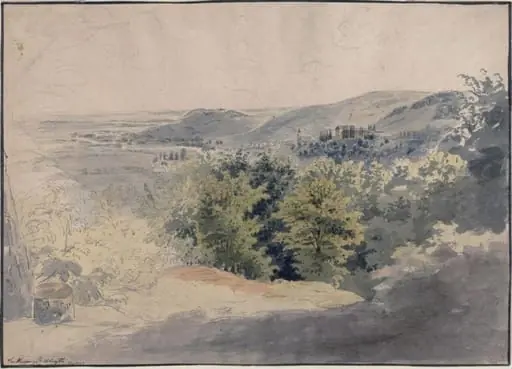 Landscape with hills in the background
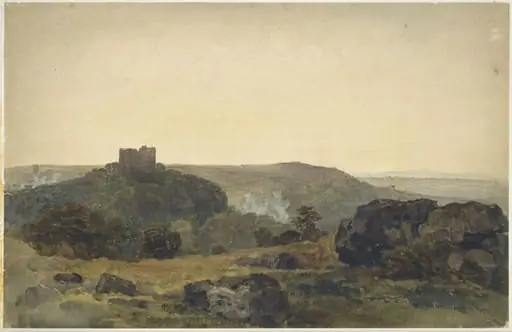 Conisborough Castle, Yorkshire
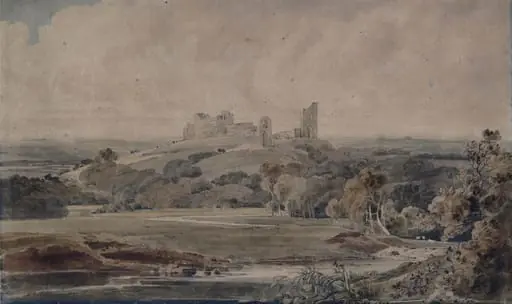 Tutbury Castle, Staffordshire
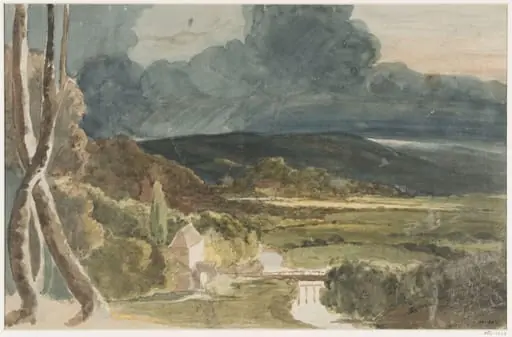 Landscape with river and mountains
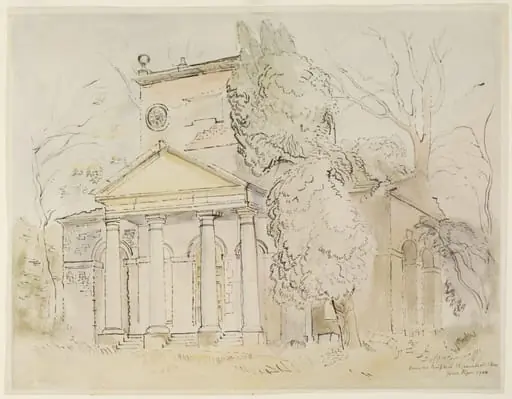 The Ruined Temple of Friendship in the Grounds at Stowe
 Bolsover Castle