Artwork
Two Chinoiseries
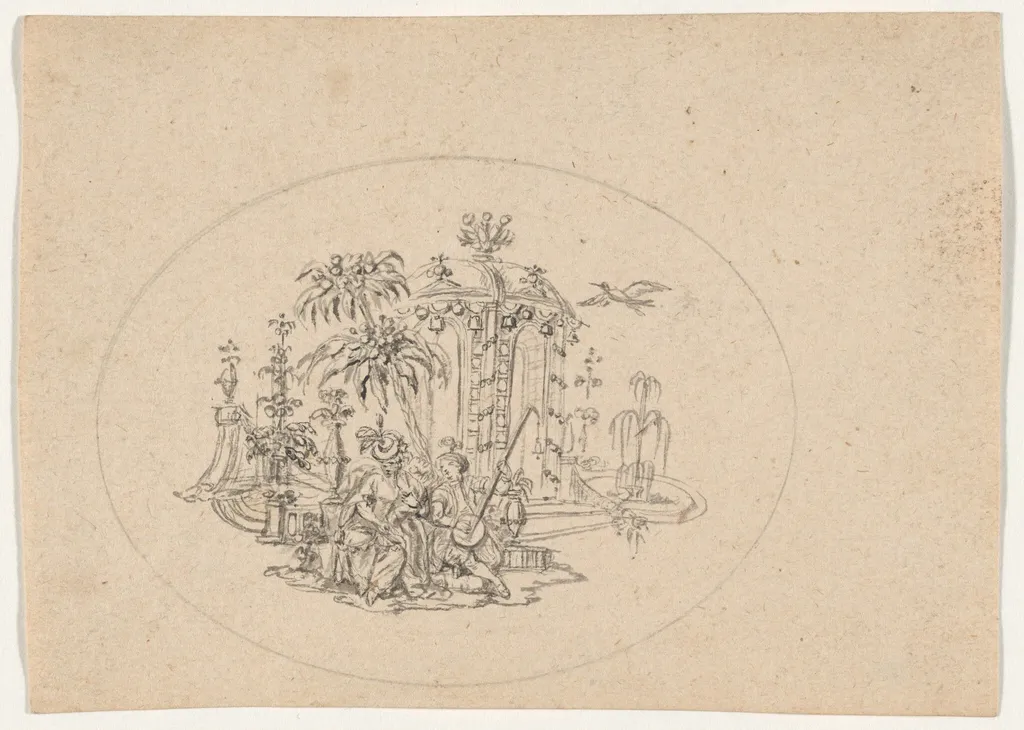
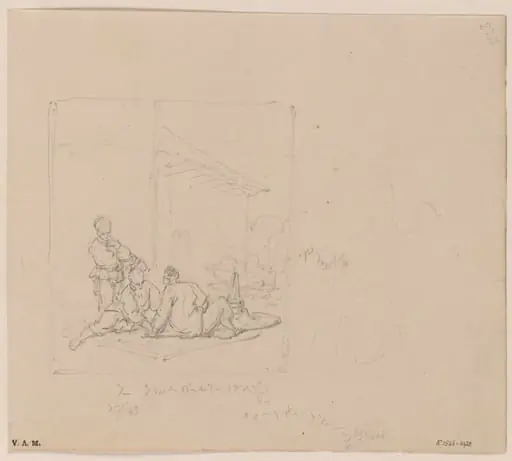
Two Chinoiseries is a graphite drawing by the Romanticist artist Jean-Baptiste Pillement. It dates from 1775 and is held in the collection of the National Gallery of Art.
About this work
Overview
Created in 1775 by Jean-Baptiste Pillement, this ink and graphite drawing is part of the National Gallery of Art’s collection in Washington, D.
Created in 1775 by Jean-Baptiste Pillement, this ink and graphite drawing is part of the National Gallery of Art’s collection in Washington, D.C. Executed with fine, controlled lines, it presents two figures in an imagined Eastern landscape, framed by a subtle incised border. The work exemplifies 18th-century European interpretations of Asian aesthetics, rendered not as ethnographic record but as decorative fantasy.
Subject & Meaning
Two figures, dressed in loose, flowing garments, sit on the ground beside a slender structure with a curved roof. One holds a long staff, suggesting a contemplative or ritual posture. The setting—featuring tall, curl-tipped plants and an ornamental pavilion—reflects a European idealization of East Asian environments, devoid of specific cultural reference. The scene evokes tranquility and otherworldly serenity, typical of Chinoiserie’s escapist fantasy.
Technique & Style
Pillement employed fine black ink and graphite to achieve delicate, precise linework. The composition is defined by thin, incised framing lines that enhance its refined, almost miniature quality. Details in foliage and architecture are rendered with meticulous care, emphasizing texture and rhythm over depth or realism. The style prioritizes decorative harmony, aligning with Rococo sensibilities adapted to exotic themes.
History & Provenance
The drawing entered the National Gallery of Art’s collection as part of a broader acquisition of 18th-century European decorative drawings. Pillement, known for his landscape prints and textile designs, produced numerous Chinoiserie works for aristocratic patrons. This piece likely served as a preparatory study or independent ornament, reflecting the popularity of Asian-inspired motifs in French and English interiors of the period.
Context
In the mid-to-late 1700s, European fascination with imagined Asian cultures—Chinoiserie—flourished in art and design, fueled by trade and travel accounts. Pillement’s work responded to this trend, translating exoticism into elegant, stylized forms. Unlike scholarly depictions, his drawings prioritized aesthetic pleasure, aligning with Rococo tastes for whimsy, asymmetry, and ornamental detail over cultural accuracy.
Legacy
Pillement’s Chinoiserie drawings contributed to the enduring European tradition of romanticizing non-Western cultures through stylized imagery. While later movements rejected such fantasies as Orientalist, these works remain valuable as artifacts of 18th-century visual imagination. Their influence persists in decorative arts, where the blending of natural forms with idealized architecture continues to inspire design.
Artist & collection


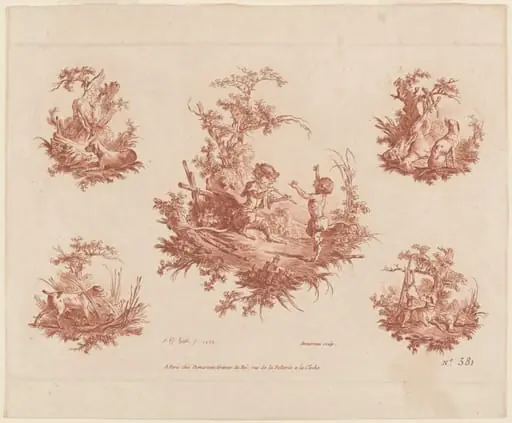 Singerie with Four Vignettes of Dogs Hunting
 Chinese game players on a mat
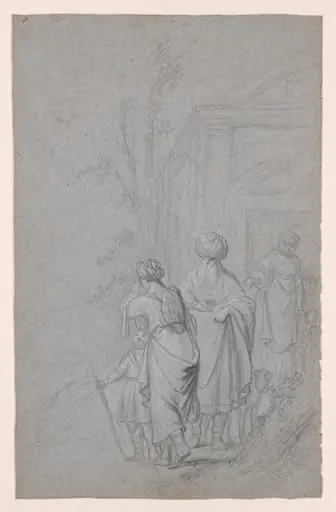 Abraham Casting Out Hagar and Ishmael
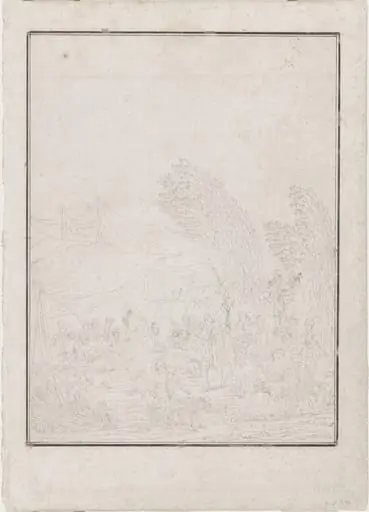 Noce de Village (Village Wedding)
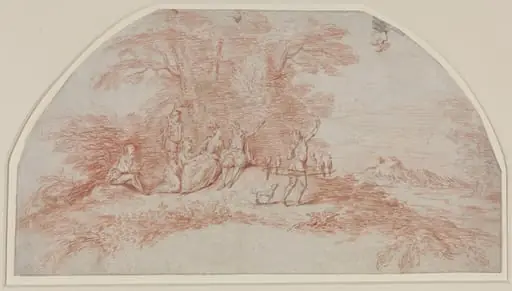 A Fête Galante with Falconers
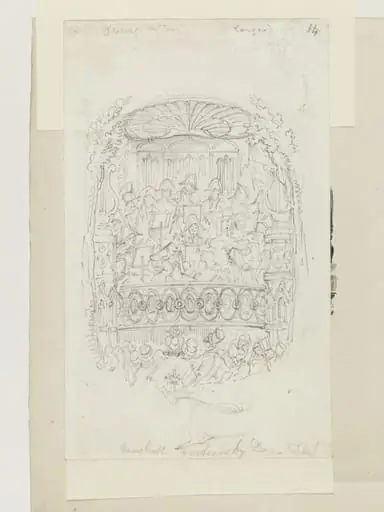 Vauxhall Gardens by Day
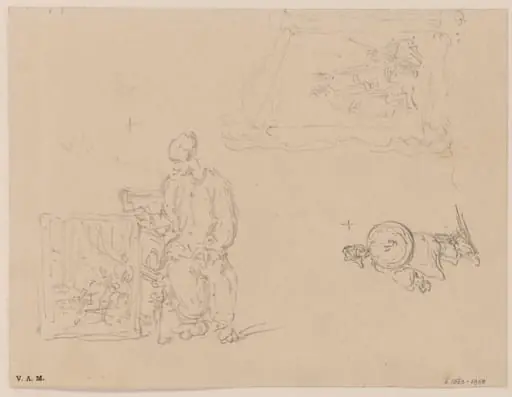 A figure seated beside a portrait, and other sketches
![Study of Moses Striking the Rock and a Procession [verso], by Benjamin West](https://artifactworldgallery.com/img/benjamin-west--study-of-moses-striking-the-rock-and-a-procession-verso--7ce38a2cd03eaace-w320.webp) Study of Moses Striking the Rock and a Procession [verso]
Study of Moses Striking the Rock and a Procession [verso]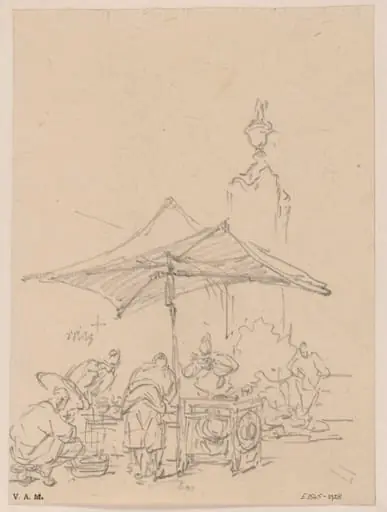 Chinese figures at a food stall
 Studies of Seated and Reclining Figures
![Queen Katherine's Dream [recto], by William Blake](https://artifactworldgallery.com/img/william-blake--queen-katherine-s-dream-recto--90af798f35cdb189-w320.webp) Queen Katherine's Dream [recto]
Queen Katherine's Dream [recto]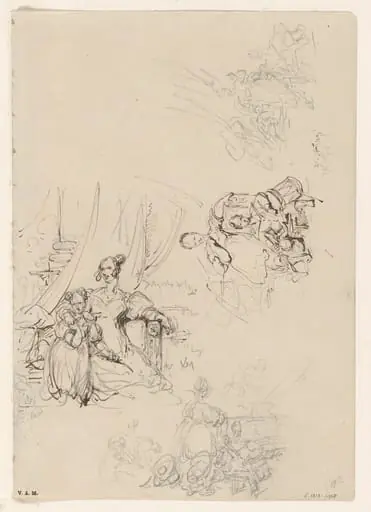 A Western woman with her children in Macau