Artwork
Fanciful Flowers and Bugs
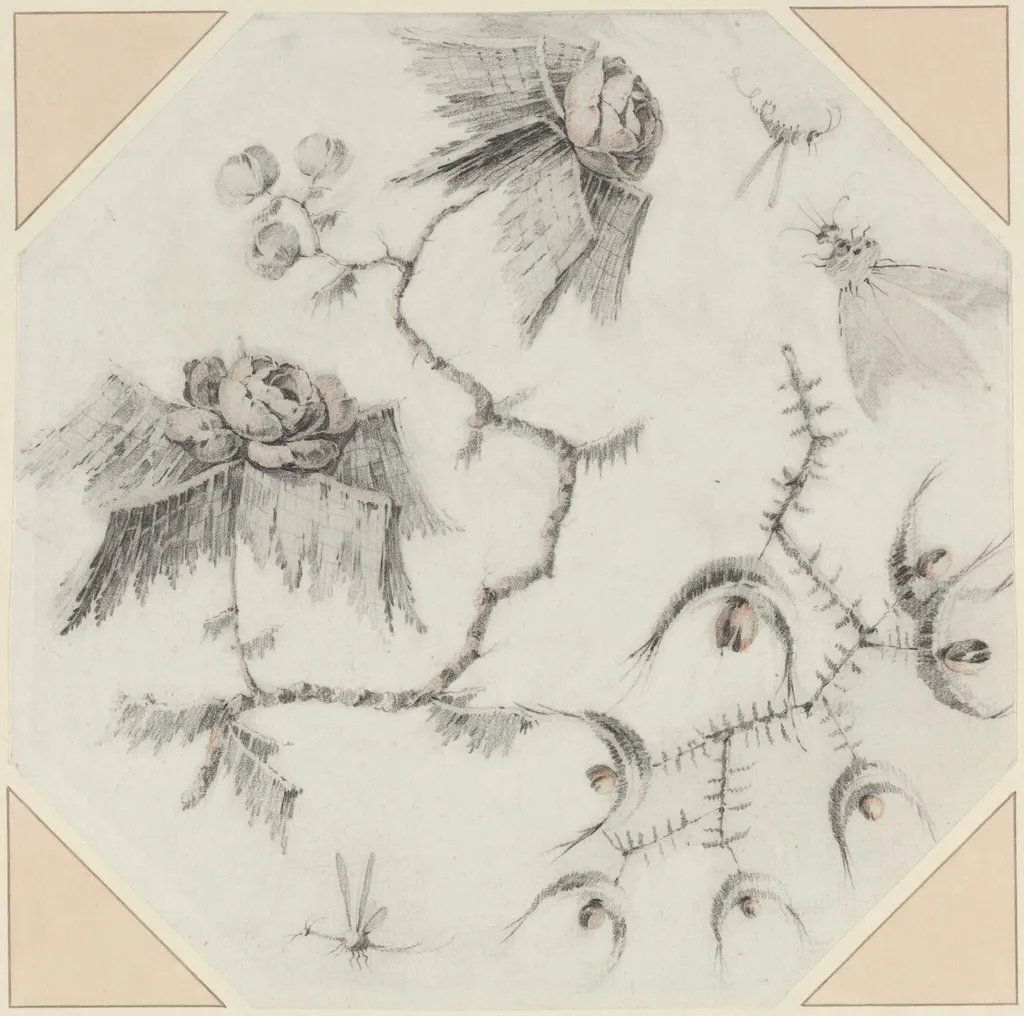
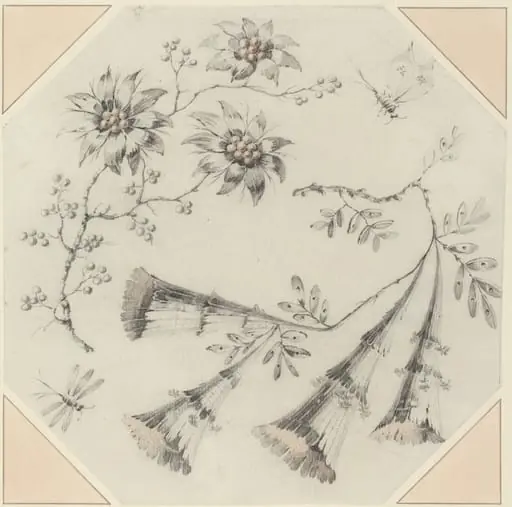
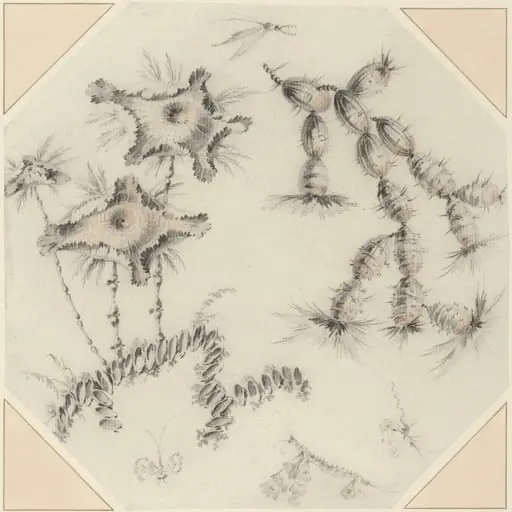
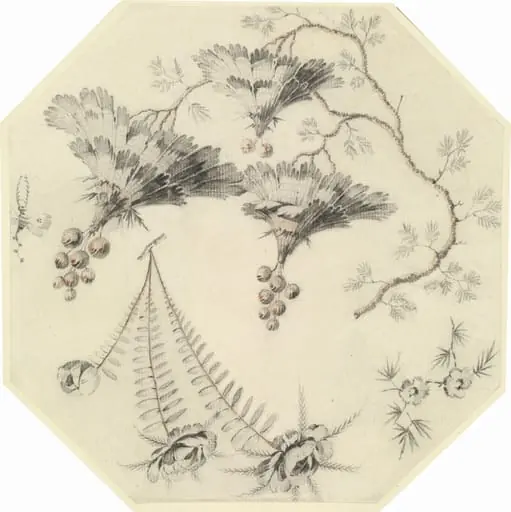
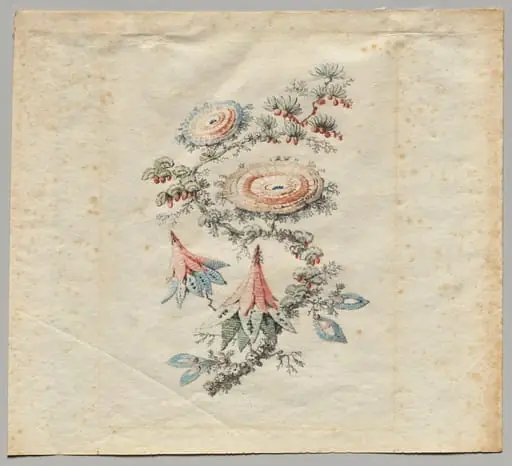
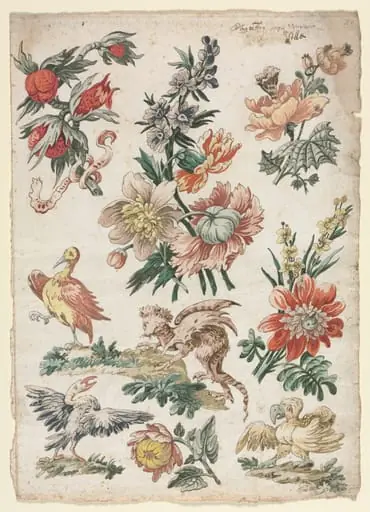
Fanciful Flowers and Bugs is a chalk drawing by the Baroque artist Jean-Baptiste Pillement. It dates from 1768 and is held in the collection of the National Gallery of Art.
About this work
Overview
Unlike botanical illustrations, the composition prioritizes decorative fantasy over scientific accuracy, reflecting the Rococo taste for playful naturalism.
Created in 1768 by Jean-Baptiste Pillement, this drawing uses black and red chalk on laid paper to depict an imaginative arrangement of flora and insects. Unlike botanical illustrations, the composition prioritizes decorative fantasy over scientific accuracy, reflecting the Rococo taste for playful naturalism. The medium allows for delicate, fluid lines that enhance the lightness and whimsy of the subject.
Subject & Meaning
The drawing presents an invented garden scene where flowers and insects coexist in a stylized, non-naturalistic harmony. No single species is rendered with precision; instead, they are combined to evoke charm and movement. The absence of human figures shifts focus to nature’s quiet vitality, aligning with 18th-century European ideals of refined, ornamental beauty rather than symbolic or moral narrative.
Technique & Style
Pillement employed black and red chalk on laid paper to achieve subtle tonal contrasts and varied line quality. The red chalk defines warm contours and soft shadows, while the black adds definition and depth. The paper’s textured surface enhances the tactile quality of the drawing, allowing the artist to blend and layer marks with a sense of spontaneity characteristic of Rococo draftsmanship.
History & Provenance
The work dates from the height of Pillement’s career, when he was celebrated across Europe for his ornamental designs. Though its early ownership is undocumented, it likely circulated among collectors of decorative arts or was used as a study for textile or wallpaper patterns. Its survival in good condition suggests it was valued as a finished piece rather than a preparatory sketch.
Context
Produced during the late Rococo era, the drawing reflects a broader cultural preference for delicate, ornamental subjects over the grandeur of the Baroque. Pillement’s work was widely reproduced in prints and applied arts, influencing interior decoration across France, England, and Germany. This piece exemplifies how nature was reimagined as elegant ornament, detached from realism or symbolism.
Legacy
Pillement’s drawings like this one helped shape the visual language of 18th-century decorative arts, particularly in chinoiserie and floral motifs. While not widely studied today as fine art, his approach influenced later designers in wallpaper and textile production. The work remains a quiet testament to the period’s fascination with nature as a source of refined, non-narrative beauty.
Artist & collection