Artwork
Abraham Casting Out Hagar and Ishmael
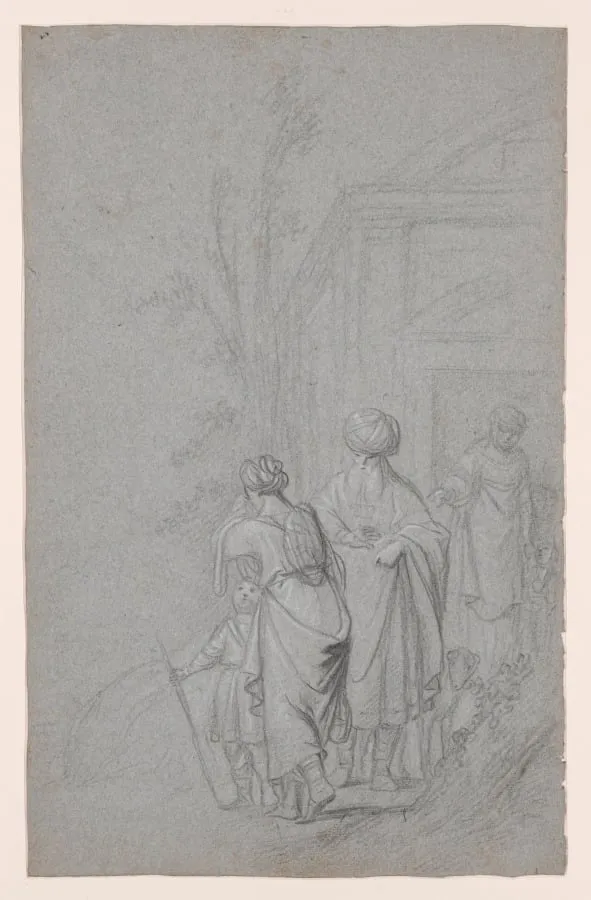
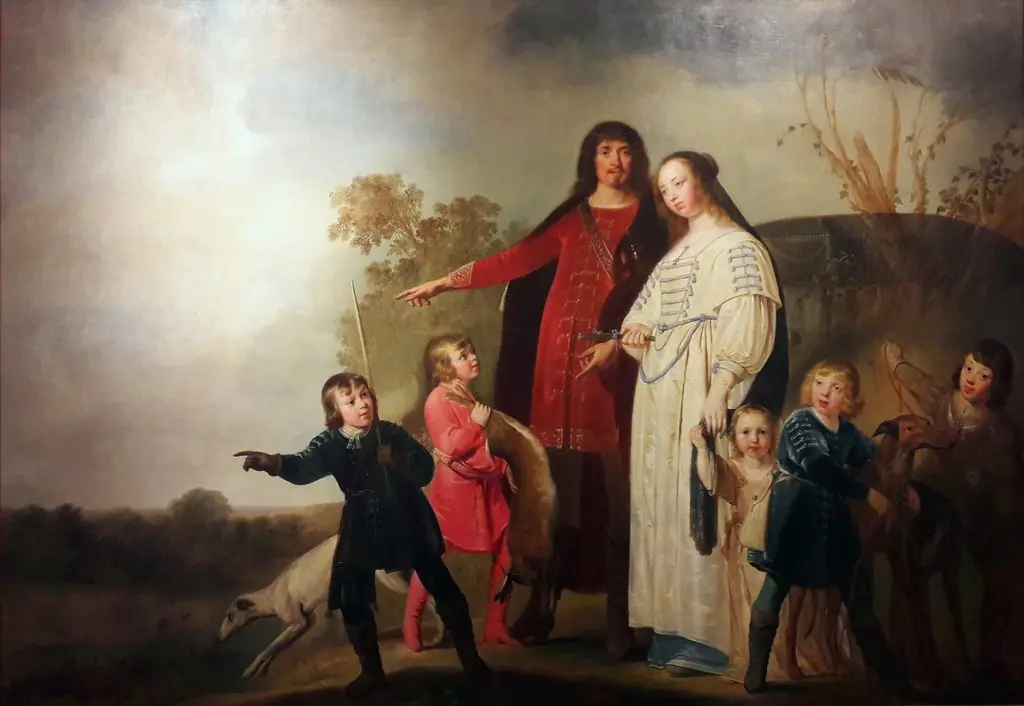
Abraham Casting Out Hagar and Ishmael is a drawing by the Baroque artist Pieter de Grebber. It dates from 1645 and is held in the collection of the Cleveland Museum of Art.
About this work
Overview
Pieter de Grebber, a Haarlem-based artist, created a pen-and-ink drawing depicting the biblical moment when Abraham sends Hagar and Ishmael into the desert. Executed with refined draftsmanship, the work captures a quiet yet emotionally charged scene, reflecting the artist’s interest in human vulnerability and moral tension within familiar scriptural narratives.
Subject & Meaning
The scene illustrates Genesis 21, where Abraham, under divine instruction, departs from his concubine Hagar and their son Ishmael. In the Protestant Dutch context, this story resonated as an allegory for societal duty toward the displaced. De Grebber emphasizes the moral weight of abandonment, inviting viewers to reflect on compassion, obedience, and the cost of exclusion.
Technique & Style
De Grebber employs subtle chiaroscuro to model the figures, using delicate ink washes to suggest volume and texture. Hagar’s draped garments fall in soft, naturalistic folds, enhancing the sense of physical and emotional weight. Abraham’s outstretched hand, rigid and directive, contrasts with Hagar’s collapsed posture, deepening the psychological divide between them.
History & Provenance
The drawing likely originated in the 1630s, during De Grebber’s active period in Haarlem. It was produced for private collectors rather than public display, consistent with the era’s taste for intimate religious works. Its survival suggests it was valued for its emotional precision and technical restraint, though its early ownership remains undocumented.
Context
In 17th-century Netherlands, Protestant communities frequently turned to Old Testament narratives to explore themes of exile, mercy, and divine justice. Stories like Hagar’s were used to frame debates about social responsibility toward refugees and marginalized groups, making such imagery both spiritually and politically resonant in domestic settings.
Legacy
De Grebber’s drawing exemplifies a quiet, introspective strand of Dutch religious art that prioritized psychological nuance over dramatic spectacle. While less known than contemporaries like Rembrandt, his focus on gesture and texture influenced later artists exploring moral ambiguity through restrained composition and intimate scale.
Artist & collection

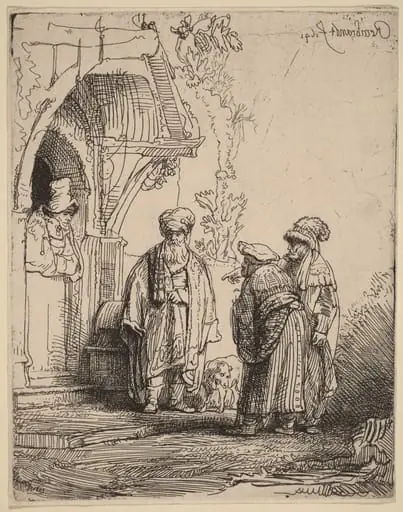 Three Oriental Figures (Jacob and Laban?)
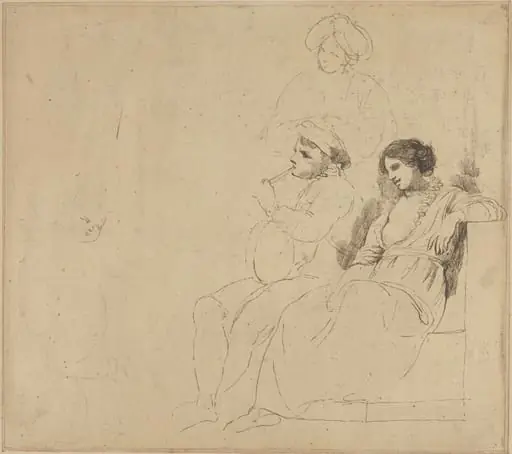 Study for "The Rustic Dancers"
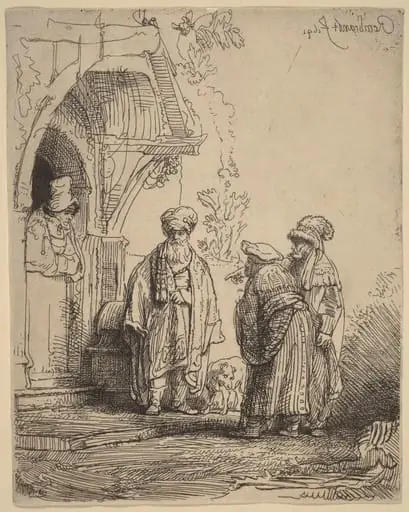 Three Oriental Figures (Jacob and Laban?)
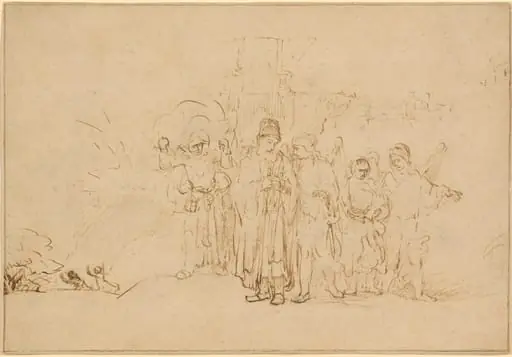 Lot and His Family Leaving Sodom
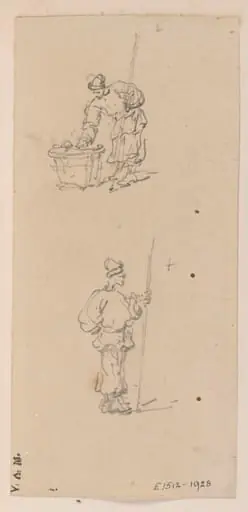 Two drawings of Chinese men
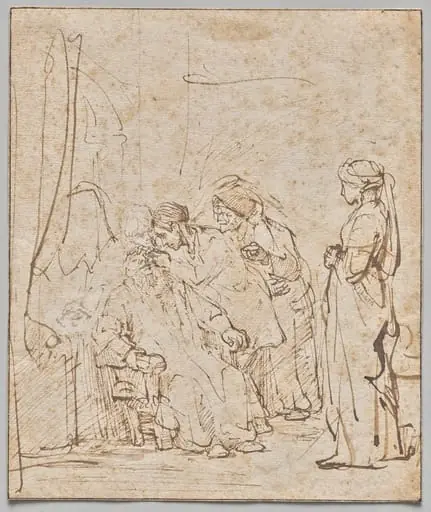 Tobias Healing His Father's Blindness
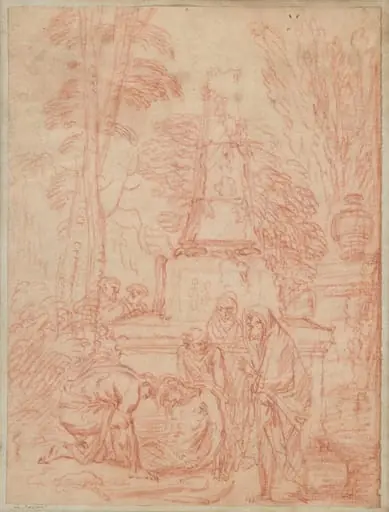 Tobit Burying the Dead
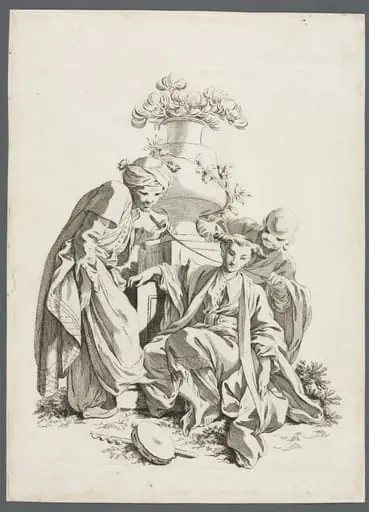 The Senses: Touch (after Boucher)
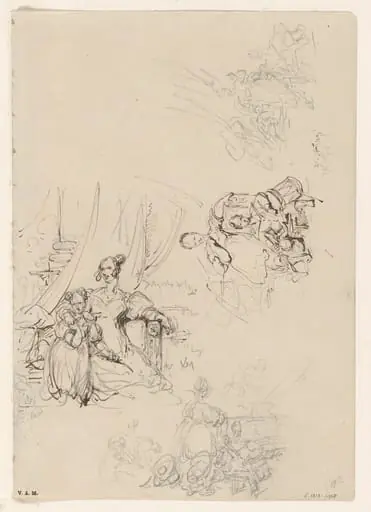 A Western woman with her children in Macau
![Queen Katherine's Dream [recto], by William Blake](https://artifactworldgallery.com/img/william-blake--queen-katherine-s-dream-recto--90af798f35cdb189-w320.webp) Queen Katherine's Dream [recto]
Queen Katherine's Dream [recto]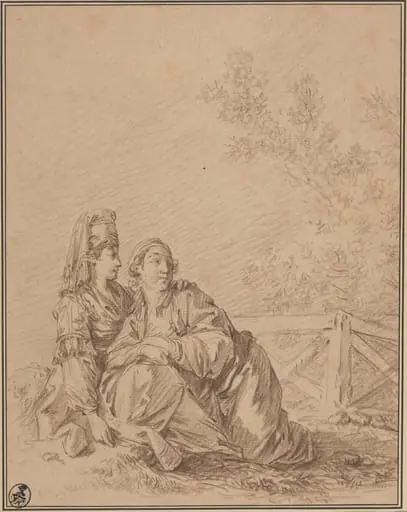 Two Russians Seated in Landscape
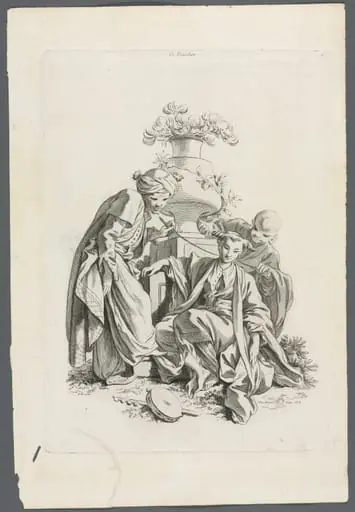 The Senses: Touch (after Boucher)