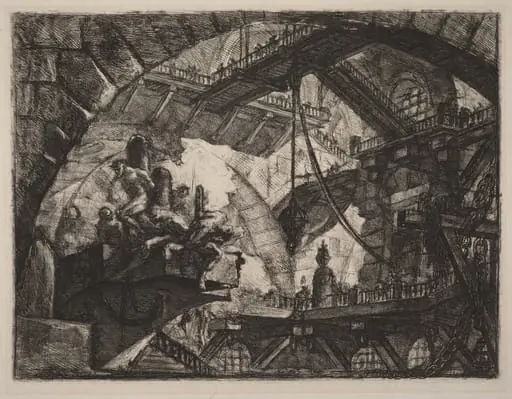
Artwork
The Grand Piazza
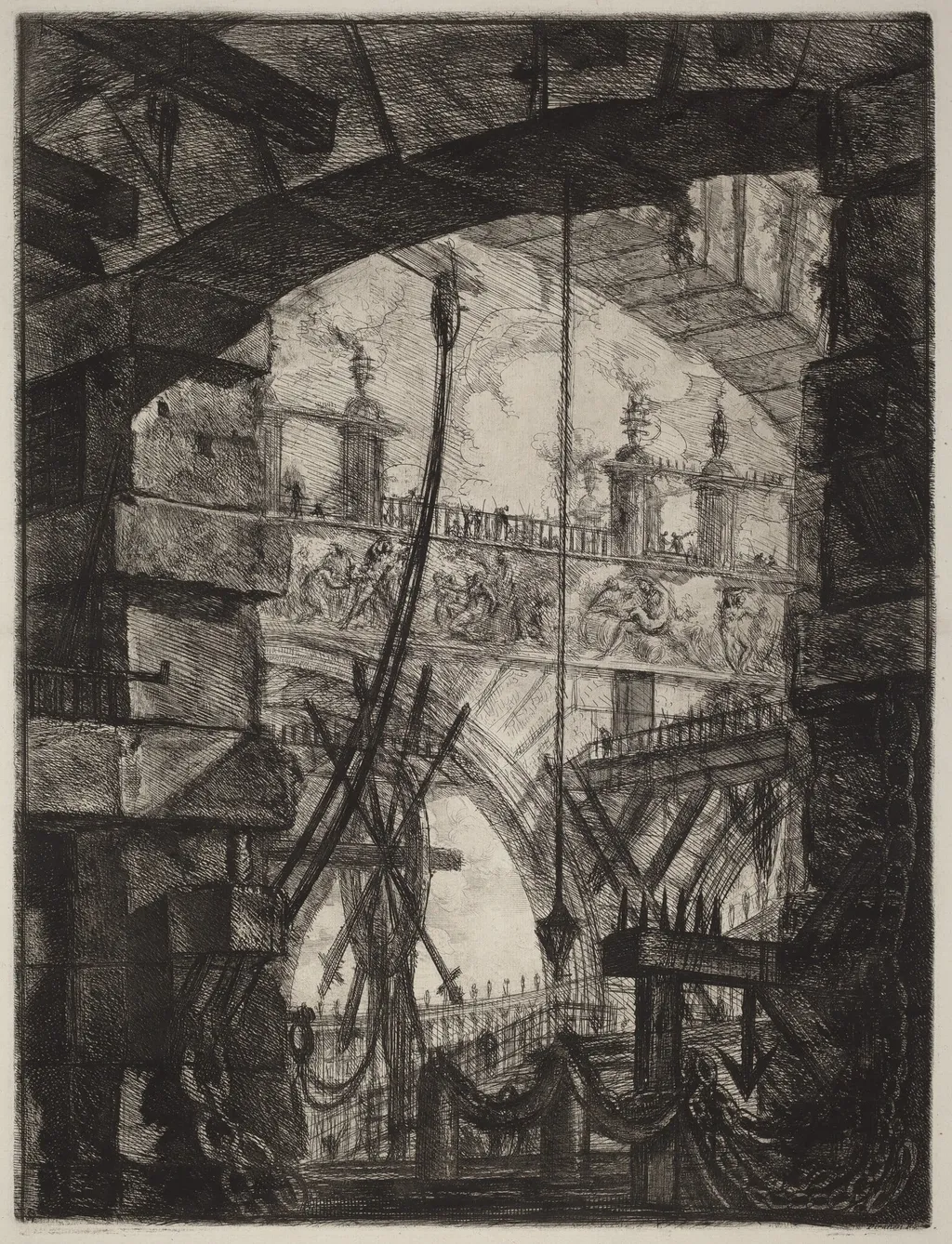
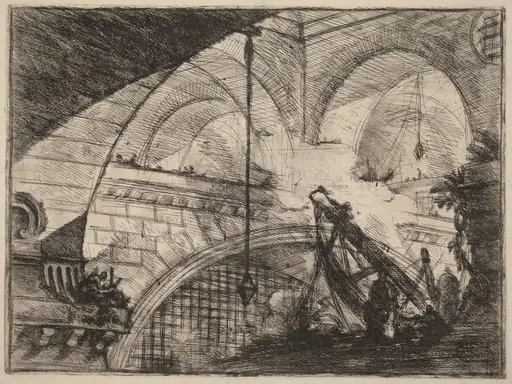
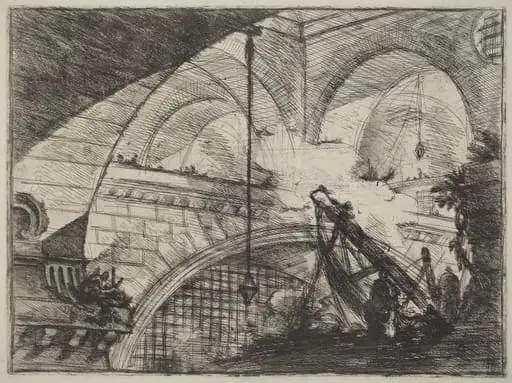
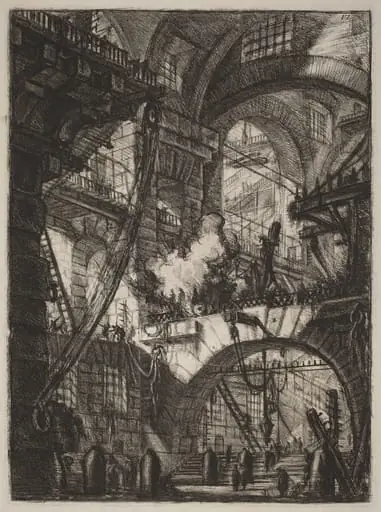
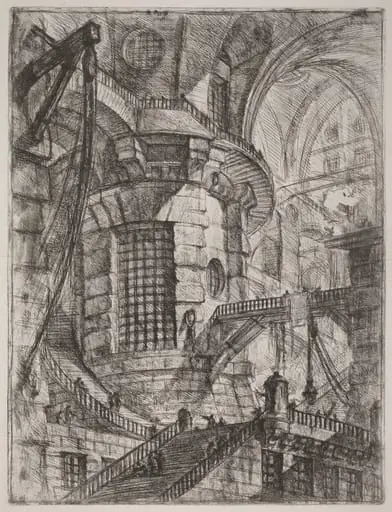
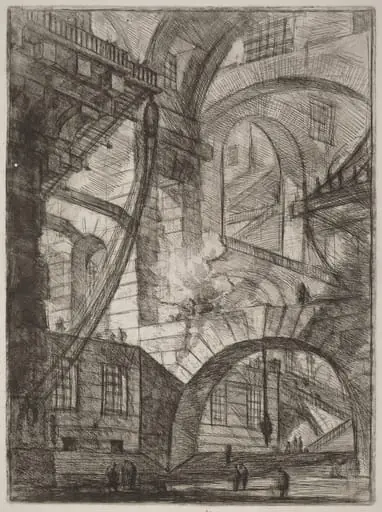
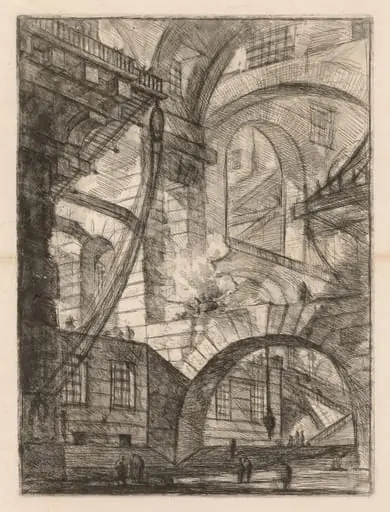
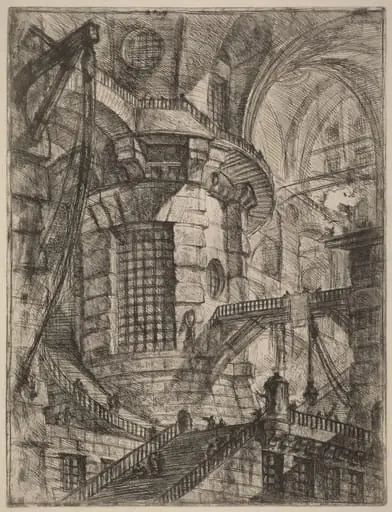
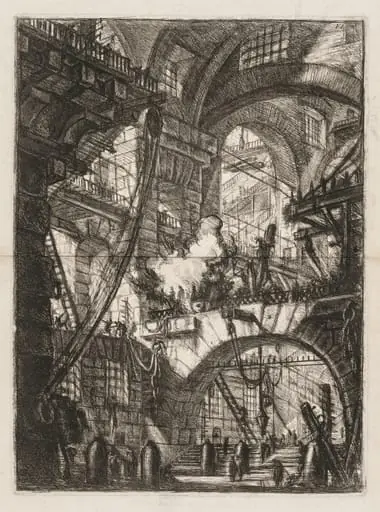
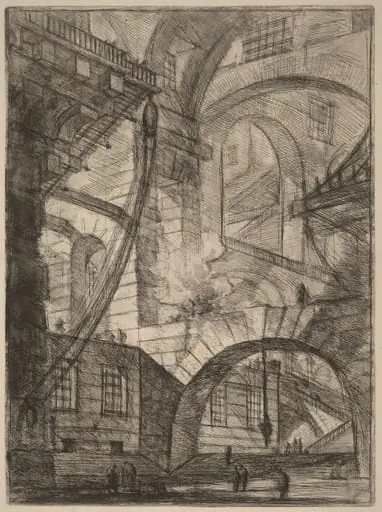
The Grand Piazza is an ink print by the Romanticist artist Giovanni Battista Piranesi. It is held in the collection of the National Gallery of Art.
About this work
Overview
Executed as a complex print, it combines traditional etching and engraving with experimental processes such as sulphur tinting and burnishing.
Giovanni Battista Piranesi produced the print titled *The Grand Piazza* in the 1780s. Executed as a complex print, it combines traditional etching and engraving with experimental processes such as sulphur tinting and burnishing. The work presents an imagined architectural space that merges ruinous Roman elements with fantastical structures, illustrating Piranesi’s interest in the interplay of antiquity and invention.
Subject & Meaning
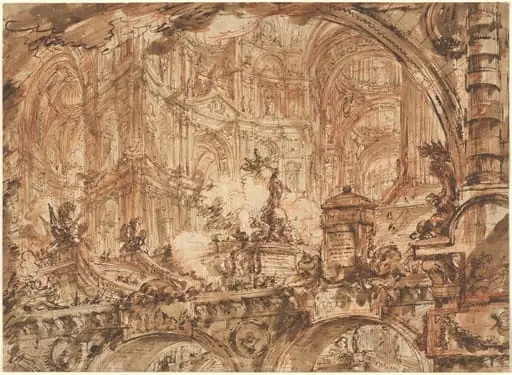
The scene depicts a vast, dimly lit courtyard crowded with broken columns, decayed arches and a colossal ship whose masts disappear into the darkness. Along the walls, enigmatic carvings—human figures, statues and mechanical devices—populate the space, suggesting a dialogue between the remnants of classical civilization and speculative, perhaps allegorical, inventions.
Technique & Style
Piranesi employed a dense network of jagged, incised lines to render texture and weight, while the sulphur tint adds a muted, atmospheric hue. Burnishing highlights certain surfaces, creating a subtle contrast between illuminated and shadowed zones. This combination of methods enhances the print’s sense of depth and the oppressive, mysterious ambience of the imagined ruin.
History & Provenance
Created during the later phase of Piranesi’s career, the print aligns with his broader series of topographical studies of Rome. It was published in the 1780s, a period when the artist was experimenting with new printmaking techniques to expand the expressive possibilities of his architectural fantasies.
Context
*The Grand Piazza* reflects Piranesi’s enduring fascination with the grandeur and decay of ancient structures, a theme that informed much of his oeuvre. By integrating fantastical elements with meticulous architectural detail, the work anticipates later Romantic and Neoclassical explorations of ruins, influencing subsequent generations of printmakers and architects interested in the evocative power of imagined spaces.
Artist & collection

Artist
Giovanni Battista (or Giambattista) Piranesi (Italian pronunciation: ; also known as simply Piranesi; 4 October 1720 – 9 November 1778) was an Italian classical archaeologist, architect, and artist, famous for his…