Artwork
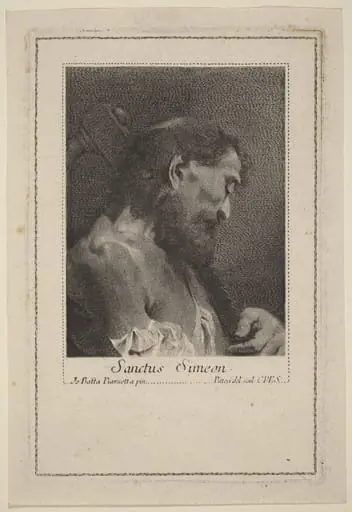
A Gentleman Pilgrim with a Rosary
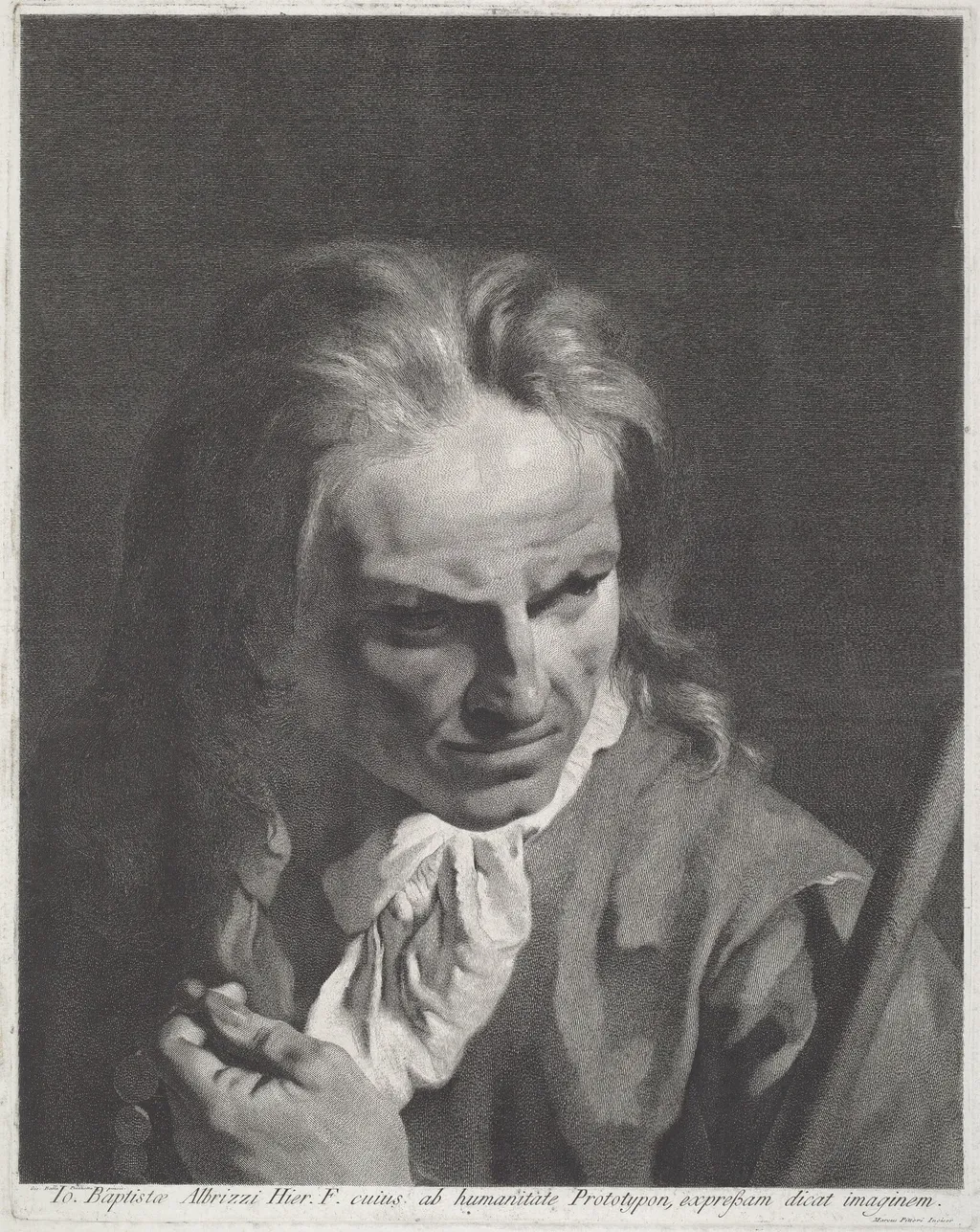
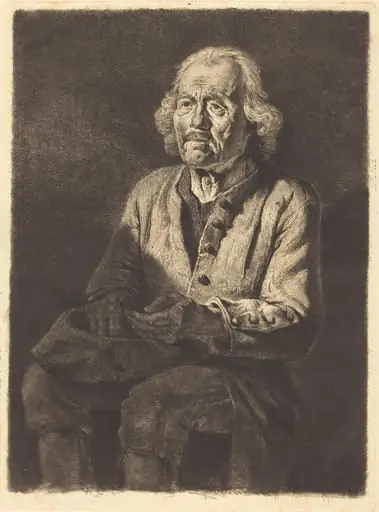
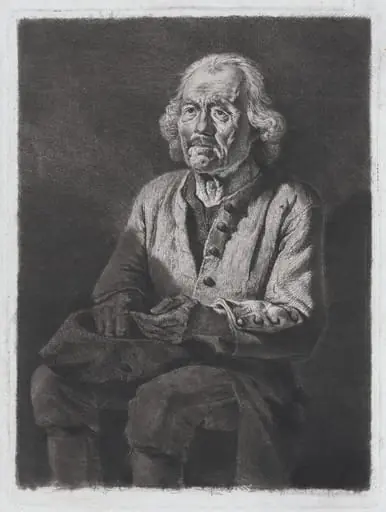
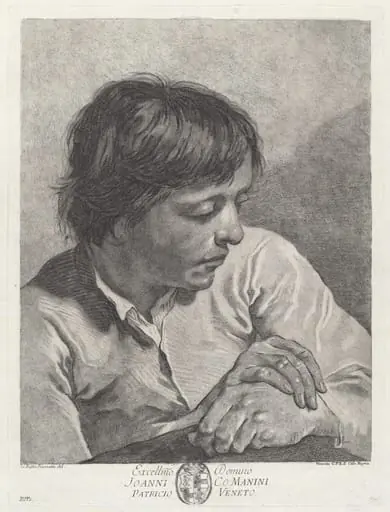
A Gentleman Pilgrim with a Rosary is an ink print by the Baroque artist Marco Alvise Pitteri. It dates from 1744 and is held in the collection of the National Gallery of Art.
About this work
Overview
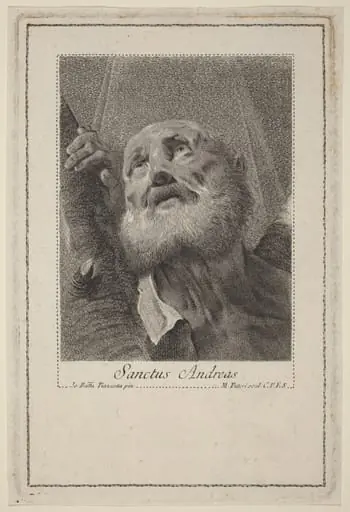
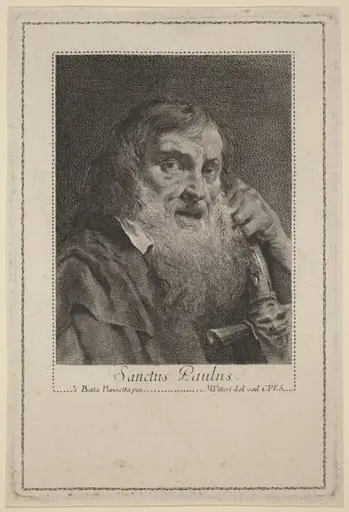
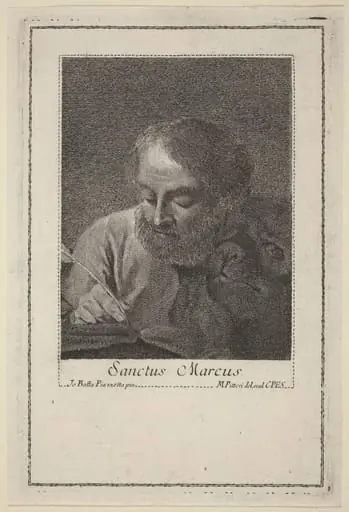
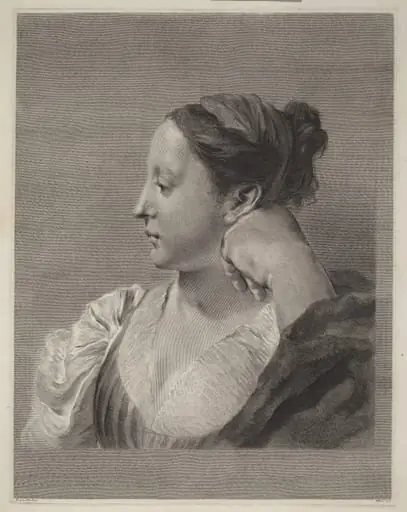
Created around 1744, this print combines engraving and etching on laid paper and is attributed to the Italian printmaker Marco Alvise Pitteri. The work presents a solitary figure—a pilgrim—engaged in quiet devotion, rendered with a high degree of precision that marks it as a fine example of mid‑18th‑century printmaking.
Subject & Meaning
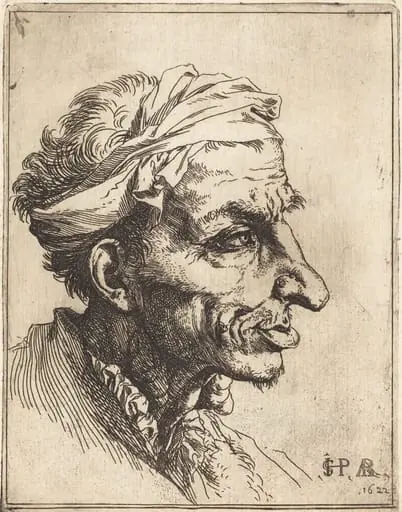
The central figure is a man in a dark robe with a white, ruffled collar, his long hair gathered back. He holds a rosary, his fingers intertwined around the beads, and gazes downward with a solemn expression. The composition suggests a moment of personal prayer or contemplation, emphasizing the spiritual discipline associated with pilgrimage.
Technique & Style
Pitteri employed a combination of engraving—deep, controlled lines that define the facial furrows and clothing folds—and etching, which provides softer tonal transitions in the background. The laid paper’s subtle texture enhances the contrast between the sharply rendered figure and the darker, less detailed surroundings.
History & Provenance
The print originates from the Venetian artistic milieu of the 1740s, a period when religious subjects were frequently reproduced for devotional purposes. While specific ownership records are scarce, the work has appeared in several 19th‑century catalogues of Italian prints, confirming its attribution to Pitteri.
Context
During the mid‑18th century, prints served both as affordable devotional images and as demonstrations of a printmaker’s skill. Pitteri, known for his meticulous approach, often chose subjects that allowed him to display fine line work and subtle shading, aligning this piece with contemporary religious and artistic trends.
Legacy
The image remains a reference point for scholars studying the intersection of religious iconography and print technique in pre‑Neoclassical Italy. Its detailed rendering of a solitary pilgrim continues to illustrate the capacity of engraving and etching to convey introspection without colour.
Artist & collection