Artwork
Old Gérard, Peasant from Chasselay
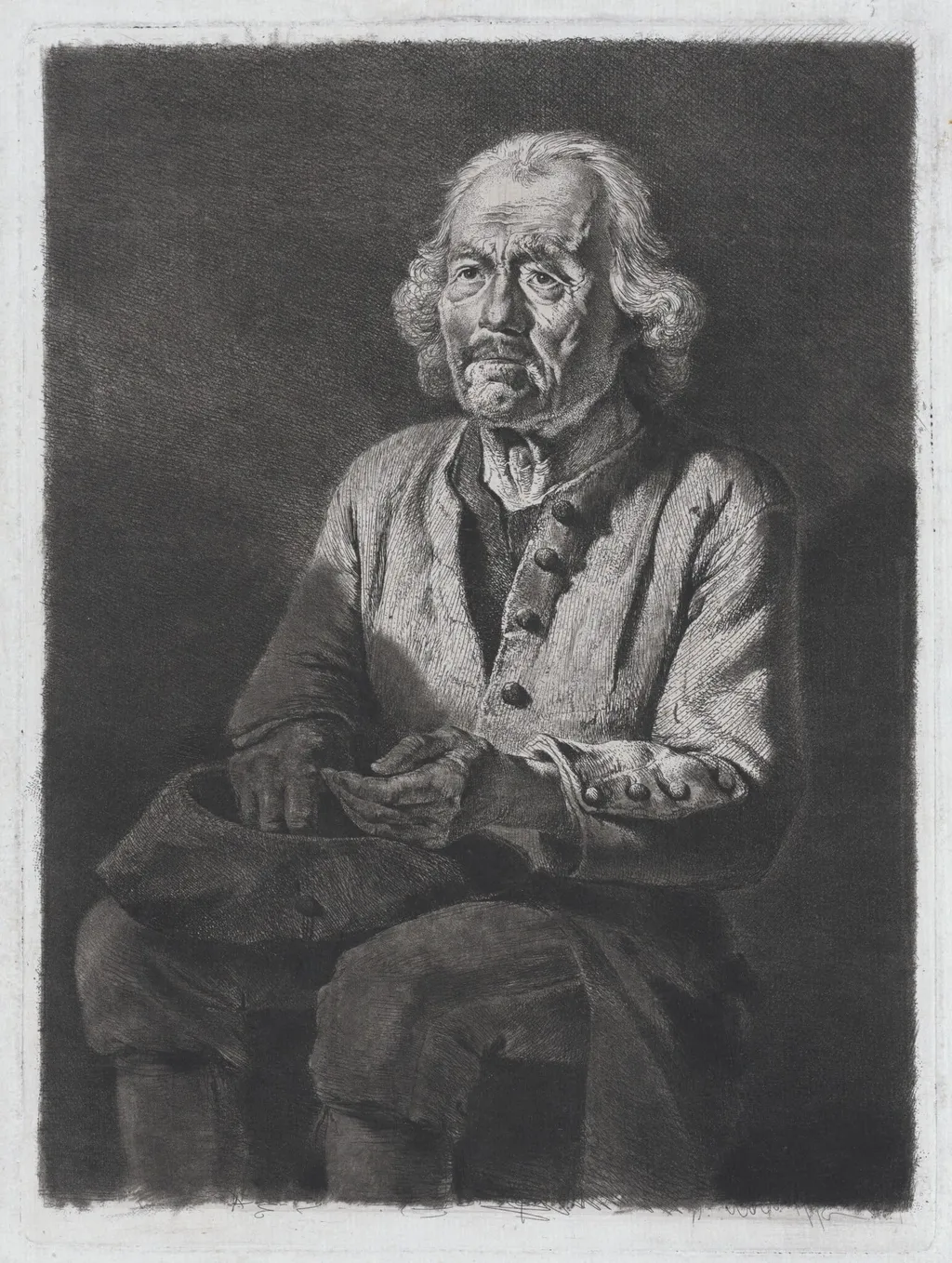
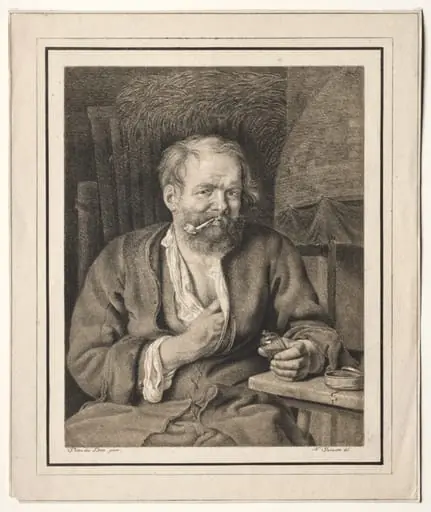
Old Gérard, Peasant from Chasselay is an ink print by the Romanticist artist Jean-Jacques de Boissieu. It dates from 1772 and is held in the collection of the National Gallery of Art.
About this work
Overview
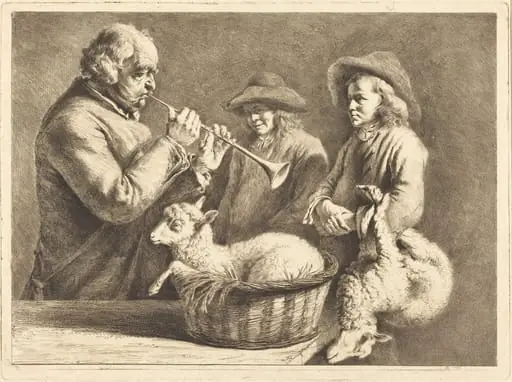
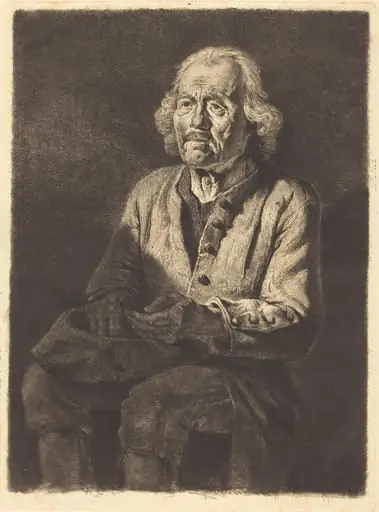
Jean-Jacques de Boissieu's 1772 etching, Old Gérard, Peasant from Chasselay, is a black-and-white portrait print rendered on laid paper using etching and roulette techniques. The composition focuses on an elderly man in a seated position.
Subject & Meaning
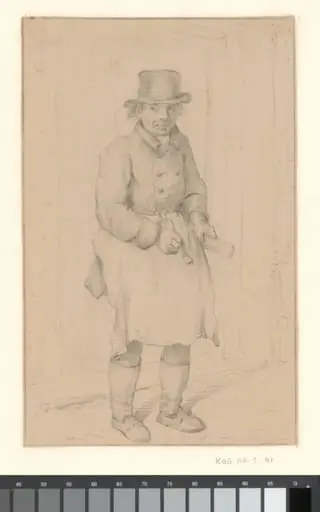
The subject, an older peasant from Chasselay, is depicted in everyday attire, including a loose coat over a buttoned shirt, with hands resting in his lap. The plain background emphasizes the man's facial features and the texture of his clothing, conveying a sense of realism and humility.
Technique & Style
The etching employs shading to accentuate the subject's wrinkles and the fabric textures of his garments. This approach aligns with 18th-century portrait conventions, which valued detailed, realistic representations. The use of etching and roulette tools allowed for precise line work and tonal variations.
History & Provenance
Created in 1772, specific details regarding the print's provenance and exhibition history are not provided in the available information.
Context
Old Gérard, Peasant from Chasselay reflects the artistic tastes of the 1700s, where detailed, realistic portraits of common subjects were a notable aspect of printmaking. The technique of etching, facilitated by tools like the roulette, was central to achieving such realism.
Legacy
While the broader impact or notable exhibitions of Old Gérard, Peasant from Chasselay are not detailed in the provided sources, it represents a characteristic example of late 18th-century etching practices focused on portraiture and everyday life.
Artist & collection
Artist
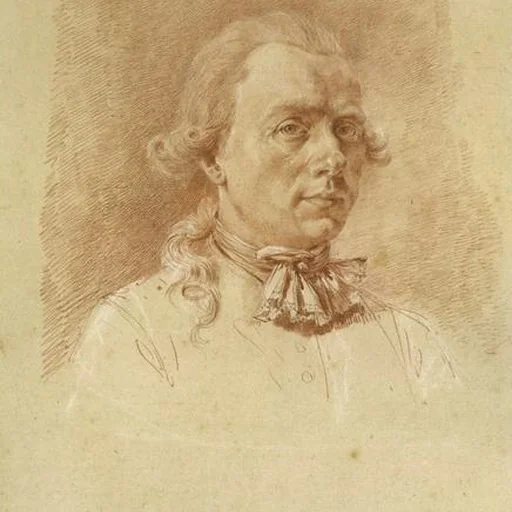
Jean-Jacques de Boissieu (1736–1810) was a French artist, born in Lyon.